The message “Bulb Failure Position Light” often appears on a Volvo dashboard without warning. Many drivers feel confused when they see it. They are not sure if the car has a serious fault or a minor issue.
This warning is common in modern Volvo vehicles. Many drivers also misunderstand it.
Volvo uses an advanced lighting control system. This system monitors each exterior bulb in real time. It checks electrical resistance, power use, and signal response from the lighting circuit.
The system triggers a warning when it detects abnormal values. This helps protect road safety and ensures proper vehicle lighting.
The warning does not always mean the bulb has failed completely. In many cases, the issue comes from weak electrical contact or a worn bulb. It can also appear when drivers install LED bulbs that do not match Volvo’s system.
Small changes in the circuit can activate the warning. This can happen even when the light still works normally.
This article explains what Volvo Bulb Failure Position Light means. It also shows why it happens and how the system works. You will understand the real cause behind the warning. This helps you avoid wrong repairs and save time.
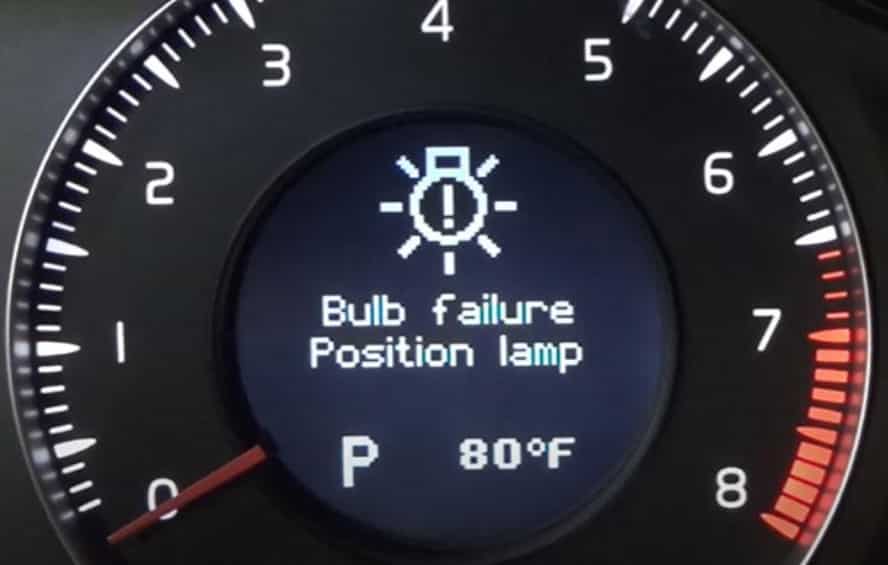
What Volvo Bulb Failure Position Light Means
The Volvo Bulb Failure Position Light warning indicates a problem in the vehicle’s exterior lighting system. It refers specifically to the position light circuit, which is responsible for providing low intensity lighting to improve vehicle visibility in low light conditions.
In a Volvo vehicle, the position light plays an important role in road safety. It helps other drivers see your car more clearly at night or in poor weather conditions. When the system detects abnormal behavior in this lighting circuit, it immediately sends a warning to the dashboard.
This warning does not always mean the bulb is completely broken. The system focuses on electrical behavior, not just visible light output. If the voltage, resistance, or signal feedback does not match expected values, the system triggers the alert.
Volvo designs its lighting system with high sensitivity. Even a small change in electrical flow can activate the warning. This design improves safety but sometimes leads to false alerts.
The position light system connects directly to Volvo’s central electrical control module. This module continuously checks each light for correct performance. When it detects inconsistency, it stores a fault code and shows the warning message.
Drivers often see this warning even when the light still works. This usually happens when the system detects early signs of bulb degradation or when aftermarket LED bulbs are installed without proper compatibility.
Understanding this warning helps drivers avoid unnecessary repairs. It also helps identify whether the issue is a simple bulb replacement or a deeper electrical fault.
How the Volvo Lighting Monitoring System Works
Volvo uses an advanced electronic lighting monitoring system to control and check all exterior lights. This system runs continuously while the vehicle is on. It checks every bulb in real time to ensure proper operation.
The system does not rely only on visual confirmation. It measures electrical signals inside each lighting circuit. These signals include voltage, resistance, and current flow. The system compares these values with standard parameters stored in the control module.
A central unit often called the Body Control Module manages this process. This module communicates with all lighting components in the vehicle. It sends test signals to each bulb circuit and analyzes the return response.
When the system detects a mismatch in electrical values, it assumes a possible fault. It then triggers a warning on the dashboard. This process happens very quickly and without driver input.
The system can also detect early signs of bulb wear. A bulb may still light up but show unstable resistance. The monitoring system treats this as a potential failure and generates a warning.
In some cases, the system reacts to aftermarket LED bulbs. LED bulbs often consume less power than traditional halogen bulbs. The Volvo system may interpret this lower power draw as a malfunction.
The monitoring system improves safety by ensuring all lights function correctly at all times. However, its high sensitivity can sometimes create warnings even when the lighting still works.
Understanding this mechanism helps drivers see that the warning is not random. It comes from a structured diagnostic process inside the vehicle’s electrical system.
Common Causes of Volvo Bulb Failure Position Light
The Volvo Bulb Failure Position Light warning can appear for several reasons. Some causes are simple and easy to fix. Other causes relate to deeper electrical issues inside the vehicle.
One of the most common causes is a faulty or aging bulb. Over time, the filament or LED inside the bulb loses performance. This change affects electrical resistance and triggers the warning.
Poor electrical contact is another frequent cause. The bulb socket can become loose or dirty. Dust, moisture, or corrosion can interrupt the connection. When this happens, the system detects unstable current flow and sends an alert.
A damaged fuse or wiring issue can also trigger the warning. If the electrical path is interrupted, the system cannot detect normal operation. This leads to a fault signal on the dashboard.
Many Volvo owners experience this issue after installing aftermarket LED bulbs. These bulbs often use less power than original halogen bulbs. The Volvo system interprets this lower power draw as a failure.
Software or module glitches can also play a role. The Body Control Module may store incorrect data or misread sensor input. In some cases, a system reset is needed to clear the warning.
Moisture inside the headlight assembly can also affect performance. Water or condensation can interfere with electrical contacts. This creates unstable readings in the monitoring system.
Each of these causes affects the electrical balance of the lighting circuit. The Volvo system reacts quickly to any inconsistency to maintain safety and visibility.
Symptoms and Real World Signs of the Issue
When the Volvo Bulb Failure Position Light warning appears, drivers often notice several related signs. These signs help confirm whether the issue comes from a real bulb problem or an electrical mismatch.
The most obvious symptom is that one of the position lights may stop working. In some cases, the light still turns on but appears dimmer than normal. This happens when the bulb starts to degrade.
Another common sign is an intermittent warning message. The alert may appear when you start the engine and disappear later. It may also come back when you turn on the headlights.
Some drivers notice that the warning appears after replacing a bulb. This often happens when the new bulb does not match Volvo’s electrical requirements. The system detects the difference and triggers the alert.
In certain cases, all lights look normal, but the warning still stays on. This usually points to a sensor issue, wiring inconsistency, or module miscommunication.
Moisture inside the headlight can also create unstable behavior. The light may flicker slightly or respond inconsistently. The system reads this as an abnormal condition.
Sometimes the issue affects only one side of the vehicle. One position light may trigger the warning while the other side works normally. This helps narrow down the faulty circuit.
These symptoms help drivers understand that the problem is not always visible. The Volvo system reacts based on electrical signals, not only visible light output.
Is Volvo Bulb Failure Position Light Dangerous
The Volvo Bulb Failure Position Light warning is usually not dangerous in the short term. However, it should not be ignored for a long time. It indicates a problem in the exterior lighting system, which affects visibility on the road.
Position lights help other drivers see your vehicle in low light conditions. If one or more lights fail, your car becomes less visible at night or in bad weather. This increases the risk of accidents, especially on poorly lit roads.
In many cases, the warning appears even when the light still works. This happens due to electrical mismatch or sensor sensitivity. In this situation, the risk is lower, but the system still detects abnormal behavior.
If the position light is completely off, the risk becomes higher. Other drivers may not notice your vehicle from a distance. This is especially important during night driving or foggy conditions.
The warning can also indicate deeper electrical issues. Problems in wiring, fuses, or control modules may affect other lighting functions over time. This makes early diagnosis important.
Driving for a short time with this warning is usually safe. However, long term driving without fixing the issue is not recommended. It can reduce road safety and may lead to further electrical faults.
Understanding the severity depends on the actual cause. A simple bulb replacement is low risk. A wiring or module issue requires immediate attention.
How to Diagnose and Fix Volvo Bulb Failure Position Light
Fixing the Volvo Bulb Failure Position Light warning starts with a simple diagnosis process. You should check the system step by step to identify the real cause before replacing any parts.
The first step is to inspect the position light bulb. You should check if the bulb is completely dead or still working. If the bulb does not light up, replacement is usually required.
The second step is to check the bulb socket. Loose contact or dirt inside the socket can interrupt the electrical connection. Cleaning and tightening the socket often solves the issue.
The third step is to inspect the wiring. Damaged or corroded wires can cause unstable electrical signals. This leads to incorrect readings in the monitoring system.
The fourth step is to check the fuse. A blown fuse can stop power flow to the position light circuit. Replacing the fuse can restore normal operation.
If you use LED bulbs, compatibility becomes important. Volvo systems are sensitive to power differences. Installing non compatible LED bulbs often triggers the warning. Using CAN bus compatible bulbs can reduce this issue.
After repairs, you may need to reset the warning. Some cases clear automatically after the issue is fixed. In other cases, a diagnostic tool is required to reset the Body Control Module.
If the warning remains after all checks, the problem may come from the control module. In this case, professional diagnostic tools are needed. A Volvo service center can read fault codes and identify hidden issues.
Following this process helps avoid unnecessary repairs. It also ensures that the real cause is fixed instead of just removing the warning.
Repair Cost and Professional Service Analysis
The cost to fix the Volvo Bulb Failure Position Light warning depends on the actual cause of the issue. Simple problems cost very little, while electrical system faults can be more expensive.
If the issue comes from a burned out bulb, the repair cost is usually low. A standard position light bulb is affordable and can be replaced quickly. Many drivers can complete this repair at home without special tools.
If the problem comes from poor socket contact or wiring issues, the cost increases slightly. Cleaning or repairing connectors requires more time and basic electrical inspection. In most cases, this type of repair remains affordable.
If the vehicle uses aftermarket LED bulbs, replacement may also be needed. Switching to compatible bulbs can solve repeated warning issues. The cost depends on the brand and type of LED chosen.
When the issue involves the Body Control Module, the cost becomes higher. Diagnostic testing is required to identify stored fault codes. This process usually needs professional equipment at a Volvo service center.
Software resets or module recalibration may also be required. These procedures increase labor costs. However, they are necessary when the system misreads electrical signals.
In rare cases, multiple issues occur at the same time. This can include wiring faults combined with sensor miscommunication. These cases require deeper inspection and higher repair costs.
Overall, most Volvo Bulb Failure Position Light issues are minor and inexpensive to fix. Early diagnosis helps reduce cost and prevents unnecessary part replacement.
Conclusion
The Volvo Bulb Failure Position Light warning is a common message in modern Volvo vehicles. It often appears due to small changes in the lighting system rather than a serious failure. In many cases, the issue comes from a simple bulb problem, weak electrical contact, or LED incompatibility.
Volvo uses an advanced monitoring system to check every position light in real time. This system focuses on electrical signals, not only visible light. That is why the warning can appear even when the light still works normally.
Understanding the meaning of this warning helps drivers avoid unnecessary repairs. Many issues can be solved with a basic bulb replacement or a simple socket inspection. More complex cases may require professional diagnosis, especially when the control module is involved.
The most important point is early detection. Fixing the issue early helps maintain road safety and prevents further electrical complications. It also reduces repair costs and avoids unnecessary part replacements.
Drivers who understand how the system works can make better decisions. They can identify whether the problem is minor or requires professional attention. This knowledge helps keep the vehicle in good condition and ensures safe driving in all conditions.