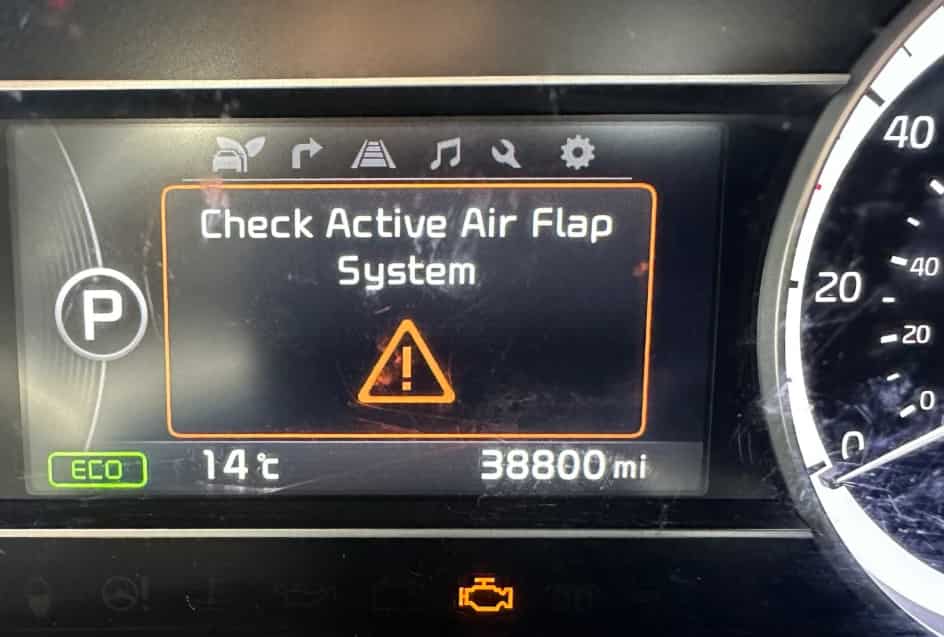
When the warning “Check Active Air Flap System” appears on a Hyundai vehicle, many drivers worry about engine damage or costly repairs. This message relates to a small but important part in the front grille system that controls airflow and helps regulate engine temperature.
Hyundai designs the Active Air Flap System to open or close grille flaps automatically based on driving speed and cooling needs. At higher speeds, the system closes the flaps to improve aerodynamics and reduce air resistance. When the engine needs cooling, the system opens the flaps to increase airflow. The vehicle’s ECU monitors this process and activates a warning if it detects abnormal behavior.
Drivers often ask two key questions. They want to know what the system does and why the warning appears. In most cases, the problem is not serious. Dirt can block the flaps and stop them from moving. A sensor may also send incorrect signals. In some cases, the actuator motor fails or wiring problems interrupt communication with the ECU.
This system plays an important role in engine cooling and fuel efficiency. A malfunction does not always stop the car from running, but it can reduce performance. In severe cases, restricted airflow may increase engine temperature and create long term risk if the issue is ignored.
This guide explains the meaning of the Hyundai Check Active Air Flap System warning, the main causes behind it, and practical steps to fix it in a simple and clear way.
What is Hyundai Active Air Flap System?
The Hyundai Active Air Flap System is a small but important part of the front grille assembly. It sits behind the front bumper and controls how air enters the engine bay. Hyundai uses this system to balance engine cooling and aerodynamic efficiency in different driving conditions.
The system works through a set of movable flaps that open and close automatically. When the vehicle drives at high speed, the flaps close to reduce air resistance. This helps the car move more efficiently and improves fuel economy. When the engine temperature rises or the vehicle moves slowly, the flaps open to allow more air into the radiator area. This supports engine cooling and helps maintain stable operating temperature.
The system is controlled by the Engine Control Unit. The ECU sends signals based on speed, temperature, and engine load. An electric actuator motor moves the flaps based on these signals. Sensors also monitor flap position to ensure accurate operation.
Hyundai applies this system in several models to improve overall performance and reduce fuel consumption. It also supports emission control by helping the engine maintain optimal temperature more consistently. In modern vehicle design, small aerodynamic improvements like this can have a noticeable impact on efficiency.
When the system works correctly, drivers usually do not notice it. It operates silently in the background and adjusts airflow automatically without any input from the driver.
What Does “Check Active Air Flap System” Mean?
When a Hyundai vehicle shows the message “Check Active Air Flap System,” it means the system has detected an abnormal condition in the grille shutter mechanism. The Engine Control Unit monitors the movement and position of the flaps, and it triggers this warning when the system does not behave as expected.
In most cases, the warning appears because the flaps cannot move correctly. The ECU may detect that the actuator motor does not respond to commands. It may also notice that the flap position does not match the expected signal from the sensor. When this mismatch happens, the system stores a fault code and displays the warning on the dashboard.
This warning does not always mean a serious engine failure. However, it does indicate that a key part of the airflow and cooling system is not working properly. If the flaps stay closed, the engine may not receive enough cooling air. If they stay open, the vehicle may lose some aerodynamic efficiency and fuel economy.
Common triggers for this warning include mechanical blockage, electrical signal failure, or sensor misreading. In some situations, the issue starts after a battery replacement or ECU reset, which can temporarily affect system calibration.
The message is essentially an early alert. It helps prevent more serious problems such as overheating or long term efficiency loss. For this reason, it is important to inspect the system as soon as the warning appears, even if the vehicle still feels normal during driving.
Common Causes of the Error
The “Check Active Air Flap System” warning on Hyundai vehicles can appear for several different reasons. Most of them are related to mechanical blockage, electrical failure, or sensor issues rather than serious engine damage. Understanding the root cause helps you choose the correct repair method and avoid unnecessary costs.
One of the most common causes is mechanical obstruction. Dirt, dust, small stones, or road debris can get stuck around the grille area. When this happens, the flaps cannot open or close smoothly. Over time, this blockage can also increase wear on the moving parts.
Another frequent cause is actuator motor failure. The actuator is responsible for moving the flaps based on ECU signals. If the motor becomes weak or fails completely, the system will stop responding correctly and trigger the warning message.
Electrical wiring problems can also lead to this issue. Damaged cables, loose connectors, or corrosion can interrupt communication between the ECU, actuator, and sensors. When the signal is unstable, the system cannot confirm proper flap movement.
Sensor malfunction is another important factor. The position sensor tells the ECU whether the flaps are open or closed. If this sensor sends incorrect data, the ECU will detect a mismatch and generate an error even if the flaps are physically working.
In some cases, the problem comes from software or calibration errors. After a battery reset or ECU update, the system may lose its reference position. This can temporarily trigger the warning until the system recalibrates or is reset properly.
Environmental conditions can also contribute. Extreme cold can make the mechanism stiff, while moisture can cause corrosion or electrical instability over time.
Symptoms You May Notice
When the Hyundai Active Air Flap System develops a fault, the warning message is usually the first sign. However, there are other symptoms that can help you confirm the issue and understand how serious it is.
The most obvious symptom is the dashboard warning “Check Active Air Flap System.” This alert appears when the Engine Control Unit detects abnormal flap movement or incorrect sensor readings. In some cases, the warning may stay on continuously. In other cases, it may appear intermittently depending on driving conditions.
You may also notice changes in engine cooling behavior. The radiator fan may run more often than usual because the system cannot regulate airflow efficiently. This can make the engine bay sound slightly louder during operation.
Fuel consumption can increase slightly in some situations. When the aerodynamic efficiency is reduced due to stuck flaps, the engine may work harder at higher speeds. This leads to less optimal fuel economy, especially during highway driving.
Another possible symptom is restricted airflow at the front grille. If the flaps are stuck in a closed position, you may notice reduced air passage into the radiator area. This condition can become more noticeable during slow traffic or warm weather.
In more severe cases, engine temperature may rise faster than normal. While modern Hyundai cooling systems are designed with safety margins, long term exposure to reduced airflow can increase the risk of overheating under heavy load.
Most of these symptoms develop gradually rather than suddenly. This is why early diagnosis is important when the warning first appears.
How to Fix Hyundai Active Air Flap System Error
Fixing the Hyundai Active Air Flap System error depends on the root cause. In many cases, the issue is simple and can be solved with basic inspection. In other situations, you may need diagnostic tools or professional repair support.
Start with a visual inspection of the front grille area. Check for dirt, stones, leaves, or any physical blockage around the flaps. Clean the area carefully and make sure the flaps can move freely without resistance. This step solves many minor cases where debris is the main cause.
Next, observe the flap movement. Turn on the ignition and check if the flaps respond during startup or engine operation. If they remain stuck, the actuator motor may not be working properly. A weak or damaged actuator often prevents the system from responding to ECU commands.
If the issue is not visible, use an OBD2 scanner to check error codes. The diagnostic tool can help identify whether the problem is related to the actuator, sensor, or wiring. This step is important because it removes guesswork and points to the exact fault area.
In some cases, a simple ECU reset can solve the problem. Disconnecting the battery or clearing fault codes may restore normal system calibration, especially if the error appeared after a voltage drop or battery replacement.
If cleaning and reset do not work, the next step is to inspect electrical connections. Check for loose plugs, damaged wires, or corrosion around connectors. Stable communication between ECU and actuator is essential for correct operation.
When the actuator or sensor is faulty, replacement is usually required. These parts cannot always be repaired and must be replaced with compatible Hyundai components to ensure proper function.
If the problem continues after all checks, it is recommended to visit a Hyundai service center for advanced diagnosis.
Repair Cost & Replacement
The cost to repair a Hyundai Active Air Flap System depends on the exact cause of the problem, the vehicle model, and whether you choose repair or replacement. In most cases, the system itself is not extremely expensive, but labor and diagnostic work can increase the total cost.
If the issue is related to dirt or blockage, the cost is usually very low. A simple cleaning service at a workshop may be enough, and in some cases, owners can do it themselves without any expense. This is the most common and cheapest scenario.
When the actuator motor is faulty, replacement becomes necessary. The actuator is an electronic mechanical part, so it is more expensive than basic maintenance. The cost can vary depending on Hyundai models such as Tucson, Santa Fe, or Elantra. In general, the price includes both the part and labor, and labor cost depends on workshop rates.
Sensor replacement is another possible expense. Position sensors or temperature-related sensors are usually less expensive than the actuator, but still require proper installation and calibration. Incorrect installation can cause the warning to return.
Diagnostic fees using OBD2 scanning or official Hyundai tools may also be added. Some service centers include this in the repair cost, while others charge separately for system analysis and fault code reading.
In rare cases where wiring harness damage or ECU-related issues occur, the cost can increase significantly due to complexity. These repairs require more time and advanced technical expertise.
Using genuine Hyundai parts is strongly recommended. While aftermarket parts may be cheaper, they can cause compatibility issues and lead to repeated errors in the future.
Is It Safe to Drive With This Warning?
In most cases, you can still drive a Hyundai vehicle when the “Check Active Air Flap System” warning appears. The system mainly supports airflow control and aerodynamic efficiency, so it does not usually stop the engine from running immediately.
However, the level of safety depends on the condition causing the error. If the flaps are stuck in an open position, the main effect is reduced fuel efficiency and slightly lower aerodynamic performance. In this case, driving is generally safe for short distances.
If the flaps are stuck closed, the situation becomes more important. The engine may receive less cooling air, especially during slow traffic or hot weather. This can increase engine temperature over time. In such conditions, long distance driving or heavy load usage should be avoided until the issue is fixed.
You should pay attention to engine temperature behavior. If the temperature gauge remains stable, the risk is lower. If you notice rising temperature or frequent cooling fan activation, it indicates that the system is not managing airflow properly.
It is also important to consider driving conditions. Highway driving may be less affected in mild cases because airflow is naturally higher at speed. City driving in traffic creates more stress on the cooling system when the flaps are not functioning correctly.
Although the vehicle can still operate, ignoring the warning for a long time is not recommended. The system plays a supporting role in both cooling efficiency and fuel economy. Delaying repair can increase the risk of overheating and long term engine strain.
For safety and performance, it is best to diagnose and fix the issue as soon as possible after the warning appears.
Conclusion
The Hyundai Check Active Air Flap System warning is related to a small but important component that controls airflow at the front of the vehicle. This system helps balance engine cooling and aerodynamic efficiency, and it plays a role in both performance and fuel economy.
When the warning appears, it usually indicates that the flap system is not working as expected. The cause can be simple, such as dirt blocking the mechanism, or more technical, such as actuator failure, sensor malfunction, or wiring issues. In most cases, the vehicle will still run normally, but the system will not operate at its optimal level.
Understanding the meaning of this warning helps drivers avoid unnecessary worry and take the right action. Basic inspection and cleaning can solve minor issues, while diagnostic tools are needed for deeper electrical or mechanical faults. In some cases, replacement of the actuator or sensors is required to fully restore system performance.
Although driving is often still possible when the warning appears, it is not advisable to ignore it for a long time. The system contributes to stable engine temperature control, and prolonged malfunction may affect efficiency or increase thermal stress under demanding conditions.
The best approach is to diagnose the issue early and apply the correct fix based on the root cause. This ensures the vehicle continues to operate efficiently and helps prevent more serious problems in the future.
If you notice this warning on your Hyundai, the safest decision is to inspect it soon and address the issue before it develops further.
One flap is open on the passenger side. The driver side is closed. It appears some dirt and debris may be the problem. My question is: can the car be driven safely until I can get to a dealer?