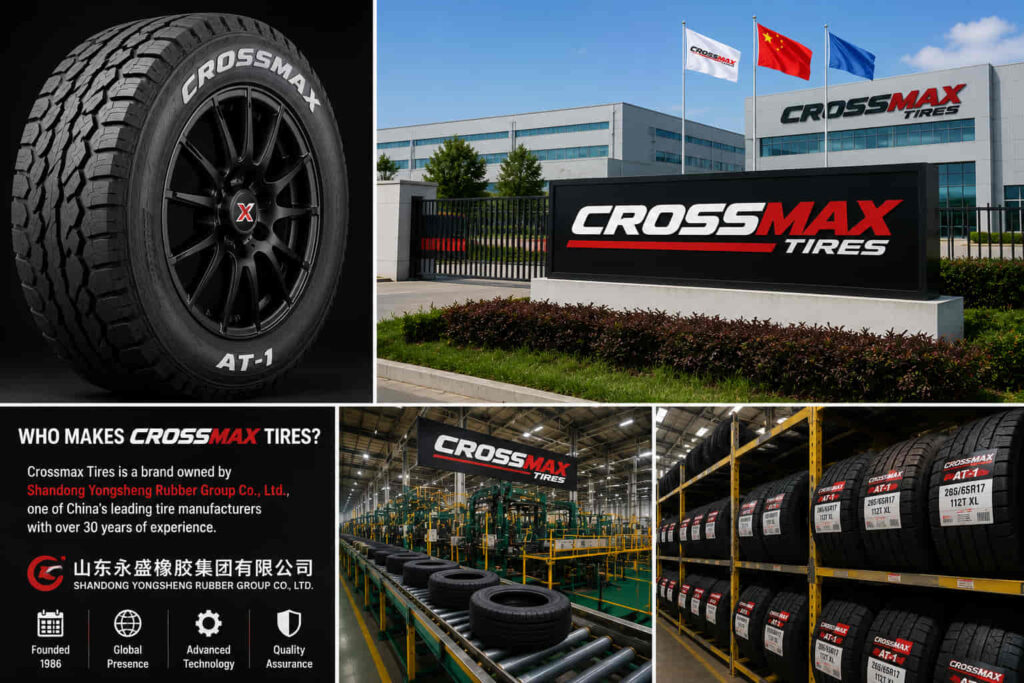
Crossmax Tires are produced as a value-focused tire brand designed for drivers looking for affordable replacement tires for passenger vehicles, SUVs, and crossover applications. The brand operates in the competitive budget tire segment, where manufacturers focus on providing practical performance, broad availability, and lower purchase costs.
Understanding who makes Crossmax Tires is important because the manufacturer behind a tire brand influences factors such as production standards, engineering processes, quality control, and the types of vehicles a tire is designed to support. Unlike globally recognized premium brands with decades of consumer recognition, smaller value-focused tire brands require additional research to understand their background and market position.
Crossmax is positioned around everyday driving needs rather than specialized high-performance applications. The brand focuses on providing replacement options for drivers who need dependable transportation solutions without paying premium tire prices.
The Crossmax product range is associated with common tire categories, including passenger tires, SUV tires, touring tires, and all-season applications. These products are designed for drivers who prioritize affordability, availability, and suitable performance for normal road conditions.
However, evaluating a tire brand requires more than looking at price alone. Factors such as manufacturer reputation, tire construction, intended application, maintenance, and driving conditions all influence real-world performance.
This guide explains who makes Crossmax Tires, the company behind the brand, manufacturing background, product categories, market position, and what drivers should know before choosing Crossmax tires.
What Is Crossmax Tires Known For?
Crossmax Tires is known as a value-focused tire brand that provides affordable replacement tires for drivers who need practical performance for everyday vehicles. The brand operates in a market segment where customers typically prioritize cost efficiency, availability, and basic driving reliability rather than advanced performance technology.
Crossmax focuses on common tire applications, including passenger vehicles, SUVs, and crossover vehicles. These categories represent a large portion of the replacement tire market because many drivers need dependable tires for commuting, highway travel, and normal road conditions.
The main appeal of Crossmax comes from its value positioning. Premium tire manufacturers often compete through advanced engineering, extensive testing programs, and specialized performance products, while value-oriented brands compete by offering functional tire solutions at more accessible prices.
For consumers, understanding this positioning is important because a budget-focused tire is designed around different expectations. A Crossmax tire may be suitable for drivers who need affordable transportation solutions, but it should be selected based on vehicle requirements, driving habits, and expected performance needs.
The brand’s product approach reflects a broader trend in the tire industry, where consumers have more options between expensive premium brands and lower-cost alternatives. Value tire brands like Crossmax target drivers who want a balance between purchase price and everyday usability.
For example, a driver replacing worn tires on a daily commuter vehicle may consider a Crossmax tire because the primary requirement is reliable transportation rather than maximum performance in extreme conditions.
Where Did Crossmax Tires Start?
Crossmax Tires developed as part of the growing global value tire market, where manufacturers expanded production to meet demand for affordable replacement tires. Unlike historic tire brands with more than a century of public recognition, Crossmax is primarily recognized through its role as a cost-focused tire option in modern replacement markets.
The growth of value tire brands has been influenced by changes in the global automotive industry. As vehicle ownership increased worldwide, demand grew for replacement tires that could provide acceptable performance while remaining affordable for everyday consumers.
Crossmax represents this market movement by focusing on practical tire applications rather than competing directly with premium manufacturers. The brand is positioned around accessibility, offering products designed for drivers who need replacement tires for common vehicles.
The origin and development of a tire brand are important factors when evaluating reliability because they provide context about its manufacturing background and market purpose. However, brand age alone does not determine tire performance. Product design, construction quality, testing standards, and proper application all affect the final driving experience.
For example, a touring tire designed for normal highway commuting should be evaluated differently from a tire intended for heavy-duty truck use or demanding off-road conditions.
Read more: Who Makes General Tires
Who Owns Crossmax Tires?
Crossmax Tires is owned and manufactured through the company structure responsible for developing and distributing the Crossmax tire brand in the replacement tire market. Understanding the ownership behind Crossmax is important because the manufacturer determines the brand’s production capability, quality standards, product development process, and global availability.
Unlike major tire brands such as Michelin, Goodyear, or Continental that have strong consumer recognition and publicly established corporate identities, Crossmax operates in the value tire segment where brand visibility is more limited. This means buyers often need to evaluate the manufacturer background, product specifications, and intended application before making a purchasing decision.
The company behind a tire brand influences important areas such as rubber compound development, tire construction methods, testing procedures, and manufacturing consistency. A tire produced within an established manufacturing system may have different quality expectations compared with products from unknown suppliers.
Crossmax’s market approach focuses on providing replacement tires that meet common driving requirements. The brand is designed for customers who prioritize affordability and practical performance rather than premium-level technology or specialized driving characteristics.
For example, a customer selecting Crossmax tires for a daily commuter vehicle may focus on tread design, size compatibility, load rating, and warranty information to determine whether the tire matches their needs.
Where Are Crossmax Tires Made?
Crossmax Tires are manufactured through production facilities associated with their supplying manufacturer, with production locations depending on the specific tire model, market requirements, and distribution channels. Like many value tire brands, Crossmax products are produced within global tire manufacturing networks that supply replacement tires to different regions.
The manufacturing location of a tire is only one factor when evaluating quality. Modern tire performance depends on several technical elements, including rubber compounds, internal construction, tread design, quality control processes, and compliance with regional safety standards.
Crossmax tires are developed for common replacement applications, meaning manufacturing priorities typically focus on achieving a balance between cost efficiency and acceptable everyday performance. Passenger tires require characteristics such as comfort, traction, and durability, while SUV and light truck tires require additional attention to load capacity and structural strength.
Drivers should evaluate a Crossmax tire based on its specifications rather than relying only on its country of manufacture. Tire size, speed rating, load index, recommended usage, and maintenance practices all influence long-term performance.
For example, a Crossmax SUV tire used for regular highway commuting has different requirements from a tire used for heavy loads, frequent towing, or demanding off-road conditions.
What Types of Tires Does Crossmax Manufacture?
Crossmax manufactures replacement tires designed primarily for passenger vehicles, SUVs, crossovers, and other everyday driving applications. The brand’s product categories reflect its focus on the value tire segment, where customers seek affordable options for common vehicle types.
Passenger tires represent an important part of the Crossmax lineup because they serve drivers who need reliable transportation for commuting and daily road use. These tires are generally designed around balanced characteristics such as traction, ride comfort, and reasonable tread durability.
Crossmax also produces SUV and crossover tires because these vehicle categories continue to represent a significant portion of the replacement tire market. SUV tires require stronger construction compared with standard passenger tires because these vehicles typically have higher weight and different handling requirements.
All-season and performance-oriented products are also part of the brand’s market focus. These tires are designed for drivers who need year-round usability and predictable performance under normal driving conditions.
The key consideration when choosing Crossmax is matching the tire category with the vehicle and driving environment. A properly selected tire can provide better results than simply choosing based on brand price.
For example, a compact SUV owner who mainly drives on paved roads may find a Crossmax all-season tire suitable, while a driver using a truck for towing or heavy-duty work may need a tire specifically engineered for higher load demands.
What Is Crossmax Tires Known For?
Crossmax Tires is known for offering affordable replacement tire options for drivers who prioritize cost efficiency and practical everyday performance. The brand’s main appeal comes from providing accessible tire solutions for common vehicles without targeting the premium performance segment.
Crossmax is positioned within the value tire market, where customers often compare brands based on purchase price, availability, basic performance characteristics, and suitability for their driving conditions. This market segment serves drivers who need dependable tires for commuting, family vehicles, and regular road use.
The brand’s focus on affordability does not mean that every Crossmax tire is suitable for every vehicle or driving situation. Tire selection remains important because different vehicles require different levels of traction, load capacity, durability, and handling performance.
For passenger vehicles, Crossmax products are generally designed around everyday requirements such as comfortable driving, predictable traction, and reasonable tread performance. For SUVs and crossovers, tire construction and load capability become more important because these vehicles are heavier and place different demands on the tire structure.
Crossmax’s position makes it attractive to drivers who need a practical replacement option rather than specialized performance. However, customers should compare individual tire models, specifications, and warranty information instead of judging only by brand price.
For example, a commuter who drives mainly on city streets and highways may find a Crossmax tire suitable, while a driver requiring extreme weather performance, frequent towing, or off-road capability may need a more specialized tire category.
How Does Crossmax Compare With Other Budget Tire Brands?
Crossmax competes with other budget tire brands by focusing on affordability, availability, and practical replacement solutions for everyday vehicles. Brands in this segment often target similar customers who want lower-cost alternatives to premium tire manufacturers.
Other value-oriented tire brands such as Sailun, Westlake, Linglong, Triangle, and Milestar also compete in this market. These manufacturers generally attract customers who want functional tire performance while keeping replacement costs lower.
The differences between budget tire brands are usually determined by specific tire models rather than brand names alone. Factors such as tread design, rubber compounds, load ratings, warranty coverage, and intended applications influence how a tire performs.
Compared with premium brands, Crossmax and similar value brands typically compete through price advantages rather than advanced technologies, motorsport experience, or specialized engineering programs. This makes them suitable for certain drivers but less ideal for customers seeking maximum performance.
The correct comparison depends on the vehicle and driving purpose. A passenger tire for daily commuting should be evaluated differently from an SUV tire used for heavier loads or changing road conditions.
For example, a driver comparing Crossmax with another budget tire brand for a compact sedan may focus on cost and expected mileage, while an SUV owner may prioritize traction, durability, and load capacity.
Is Crossmax a Reliable Tire Brand?
Crossmax can be a suitable tire brand for drivers who choose the correct tire model for their vehicle and have realistic expectations about value-focused products. The brand’s main advantage is providing affordable replacement options for everyday transportation needs.
Tire reliability depends on several factors beyond the brand name. Proper inflation, regular maintenance, correct tire sizing, driving habits, and road conditions all influence how a tire performs throughout its service life.
Crossmax is most suitable for drivers who prioritize affordability and basic reliability for normal driving situations. It can be a practical choice for commuters, older vehicles, and drivers who need replacement tires without investing in premium-priced products.
However, drivers with specialized requirements should carefully evaluate whether a budget tire meets their needs. Vehicles used for high-performance driving, heavy towing, extreme weather conditions, or demanding off-road environments may require tires specifically designed for those applications.
The important factor is matching the tire with the intended use. A properly selected Crossmax tire can provide reasonable value when used within its designed conditions.
For example, a driver replacing worn tires on a daily-use crossover may consider Crossmax because it offers an affordable solution for normal road travel, while a vehicle owner who frequently drives in severe winter conditions may need a tire designed specifically for those environments.