Ford has addressed cam phaser problems in certain vehicles through Customer Satisfaction Programs (CSPs) and Technical Service Bulletins (TSBs), but these actions are not the same as a federal safety recall. The Ford cam phasers recall issue primarily concerns the 3.5L EcoBoost V6 engine in select 2017–2020 Ford F-150, 2018–2020 Ford Expedition, and 2018–2020 Lincoln Navigator vehicles. Owners must verify their Vehicle Identification Number (VIN) to determine whether a specific recall or service program applies.
Ford introduced Customer Satisfaction Program 21B10 to update the Powertrain Control Module (PCM) software and help prevent cam phaser noise. Program 21N03 provided conditional coverage for cam phaser replacement when eligible vehicles developed excessive rattling during startup or knocking at idle. However, 21N03 expired on January 1, 2023, and its previous repair coverage does not automatically apply to current repairs.
Cam phaser problems can produce rattling noises during cold starts and may require mechanical replacement when the components become worn. Repair costs depend on the vehicle model, engine configuration, labor rates, and available warranty coverage.
This guide explains which Ford models and years were included in cam phaser service programs, how to check recall status by VIN, what repair coverage Ford previously offered, and what owners should know about symptoms, replacement procedures, and repair costs.
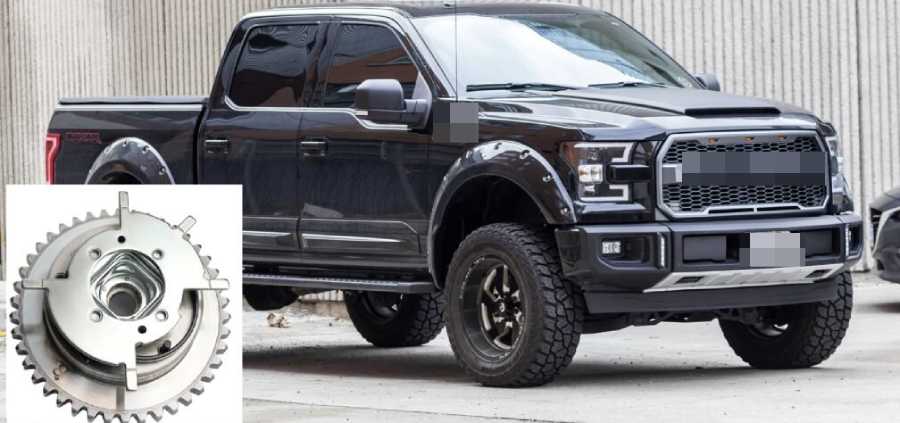
Is There a Ford Cam Phaser Recall?
Ford addressed cam phaser problems through Customer Satisfaction Programs 21B10 and 21N03 rather than a nationwide safety recall specifically covering the cam phaser noise condition. These programs targeted certain vehicles equipped with the 3.5L EcoBoost engine that experienced excessive rattling during startup or knocking at idle. However, owners should check their VIN for any separate open safety recalls because a vehicle’s recall status depends on its specific identification number.
Ford introduced Customer Satisfaction Program 21B10 in 2021 to reprogram the Powertrain Control Module (PCM). The software update modified engine operating strategies to help prevent cam phaser noise from developing. It was intended as a preventive measure rather than a mechanical repair for cam phasers that were already producing excessive noise.
Customer Satisfaction Program 21N03 addressed vehicles that developed cam phaser noise after meeting the program’s eligibility requirements. It provided a one-time cam phaser replacement with financial assistance determined by vehicle mileage and other program conditions. The program required qualifying owners to have completed the 21B10 software update within the specified period. Program 21N03 expired on January 1, 2023, meaning its historical coverage terms should not be interpreted as an active repair offer.
A safety recall, Customer Satisfaction Program, and Technical Service Bulletin serve different purposes. A safety recall addresses a safety-related defect or regulatory noncompliance and provides remedies for affected vehicles. A Customer Satisfaction Program offers assistance under manufacturer-defined conditions, while a Technical Service Bulletin provides dealerships with diagnostic or repair instructions. Owners can check open safety recalls through the National Highway Traffic Safety Administration (NHTSA) and contact a Ford dealership to review their vehicle’s service program history.
Which Ford Models and Years Were Covered by the Cam Phaser Program?
Ford Customer Satisfaction Program 21N03 covered certain 2017–2020 Ford F-150, 2018–2020 Ford Expedition, and 2018–2020 Lincoln Navigator vehicles equipped with the 3.5L EcoBoost V6 engine. These model-year ranges identify vehicles included in the program documentation, but they do not mean every vehicle produced during those years qualified for cam phaser replacement.
| Vehicle Model | Model Years | Engine |
|---|---|---|
| Ford F-150 | 2017–2020 | 3.5L EcoBoost V6 |
| Ford Expedition | 2018–2020 | 3.5L EcoBoost V6 |
| Lincoln Navigator | 2018–2020 | 3.5L EcoBoost V6 |
The Ford F-150 was one of the primary vehicles addressed by the cam phaser service programs. Certain trucks equipped with the second-generation 3.5L EcoBoost engine experienced rattling shortly after engine startup. The noise was associated with the variable camshaft timing system, which adjusts camshaft position to control engine valve timing. Ford’s service documentation established procedures for diagnosing the condition and replacing affected cam phasers when the vehicle met the applicable requirements.
The 2018–2020 Ford Expedition and Lincoln Navigator were also included because they used related 3.5L EcoBoost engine configurations. These SUVs could exhibit similar cam phaser noise during startup or at idle. However, their inclusion in the program did not establish identical repair coverage for every owner. Eligibility depended on factors such as vehicle identification, previous service actions, mileage, and the applicable program terms.
A model year alone cannot confirm cam phaser repair eligibility. Two Ford F-150 trucks manufactured in the same year may have different engine configurations, service histories, and warranty conditions. For example, a 2019 F-150 equipped with the 3.5L EcoBoost engine may fall within the documented vehicle population, while a truck with a different engine does not automatically qualify under the same program.
Owners should use their 17-character Vehicle Identification Number (VIN) to verify the vehicle’s engine configuration, outstanding safety recalls, and completed manufacturer service actions. An authorized Ford or Lincoln dealership can review the relevant service records and determine whether any current warranty coverage or other manufacturer assistance applies.
What Did Ford’s Cam Phaser Programs 21B10 and 21N03 Cover?
Ford Customer Satisfaction Programs 21B10 and 21N03 addressed cam phaser concerns through two different approaches: preventive software reprogramming and conditional mechanical replacement. Program 21B10 focused on reducing the likelihood of cam phaser noise, while 21N03 provided replacement assistance for qualifying vehicles that developed the specified noise condition. Both programs had eligibility requirements and deadlines, and neither was a federal safety recall.
What Was Included in Ford Program 21B10?
Ford Program 21B10 provided a Powertrain Control Module (PCM) software update intended to help prevent cam phaser noise during engine startup. The update changed engine control strategies associated with the variable camshaft timing system in eligible vehicles equipped with the 3.5L EcoBoost engine.
Cam phasers adjust camshaft timing through a mechanism controlled by engine oil pressure and the PCM. During engine startup, oil pressure must build sufficiently for the timing system to operate as intended. The 21B10 calibration was designed to reduce conditions associated with cam phaser noise, but it did not replace the mechanical components or repair existing physical wear.
The program was intended for eligible vehicles that had not already developed the specified cam phaser noise. Owners whose vehicles were already experiencing excessive rattling required diagnosis rather than assuming a software update would resolve the condition. Completing 21B10 by the applicable deadline was also an important eligibility condition for the subsequent 21N03 replacement program.
Ford later introduced Program 21N08 to address engine shudder that could occur after the 21B10 update. This separate program involved restoring an earlier PCM calibration in qualifying vehicles. It did not provide cam phaser replacement.
What Was Included in Ford Program 21N03?
Ford Program 21N03 provided a one-time cam phaser replacement for qualifying vehicles that developed excessive startup rattling or knocking at idle. Unlike 21B10, which involved software reprogramming, 21N03 addressed the mechanical cam phaser components when the specified noise condition was confirmed.
The program applied to eligible vehicles within the documented model-year ranges and required compliance with Ford’s service program conditions. For example, qualifying vehicles generally needed to have received the 21B10 PCM update before the specified cutoff date. Ford also used mileage-based reimbursement levels to determine how much of the replacement cost it would cover.
The historical coverage structure provided full payment for qualifying Ford vehicles below 70,000 miles, with reduced assistance at higher mileage levels. Lincoln vehicles had separate coverage provisions. Owners were required to meet the applicable eligibility conditions, and the repair was limited to one qualifying replacement under the program.
Program 21N03 expired on January 1, 2023. Owners seeking cam phaser repairs today should not assume that the original program will pay for replacement. Any remaining factory warranty, extended service contract, or discretionary manufacturer assistance must be evaluated separately.
How Can You Check a Ford Cam Phaser Recall by VIN?
You can check a Ford vehicle for open safety recalls by entering its 17-character Vehicle Identification Number (VIN) into the NHTSA recall database or Ford’s official recall lookup. However, historical cam phaser Customer Satisfaction Programs require a separate review of manufacturer service records because they are not necessarily listed as safety recalls.
How Do You Check Ford Recalls on the NHTSA Website?
To check Ford safety recalls through NHTSA, follow these four steps:
- Locate the VIN. Find the 17-character number on the driver’s side dashboard near the windshield, the driver’s door jamb label, or the vehicle registration documents.
- Open the official recall database. Visit NHTSA’s recall lookup.
- Enter the VIN. Submit the vehicle identification number to search for applicable open safety recalls.
- Review the results. Check the recall description, affected components, and available manufacturer remedy.
The NHTSA database identifies applicable unrepaired safety recalls reported to the agency. It does not serve as a complete record of every Technical Service Bulletin, Customer Satisfaction Program, or previously completed dealership repair.
For example, a 2018 Ford F-150 may show no open safety recalls in the NHTSA database while still having a history of cam phaser repairs under Ford Program 21N03. A result showing no open recalls therefore does not establish that the vehicle has never experienced cam phaser problems.
How Do You Verify Cam Phaser Service Program Eligibility With Ford?
An authorized Ford or Lincoln dealership can verify cam phaser service program history using the vehicle’s VIN and Ford’s manufacturer service records. This is the appropriate method for determining whether programs such as 21B10 and 21N03 were assigned to a vehicle or previously completed.
Contact the dealership’s service department and request a VIN-specific review of the vehicle’s Field Service Actions (FSAs) and applicable service history through Ford’s OASIS system. Ask whether Program 21B10 was completed, whether Program 21N03 was applicable, and whether any cam phaser replacement was previously recorded.
If the vehicle currently produces rattling during startup or knocking at idle, describe the symptoms and request a diagnostic inspection. A service technician can determine whether the noise matches a documented cam phaser condition or originates from another engine component.
Owners should also request confirmation of any remaining factory warranty, Ford Protect coverage, or manufacturer goodwill assistance. Because the original 21N03 program has expired, historical program eligibility does not guarantee a free repair today. Obtain written confirmation of repair coverage and estimated out-of-pocket costs before authorizing replacement.
Will Ford Pay for Cam Phaser Replacement?
Ford may pay for cam phaser replacement if the vehicle qualifies under an active warranty, an extended service contract, or approved manufacturer assistance. However, Customer Satisfaction Program 21N03, which previously covered cam phaser replacement for eligible vehicles, expired on January 1, 2023. Owners can no longer rely on its original reimbursement terms to obtain a free repair.
Under Program 21N03, Ford provided mileage-based financial assistance for qualifying vehicles with confirmed cam phaser noise. The amount Ford paid depended on the vehicle’s mileage when the repair was performed, provided the vehicle met the program’s other requirements.
The following table summarizes the historical reimbursement structure for eligible Ford vehicles.
| Vehicle Mileage | Ford Coverage | Owner Responsibility |
|---|---|---|
| 0–69,999 miles | 100% | 0% |
| 70,000–79,999 miles | 66% | 34% |
| 80,000–89,999 miles | 33% | 67% |
| 90,000 miles or more | 0% | 100% |
These percentages applied to qualifying repairs under the historical program and should not be treated as current warranty benefits. Lincoln vehicles had separate coverage provisions, and eligibility also depended on compliance with Ford’s program requirements.
For example, a qualifying Ford F-150 with 75,000 miles would historically have received 66% coverage under the applicable reimbursement tier. If the approved repair cost had been $3,000, Ford’s contribution would have been $1,980, leaving the owner responsible for $1,020. This example illustrates the former reimbursement calculation rather than a currently available offer.
Owners who need cam phaser replacement after the program’s expiration should review their remaining factory warranty, Ford Protect extended service contract, or other applicable coverage. Ford dealerships can also submit requests for discretionary goodwill assistance, although approval depends on individual circumstances and is not guaranteed.
The most reliable way to determine current repair coverage is to request a VIN-specific warranty review from an authorized Ford dealership. Owners should obtain written confirmation of covered parts, labor charges, deductibles, and any remaining out-of-pocket expenses before authorizing the repair.
How Does Ford Repair Faulty Cam Phasers?
Ford repairs confirmed mechanical cam phaser failures by replacing the affected camshaft phasers and completing the necessary engine timing procedures. The repair involves accessing the timing components, removing the defective phasers, installing replacement parts, and verifying correct engine operation. A PCM software update alone cannot restore cam phasers that have already developed mechanical damage.
The repair begins with a diagnostic inspection to confirm the source of the engine noise. Technicians evaluate symptoms such as rattling immediately after startup or knocking at idle and compare them with Ford’s published service procedures. Because timing chain components, tensioners, and other engine parts can produce similar sounds, identifying the source is necessary before replacing cam phasers.
Once cam phaser failure is confirmed, the technician removes the components required to access the engine’s timing system. On the 3.5L EcoBoost V6, this involves substantial disassembly around the front of the engine. The technician must maintain proper crankshaft and camshaft alignment while removing and installing the phasers to prevent incorrect valve timing.
The repair may also involve inspecting timing chains, guides, tensioners, seals, and related components for wear or damage. Replacement of these additional parts depends on their condition and the applicable Ford repair procedure. After installation, the technician reassembles the engine, verifies timing alignment, checks for oil leaks, and confirms that the original noise has been resolved.
Cam phaser replacement is labor-intensive because the components are integrated into the engine’s timing system. The final repair cost depends on the vehicle configuration, number of phasers replaced, additional parts required, and local labor rates. Owners should request an itemized estimate that identifies the replacement components and confirms whether the repair includes updated parts specified by Ford.
What Are the Symptoms of Ford Cam Phaser Failure?
The two primary symptoms of Ford cam phaser problems documented in the relevant service programs are excessive rattling during engine startup and knocking at idle when the engine is at operating temperature. These symptoms have been reported in certain Ford F-150, Expedition, and Lincoln Navigator vehicles equipped with the 3.5L EcoBoost V6 engine. Additional symptoms, including rough idling, reduced engine performance, and diagnostic trouble codes, may occur when camshaft timing is not operating correctly, but they do not independently confirm cam phaser failure.
Cold-start rattling is a characteristic complaint associated with Ford’s cam phaser service programs. The noise typically appears immediately after starting an engine that has been shut off for an extended period. It may sound like a metallic rattle coming from the front of the engine and disappear within several seconds as engine oil pressure increases. Cam phasers depend on controlled oil pressure and internal locking mechanisms to maintain the intended camshaft position during startup. When these mechanisms do not function correctly, unwanted movement can produce a brief rattling sound.
Knocking or rattling at idle is another symptom identified in Ford’s service documentation. Unlike startup noise, this condition occurs while the engine is running at idle and may be noticeable after the engine reaches operating temperature. The sound can resemble noise from timing chains, tensioners, or other moving engine components. A technician must identify the source before determining whether cam phaser replacement is necessary.
Faults affecting variable camshaft timing can also contribute to unstable engine operation. Incorrect camshaft positioning may disrupt valve timing, which influences combustion efficiency, engine response, and idle stability. In some cases, the Powertrain Control Module may detect a camshaft timing performance problem and illuminate the check engine light. Diagnostic trouble codes such as P0011 or P0021 can indicate camshaft timing abnormalities, although these codes can also result from oil control or other timing system faults.
A startup rattle alone is not sufficient to diagnose a defective cam phaser. Owners should record when the noise occurs, how long it lasts, and whether it changes with engine temperature. Providing these details to a qualified technician helps distinguish cam phaser problems from other mechanical conditions and supports an accurate diagnosis.
What Causes Ford Cam Phasers to Fail?
Ford cam phaser problems can develop when internal phaser components fail to maintain or control the intended camshaft position, particularly during engine startup. Mechanical wear, locking mechanism problems, and irregular oil pressure are relevant factors in cam phaser operation. However, not every Ford cam phaser failure has the same confirmed underlying cause, and identifying the exact defect requires inspection of the affected components.
Cam phasers are part of Ford’s Variable Camshaft Timing (VCT) system, which adjusts the position of the camshafts relative to the crankshaft. The Powertrain Control Module commands changes in valve timing according to engine speed, load, and operating conditions. Engine oil pressure acts on internal chambers within the phasers to advance or retard camshaft position. This adjustment helps the engine balance torque, fuel efficiency, and emissions across different operating conditions.
During engine shutdown, oil pressure decreases and the cam phaser must remain in its designated position for the next startup. Internal locking components help control unwanted movement before sufficient oil pressure becomes available. If a locking mechanism or another internal component no longer maintains the intended position, the phaser may move unexpectedly during startup and generate a metallic rattle. The noise can diminish once oil pressure builds and stabilizes the mechanism.
Engine oil condition also affects the operation of the VCT system. Cam phasers rely on properly regulated oil flow, while VCT solenoids control oil delivery to the timing mechanisms. Low oil pressure, incorrect oil viscosity, contaminated oil, or restricted oil passages can interfere with camshaft timing control. These conditions can produce symptoms similar to mechanical cam phaser failure, making oil system inspection an important part of diagnosis.
Mechanical deterioration within the timing system can further complicate the diagnosis. Timing chain tensioners, guides, and related components operate alongside the cam phasers and may produce overlapping noise symptoms. For example, a worn timing chain tensioner can create rattling during startup even when the cam phaser is not the primary source of the sound. Replacing cam phasers without confirming the defective component may therefore leave the original problem unresolved.
Proper engine oil maintenance supports VCT operation but does not guarantee prevention of cam phaser failure. Owners should use the oil specification recommended for their engine, maintain the correct oil level, and follow the applicable maintenance schedule. When persistent startup rattling or abnormal camshaft timing operation develops, a professional diagnosis is necessary to determine whether the problem involves the cam phasers, oil control system, or other timing components.
Read more: AFM DOD Delete: Benefits, Risks, Cost & How It Works
How Much Does Ford Cam Phaser Replacement Cost?
Ford cam phaser replacement can cost approximately $2,000–$4,500 for a major repair involving multiple phasers, depending on the vehicle, labor rates, and replacement parts. This is an indicative budgeting range rather than a verified national average or a fixed Ford repair price. Owners should obtain a vehicle-specific estimate before authorizing the work.
Labor is a major expense because the cam phasers are located within the engine’s timing system. On a 3.5L EcoBoost V6, technicians must remove components to access the front timing assembly, maintain correct crankshaft and camshaft alignment, and reinstall the timing components according to Ford’s service procedures. The work requires specialized knowledge and precise timing verification, increasing labor costs compared with repairs involving externally accessible engine components.
Replacement parts also affect the total price. A repair may involve intake and exhaust camshaft phasers, timing cover seals, gaskets, engine oil, and other components required by the applicable procedure. Timing chains, guides, or tensioners may need replacement if inspection identifies additional wear or damage. For example, replacing multiple phasers and worn timing components costs more than replacing a single defective component because it increases both parts expenses and repair scope.
Ford dealerships and independent automotive repair shops may provide different estimates for the same vehicle. Dealerships use manufacturer service procedures and can review Ford warranty eligibility, while independent shops may offer different labor rates. However, a lower estimate is not necessarily equivalent if it excludes required seals, diagnostic work, or related timing components.
Owners should request an itemized estimate showing the number of phasers being replaced, parts specifications, labor charges, additional timing system repairs, and warranty terms. Comparing estimates with the same repair scope provides a more accurate assessment of the expected cost. Any applicable warranty or approved manufacturer assistance should be confirmed before the repair begins.
Can You Drive a Ford With a Bad Cam Phaser?
A Ford with suspected cam phaser failure should be inspected before continued regular driving, although a brief startup rattle does not automatically mean the engine is unsafe to operate. The appropriate response depends on the severity of the symptoms, whether camshaft timing is functioning correctly, and whether other engine problems are present.
Ford’s historical cam phaser service programs addressed specific noise conditions, including rattling during startup and knocking at idle. A vehicle exhibiting only the documented noise condition may behave differently from one experiencing severe timing faults, misfires, or loss of engine power. The presence of cam phaser noise alone does not establish the extent of mechanical damage or guarantee that continued driving is safe.
Cam phasers regulate camshaft position as part of the Variable Camshaft Timing system. When a phaser cannot maintain the commanded position, valve timing may deviate from the engine’s intended operating parameters. Depending on the failure, this can affect idle quality, engine performance, and diagnostic monitoring. Severe mechanical timing problems may create a risk of additional engine damage, particularly when related timing components are compromised.
Owners should stop driving when the vehicle develops severe or persistent metallic knocking, substantial power loss, an oil pressure warning, or other signs of serious engine malfunction. A flashing check engine light can indicate an active misfire capable of damaging the catalytic converter and also requires prompt attention. In these situations, arranging professional inspection or towing is safer than continuing to operate the vehicle.
For vehicles that produce a brief startup rattle without other noticeable symptoms, owners should schedule a diagnostic inspection rather than waiting for the noise to worsen. Recording the sound during a cold start and documenting its duration can help technicians reproduce the condition. Checking the engine oil level and reviewing maintenance records may also provide useful diagnostic information, although neither action replaces mechanical inspection.
Repair decisions should be based on a confirmed diagnosis rather than engine noise alone. A qualified technician can determine whether the cam phasers require replacement, whether another timing component is responsible, and whether the vehicle can be operated safely before repairs are completed.