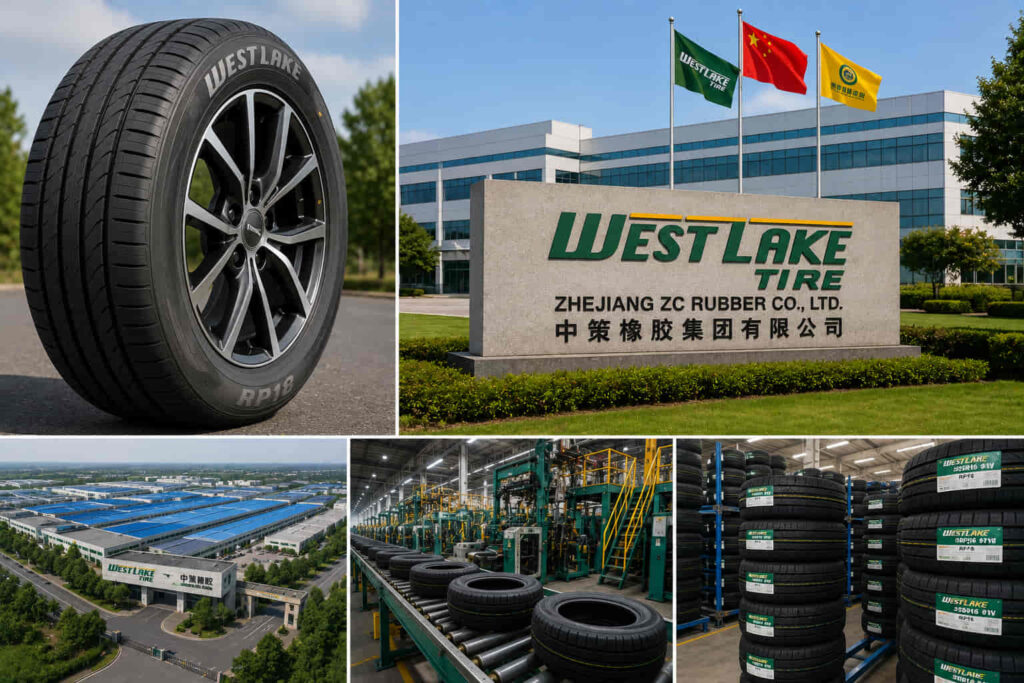
Westlake Tires are made by Zhongce Rubber Group (ZC Rubber), a Chinese tire manufacturer that produces replacement tires for passenger vehicles, SUVs, trailers, commercial vehicles, and industrial applications. The Westlake brand is part of ZC Rubber’s global tire portfolio and focuses on providing affordable tire solutions for drivers and businesses across different markets.
Understanding who makes Westlake Tires helps consumers evaluate the brand beyond its price point. A tire manufacturer’s background influences important factors such as production capability, product development, quality standards, and the types of vehicles and applications a brand can support.
Westlake operates in the value tire segment, where affordability and accessibility are major factors. Unlike premium tire manufacturers that compete through advanced technology, extensive research programs, and high-performance applications, Westlake focuses on delivering practical tire options for everyday driving and commercial needs.
The brand offers products for multiple categories, including passenger cars, SUVs, light trucks, trailers, and commercial vehicles. This broad product range allows Westlake to serve both individual drivers and businesses that require cost-effective tire solutions.
However, evaluating a value tire brand requires understanding its intended market position. A budget-focused tire may provide suitable performance when matched with the correct vehicle, driving conditions, and user expectations.
This guide explains who makes Westlake Tires, the company behind the brand, manufacturing background, product categories, applications, market position, and whether Westlake is a reliable choice for different types of drivers.
What Is ZC Rubber Known For?
Zhongce Rubber Group (ZC Rubber) is known as one of China’s largest tire manufacturers and the company behind the Westlake Tires brand. The company produces a wide range of tire products for passenger vehicles, commercial transportation, trailers, agricultural equipment, and industrial applications.
ZC Rubber’s main strength is its large-scale manufacturing capability and broad product coverage. Instead of focusing only on one tire category, the company develops products for different markets, from everyday replacement tires to specialized commercial and industrial applications.
The company operates multiple tire brands, with Westlake positioned as a value-focused brand designed for customers who need practical performance at a competitive price. This positioning allows ZC Rubber to serve drivers and businesses that prioritize affordability, availability, and basic reliability.
Westlake’s connection with ZC Rubber is an important factor when evaluating the brand. A tire manufacturer with large production capacity can support different tire sizes, vehicle categories, and global distribution requirements. However, manufacturing scale alone does not determine tire performance because factors such as tire design, materials, testing standards, and intended application also influence real-world results.
ZC Rubber’s product strategy reflects the changing global tire market, where many consumers look for alternatives between premium brands and low-cost unknown manufacturers. Westlake fills this middle space by offering accessible tire options for common driving and commercial needs.
For example, a fleet operator managing delivery trailers may consider Westlake because the brand provides commercial tire solutions at a lower acquisition cost compared with many premium alternatives.
Where Did Westlake Tires Start?
Westlake Tires originated in China as a brand developed by ZC Rubber to serve the growing global demand for affordable replacement tires. The brand’s development is connected with China’s expansion as a major manufacturing center for automotive products and tire production.
China’s automotive industry growth created opportunities for domestic tire manufacturers to expand beyond local markets. Companies such as ZC Rubber invested in production technology, manufacturing facilities, and international distribution networks to compete in global tire markets.
Westlake developed its presence by focusing on practical tire applications rather than competing directly with premium brands. The brand became recognized among customers looking for cost-effective options for passenger vehicles, trucks, trailers, and commercial equipment.
The growth of Westlake reflects a broader trend in the tire industry. Global consumers now have access to a wider range of tire brands, allowing value-oriented manufacturers to compete through pricing, product availability, and application coverage.
However, the origin of a tire brand should be evaluated together with other factors. Manufacturing location, quality control processes, product specifications, and correct tire selection all contribute to the final driving experience.
For example, a Westlake tire designed for a trailer application should be evaluated based on load capacity, durability, and towing requirements rather than compared directly with a passenger tire designed for daily commuting.
Read more: Radial Ply vs Bias Ply Tires
Who Owns Westlake Tires?
Westlake Tires is owned by Zhongce Rubber Group (ZC Rubber), the Chinese tire manufacturer responsible for developing, producing, and distributing Westlake products in global markets. As part of ZC Rubber’s brand portfolio, Westlake benefits from the company’s manufacturing capacity, research resources, and international distribution network.
ZC Rubber manages the development of Westlake tires across different vehicle categories, including passenger vehicles, commercial transportation, trailers, and industrial applications. This ownership structure allows Westlake to serve a wide range of customers while maintaining its position as a value-focused tire brand.
The relationship between Westlake and ZC Rubber is important because the manufacturer behind a tire brand influences production capability and market reach. Large-scale tire manufacturers can support broader product availability, different tire sizes, and specialized applications compared with smaller producers.
However, ownership alone does not determine whether a tire is suitable for a specific vehicle. Tire quality depends on several factors, including construction design, materials, manufacturing processes, testing standards, and whether the tire matches the intended application.
Westlake’s position within ZC Rubber’s portfolio reflects a strategy focused on affordability and accessibility. The brand is designed for customers who need practical tire solutions without paying premium-brand prices.
For example, a business operating commercial trailers may consider Westlake because the brand provides specialized tire options while helping control operating costs.
Where Are Westlake Tires Made?
Westlake Tires are manufactured through ZC Rubber’s production network, with the brand originating from China and serving international markets through global distribution channels. The company uses large-scale manufacturing facilities to produce tires for different applications, including passenger vehicles, trucks, trailers, and industrial equipment.
China plays an important role in Westlake’s manufacturing background because ZC Rubber developed its production capabilities within the country’s expanding automotive and tire manufacturing industry. These facilities allow the company to produce a wide variety of tire products at competitive costs.
The manufacturing location of a Westlake tire can depend on the specific product line, market requirements, and production planning. However, the country where a tire is produced is only one factor in evaluating performance. Tire design, engineering standards, quality control systems, and intended use are equally important.
Westlake applies different construction approaches depending on the application. Passenger tires require a balance of comfort, traction, and efficiency, while commercial and trailer tires require stronger load capability and durability.
For example, a Westlake trailer tire used for towing applications must be evaluated based on load rating, inflation requirements, and operating conditions rather than simply its manufacturing origin.
What Types of Tires Does Westlake Manufacture?
Westlake manufactures tires for passenger vehicles, SUVs, light trucks, trailers, commercial vehicles, and specialized applications. The brand’s broad product range allows it to serve both individual consumers and businesses that need affordable tire solutions.
Passenger tire products such as the Westlake RP18 are designed for everyday driving applications. These tires focus on providing basic traction, comfort, and reliable road performance for common vehicles such as sedans and compact cars.
Westlake also produces SUV and light truck tires, including products designed for drivers who need additional load capability and durability. These tires support vehicles with higher weight requirements and are commonly used for family SUVs, pickups, and utility vehicles.
Commercial and trailer tires represent another important part of Westlake’s product portfolio. These products are designed around different demands, including carrying heavier loads, maintaining stability, and supporting frequent transportation use.
The brand also produces tires for agricultural and industrial applications, demonstrating the broader capabilities of ZC Rubber’s manufacturing operations.
Westlake’s wide product coverage shows that the brand is not limited to one vehicle category. Instead, it focuses on providing practical tire options across multiple markets where cost efficiency and availability are important considerations.
For example, a passenger vehicle owner may choose Westlake for affordable replacement tires, while a commercial operator may select Westlake products based on load requirements and operating costs.
What Is Westlake Tires Known For?
Westlake Tires is known for providing affordable tire solutions with broad application coverage across passenger vehicles, SUVs, trailers, commercial vehicles, and industrial equipment. The brand’s primary advantage is its ability to offer practical tire products at a lower price point compared with many premium manufacturers.
Westlake competes in the value tire segment, where customers often prioritize purchase cost, availability, and basic performance requirements. This market position makes the brand attractive to drivers who need replacement tires for daily transportation, older vehicles, work vehicles, or commercial applications where controlling operating expenses is important.
One of Westlake’s strengths is product variety. While some budget tire brands focus on only passenger vehicles, Westlake provides options for different categories, including trailer tires and commercial tires. This allows the brand to serve both individual consumers and businesses with different transportation needs.
However, Westlake’s positioning also defines its limitations. The brand does not primarily compete with premium manufacturers that invest heavily in advanced tire technology, extensive testing programs, and specialized performance development. Instead, Westlake focuses on delivering functional performance for drivers with realistic expectations.
The value of a Westlake tire depends on selecting the correct product for the intended application. A passenger tire used for normal commuting has different requirements compared with a commercial tire carrying heavy loads or a trailer tire used for long-distance towing.
For example, a driver replacing tires on an older sedan may prioritize affordability and availability, while a fleet operator may evaluate Westlake based on load capacity, durability, and operating cost.
How Does Westlake Compare With Other Budget Tire Brands?
Westlake competes with other budget tire brands such as Sailun, Linglong, Triangle, and Milestar by focusing on affordability, product availability, and a wide range of applications. These brands operate in a similar market segment where customers compare price, specifications, warranty coverage, and expected performance.
Compared with other value-focused manufacturers, Westlake’s advantage is its connection with ZC Rubber, a large-scale tire producer with experience across passenger, commercial, and industrial categories. This allows Westlake to offer products for more vehicle types than many smaller budget brands.
Sailun, Linglong, and Triangle also compete in the global value tire market. Each brand has developed international distribution networks and offers products designed for drivers seeking lower-cost alternatives to premium tires.
The differences between these brands often depend on the specific tire model rather than the brand name alone. A Westlake passenger tire, for example, should be compared with similar passenger tires from other manufacturers based on tread design, load rating, performance characteristics, and intended use.
Budget tire comparisons should also consider the application. A tire used for daily commuting has different requirements from one used for commercial hauling or trailer towing.
For example, a consumer comparing Westlake with another budget brand for an SUV may focus on comfort and price, while a business selecting commercial tires may place greater importance on durability, load capability, and replacement costs.
Is Westlake a Reliable Tire Brand?
Westlake can be a reliable tire brand for drivers who choose products that match their vehicle needs and understand the expectations of a value-focused tire. The brand benefits from ZC Rubber’s manufacturing experience and offers a wide range of products for different automotive applications.
Reliability in tires depends on multiple factors beyond the manufacturer name. Proper tire selection, correct inflation, regular maintenance, driving habits, and operating conditions all influence how a tire performs over time.
Westlake is generally most suitable for drivers who prioritize affordability and practical performance. Commuters, trailer owners, and commercial operators looking for cost-effective solutions may find value in the brand when the selected tire matches their requirements.
However, drivers who require maximum performance, premium comfort, extreme weather capability, or the longest possible tread life may prefer higher-tier tire brands with more advanced engineering investments.
The key factor is understanding the role of Westlake within the tire market. It is designed as a value-oriented option rather than a direct competitor to premium brands such as Michelin, Continental, or Bridgestone.
For example, a utility trailer owner who needs affordable replacement tires with suitable load ratings may find Westlake a practical choice, while a performance vehicle owner seeking maximum handling capability may need a specialized premium tire.