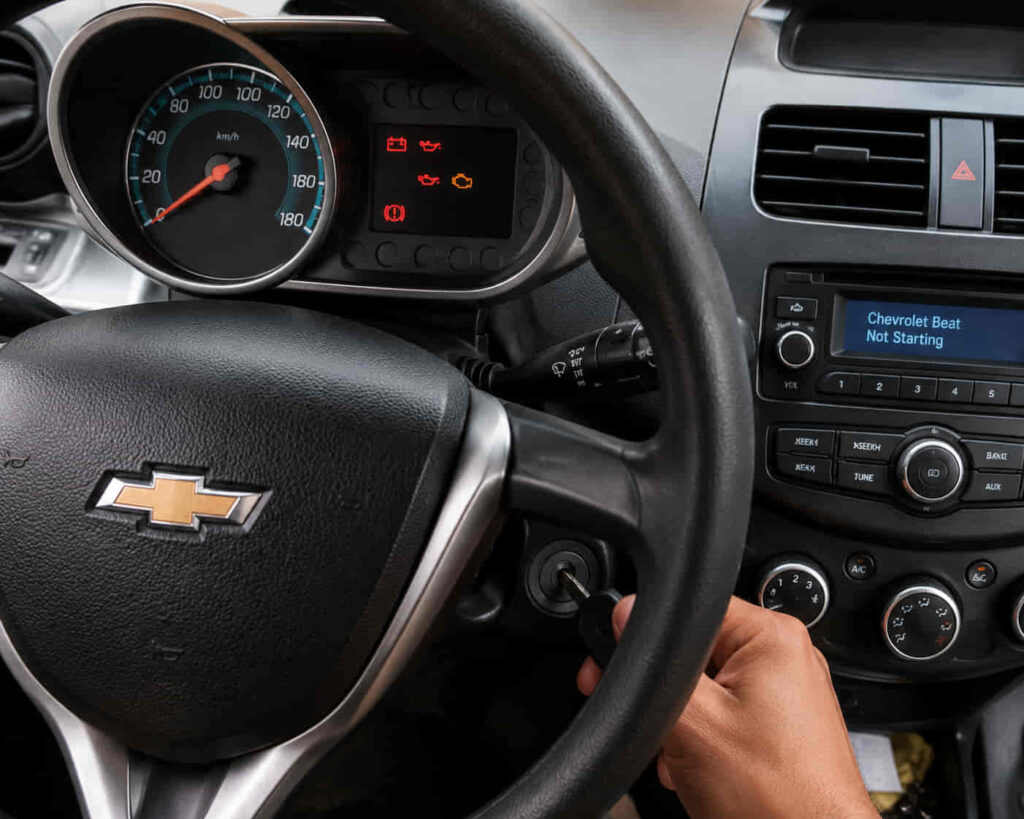
A Chevrolet Beat may not start because of battery failure, starter motor problems, fuel delivery issues, ignition system faults, electrical connection problems, or engine control errors. The starting process depends on multiple vehicle systems working together, including the battery, starter motor, ignition components, fuel system, and engine control module. A failure in any one of these areas can prevent the engine from running even when other vehicle functions appear normal.
When a Chevrolet Beat does not start, the first step is identifying whether the engine is failing to crank or whether it cranks but does not start. A no-crank condition usually points toward electrical power, battery, or starter system problems, while a crank-but-no-start condition often involves fuel delivery, ignition, or sensor-related issues.
Replacing parts without proper diagnosis can lead to unnecessary repairs because several different failures can create similar symptoms. For example, a weak battery connection can produce the same clicking sound as a faulty starter motor, while a failed fuel pump can make the engine crank normally but prevent combustion.
This guide explains the most common reasons a Chevrolet Beat will not start and how each part of the starting system affects engine operation. Understanding these causes helps identify the correct repair approach and prevents replacing components that are still working properly.
Is a Weak or Dead Battery Preventing Your Chevrolet Beat From Starting?
A weak or dead battery is one of the most common reasons a Chevrolet Beat does not start because the battery provides the electrical power required to activate the starter motor and engine control systems. Without enough voltage and current, the starter cannot rotate the engine at the speed required for combustion to begin.
Battery-related starting problems usually appear in different forms depending on the level of failure. A completely discharged battery may cause no response when turning the ignition key, while a weak battery may only produce slow cranking or a clicking sound from the starter system. These symptoms occur because the battery cannot provide the high electrical current required during engine startup.
The battery condition is affected by factors such as age, charging system performance, extreme temperatures, and electrical connections. Corroded battery terminals or loose cable connections can interrupt the flow of electricity even when the battery itself still has enough stored energy. This creates a situation where the Chevrolet Beat appears to have a battery problem while the actual issue is poor electrical contact.
Testing battery voltage and inspecting the terminals are important first steps before replacing components. For example, if the dashboard lights work but the engine only clicks when starting, the problem may involve insufficient battery power or a poor connection rather than a complete engine failure.
Is the Starter Motor Causing Your Chevrolet Beat Starting Problem?
A faulty starter motor can prevent a Chevrolet Beat from starting because the starter is responsible for converting electrical energy from the battery into mechanical movement that turns the engine. When the starter fails, the engine cannot rotate, which prevents the combustion process from beginning.
Starter motor problems often create specific symptoms that help separate them from other starting system failures. A single clicking sound when turning the ignition key may indicate a starter solenoid problem, while repeated clicking can suggest insufficient power reaching the starter. In some cases, the starter may operate intermittently before failing completely.
The starter system includes several connected components, including the starter motor, solenoid, electrical cables, and ignition switch. A failure in any of these parts can interrupt the process of transferring electrical energy into engine movement. This is why a starting problem should not automatically be diagnosed as a bad starter motor without checking the complete circuit.
For example, if a Chevrolet Beat has a fully charged battery but the engine does not rotate when the key is turned, the starter motor or its electrical connections become likely causes. Testing the starter circuit helps determine whether the failure comes from the motor itself, the solenoid, or the power supply reaching the starter.
Is the Fuel System Preventing Your Chevrolet Beat From Starting?
A fuel system problem can prevent a Chevrolet Beat from starting because the engine requires a consistent supply of fuel at the correct pressure to create combustion. Even when the battery and starter motor operate normally, the engine cannot run if fuel does not reach the combustion chamber.
Fuel delivery depends on several components working together, including the fuel pump, fuel injectors, fuel filter, and fuel pressure system. A failure in any of these components can interrupt the process of delivering fuel from the tank to the engine. When this happens, the engine may crank normally but fail to start because the combustion process cannot begin.
Fuel pump problems are a common cause of starting failures. A failing pump may not generate enough pressure, causing inconsistent fuel delivery during startup. In some cases, drivers may notice a delayed start, engine hesitation before failure, or a complete no-start condition where the starter turns the engine but combustion never occurs.
Checking the fuel system helps distinguish a fuel-related problem from an electrical issue. For example, if a Chevrolet Beat engine cranks at normal speed but does not start, while the battery and starter system are functioning correctly, checking fuel pressure and injector operation becomes an important diagnostic step.
Are Spark Plugs or Ignition Components Causing the Problem?
Ignition system failures can prevent a Chevrolet Beat from starting because the engine requires a properly timed spark to ignite the fuel-air mixture inside the cylinders. The ignition system works together with the fuel system and engine control system to create combustion at the correct moment.
Important ignition components include spark plugs, ignition coils, and related electrical circuits. Worn spark plugs may produce a weak spark, while a failed ignition coil can prevent one or more cylinders from receiving the energy needed for combustion. These problems can cause difficult starting, engine misfires, or a complete failure to start.
Ignition problems often appear differently from battery or starter failures. A Chevrolet Beat with a weak battery may fail to crank, but a vehicle with an ignition problem usually cranks normally because the starter system is still operating. The difference between these two conditions helps identify which system requires inspection.
For example, if the engine turns over normally when the key is turned but never starts, checking spark plug condition and ignition performance can reveal whether the problem comes from a lack of ignition energy rather than a mechanical starting failure.
Read more: Chevrolet Captiva Alternator Not Charging
Are Electrical Connections or Sensors Preventing Engine Startup?
Electrical connection problems or sensor failures can prevent a Chevrolet Beat from starting because the engine control system requires accurate electrical signals to control fuel injection, ignition timing, and startup operation. Modern vehicles depend on communication between sensors, the engine control unit (ECU), and electrical components to determine when and how the engine should start.
Poor electrical connections can interrupt this communication. Loose battery cables, damaged ground connections, or corroded wiring can reduce electrical flow and create unstable signals between vehicle systems. These issues may cause intermittent starting problems where the Chevrolet Beat starts normally on some occasions but fails during others.
Engine sensors also play an important role during startup. Components such as the crankshaft position sensor provide information about engine speed and position to the ECU. If the ECU cannot receive accurate sensor data, it may prevent fuel injection or ignition timing from operating correctly, resulting in a no-start condition.
Electrical and sensor-related problems often require more detailed diagnosis because they may not create obvious physical symptoms. For example, a Chevrolet Beat may have a fully charged battery, a working starter motor, and normal fuel delivery, but still fail to start because a faulty sensor prevents the ECU from completing the ignition and fuel control process.
Is the Chevrolet Beat Security System Blocking the Start?
The Chevrolet Beat security system can prevent the engine from starting when the immobilizer does not recognize the correct key signal or detects a security-related problem. The immobilizer system is designed to prevent unauthorized vehicle operation by controlling whether the engine receives permission to start.
The security system communicates with the vehicle key through a transponder or electronic identification system. When the key is not recognized correctly, the ECU may block fuel injection or ignition operation even though the battery and starter motor are functioning normally.
Security-related starting problems often appear after key replacement, battery replacement in the key fob, electrical system repairs, or communication failures between the key and vehicle control modules. Drivers may notice a security warning light or a situation where the engine cranks but does not start.
Checking the immobilizer system is important when other starting components appear normal. For example, if a Chevrolet Beat has a strong battery, the starter turns the engine correctly, and fuel and ignition systems appear functional, a key recognition or security system issue may be preventing normal startup.
How Do You Diagnose a Chevrolet Beat That Will Not Start?
Diagnosing a Chevrolet Beat that will not start requires identifying which part of the starting system has failed instead of replacing components based only on symptoms. A structured diagnosis separates electrical problems, mechanical starting failures, fuel delivery issues, ignition faults, and engine control problems.
The first step is determining whether the engine cranks when the ignition is turned on. A no-crank condition usually points toward the battery, starter motor, ignition switch, or electrical connections because the engine is not receiving enough mechanical movement to begin operation. A crank-but-no-start condition requires checking systems involved in combustion, including fuel delivery, ignition, and engine sensors.
Electrical testing helps confirm whether the battery and charging system provide enough power for startup. If battery voltage is normal, the next inspection focuses on starter operation, fuel supply, and ignition performance. Modern diagnostic tools such as an OBD scanner can also identify stored fault codes from the ECU and provide information about sensor or control system failures.
A complete diagnosis prevents unnecessary repairs. For example, replacing a starter motor on a Chevrolet Beat that has a failed crankshaft position sensor will not solve the problem because the engine is already turning correctly but lacks the information needed for proper fuel and ignition control.
How Can You Restore Chevrolet Beat Starting Performance?
You can restore Chevrolet Beat starting performance by identifying the exact system responsible for the failure and repairing the underlying cause instead of replacing parts without diagnosis. The starting process depends on the cooperation of multiple systems, including the battery, starter motor, fuel system, ignition components, electrical connections, security system, and engine control module.
A Chevrolet Beat that does not start does not always have a major engine problem. A weak battery connection, faulty starter component, blocked fuel delivery, worn ignition part, or failed sensor can create similar symptoms. Understanding whether the engine does not crank or cranks without starting is the first step toward finding the correct solution.
A structured diagnostic process helps separate simple repairs from complex failures. Checking battery condition, testing starter operation, verifying fuel and ignition systems, scanning ECU fault codes, and inspecting electrical connections provide a complete picture of the starting system condition.
Regular maintenance also reduces the chance of unexpected starting problems. Keeping battery terminals clean, monitoring warning signs, servicing ignition components, and addressing unusual starting behavior early can improve Chevrolet Beat reliability.
When basic checks do not identify the cause, professional diagnosis provides the most accurate repair path. A properly functioning starting system ensures the Chevrolet Beat can deliver reliable engine operation in daily driving conditions.