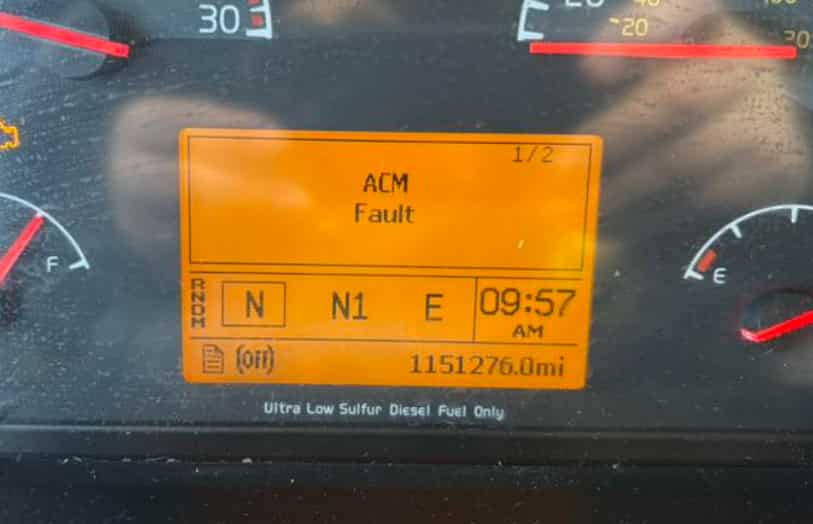
Modern Volvo trucks rely on advanced emission control systems to meet environmental regulations while maintaining engine efficiency. At the center of this system is the Aftertreatment Control Module, commonly known as the ACM. This module plays a critical role in managing the Selective Catalytic Reduction system, Diesel Exhaust Fluid injection, NOx sensors, and other emission related components. When an ACM fault occurs, it can trigger warning lights, reduce engine performance, and even place the vehicle into derate mode.
Many drivers and fleet operators first notice a Volvo ACM fault when a warning message appears on the dashboard. While it may seem like a minor electronic issue, the problem can quickly affect fuel efficiency, emissions compliance, and overall vehicle reliability. Ignoring the fault can lead to more expensive repairs and unexpected downtime, especially for trucks operating on long routes or under demanding conditions.
Understanding the causes, symptoms, and diagnostic procedures associated with a Volvo ACM fault is essential for preventing serious mechanical and operational problems. Whether the issue originates from a faulty NOx sensor, a DEF system malfunction, damaged wiring, or an internal ACM failure, identifying the root cause early can save both time and money.
This guide explains everything you need to know about Volvo ACM faults, including how the ACM works, the most common warning signs, diagnostic methods, and the most effective solutions to restore proper system performance.
What Is the ACM Module in a Volvo Truck?
The Aftertreatment Control Module, or ACM, is a dedicated electronic control unit responsible for managing the emission control system in Volvo trucks. Its primary function is to ensure that the vehicle meets strict environmental regulations by monitoring and controlling various aftertreatment components. These components work together to reduce harmful emissions produced during the combustion process.
The ACM continuously collects data from multiple sensors located throughout the exhaust and emission systems. It analyzes this information and adjusts system operations in real time to maintain optimal performance. This process helps reduce nitrogen oxide emissions, improve fuel efficiency, and support the overall reliability of the engine.
One of the most important responsibilities of the ACM is controlling the Selective Catalytic Reduction system. The module regulates the injection of Diesel Exhaust Fluid into the exhaust stream, allowing harmful nitrogen oxides to be converted into harmless nitrogen and water vapor. If the ACM detects abnormal readings or communication failures within the system, it can trigger fault codes and warning messages to alert the driver.
The ACM also communicates with several other control modules throughout the vehicle. It exchanges information with the Engine Control Module, NOx sensors, DEF pump, dosing unit, and various temperature and pressure sensors. This communication occurs through the vehicle’s CAN bus network, allowing all systems to work together efficiently.
Because the ACM serves as the central management unit for the emission control system, any malfunction can affect multiple components simultaneously. A single fault may lead to warning lights, failed regeneration cycles, reduced engine power, increased emissions, or engine derate conditions. Understanding the role of the ACM is the first step toward diagnosing and resolving Volvo ACM faults effectively.
Common Causes of Volvo ACM Faults
A Volvo ACM fault can occur for many reasons. In most cases, the problem does not originate from the ACM itself. Instead, the module detects an abnormal condition in a related component and stores a diagnostic trouble code. Understanding the most common causes can help technicians identify the issue faster.
One of the most common causes is a faulty NOx sensor. Volvo trucks use upstream and downstream NOx sensors to measure nitrogen oxide levels. These sensors provide critical data to the ACM. If a sensor becomes contaminated or damaged, it may send inaccurate readings. The ACM can then interpret these readings as an emissions system problem and trigger a fault code.
Problems within the Diesel Exhaust Fluid system are also common. Low quality DEF fluid can affect system performance. Contaminated fluid may damage sensitive components. Crystallization inside the dosing system can restrict fluid flow. A failing DEF pump can create pressure issues. Any of these conditions may cause the ACM to detect a fault.
Electrical issues are another major contributor. Damaged wiring can interrupt communication between modules. Loose connectors may create intermittent signals. Corroded terminals often increase electrical resistance. Poor grounding can also affect system stability. As a result, the ACM may generate communication related fault codes.
CAN bus network failures can produce similar symptoms. The ACM depends on constant communication with the Engine Control Module and other systems. Data transmission errors can prevent important information from reaching the module. When communication is lost, fault messages may appear on the dashboard.
Software related issues can also trigger ACM faults. Outdated software may contain unresolved bugs. Incomplete updates can cause system inconsistencies. Volvo periodically releases software improvements to address known problems. Keeping the system updated can prevent unnecessary fault warnings.
In some situations, the ACM itself may fail. Internal electronic components can degrade over time. Moisture intrusion may damage sensitive circuits. Excessive heat and vibration can also shorten module life. When internal failure occurs, ACM replacement is often required.
Accurate diagnosis is essential because several different problems can produce similar symptoms. A structured troubleshooting process helps identify the root cause and prevents unnecessary repairs.
Symptoms of a Volvo ACM Fault
A Volvo ACM fault can produce a wide range of symptoms. Some warning signs appear immediately, while others develop over time. Recognizing these symptoms early can help prevent costly repairs and unexpected downtime.
One of the first signs is the appearance of a warning message on the dashboard. Drivers may see an ACM fault notification, an emissions system warning, or a check engine light. These alerts indicate that the ACM has detected a problem within the aftertreatment system and requires further diagnosis.
Reduced engine performance is another common symptom. The engine may respond more slowly during acceleration or feel less powerful under load. This happens because the vehicle’s control systems may limit engine output when emissions related faults are detected.
Many Volvo trucks enter derate mode when a serious ACM fault remains unresolved. Derate mode reduces engine power and may limit vehicle speed. This protective function helps ensure compliance with emissions regulations and prevents further system damage. However, it can significantly affect productivity and delivery schedules.
Fuel efficiency may also decline. When the aftertreatment system is not operating correctly, the engine may consume more fuel than normal. Drivers often notice increased fuel costs before they identify the underlying fault.
Problems with the Diesel Exhaust Fluid system are frequently associated with ACM faults. The vehicle may display DEF warnings or indicate low system efficiency. In some cases, the DEF dosing process becomes inconsistent, reducing the effectiveness of the SCR system.
Failed or interrupted regeneration cycles can also occur. The Diesel Particulate Filter relies on proper communication between multiple components. If the ACM cannot manage the process correctly, regeneration may be delayed or canceled. Over time, excessive soot accumulation can create additional performance issues.
Higher emission levels are another potential symptom. The ACM continuously monitors emissions related components. When the system cannot control exhaust gases effectively, emission levels may rise above acceptable limits. This can lead to regulatory compliance concerns and additional fault codes.
Intermittent warning messages may indicate electrical or communication problems. A fault message that appears and disappears often points to damaged wiring, loose connectors, or unstable network communication. These issues can be difficult to diagnose because the symptoms are not always present.
In severe cases, multiple fault codes may appear simultaneously. This usually occurs when a single failure affects several connected systems. Comprehensive diagnostic testing is necessary to determine the root cause and avoid replacing functioning components unnecessarily.
Understanding these symptoms can help drivers and technicians respond quickly. Early diagnosis often reduces repair costs and minimizes the risk of further damage to the emission control system.
Common Volvo ACM Fault Codes
Volvo ACM faults are often identified through diagnostic trouble codes. These codes help technicians understand which part of the system is experiencing a problem. Each code points to a specific condition, but the root cause may still require deeper diagnosis.
One of the most common codes is SPN 3360. This code is related to the aftertreatment control system. It often appears when the ACM detects abnormal performance in the SCR system or communication issues with related components. In many cases, it is linked to NOx sensor errors or DEF system inconsistencies.
Another frequently reported code is SPN 5246. This code usually indicates a performance issue within the emission control system. It may be triggered when the SCR efficiency drops below expected levels. Poor DEF quality, injector problems, or sensor inaccuracies can contribute to this condition.
SPN 5394 is also associated with ACM related faults. This code is often linked to communication or calibration issues. It may appear when the ACM cannot properly exchange data with other control modules. CAN bus disruptions or software mismatches are common contributing factors.
In addition to SPN codes, Volvo trucks may display manufacturer specific fault codes. These codes often provide more detailed information about DEF system failures, NOx sensor malfunctions, or SCR dosing errors. Understanding both SPN and manufacturer codes is essential for accurate troubleshooting.
Some fault codes are intermittent, meaning they do not remain active all the time. These temporary codes often point to electrical issues such as loose connectors or unstable wiring. Intermittent faults can be more difficult to diagnose because they may disappear during testing.
When multiple fault codes appear at the same time, it usually indicates a system wide issue. This can happen when a single component failure affects several connected systems. In such cases, technicians must perform a full system scan and follow a structured diagnostic process.
Accurate interpretation of Volvo ACM fault codes is critical. Misreading a code can lead to unnecessary part replacement and increased repair costs. Proper diagnostic tools and procedures are always recommended to confirm the root cause before performing repairs.
How to Diagnose a Volvo ACM Fault
Diagnosing a Volvo ACM fault requires a structured approach. The ACM connects to many emission related components, so one symptom can have multiple causes. A clear diagnostic process helps technicians identify the root problem faster and more accurately.
The first step involves a full visual inspection. Technicians inspect wiring harnesses connected to the ACM and nearby sensors. They look for damaged insulation, loose connectors, and corroded terminals. Physical damage often reveals early signs of electrical faults before electronic testing begins.
The next step uses professional diagnostic tools. Volvo specific software reads detailed fault codes stored in the system. These codes show problems related to NOx sensors, DEF system performance, and module communication. Technicians avoid relying only on generic codes because they often miss key details.
After scanning the system, technicians check the DEF system. Diesel Exhaust Fluid quality plays an important role in SCR performance. Contaminated or low quality fluid can trigger incorrect readings and lead to ACM faults. Technicians also inspect the DEF tank, pump, and injector to ensure proper operation.
Technicians then test NOx sensors. These sensors measure emissions before and after the SCR system. When readings become inconsistent or fall outside expected ranges, the ACM records fault codes. Technicians also check sensor wiring and connectors because electrical issues often affect signal accuracy.
The CAN bus network also requires evaluation. The ACM depends on continuous communication with the Engine Control Module and other systems. Any interruption in data transmission can generate multiple fault codes. Technicians measure voltage levels and test communication signals to confirm network stability.
Software version also plays an important role. Outdated or corrupted software can trigger false fault detection. Technicians check for available updates and apply recalibration when needed. Volvo releases regular updates to improve system stability and performance.
In some cases, technicians perform deeper testing. They may test DEF pressure, analyze live sensor data, and run functional tests on emission components. These advanced steps help confirm whether the ACM is faulty or another component causes the issue.
A complete diagnostic process prevents unnecessary replacement of expensive parts. Since many Volvo ACM faults come from external components, accurate testing ensures correct repair decisions and reduces downtime.
Effective Solutions for Volvo ACM Faults
Fixing a Volvo ACM fault depends on identifying the exact root cause. Since the ACM only reports system issues, the solution often targets connected components instead of replacing the module itself. A structured repair approach helps restore performance and avoid unnecessary costs.
Technicians start by repairing or replacing damaged wiring. They fix broken harnesses, clean corroded connectors, and secure loose terminals. Strong electrical connections restore stable communication between the ACM and other modules. In many cases, this step alone removes intermittent fault codes.
If NOx sensors fail, technicians replace them with calibrated units. Faulty sensors often send incorrect emissions data to the ACM. After replacement, technicians verify sensor readings to ensure accurate system feedback. This step improves SCR efficiency and reduces warning messages.
DEF system issues require careful correction. Technicians drain contaminated fluid and refill the tank with high quality Diesel Exhaust Fluid. They inspect the DEF pump, injector, and dosing unit for blockages or pressure issues. Proper DEF flow restores correct SCR operation and reduces emission faults.
Software updates also play an important role in fixing ACM faults. Technicians install the latest Volvo software version to correct known bugs and improve system logic. After updates, they perform recalibration to ensure all modules communicate correctly. This step often resolves false or recurring fault codes.
If the CAN bus network shows instability, technicians repair communication lines. They check signal continuity, fix damaged cables, and restore proper voltage levels. Stable communication between modules ensures the ACM receives accurate real time data.
In cases of internal ACM failure, technicians replace the module completely. They install a new ACM and program it according to vehicle specifications. Proper programming ensures compatibility with the engine system and emission control components. Without correct programming, the system may continue to generate faults.
After repairs, technicians perform a full system reset. They clear stored fault codes and run a complete diagnostic scan. This step confirms that all components function correctly and no hidden issues remain.
Preventive maintenance helps avoid future ACM faults. Regular inspection of wiring, DEF quality, and sensor performance keeps the emission system stable. Keeping software updated also reduces the risk of unexpected faults.
A correct repair strategy focuses on system level diagnosis rather than isolated part replacement. This approach improves reliability, reduces downtime, and ensures compliance with emission standards.
Can You Drive with a Volvo ACM Fault?
Driving with a Volvo ACM fault depends on the severity of the issue. In some cases, the vehicle may still operate normally for a short period. However, ignoring the fault can lead to reduced performance and serious system restrictions over time.
When the fault is minor, the truck may continue to drive without immediate changes. The warning light may stay on, but engine performance remains stable. Even in this condition, the system still records the issue and it may worsen if not addressed.
If the fault becomes more serious, the engine may enter derate mode. In this state, the vehicle reduces engine power and limits speed. This happens to protect the emission system and ensure compliance with regulations. Derate mode can significantly affect delivery schedules and operational efficiency.
In more severe cases, the truck may become difficult to operate. The engine may lose power frequently or display repeated warning messages. Continuing to drive in this condition increases the risk of damage to the SCR system, NOx sensors, and other emission components.
For safety and cost reasons, technicians recommend diagnosing and repairing the fault as soon as possible. Early action prevents additional failures and reduces repair expenses. It also helps avoid unexpected breakdowns during long distance transport.
Conclusion
A Volvo ACM fault indicates a problem within the emission control system, but it does not always mean the ACM itself has failed. Most issues come from related components such as NOx sensors, the DEF system, wiring, or communication networks.
Understanding the causes, symptoms, and diagnostic steps helps identify problems early. Proper inspection and testing ensure accurate repairs and prevent unnecessary part replacement. This approach saves time and reduces maintenance costs.
Effective solutions often include repairing wiring, replacing faulty sensors, correcting DEF system issues, and updating software. In rare cases, the ACM module requires replacement and programming.
Regular maintenance plays a key role in preventing future faults. Clean DEF fluid, stable electrical connections, and updated software help keep the system stable and reliable.
A structured diagnostic and repair process ensures long term performance, better fuel efficiency, and full compliance with emission standards.