Seeing the Volvo Alarm System Service Required warning on your dashboard can be frustrating, especially if your vehicle appears to be operating normally. Many Volvo owners first encounter this message without any obvious signs of a security system problem. However, ignoring the warning can lead to recurring alarm issues, unexpected battery drain, and reduced protection against theft.
The Volvo alarm system is designed to safeguard your vehicle by monitoring doors, windows, the hood, and other key access points. When the system detects a fault within one of its components, it may trigger the Volvo Alarm System Service Required message. In some cases, the cause is as simple as a weak siren battery. In others, the issue may involve faulty sensors, damaged wiring, or communication problems within the vehicle’s electronic control modules.
Understanding the root cause of this warning is important because it helps prevent unnecessary repairs and reduces the risk of replacing parts that are still functioning correctly. A proper diagnosis can save both time and money while ensuring that your Volvo’s security system continues to operate as intended.
In this guide, you will learn what the Volvo Alarm System Service Required warning means, the most common causes behind it, how to diagnose the problem, effective repair solutions, reset methods, and the typical costs associated with fixing the issue. By the end, you will have a clear understanding of how to restore your Volvo’s alarm system and prevent similar problems in the future.
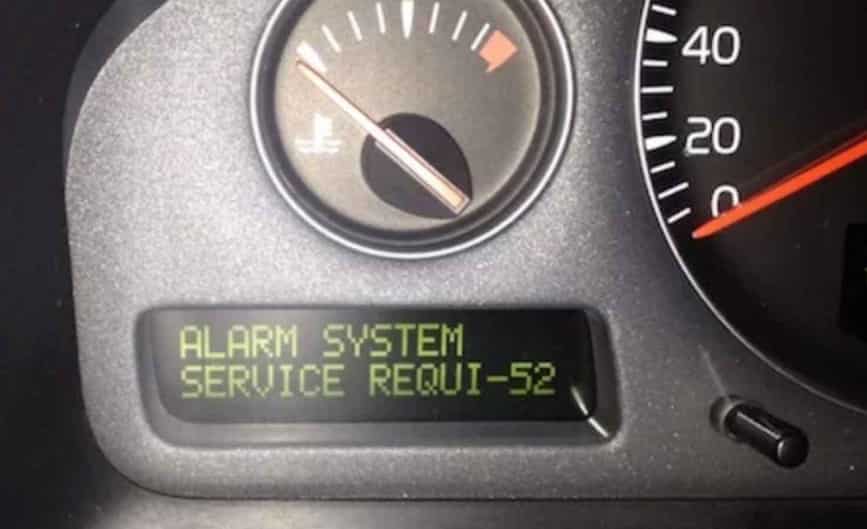
What Does “Volvo Alarm System Service Required” Mean?
The Volvo Alarm System Service Required warning tells you that the vehicle has detected a problem within its security system. The message does not always mean the alarm has stopped working completely. Instead, it indicates that one or more components need attention.
Volvo uses an advanced security system to protect the vehicle from unauthorized access. The system monitors doors, windows, the hood, and the tailgate. It also communicates with several electronic modules throughout the vehicle. When a component fails or sends incorrect information, the system stores a fault code and displays a warning message.
A failing alarm siren battery is one of the most common causes of this warning. Over time, the battery loses its ability to hold a charge. In some cases, it may leak and damage internal components. As a result, the alarm module cannot communicate properly with the vehicle.
Other faults can also trigger the message. Common examples include defective door sensors, damaged wiring, low battery voltage, and software communication errors. Problems within the Central Electronic Module can also affect alarm system performance.
This warning appears on many Volvo models, including the XC60, XC90, S60, and V60. While the exact cause may differ between vehicles, the message has the same meaning. The security system has detected a fault that requires diagnosis.
The warning usually does not affect how the vehicle drives. However, it can reduce the effectiveness of the anti theft system. Addressing the problem early helps prevent further electrical issues and keeps the security system working as intended.
How the Volvo Alarm System Works
The Volvo alarm system protects the vehicle from unauthorized access and potential theft. It uses a network of sensors, electronic modules, and communication systems to monitor different parts of the vehicle. When the system detects suspicious activity, it activates the alarm and alerts the owner.
Alarm Siren Module
The alarm siren module is one of the most important components of the security system. It produces the audible alarm when the vehicle detects a threat. The module contains its own backup battery, which allows it to function even if the main vehicle battery becomes disconnected.
As the siren battery ages, its performance can decline. In many Volvo models, a failing siren battery is one of the leading causes of the Volvo Alarm System Service Required warning.
Door and Window Sensors
Door and window sensors help the system determine whether someone is attempting to enter the vehicle without authorization. These sensors constantly report their status to the vehicle’s control modules.
If a sensor fails or sends incorrect information, the alarm system may interpret the signal as a fault. As a result, the dashboard may display a warning message.
Hood and Tailgate Sensors
The hood and tailgate also contain dedicated sensors. These components help protect areas that thieves may target to gain access to the engine compartment or cargo area.
Over time, dirt, corrosion, and normal wear can affect sensor performance. When this happens, the system may record a fault and trigger a service warning.
Central Electronic Module (CEM)
The Central Electronic Module acts as a communication hub for many vehicle systems, including the alarm system. It receives information from sensors and coordinates communication between different electronic components.
When the CEM detects abnormal data or communication failures, it may generate fault codes related to the security system. In some cases, software issues can also contribute to these errors.
Vehicle Battery and Power Supply
The alarm system depends on stable battery voltage to operate correctly. A weak battery can create communication problems between modules. It can also trigger warning messages that appear unrelated to the battery itself.
Many owners focus on alarm components first. However, checking battery health should always be part of the diagnostic process.
Key Fob Communication
The key fob plays an important role in the overall security system. It allows the vehicle to lock, unlock, and arm the alarm system remotely.
If the key fob battery becomes weak or communication issues occur, the system may not function as expected. Although this is less common, it can contribute to security system faults in certain situations.
All of these components work together to keep the vehicle secure. When one part fails, the entire system can be affected. Understanding how the alarm system operates makes it easier to identify the source of the Volvo Alarm System Service Required warning.
Common Causes of the Volvo Alarm System Service Required Warning
Several factors can trigger the Volvo Alarm System Service Required warning, but some causes appear far more frequently than others. In many Volvo models, the most common culprit is a failing alarm siren battery. The siren contains its own rechargeable backup battery, which allows the alarm system to remain active even if the main vehicle battery is disconnected. As the battery ages, it gradually loses capacity and may eventually leak. When this happens, the siren module can no longer communicate properly with the vehicle’s electronic systems, causing the dashboard to display a warning message.
Another common cause involves the alarm siren module itself. Exposure to heat, moisture, and normal wear can damage internal electronic components over time. In addition, faulty door sensors, hood latch sensors, and tailgate sensors can interfere with the alarm system’s ability to detect whether the vehicle is properly secured. When one of these sensors sends inaccurate information, the security system may interpret it as a fault and trigger the warning. Drivers sometimes notice related symptoms such as false alarms, intermittent warning messages, or problems when locking and unlocking the vehicle.
Electrical issues can also play a significant role. Damaged wiring, corroded connectors, and low battery voltage may disrupt communication between the alarm system and other control modules. In some cases, the Central Electronic Module fails to process information correctly, leading to security related fault codes. Software glitches and communication errors can produce similar symptoms as well. Because multiple components work together within the Volvo security system, identifying the exact cause often requires a systematic diagnosis rather than replacing parts based on assumptions alone.
Symptoms That Often Accompany the Warning Message
When the Volvo Alarm System Service Required warning appears, it is often accompanied by several noticeable symptoms. These signs can help you identify whether the issue is limited to a minor sensor fault or related to a deeper electrical problem within the vehicle. One of the most common symptoms is inconsistent alarm behavior. The alarm may trigger randomly without any real threat, or it may fail to activate when the vehicle is locked. This irregular behavior usually points to a fault in the siren module, sensors, or communication system.
Another frequent symptom is difficulty with the central locking system. In some cases, the vehicle may lock and unlock normally, but the alarm does not arm correctly. Drivers may also notice that the key fob response becomes delayed or unreliable. Although this can sometimes be caused by a weak key fob battery, it may also indicate a broader communication issue between the vehicle’s control modules and the alarm system.
Dashboard warnings often appear alongside other electrical messages. Some owners report multiple alerts at the same time, especially when the vehicle battery is weak or failing. In more advanced cases, the alarm system may stop producing sound entirely due to a failed siren module or internal battery damage. This creates a situation where the vehicle appears to function normally, but the security system is no longer fully active.
Battery drain is another symptom that should not be ignored. A malfunctioning alarm siren or electrical fault can slowly discharge the main battery over time. This leads to hard starts, reduced electrical performance, and repeated warning messages. When these symptoms appear together, they strongly suggest that the Volvo alarm system requires diagnosis rather than a simple reset.
How to Diagnose Volvo Alarm System Problems
Diagnosing the Volvo Alarm System Service Required warning requires a structured approach because the system involves multiple connected components. The first step is to check for visible signs of damage or wear. Inspect the vehicle battery, alarm siren area, and accessible wiring for corrosion, moisture, or loose connectors. Many Volvo alarm issues start with simple physical faults that gradually affect communication between modules.
The next step is to evaluate the vehicle battery condition. A weak or unstable battery can create false fault codes in the alarm system. Use a voltage tester to confirm that the battery maintains a stable charge under load. If the voltage drops significantly, it can affect the performance of the alarm system and other electronic components. In many cases, replacing an aging battery resolves intermittent warning messages.
After checking the battery, the system should be scanned using a diagnostic tool. A proper scan reveals stored fault codes that point to specific components such as the alarm siren module, door sensors, or Central Electronic Module. These codes help narrow down the problem instead of relying on guesswork. Without this step, it is easy to replace parts that are still functioning correctly.
Sensor testing is also important during diagnosis. Door, hood, and tailgate sensors should be checked for proper operation and consistent signal output. If any sensor sends irregular data, the alarm system may interpret it as a security fault. In more complex cases, communication issues between modules may require advanced diagnostics at a professional workshop.
A complete diagnosis ensures that the root cause is identified accurately. Since multiple systems interact within the Volvo security network, a systematic approach prevents unnecessary repairs and reduces overall repair costs.
How to Fix Volvo Alarm System Service Required
Fixing the Volvo Alarm System Service Required warning depends on the exact cause identified during diagnosis. In many cases, the most effective repair involves replacing the alarm siren battery. This component is known to fail over time, especially in older Volvo models. When the internal battery weakens or leaks, the siren module loses proper communication with the vehicle. Replacing the siren battery or the entire siren module often restores normal operation and clears the warning.
If sensors are the source of the problem, repairing or replacing the affected unit is necessary. Door sensors, hood latch sensors, and tailgate sensors can fail due to dirt, corrosion, or mechanical wear. Cleaning the contact points may solve minor issues, but damaged sensors usually need replacement. Once the faulty sensor is corrected, the alarm system can properly recognize the vehicle’s status again.
Electrical wiring issues require careful inspection and repair. Damaged wires or loose connectors can interrupt communication between the alarm system and the Central Electronic Module. Repairing or replacing affected wiring restores proper signal flow and helps prevent recurring faults. In some cases, moisture intrusion must also be addressed to avoid repeated electrical damage.
A weak vehicle battery should never be ignored during repairs. If the battery cannot maintain stable voltage, replacing it may resolve multiple electronic issues at once. After battery replacement, it is important to clear fault codes and allow the system to recalibrate.
Software updates can also fix certain alarm system issues. Volvo vehicles rely on integrated software to manage communication between modules. Updating the system at a certified service center can resolve glitches that trigger false warnings.
A proper repair process ensures the alarm system returns to full functionality and maintains reliable vehicle security.
How to Reset the Volvo Alarm System
Resetting the Volvo alarm system can sometimes clear temporary faults, especially when the issue is caused by minor communication errors or a low battery condition. However, a reset is not a permanent fix if there is an underlying hardware problem. It is important to understand when a reset is useful and when further repair is required.
One basic method is the lock and unlock procedure. The driver locks the vehicle using the key fob, waits for a short period, and then unlocks it again. This simple cycle can help the system reinitialize and restore normal communication between modules. In some cases, it clears temporary glitches that trigger the warning message.
Another common method is the battery disconnect reset. The vehicle battery is disconnected for a few minutes to force a system reboot. When the battery is reconnected, the electronic control modules restart and re-establish communication. This method can sometimes clear stored temporary errors, but it may not remove persistent fault codes related to defective components.
A more advanced reset requires a diagnostic tool. Technicians use specialized equipment to read and clear fault codes from the Central Electronic Module and other related systems. This method is more precise because it targets specific errors rather than resetting the entire system blindly. It is often used after repairs have been completed to confirm that the issue has been resolved.
In some cases, a reset will not work at all. If the alarm siren module is damaged, sensors are faulty, or wiring is compromised, the warning will return shortly after resetting the system. This indicates that the root cause still exists and must be repaired before the system can function correctly.
A proper reset should always be combined with accurate diagnosis to ensure long term reliability of the Volvo alarm system.
Volvo Alarm System Repair Costs
The cost of repairing the Volvo Alarm System Service Required issue can vary depending on the root cause, vehicle model, and labor rates. In many cases, the alarm siren module or its internal battery is the primary source of the problem, and this repair is one of the most common expenses for Volvo owners. Replacing the alarm siren battery alone is usually less expensive than replacing the full module, but many workshops recommend a full replacement because the internal components often degrade at the same time.
Sensor related repairs are generally more affordable. Door sensors, hood latch sensors, and tailgate sensors typically cost less to replace, and the labor time is also relatively low. However, multiple faulty sensors can increase the overall repair cost, especially if the vehicle requires extensive diagnostic work to identify each failed component.
Wiring repairs can vary widely in cost depending on the severity of the damage. Minor connector repairs are usually inexpensive, while complex wiring issues that involve tracing faults through the vehicle harness can take more time and increase labor charges. If moisture damage is involved, additional repair steps may be required to prevent future failures.
More serious issues involving the Central Electronic Module can significantly increase repair costs. CEM related repairs often require advanced diagnostics, software programming, or even module replacement. These procedures are more complex and usually need specialized tools or dealership level service.
Labor costs also play an important role in the total expense. Diagnostic time, system scanning, and post repair testing can add to the final bill. Overall, simple fixes may cost relatively little, while complex electrical faults can become much more expensive depending on the depth of the issue and the model of the Volvo vehicle.
Can You Drive With the Volvo Alarm System Service Required Warning
In most cases, you can still drive the vehicle when the Volvo Alarm System Service Required warning appears. This message is usually related to the security system rather than the engine or drivetrain. As a result, it does not typically affect basic driving functions such as acceleration, braking, or steering.
However, this does not mean the issue should be ignored. The warning indicates that the vehicle’s anti theft system is not working at full capacity. If the alarm system is compromised, the vehicle becomes more vulnerable to unauthorized access. This can increase the risk of theft, especially if the siren module or sensors are completely disabled.
In some situations, the warning may also be linked to electrical system instability. A weak battery or communication fault can affect multiple electronic modules at the same time. While the car may still operate normally, other systems could begin to show additional warning messages over time. This is why early diagnosis is important even when the vehicle still feels normal to drive.
If the warning appears alongside symptoms such as battery drain, random alarms, or multiple dashboard alerts, it is recommended to have the vehicle inspected as soon as possible. Continuing to drive without addressing the root cause may lead to more expensive repairs later.
Ultimately, short term driving is usually safe, but long term neglect is not recommended. Fixing the issue early ensures that the Volvo security system remains reliable and the vehicle stays properly protected.
How to Prevent Future Alarm System Problems
Preventing the Volvo Alarm System Service Required warning requires consistent maintenance of both the electrical system and security components. One of the most important steps is maintaining a healthy vehicle battery. A weak or aging battery can create unstable voltage, which affects the performance of the alarm system and other electronic modules. Regular battery testing helps ensure stable operation and reduces the risk of false warning messages.
Routine inspection of electrical components is also essential. Over time, connectors and wiring can become loose, corroded, or exposed to moisture. Checking these areas during service intervals helps identify small issues before they develop into system failures. This is especially important for components connected to the alarm siren module and sensors.
Protecting electrical connectors from moisture is another key preventive measure. Water intrusion is a common cause of communication errors within Volvo’s security system. Keeping drainage areas clean and ensuring seals remain intact helps reduce the risk of corrosion and short circuits.
Software updates also play an important role in system stability. Volvo regularly releases updates that improve communication between control modules. Installing these updates at a certified service center can help prevent software related alarm faults and improve overall system reliability.
Finally, responding early to warning messages can prevent larger issues. Ignoring initial signs of alarm system malfunction often leads to more complex electrical problems over time. Prompt diagnosis and repair help maintain the integrity of the vehicle’s anti theft system and reduce long term repair costs.
With proper maintenance and timely attention, the Volvo alarm system can remain reliable and effective throughout the vehicle’s lifespan.
Frequently Asked Questions
Many Volvo owners have similar concerns when the Volvo Alarm System Service Required warning appears. These questions usually relate to safety, repair costs, and whether the issue can be resolved without professional help.
What does Volvo Alarm System Service Required mean?
This warning means the vehicle has detected a fault within the alarm or anti theft system. It indicates that one or more components are not working correctly and need diagnosis.
Can a weak battery trigger this warning?
Yes, a weak or unstable vehicle battery can trigger the warning. Low voltage affects communication between electronic modules and can create false fault messages.
How much does it cost to fix the problem?
Repair costs vary depending on the cause. Simple issues like sensor replacement are usually affordable. More complex problems involving the alarm siren module or Central Electronic Module can be significantly more expensive.
Can I reset the warning myself?
You can try a basic reset using the key fob or battery disconnect method. However, these resets only work for temporary faults. If a hardware issue exists, the warning will return.
Is it safe to drive with this warning?
Yes, the vehicle is usually safe to drive because the issue does not affect engine performance. However, the security system may not function properly, so the risk of theft protection failure is higher.
Which Volvo models are most affected?
The warning can appear in several models including the XC60, XC90, S60, and V60. It is more common in older vehicles where the siren battery or sensors have aged.
Final Thoughts
The Volvo Alarm System Service Required warning is usually a sign that the vehicle has detected an issue within its security system. In most cases, the problem is not related to engine performance or driving safety, but it still requires attention. The most common causes include a failing alarm siren battery, weak vehicle battery, faulty sensors, or communication issues between electronic modules.
Although the vehicle can typically still be driven, ignoring this warning is not recommended. When the alarm system does not function correctly, the vehicle loses part of its anti theft protection. Over time, small electrical issues can also develop into more complex problems if they are not diagnosed early. This is why identifying the root cause is more important than simply resetting the system.
A proper inspection can help determine whether the issue comes from the siren module, sensors, wiring, or the Central Electronic Module. In many cases, the repair is straightforward once the correct fault is identified. Replacing a weak battery or a damaged sensor can quickly restore normal operation and prevent the warning from returning.
Regular maintenance also plays an important role in avoiding future issues. Keeping the electrical system in good condition, updating software when needed, and addressing warning messages early will help maintain the reliability of the Volvo security system.
With the right diagnosis and timely repair, the Volvo alarm system can continue to operate effectively and protect the vehicle as intended for many years.