A “Volvo Park Assist System Service Required” warning can appear without warning on your dashboard. It often surprises drivers during normal driving or parking. This message signals that the parking assist system has stopped working correctly.
The Volvo Park Assist System helps you park safely. It uses ultrasonic sensors to detect objects around the car. These sensors send signals to the control system. The system then alerts the driver with sound and visual feedback.
When the system detects a fault, it stops working. It then shows a service warning message. This can reduce parking safety and make tight maneuvers more difficult.
In some cases, the problem is simple. Dirty or blocked sensors often trigger the warning. Moisture, snow, or road dirt can interfere with sensor signals.
In other cases, the issue is more serious. Faulty sensors, damaged wiring, or software errors can cause the warning. A weak battery can also affect system performance.
Different Volvo models such as XC60, XC90, S60, and V60 may show this warning. The meaning stays the same across all models.
This guide explains what the warning means. It also covers common causes and step by step fixes. You will also learn how to diagnose the issue correctly. This helps you avoid unnecessary repair costs and restore your parking assist system quickly.
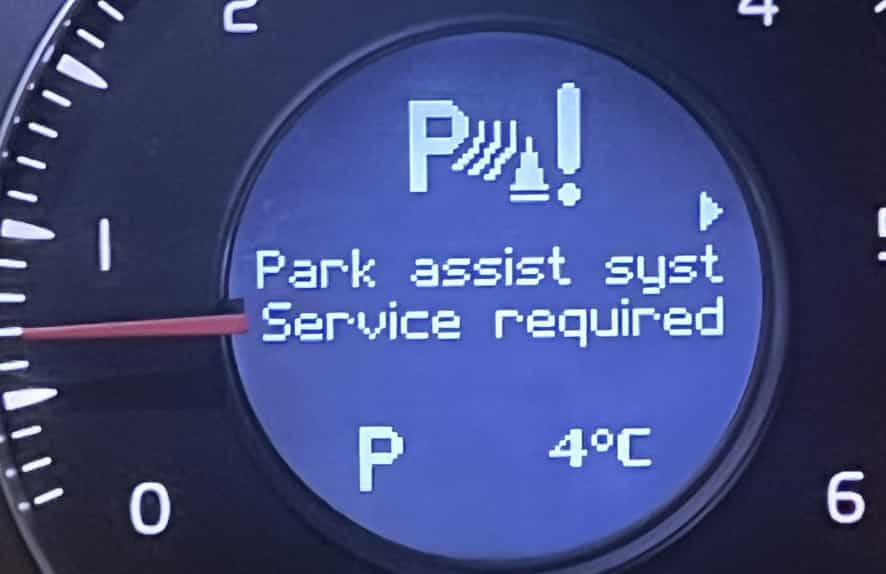
What Does the Volvo Park Assist System Service Required Warning Mean
The “Volvo Park Assist System Service Required” warning means the parking assist system has detected a malfunction. The system has stopped normal operation to prevent incorrect sensor readings.
This warning does not always mean a major failure. It often indicates a fault in one part of the system. The system disables parking assistance until the issue is resolved.
The Volvo Park Assist System uses ultrasonic sensors placed in the front and rear bumpers. These sensors send sound waves to detect nearby objects. The system calculates distance based on signal reflection.
When everything works correctly, the system alerts the driver with sound and screen notifications. It helps the driver avoid collisions during parking.
When a fault occurs, the control module stops processing sensor data. It then triggers the service warning on the dashboard.
There is an important difference between warning messages. “Service Required” usually indicates a system fault. “Temporarily Unavailable” often means a short term blockage like dirt or bad weather.
In most cases, the warning affects all parking sensors. However, some vehicles may show partial sensor failure. This depends on which component is damaged.
The system connects with other driver assistance features in Volvo vehicles. A failure in the park assist system does not usually affect engine performance. However, it reduces parking safety and driver confidence.
Understanding this warning helps you decide the next step. You can then check sensors, wiring, or software before going to a workshop.
Common Causes of the Volvo Park Assist System Service Required Warning
The Volvo Park Assist System Service Required warning can appear for several different reasons, and most of them relate to sensor performance, electrical stability, or system communication. One of the most common causes is dirty or blocked parking sensors. These sensors are located on the front and rear bumpers and rely on clear surfaces to detect objects. When dirt, mud, ice, or snow covers the sensors, the system may fail to read distance correctly and trigger a warning. Even a thin layer of residue can affect accuracy and cause temporary system shutdown.
Another frequent cause is faulty parking sensors. Over time, sensors can degrade or become damaged due to minor impacts such as parking bumps or road debris. When a sensor fails, it may stop sending signals or produce incorrect data, which leads the system to disable park assist functions.
Wiring and connector issues can also trigger the warning. The system depends on stable electrical connections between sensors and the control module. If connectors become loose, corroded, or exposed to moisture, signal interruption can occur. This problem is more common in vehicles exposed to harsh weather conditions.
Low battery voltage is another important factor. The park assist system is sensitive to electrical fluctuations. When the battery is weak or unstable, the system may shut down to protect itself, which results in a service warning.
In some cases, the issue comes from the park assist control module or software communication errors. The module processes all sensor data, and any malfunction in software or CAN bus communication can disable the entire system. In these situations, proper diagnosis is required to identify the exact cause before replacing any components.
Symptoms and How to Diagnose the Volvo Park Assist System Service Required Warning
When the Volvo Park Assist System Service Required warning appears, the symptoms are usually easy to notice while driving or parking. The most common sign is that the parking sensors stop detecting obstacles correctly. You may notice no beeping sound when approaching objects or inconsistent alerts that do not match the real distance. In some cases, the system produces continuous warning tones even when nothing is near the vehicle. Drivers may also see false obstacle warnings on the dashboard or infotainment display. Another frequent symptom is partial failure where only the front or rear sensors stop working while the other set still functions. These issues often reduce parking confidence and increase the risk of minor collisions in tight spaces.
To diagnose the problem correctly, start with a visual inspection of all parking sensors. Check for dirt, mud, ice, or physical damage on the bumper sensors. Clean each sensor carefully and test the system again. If the warning remains, the next step is to scan the vehicle using an OBD2 scanner or Volvo VIDA diagnostic tool. These tools can read error codes stored in the Park Assist Control Module and help identify the faulty component.
You should also test the system by slowly approaching an object and listening for sensor response. If one sensor fails to react, it may be defective. In addition, check the vehicle battery voltage because low power can trigger system instability. A healthy battery should maintain stable voltage under load.
Finally, inspect wiring and connectors behind the bumper if accessible. Moisture or corrosion in connectors can interrupt communication between sensors and the control module. Proper diagnosis helps avoid unnecessary sensor replacement and ensures the correct root cause is identified before repair.
How to Fix the Volvo Park Assist System Service Required Warning
Fixing the Volvo Park Assist System Service Required warning depends on the root cause. In many cases, the issue can be resolved without expensive repairs. The first and simplest fix is cleaning the parking sensors. Dirt, mud, ice, or road salt can block ultrasonic signals. A soft cloth and mild cleaner are usually enough to restore normal function. After cleaning, restart the vehicle and check if the warning disappears.
If the warning remains, the next step is to reset the system. You can turn off the engine and restart the vehicle to refresh the electronic modules. In some cases, disconnecting the battery for a few minutes can reset communication between the Park Assist Control Module and the sensors. This method often clears temporary software glitches.
If a specific sensor is faulty, replacement is necessary. A damaged parking sensor cannot be repaired and must be replaced with a compatible Volvo part. After replacement, the system usually recalibrates automatically, but some cases may require a diagnostic tool like Volvo VIDA for coding.
Wiring issues also require careful repair. Loose or corroded connectors should be cleaned and secured properly. If the wiring harness is damaged, it must be repaired or replaced to restore stable signal transmission between components.
Software problems can also trigger the warning. In this case, a system update may be required. Volvo dealerships or certified workshops can update the vehicle software to fix communication errors and improve system stability.
If the Park Assist Control Module is faulty, replacement is the last option. This is the most expensive repair and requires professional diagnosis. A technician should confirm module failure before replacement to avoid unnecessary cost. Proper diagnosis ensures the correct fix and restores full parking assistance functionality.
Can You Drive With the Volvo Park Assist System Service Required Warning
You can still drive the vehicle when the Volvo Park Assist System Service Required warning appears. The warning only affects the parking assist system. It does not usually impact engine performance, steering, or braking systems. However, the loss of parking sensors can reduce safety in tight spaces and increase the risk of minor collisions.
Drivers should treat this warning as an important maintenance issue. It does not stop the car from operating, but it removes a key safety feature. Parking in crowded areas or reversing without sensor support becomes more difficult. This is especially important in larger Volvo models like the XC90 where visibility is more limited.
In some situations, the warning may indicate a temporary issue such as dirty sensors or low battery voltage. In these cases, the system may recover after cleaning or restarting the vehicle. However, if the warning stays active for a long time, it usually indicates a deeper fault that needs diagnosis.
Continuing to drive with a faulty system is generally safe for short periods. However, ignoring the issue for too long can lead to more serious electrical or sensor failures. This may increase repair costs over time.
The best approach is to inspect the sensors early and perform basic troubleshooting. If the warning does not disappear, a diagnostic scan should be performed to identify the exact cause. Prompt action helps maintain full parking safety and prevents unnecessary damage to other components.
Preventing Future Volvo Park Assist System Problems
Preventing the Volvo Park Assist System Service Required warning starts with regular maintenance and careful driving habits. Parking sensors work best when they stay clean and unobstructed. Dirt, mud, road salt, and ice can reduce sensor accuracy. Regularly cleaning the front and rear bumpers helps maintain consistent performance, especially during winter or rainy conditions.
Battery health also plays an important role in system stability. A weak or aging battery can cause voltage drops that affect electronic systems, including the park assist function. Checking the battery condition during routine servicing helps prevent unexpected warnings and system failures.
Drivers should also avoid physical damage to the bumper area. Even small impacts during parking can damage ultrasonic sensors. Once a sensor is damaged, it may not work correctly and will trigger a service warning. Parking carefully in tight spaces reduces this risk significantly.
Software updates are another important factor. Volvo periodically releases updates that improve system stability and fix known bugs. Keeping the vehicle software up to date helps reduce communication errors between sensors and control modules.
Finally, regular vehicle inspections help detect early signs of wiring or connector issues. Moisture or corrosion in connectors can develop over time and gradually affect system performance. Identifying these issues early prevents more serious failures.
By maintaining sensors, battery health, software, and wiring condition, drivers can significantly reduce the risk of park assist system warnings and ensure reliable parking assistance over the long term.
Frequently Asked Questions
Many drivers have similar questions when the Volvo Park Assist System Service Required warning appears. The answers below clarify the most common concerns and help you understand the system better.
Can the warning disappear on its own
Yes, in some cases the warning can disappear on its own. This usually happens when the issue is temporary. Dirt, snow, or moisture on sensors can trigger a short term fault. Once the sensors are clean and conditions improve, the system may return to normal.
Will a car wash trigger the warning
Yes, a car wash can sometimes trigger the warning. Water pressure, soap residue, or moisture inside connectors may affect sensor signals. In most cases, the system returns to normal after the sensors dry completely.
How long do Volvo parking sensors last
Volvo parking sensors are designed to last many years. In normal conditions, they can function for the lifetime of the vehicle. However, physical damage, moisture, or electrical issues can shorten their lifespan.
Can I replace a parking sensor myself
It is possible to replace a parking sensor yourself if you have basic mechanical skills. However, proper diagnosis is important before replacement. Some vehicles may also require calibration using diagnostic tools after installation.
Does the warning affect other systems
In most cases, the warning only affects the park assist system. Engine performance, steering, and braking systems continue to work normally. However, related driver assistance features may be limited depending on the vehicle configuration.
Is it safe to ignore the warning
It is safe to drive for a short time, but ignoring the warning for too long is not recommended. Parking safety is reduced, and underlying electrical issues may worsen over time.
Conclusion
The Volvo Park Assist System Service Required warning indicates that the parking assistance system has detected a malfunction. This issue can come from simple causes such as dirty sensors or more complex problems like wiring faults, software errors, or control module failure.
Understanding the warning helps you respond correctly and avoid unnecessary repairs. In many cases, basic steps like cleaning sensors or restarting the vehicle can restore normal function. However, persistent warnings usually require proper diagnosis using tools like an OBD2 scanner or Volvo VIDA system.
Most causes are not critical to vehicle operation, but they directly affect parking safety. This is why early inspection is important. Ignoring the issue for a long time can lead to more expensive repairs and reduced driving confidence, especially in tight parking conditions.
Regular maintenance, clean sensors, stable battery health, and updated software can significantly reduce the risk of this warning appearing again. By taking these preventive steps, you can ensure the Volvo Park Assist System continues to operate reliably and support safe parking in daily driving.