When the check engine light suddenly appears on a Hyundai dashboard, most drivers feel confused. The warning light does not explain the exact problem. Many people think they need an expensive OBD2 scanner or a visit to a repair shop right away. This creates stress and uncertainty.
In reality, you can read Hyundai check engine codes without a scanner on many models. Hyundai builds self diagnostic functions into the ECU in some vehicles, especially older generations. These functions allow the car to display basic fault information through simple manual methods.
You can use techniques such as ignition key cycling, accelerator pedal input, or check engine light blink patterns to identify error codes. These methods help you understand whether the problem is minor or serious. For example, it may involve a sensor issue, an emissions fault, or an engine misfire.
This guide shows you step by step how to access and interpret those codes without using diagnostic tools. You will learn how Hyundai stores fault data inside the ECU and how the system communicates errors through simple signals. You will also understand when manual methods are enough and when you still need a proper OBD2 scanner.
By the end of this guide, you will be able to respond to a check engine light with more confidence and avoid unnecessary repair costs.
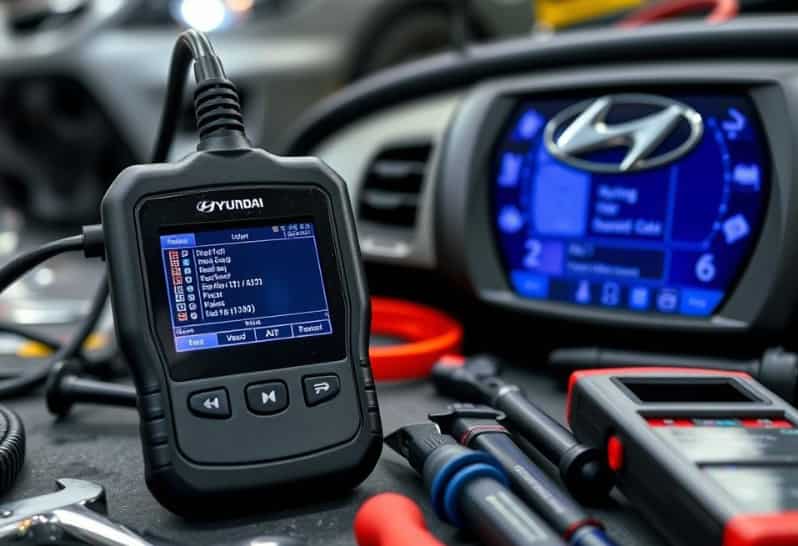
What Are Hyundai Check Engine Codes?
Before you learn how to read Hyundai check engine codes without a scanner, you need to understand what these codes actually mean. A check engine code is a signal that comes from the vehicle’s Engine Control Unit, also called the ECU. The ECU constantly monitors engine performance, fuel delivery, air intake, and emissions systems while you drive.
When the ECU detects a problem, it stores a Diagnostic Trouble Code, also known as a DTC. This code represents a specific fault inside the vehicle system. Each code links to a certain issue, such as engine misfires, oxygen sensor failures, or fuel system imbalance. Hyundai vehicles follow the standard OBD2 coding structure, so many codes begin with letters like P, B, C, or U.
The most common type of code you will see is a P code, which relates to the powertrain system. This includes the engine, transmission, and emissions system. For example, a P0300 code indicates random engine misfires, while a P0420 code points to catalytic converter efficiency problems. These codes help you identify where the problem starts, even without advanced diagnostic tools.
The ECU stores these codes when it detects abnormal data from sensors. It may also trigger the check engine light on the dashboard to alert the driver. In some Hyundai models, the system can display basic codes through blink patterns or self diagnostic modes. This allows drivers to access limited information without using an OBD2 scanner.
Understanding these codes is important because it helps you separate minor issues from serious engine problems. It also gives you a clearer direction before deciding whether to repair the issue yourself or seek professional diagnostics.
Ignition Key Cycle Method
The ignition key cycle method is one of the simplest ways to try reading Hyundai check engine codes without a scanner. This method works by forcing the vehicle’s ECU to enter a basic diagnostic response mode in some older Hyundai models. When the system detects a specific ignition pattern, it may output stored fault information through the check engine light.
To use this method, start by inserting the key into the ignition. Turn the ignition ON without starting the engine. Then turn it OFF and repeat this cycle in a specific sequence depending on the model. In many cases, you repeat this ON and OFF cycle three to five times. After completing the sequence, watch the check engine light on the dashboard closely.
If the vehicle supports this function, the check engine light will start flashing in a pattern. These flashes represent stored diagnostic trouble codes. Long flashes usually indicate the first digit of the code, while short flashes represent the second digit. For example, two long flashes followed by three short flashes can represent code 23. Each vehicle may vary slightly in interpretation, so it is important to observe the pattern carefully.
This method is mostly effective on older Hyundai vehicles that use simpler ECU systems. Newer models with advanced CAN bus architecture usually do not support this type of manual code retrieval. In those cases, the ignition cycle will not produce any diagnostic output.
Even though this method is basic, it can still help you identify whether the engine issue is minor or more serious. It gives you a starting point before using a professional OBD2 scanner for full diagnosis.
Accelerator Pedal Self-Diagnostic Test
Another method that some Hyundai vehicles support is the accelerator pedal self diagnostic test. This technique allows the ECU to enter a limited diagnostic mode by detecting a specific sequence of pedal input. It does not require any external tools, which makes it useful when you want to read Hyundai check engine codes without a scanner.
To perform this method, first turn the ignition key to the ON position without starting the engine. Make sure the dashboard lights are fully active. Then press and release the accelerator pedal in a specific sequence. In many Hyundai models, you press the pedal fully down and release it several times within a short time window. The exact number of presses may vary depending on the vehicle model and year.
If the system accepts the input, the check engine light may begin to flash or change behavior on the dashboard. These flashes can represent stored trouble codes in a simplified format. Each pattern corresponds to a specific fault stored in the ECU memory. You can observe the flashes and match them to basic diagnostic references to identify potential issues.
This method is commonly found in older Hyundai models such as certain versions of Accent, Elantra, and Sonata. However, newer vehicles often disable this function due to updated electronic control systems and stricter OBD2 compliance. In those cases, the pedal method will not trigger any response.
Although this method is not as precise as an OBD2 scanner, it still helps you gain early insight into engine problems. It can indicate whether the issue is related to sensors, fuel delivery, or engine misfires before you proceed with deeper diagnostics.
Dashboard Blink Code Interpretation
One of the most important ways to read Hyundai check engine codes without a scanner is by observing the dashboard blink pattern from the check engine light. This method relies on how the ECU communicates faults through visual signals when a full diagnostic tool is not available.
When the system detects a problem, the check engine light may behave in different ways. A steady light usually indicates a less urgent issue such as a sensor imbalance or minor emissions fault. A flashing light often signals a more serious condition, especially engine misfires that require immediate attention.
In vehicles that support blink code output, the check engine light will flash in a structured pattern after entering a diagnostic mode. These flashes represent stored trouble codes inside the ECU. Long flashes typically represent the first digit of a code, while short flashes represent the second digit. For example, a sequence of two long flashes followed by three short flashes may represent code 23. This system allows the vehicle to communicate basic fault information without a scanner.
Some Hyundai models may also combine multiple blink sequences to represent different stored codes. In this case, there may be a pause between groups of flashes to separate individual fault codes. It is important to carefully count each flash and note the pattern to avoid misreading the result.
This method is useful for older Hyundai vehicles that do not fully rely on modern OBD2 scan tools. However, it has limitations because it does not provide detailed data such as freeze frame information or sensor live readings. Even so, it still helps you quickly understand whether the problem is related to ignition, fuel delivery, or emissions systems.
Hidden Hyundai Self Diagnostic Mode
Some Hyundai vehicles include a hidden self diagnostic mode inside the instrument cluster. This mode allows the car to run internal system checks and display basic information without requiring a scanner. In certain cases, it can also help you understand whether there are stored issues related to the engine or electronic systems.
To access this mode, the process depends on the Hyundai model and production year. In many vehicles, you can activate it by holding specific dashboard buttons while turning the ignition to the ON position. Once activated, the instrument cluster may enter a test sequence. During this sequence, the speedometer, tachometer, fuel gauge, and warning lights are checked one by one.
On some models, this mode can also reveal basic diagnostic information stored in the system. While it does not always show full OBD2 codes, it can indicate abnormal readings or system errors. This is especially useful for identifying issues related to sensors, electrical connections, or cluster communication problems.
This feature is more commonly found in older Hyundai models such as certain generations of Sonata, Tucson, and Elantra. Newer Hyundai vehicles often limit this function or integrate it into more advanced onboard diagnostic systems that require professional tools.
Although the hidden diagnostic mode does not fully replace an OBD2 scanner, it gives you additional insight into the vehicle’s internal status. It helps you confirm whether warning lights are caused by real system faults or temporary electronic glitches.
Common Hyundai Check Engine Codes You Might See
After learning how to read Hyundai check engine codes without a scanner, the next step is understanding what the most common codes actually mean. Some trouble codes appear more often than others because they relate to common engine, fuel, or emissions problems found in many Hyundai vehicles.
One of the most frequent codes is P0300. This code indicates random or multiple engine misfires. Drivers may notice rough idling, poor acceleration, engine vibration, or reduced fuel economy. Ignition coils, spark plugs, or fuel delivery issues often cause this problem. If the check engine light flashes continuously with this code, you should avoid driving aggressively because engine damage can occur.
Another common code is P0420, which points to low catalytic converter efficiency. This issue usually develops slowly over time. Symptoms may include reduced fuel efficiency, weak acceleration, and increased exhaust smell. In some cases, a failing oxygen sensor can also trigger this code.
The P0171 code means the engine runs too lean. This happens when the air and fuel mixture contains too much air and not enough fuel. Vacuum leaks, dirty mass airflow sensors, or fuel delivery problems often create this condition. Drivers may experience hesitation during acceleration or unstable idle speed.
You may also encounter P0507, which indicates idle control system problems. The engine may idle higher than normal or fluctuate unexpectedly. Carbon buildup around the throttle body commonly contributes to this issue.
Another possible code is P0113, which relates to the intake air temperature sensor circuit. When this sensor sends incorrect data, the ECU may struggle to adjust fuel delivery properly. This can reduce engine efficiency and trigger starting problems in certain weather conditions.
Understanding these common Hyundai trouble codes helps you identify the seriousness of the issue before visiting a repair shop. Even without a scanner, basic code interpretation can save time, reduce stress, and prevent unnecessary repairs.
Limitations of Reading Codes Without a Scanner
Although manual diagnostic methods can help you read Hyundai check engine codes without a scanner, they still have important limitations. These techniques provide only basic fault information and cannot match the accuracy of a professional OBD2 diagnostic tool.
One major limitation involves incomplete data access. Manual methods usually display only simple fault codes or blink patterns. They cannot provide detailed freeze frame information, sensor readings, or live engine data. Without this information, it becomes much harder to identify the exact source of a problem.
Another issue is compatibility. Many newer Hyundai vehicles no longer support manual blink code retrieval or hidden diagnostic functions. Modern ECU systems use advanced communication networks and encrypted diagnostic protocols. As a result, the ignition cycle method or pedal test may not produce any response at all.
Manual code interpretation can also create confusion. Drivers may count blink sequences incorrectly or misunderstand what a specific pattern means. In some situations, multiple faults can trigger similar symptoms, which increases the risk of incorrect diagnosis. Replacing parts based on guesswork may lead to unnecessary repair expenses.
Some engine problems do not trigger visible blink codes either. Intermittent sensor failures, electrical issues, or transmission faults may remain hidden without a scanner. The vehicle may still store important diagnostic information inside the ECU even if the dashboard does not display clear warning patterns.
Safety is another important concern. A flashing check engine light can indicate serious engine misfires or emissions problems that require immediate attention. Manual methods should never replace proper diagnostics when the vehicle shows severe symptoms such as power loss, overheating, rough running, or strong fuel smell.
For these reasons, manual code reading works best as an early troubleshooting step rather than a complete diagnostic solution. It helps you gain basic insight into the problem, but professional scanning remains the most reliable way to confirm repairs and prevent long term engine damage.
When You Should Still Use an OBD2 Scanner
Manual methods can help you understand basic engine problems, but some situations still require a proper OBD2 scanner. Modern Hyundai vehicles use complex electronic systems that store detailed diagnostic information inside the ECU. Without a scanner, you may miss critical data that affects engine performance and long term reliability.
You should use an OBD2 scanner if the check engine light remains on after basic troubleshooting. Persistent warning lights often indicate deeper issues that manual blink codes cannot fully explain. A scanner can access stored trouble codes, pending faults, and live sensor data in real time.
A flashing check engine light is another serious warning sign. This usually points to active engine misfires that can damage the catalytic converter if ignored. In this situation, relying only on manual methods is risky because the problem may worsen quickly while driving.
You should also consider using a scanner if you notice symptoms such as poor fuel economy, rough idling, power loss, hard starting, or transmission shifting problems. These issues often involve multiple sensors and electronic components that require accurate diagnostics.
Another important reason involves emissions testing. Many Hyundai vehicles must pass emissions inspections, and unresolved ECU faults can cause automatic test failure. An OBD2 scanner helps identify hidden codes before inspection and allows you to confirm whether repairs solved the problem.
Today, even affordable scanners can provide valuable information for DIY maintenance. Basic models can read and clear codes within minutes, making them a practical investment for Hyundai owners who want faster and more reliable troubleshooting.
Conclusion
Learning how to read Hyundai check engine codes without a scanner can help you respond quickly when warning lights appear. Methods such as ignition key cycling, accelerator pedal tests, dashboard blink patterns, and hidden diagnostic modes provide useful starting points for basic troubleshooting. These techniques may help you identify common problems related to sensors, fuel delivery, ignition systems, or emissions components.
However, manual diagnostics also have clear limitations. They cannot access advanced ECU data or provide the same level of accuracy as a dedicated OBD2 scanner. Modern Hyundai vehicles rely heavily on electronic communication systems, which often require professional diagnostic tools for complete analysis.
The best approach is to use manual methods as an early diagnostic step. They can help you reduce uncertainty, avoid unnecessary panic, and understand whether the issue appears minor or serious. If the warning light stays active or the vehicle shows strong performance problems, you should confirm the diagnosis with a proper scanner or professional inspection.
By understanding these DIY diagnostic methods, Hyundai owners can save time, reduce repair costs, and make smarter decisions before visiting a repair shop.