Modern Mercedes-Benz vehicles are engineered to deliver smooth, intelligent gear changes by continuously adapting to your driving habits. Over time, the transmission control module (TCM) learns factors such as throttle input, braking style, driving conditions, and vehicle load to optimize shift quality. However, after years of driving, a battery replacement, a transmission fluid service, or certain repairs, these learned values may no longer reflect the vehicle’s current condition. This is where a Mercedes-Benz transmission reset may help.
Many owners searching online encounter conflicting advice about the so-called “gas pedal reset” or other DIY procedures. Some claim it instantly fixes harsh shifting, while others report no noticeable improvement. The truth is more nuanced. Not every reset method works on every Mercedes model, and a transmission reset cannot repair worn clutches, damaged solenoids, or mechanical failures inside the gearbox.
This comprehensive guide explains everything you need to know about performing a Mercedes-Benz transmission reset safely and effectively. You’ll learn what a transmission reset actually does, when it should be performed, the different reset methods available, how the transmission relearns your driving style afterward, and the common mistakes that could lead to unnecessary repairs or wasted time. Whether you drive a C-Class, E-Class, GLC, GLE, or an AMG model equipped with a 5G-Tronic, 7G-Tronic, or 9G-Tronic transmission, this guide will help you make an informed decision before attempting a reset yourself.
What Is a Mercedes-Benz Transmission Reset?
A Mercedes-Benz transmission reset is a procedure that clears or reinitializes some of the learned values used by the transmission control system. In many modern Mercedes vehicles, the automatic transmission does more than simply select gears according to road speed. It works with electronic sensors, hydraulic components, engine data, and stored adaptation values to determine how quickly and firmly each shift should occur.
Mercedes-Benz has used several transmission designs across its vehicle range, including the 5G-Tronic, 7G-Tronic, 7G-Tronic Plus, 7G-DCT, and 9G-Tronic. These units do not all operate in exactly the same way. For example, many rear-wheel-drive Mercedes models use torque-converter automatic transmissions, while some compact front-wheel-drive models use a dual-clutch transmission. Mercedes documentation confirms that 7G-Tronic Plus systems use electrohydraulic control, while the 7G-DCT is a different dual-clutch design with its own operating characteristics.
Because of these differences, the phrase “Mercedes-Benz transmission reset” can refer to several procedures. Understanding the terminology is essential before connecting a scan tool, disconnecting the battery, or attempting an internet-based pedal sequence.
How the Transmission Control System Works
The transmission control system receives information from multiple parts of the vehicle. Depending on the model, this information may include:
• Accelerator pedal position
• Engine speed and engine load
• Vehicle speed
• Brake pedal activity
• Transmission fluid temperature
• Selected driving mode
• Wheel-speed data
• Hydraulic pressure and clutch behavior
Using this information, the system calculates when to change gear and how much hydraulic pressure is required to complete the shift. It may also make gradual corrections as components wear or as driving conditions change.
For example, a driver who frequently accelerates aggressively may experience different shift behavior from someone who normally drives gently in urban traffic. The transmission may adjust its response to maintain acceptable comfort, performance, and clutch control.
These learned corrections are commonly called adaptation values. They are not the same as permanent software programming. Instead, they are calculated values that help the control unit compensate for real operating conditions.
What Happens During a Transmission Reset?
A proper adaptation reset removes selected learned corrections from the transmission control unit. Once those values are cleared, the control system must begin learning again.
Immediately after a reset, the vehicle may not shift perfectly. Gear changes can temporarily feel firmer, slower, or less predictable because the transmission has not yet rebuilt the information needed to fine-tune clutch filling times and shift pressure.
This is why a reset is usually followed by a relearn or adaptation drive. During the relearn process, the vehicle is driven under controlled conditions so the transmission can observe repeated upshifts, downshifts, acceleration events, and deceleration events.
A reset does not physically repair the gearbox. It does not replace worn clutch packs, restore damaged gears, clean blocked hydraulic passages, repair a failing torque converter, or correct a low fluid level. It only affects electronic values or control-unit settings.
Transmission Reset vs Adaptation Reset
The terms “transmission reset” and “adaptation reset” are often used interchangeably online, but they may describe different procedures.
A general transmission reset may refer to restarting a control module, clearing temporary data, disconnecting the battery, or performing a pedal sequence. These methods may not erase actual transmission adaptation values.
An adaptation reset is normally a diagnostic procedure performed through compatible equipment. The technician selects the relevant transmission control module and instructs it to erase specific learned values.
This distinction matters because many inexpensive online guides promise a complete reset without explaining what is actually being changed. A pedal procedure may alter throttle-related behavior on certain vehicles, but it should not automatically be assumed to erase clutch adaptation data inside every Mercedes transmission.
Transmission Reset vs TCU Programming
A transmission control unit reset is also different from TCU programming.
Resetting clears selected stored information. Programming installs or updates software in the control unit. Coding configures the module for the vehicle’s equipment, drivetrain, market, or transmission version.
Programming may be required after replacing a control unit, installing certain mechatronic components, or completing a manufacturer-directed software update. It generally requires professional diagnostic equipment, stable battery support, correct vehicle identification, and access to suitable software.
Attempting to program a transmission with an unsupported scanner or unstable voltage can create serious problems. A failed programming session may leave the control unit unable to communicate or operate correctly.
Transmission Reset vs Fault-Code Clearing
Clearing diagnostic trouble codes is not the same as resetting adaptations.
Fault codes record problems detected by the transmission, engine, braking system, or related modules. Clearing those codes removes the stored record, but it does not necessarily remove the condition that caused the code.
If a faulty speed sensor, electrical connector, solenoid, or internal component is still malfunctioning, the code will usually return. Clearing it may also erase useful information that a technician needs for diagnosis, including freeze-frame data and fault frequency.
For this reason, diagnostic codes should be recorded before they are cleared.
What a Reset Can and Cannot Do
A Mercedes-Benz transmission reset may help when poor shift quality is caused by inappropriate learned values, especially after certain repairs or service procedures. It may also be part of a structured diagnostic or adaptation process.
However, it cannot be expected to solve every transmission complaint.
A reset may help with:
• Shift behavior that changed after a completed repair
• Adaptation values that no longer match replaced components
• A controlled relearn following approved service work
• Certain drivability concerns when no mechanical fault is present
A reset is unlikely to fix:
• Burned or contaminated transmission fluid
• Low fluid caused by a leak
• Worn clutch packs
• A damaged valve body
• Failed speed sensors or solenoids
• Internal mechanical noise
• Severe slipping
• Persistent limp mode
• Transmission-related warning messages caused by active faults
The most important principle is simple: reset only after understanding why the transmission is behaving poorly. Erasing data before diagnosing the problem can hide valuable clues without resolving the underlying fault.
Signs Your Mercedes Transmission May Need a Reset
Drivers often consider a Mercedes-Benz transmission reset when the vehicle no longer shifts as smoothly as expected. Some symptoms can be associated with learned adaptation values, but the same symptoms can also be caused by fluid problems, electrical faults, software issues, or internal wear.
A reset should therefore be considered a possible procedure, not an automatic repair.
Harsh or Abrupt Gear Changes
A noticeable jolt during an upshift or downshift is one of the most common reasons owners search for a transmission reset. The vehicle may shift smoothly when cold but become harsh after warming up, or it may produce a stronger bump during a specific gear change.
In some cases, shift pressure adaptations may no longer match the current condition of the transmission. This can happen after repair work or component replacement. However, harsh shifting can also result from:
• Incorrect transmission fluid level
• Contaminated or unsuitable fluid
• Valve-body wear
• Solenoid problems
• Engine performance issues
• Worn mounts
• Internal clutch wear
• Outdated control-unit software
Resetting adaptations without addressing these problems may make the shift quality worse.
Delayed Engagement Into Drive or Reverse
A healthy automatic transmission should normally engage Drive or Reverse without excessive delay. A brief pause may be normal in some conditions, but a long hesitation followed by a strong impact requires attention.
Delayed engagement may indicate hydraulic pressure loss, low fluid, internal leakage, valve-body wear, or clutch-related problems. It can also appear after repairs if adaptation values have not been correctly initialized.
If the delay is severe, repeatedly shifting between Park, Reverse, and Drive can increase stress on the transmission. The vehicle should be inspected before any reset is attempted.
Rough Downshifts When Slowing Down
Some Mercedes owners notice a bump as the transmission shifts into a lower gear while approaching a stop. The sensation may feel similar to another vehicle lightly tapping the rear bumper.
A mild downshift sensation is not always abnormal, particularly when the transmission is cold or the vehicle is in a sport-oriented driving mode. A repeated, aggressive impact is different.
Possible causes include adaptation issues, incorrect engine torque data, valve-body problems, fluid degradation, drivetrain mount wear, or control software behavior. A reset may be considered only after these factors have been evaluated.
Gear Hunting or Frequent Shifting
Gear hunting occurs when the transmission repeatedly changes between two gears instead of holding a stable ratio. This may happen on hills, during light acceleration, or at a consistent cruising speed.
Possible causes include:
• Inconsistent throttle input
• Engine performance problems
• Incorrect sensor data
• Transmission software behavior
• Driving-mode selection
• Torque-converter concerns
• Adaptation values that no longer suit current conditions
Because modern transmission operation depends heavily on engine data, a problem that feels like a gearbox fault may begin in the engine management system. Misfires, air-metering problems, turbocharger issues, or throttle faults can influence shifting.
Hesitation During Acceleration
A driver may press the accelerator and feel a delay before the transmission downshifts. This can be described as hesitation, sluggishness, or poor throttle response.
Before blaming the transmission, determine whether the delay comes from the engine, accelerator system, turbocharger, traction control, or gearbox. The transmission may simply be reacting to inaccurate or limited engine torque information.
A reset should not be used as a substitute for checking diagnostic trouble codes.
Shift Quality Changed After a Transmission Service
If the transmission began shifting differently immediately after a fluid change, filter replacement, valve-body repair, conductor-plate replacement, or mechatronic service, adaptation may be relevant.
However, the service itself must first be verified. The workshop should confirm:
• The correct fluid specification was used
• The fluid level was checked at the required temperature
• The filter and seals were installed properly
• Connectors were fully seated
• No leaks are present
• All related fault codes were addressed
• Required initialization procedures were completed
A reset cannot compensate for an incorrect fluid level or improperly installed component.
Symptoms Appeared After Battery Replacement
Battery disconnection or low system voltage can affect electronic modules, stored settings, and communication between vehicle systems. In some cases, drivers report different shift behavior after replacing a weak battery.
This does not automatically mean the transmission needs a full adaptation reset. The vehicle may simply require time to stabilize, or another module may need initialization.
Low voltage can also generate misleading fault codes. Before resetting the transmission, the battery and charging system should be tested and the vehicle scanned for stored faults.
The Vehicle Entered Limp Mode
Limp mode is a protective strategy that limits vehicle operation when the control system detects a serious problem. The transmission may remain in one gear, restrict shifting, reduce engine output, or display a warning message.
A transmission reset is not the correct first response to limp mode. The fault codes should be read before the ignition is cycled repeatedly or the battery is disconnected.
Common causes can include sensor faults, wiring problems, low voltage, hydraulic issues, overheating, or internal transmission defects. Clearing the codes without diagnosis may temporarily remove the warning, but the vehicle can return to limp mode as soon as the fault is detected again.
When a Reset Will Not Solve the Problem
Certain warning signs strongly suggest that diagnosis and repair should come before any reset:
• The transmission slips under acceleration
• Engine speed rises without a matching increase in road speed
• The vehicle will not move in Drive or Reverse
• There is a grinding, whining, or metallic noise
• Transmission fluid is leaking
• The fluid smells burned
• A warning message remains active
• Limp mode returns repeatedly
• The vehicle shakes severely during gear engagement
• Metal debris is found in the transmission pan
Continuing to drive with these symptoms may increase repair costs. The safest approach is to stop treating the issue as a software problem and arrange a professional inspection.
When Should You Reset a Mercedes-Benz Transmission?
A Mercedes-Benz transmission reset should be performed for a specific reason. It is not routine maintenance, and it should not be repeated whenever the vehicle feels slightly different.
The best results usually occur when a reset is part of a documented repair or diagnostic process. The transmission, installed control software, service history, and symptoms should all be considered.
After Replacing a Valve Body or Mechatronic Component
The valve body controls the flow and pressure of transmission fluid. In many electronically controlled transmissions, it works closely with solenoids, sensors, and the transmission control unit.
When a valve body or mechatronic assembly is repaired or replaced, the old adaptation values may not match the hydraulic behavior of the new component. A diagnostic reset and structured relearn may therefore be required.
This procedure should be based on the exact transmission and repair instructions. Some replacement components also require coding, initialization, or software programming.
After Replacing a Conductor Plate or Internal Sensor Assembly
Certain Mercedes transmissions use an internal conductor plate or related sensor assembly to monitor transmission operation. Depending on the transmission, this component may contain or support speed sensors, electrical connections, or control electronics.
After replacement, the technician may need to clear faults, verify live data, initialize the control system, or perform an adaptation procedure.
A basic battery disconnect is not a reliable substitute for these steps.
After Replacing or Programming the Transmission Control Unit
A replacement transmission control unit must communicate correctly with the rest of the vehicle. Depending on the model, it may require coding, personalization, software installation, initial startup, or adaptation.
This work generally requires professional diagnostic access. Stable system voltage is critical during programming because an interruption can corrupt the process.
After successful programming, the transmission may need an adaptation drive so it can learn clutch behavior and shift characteristics.
After Certain Transmission Repairs
A reset may be appropriate after internal work that changes clutch clearances, hydraulic response, solenoid operation, or torque-converter behavior.
Examples can include:
• Clutch-pack replacement
• Torque-converter replacement
• Solenoid replacement
• Valve-body repair
• Mechatronic repair
• Complete transmission replacement
The correct post-repair procedure depends on the transmission family. A 7G-Tronic Plus torque-converter transmission, for example, is technically different from a compact-model 7G-DCT dual-clutch transmission, so they should not be treated as though they share one universal reset routine.
After a Software Update
Manufacturers sometimes release software revisions to improve drivability, emissions behavior, diagnostic logic, or component protection. When transmission software is updated, the workshop may be instructed to reset or relearn selected values.
Software work should not be attempted with an unstable battery, unreliable interface, or unverified files. Programming is different from clearing codes and carries greater risk.
After a Transmission Fluid Service
A fluid and filter service does not always require a full adaptation reset.
If the transmission was shifting normally before the service and no components were replaced, resetting well-established adaptation values may be unnecessary. In some situations, clearing them can temporarily reduce shift quality because the transmission must learn again.
A reset may be appropriate when:
• The repair procedure specifically requires it
• A valve-body or mechatronic component was serviced
• Adaptation limits were reached and the cause was corrected
• The technician needs to perform a documented relearn
• Shift quality changed because a repaired component now behaves differently
The decision should not be based solely on the fact that new fluid was installed.
After Battery Replacement
Battery replacement alone does not automatically require a transmission adaptation reset.
If the vehicle drives normally and no transmission warnings are present, there may be no reason to erase learned values. The more appropriate first steps are to verify battery registration or initialization requirements, confirm charging voltage, scan for low-voltage faults, and road-test the vehicle.
A reset should be considered only when symptoms persist and diagnostic evidence supports it.
After Buying a Used Mercedes-Benz
Some owners want to reset the transmission so it can “learn the new driver.” This is understandable, but it is not always necessary.
The adaptive system can continue adjusting during normal driving. Erasing all learned values may create a temporary period of rougher shifting and could remove useful compensation for existing wear.
For a recently purchased used Mercedes, a better starting point is:
• Review the service history
• Check the fluid service record
• Scan every control module for faults
• Inspect for leaks
• Confirm the correct transmission type
• Evaluate shift quality when cold and warm
• Check for software updates or unresolved repair history
Resetting should come after inspection, not before it.
When a Professional Reset Is the Better Choice
Professional diagnostic equipment is strongly recommended when the vehicle has active fault codes, previous transmission repairs, repeated limp mode, severe shift complaints, or an unknown service history.
A qualified Mercedes specialist can review:
• Actual adaptation values
• Clutch filling times
• Shift-pressure corrections
• Transmission temperature
• Speed-sensor signals
• Solenoid operation
• Torque-converter slip
• Fault history
• Software and coding status
This information helps determine whether resetting the transmission is reasonable or whether the existing values are revealing a mechanical problem.
The safest rule is to diagnose first, repair second, and reset only when the procedure supports a clear technical objective.
Mercedes-Benz Transmission Reset Methods
There are several methods commonly described as a Mercedes-Benz transmission reset. However, they do not all accomplish the same objective. Some simply restart electronic systems, while others erase learned adaptation values stored inside the transmission control module. Choosing the correct procedure depends on your vehicle model, transmission type, and the reason for performing the reset.
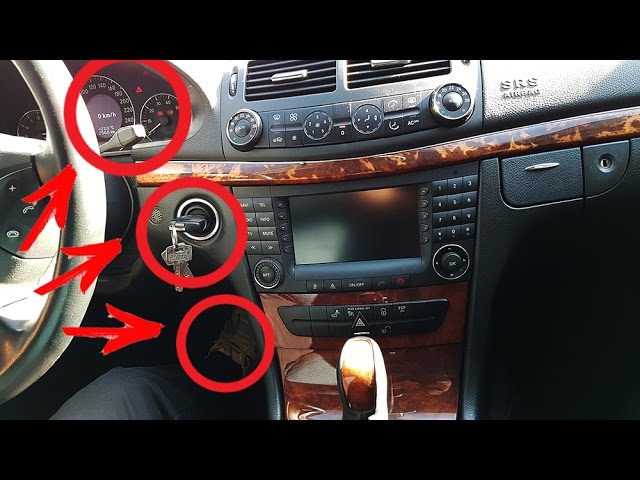
Method 1: Gas Pedal Reset
The gas pedal reset has become one of the most widely shared Mercedes-Benz maintenance tips on forums, YouTube, and social media. Although many owners report improvements after performing the procedure, there is no official Mercedes-Benz service documentation stating that this method performs a complete transmission adaptation reset on all models.
The commonly described procedure involves the following steps:
- Insert the key or press the Start button without starting the engine.
- Turn the ignition to the ON position.
- Fully depress the accelerator pedal for approximately 10 to 15 seconds.
- Release the pedal.
- Turn the ignition off.
- Wait at least two minutes without opening the driver’s door.
- Start the vehicle and drive normally.
Some drivers notice smoother shifts afterward. Others experience no change at all.
There are several possible explanations for these mixed results. Depending on the vehicle generation, the procedure may reset throttle adaptation, refresh communication between electronic modules, or simply restart control systems after the ignition cycle. In many modern Mercedes-Benz models, however, true transmission adaptation values remain stored unless they are cleared with factory-level diagnostic equipment.
Therefore, the gas pedal method should be viewed as a simple troubleshooting step rather than a guaranteed transmission reset.
Advantages include:
• No tools required
• Takes only a few minutes
• Completely free
• Safe when performed correctly
Limitations include:
• Not officially documented as a universal transmission reset
• Results vary by model year
• Cannot erase all adaptation values
• Cannot repair mechanical transmission problems
Method 2: Reset Using a Diagnostic Scanner
The most accurate way to reset a Mercedes-Benz transmission is through a compatible diagnostic scanner capable of communicating with the transmission control module.
Professional workshops commonly use Mercedes-Benz XENTRY or STAR Diagnosis. High-quality aftermarket scan tools such as Autel MaxiSys, Launch X431, iCarsoft MB series, or Foxwell Mercedes-compatible scanners may also support transmission adaptation functions on selected models.
Although menu names vary between manufacturers, the procedure generally follows these steps:
- Connect the diagnostic scanner to the OBD-II port.
- Verify battery voltage is stable.
- Identify the vehicle automatically or enter the VIN manually.
- Access the transmission control module.
- Read and save all diagnostic trouble codes.
- Review live transmission data if available.
- Clear adaptation values or perform the transmission reset function.
- Follow any on-screen instructions.
- Cycle the ignition if required.
- Perform the recommended adaptation drive.
Professional diagnostic equipment provides several important advantages.
It confirms whether active transmission faults are present before adaptations are erased. It also allows technicians to monitor clutch filling times, transmission temperature, shift pressure, and sensor values before and after the reset.
If the transmission immediately relearns abnormal values after the reset, this often indicates an underlying mechanical or hydraulic problem rather than a software issue.
Method 3: Battery Disconnect Method
Another method frequently discussed online is disconnecting the battery for several minutes before reconnecting it.
Disconnecting battery power may reset certain electronic modules or erase temporary memory within some vehicle systems. However, modern Mercedes-Benz vehicles store many adaptation values in non-volatile memory, meaning they remain available even after battery power is removed.
For this reason, disconnecting the battery should not be considered a complete transmission adaptation reset.
Before attempting this procedure, owners should be aware of possible consequences:
• Clock and radio settings may be lost.
• Window initialization may be required.
• Steering angle calibration may need to be completed.
• Certain driver assistance systems may temporarily display warning messages.
• Diagnostic fault codes related to low voltage may be stored.
If battery disconnection is necessary for another repair, follow the manufacturer’s safety procedures and use an approved battery support device whenever electronic programming is being performed.
Which Reset Method Is Best?
For owners experiencing only minor shift inconsistencies without warning lights or diagnostic faults, the gas pedal method may be worth trying because it is simple and carries very little risk.
If the transmission has recently undergone repairs, received a software update, or had major components replaced, a diagnostic scanner is the preferred solution because it can properly erase adaptation values and verify that the transmission control module is functioning correctly.
Battery disconnection should only be viewed as an electrical reset procedure rather than a dedicated transmission reset.
Ultimately, selecting the correct method is far more important than simply performing a reset. Understanding what each procedure actually changes helps prevent unnecessary work and avoids unrealistic expectations.
Step by Step Mercedes-Benz Transmission Reset Guide
Before performing any transmission reset, make sure the vehicle is in good mechanical condition. A reset cannot compensate for low transmission fluid, internal gearbox damage, faulty sensors, or electrical problems.
Step 1: Prepare the Vehicle
Park the vehicle on a level surface and apply the parking brake.
Ensure that:
• The battery is fully charged.
• The transmission fluid level is correct.
• There are no visible transmission leaks.
• The vehicle has reached normal operating temperature if required by the chosen procedure.
If using a diagnostic scanner, connect a battery maintainer whenever recommended by the equipment manufacturer.
Step 2: Scan for Diagnostic Trouble Codes
Before clearing any adaptations, perform a complete vehicle scan.
Pay particular attention to transmission-related fault codes involving:
• Input speed sensors
• Output speed sensors
• Solenoids
• Hydraulic pressure
• Transmission temperature sensors
• CAN communication
• Low battery voltage
Record every code before clearing anything.
Many transmission problems become much easier to diagnose when historical fault information is preserved.
Step 3: Choose the Appropriate Reset Method
Select the reset procedure based on your situation.
If you simply want to determine whether electronic adaptation contributes to slightly rough shifting, you may begin with the gas pedal method.
If the vehicle recently received transmission repairs or software updates, use a compatible diagnostic scanner.
Avoid randomly disconnecting the battery unless it is part of another approved repair procedure.
Step 4: Perform the Reset
Complete the chosen reset method exactly as instructed.
Avoid interrupting the process.
Do not cycle the ignition unnecessarily.
Do not disconnect the scanner while communication is active.
If the scan tool displays additional instructions, complete every required step before exiting the menu.
Step 5: Restart the Vehicle
After the reset has finished:
Start the engine.
Allow it to idle for several minutes.
Observe the instrument cluster for warning messages.
Listen for unusual noises.
Shift slowly through Park, Reverse, Neutral, and Drive while keeping the brake pedal applied.
Gear engagement should occur smoothly without excessive delay or harsh impacts.
Step 6: Check for Fault Codes Again
Perform another diagnostic scan after restarting the vehicle.
Confirm that:
• No new fault codes have appeared.
• No communication errors exist.
• Transmission temperature values appear reasonable.
• Live sensor data is normal.
If new transmission faults appear immediately after the reset, additional diagnosis should be performed before driving long distances.
Step 7: Road Test the Vehicle
Begin with gentle acceleration.
Allow the transmission to shift naturally through all forward gears.
Avoid aggressive acceleration during the first portion of the test drive.
Monitor for:
• Shift timing
• Shift smoothness
• Delayed engagement
• Gear hunting
• Unusual vibration
• Warning lights
If the transmission behaves significantly worse than before the reset, stop driving and investigate the underlying cause rather than repeatedly performing additional resets.
Mercedes-Benz Transmission Relearn Procedure
Resetting the transmission is only part of the process. After adaptation values have been cleared, the transmission control module must collect new operating data to optimize shift quality. This learning phase is commonly referred to as the transmission relearn procedure.
Without allowing the relearn process to complete, drivers may incorrectly assume that the reset has failed.
Why Relearning Is Necessary
Adaptive transmissions are designed to compensate for component wear and different driving conditions.
After the stored adaptation values are erased, the transmission no longer has the information it previously used to calculate clutch filling time, hydraulic pressure, and shift timing.
The relearn process allows the control module to rebuild these values gradually using real driving data.
How the Transmission Learns
As the vehicle is driven, the transmission continuously monitors:
• Engine torque
• Accelerator position
• Vehicle speed
• Gear engagement time
• Hydraulic pressure
• Transmission temperature
• Clutch performance
Each completed shift provides additional information that helps refine future gear changes.
Rather than learning everything during one trip, the transmission typically improves over multiple drive cycles under different operating conditions.
Recommended Driving Conditions
For the best results, drive the vehicle smoothly through a variety of conditions.
Include:
• Light city driving
• Moderate suburban traffic
• Steady highway cruising
• Gentle acceleration
• Controlled deceleration
• Multiple complete stops
Avoid repeated full-throttle acceleration or aggressive manual shifting during the initial relearn period unless required by official service procedures.
How Long Does Relearning Take?
The exact learning period varies by transmission type, software version, and driving conditions.
Some vehicles show noticeable improvement within the first 20 to 30 miles.
Others may require several hundred miles before shift quality becomes fully optimized.
The process is gradual rather than immediate.
Drivers should expect small improvements over time instead of dramatic changes after the first drive.
Signs the Relearn Process Is Working
During the relearn period, you may notice:
• Smoother upshifts
• Reduced hesitation
• More consistent downshifts
• Improved throttle response
• Better gear selection during normal driving
Minor variations during the first few trips are generally expected as the control module refines its calculations.
However, persistent slipping, severe impacts, warning lights, or limp mode indicate problems that require diagnosis rather than additional relearn time.
Tips for a Successful Relearn
To achieve the best results:
• Keep the transmission fluid at the correct level.
• Use the manufacturer-approved fluid specification.
• Avoid aggressive driving during the initial learning period.
• Complete several normal driving cycles instead of one long trip.
• Address any stored fault codes before beginning the relearn process.
Following these recommendations allows the transmission control module to build accurate adaptation values and restore the smooth, refined shifting expected from a properly functioning Mercedes-Benz automatic transmission.
Does the Gas Pedal Reset Actually Work?
The gas pedal reset has been discussed among Mercedes-Benz owners for years, making it one of the most controversial maintenance procedures on the internet. Some drivers claim that it immediately improves shift quality, while others insist it makes no difference whatsoever. To understand why opinions vary so widely, it is important to separate personal experiences from how Mercedes transmission systems are actually designed.
The procedure itself is simple, requires no tools, and carries very little risk when performed correctly. This has contributed to its popularity, especially among owners looking for a quick solution to harsh shifting or delayed gear changes.
However, there is one important fact that every Mercedes owner should know. Mercedes-Benz has never officially stated that the accelerator pedal procedure performs a complete transmission adaptation reset across all vehicle generations. Factory service documentation instead relies on diagnostic equipment for adaptation functions, software updates, and transmission initialization.
Why Some Drivers Notice an Improvement
There are several reasons why a driver may genuinely experience smoother shifting after performing the gas pedal procedure.
First, cycling the ignition and allowing electronic control units to restart may temporarily improve communication between different modules.
Second, some models may recalibrate throttle response or accelerator pedal adaptation, creating the impression that the transmission is shifting differently because engine response has changed.
Third, many transmission complaints are intermittent. If the problem disappears naturally during the next drive, owners may associate the improvement with the reset procedure even though the issue resolved independently.
Finally, driver expectation plays a role. After performing maintenance, people often pay closer attention to vehicle behavior, making small improvements feel more significant than they actually are.
Why It May Not Work
The gas pedal procedure cannot repair worn clutch packs, leaking hydraulic circuits, damaged valve bodies, faulty speed sensors, failing solenoids, or contaminated transmission fluid.
It also cannot install updated transmission software or erase every adaptation value stored inside modern transmission control modules.
If harsh shifting is caused by mechanical wear, electronic failures, or incorrect transmission fluid, the vehicle will continue to display the same symptoms regardless of how many times the gas pedal procedure is repeated.
This explains why many owners report no improvement after attempting the reset.
When It Is Worth Trying
The gas pedal method can be considered when:
• The vehicle has no active transmission fault codes.
• Shift quality has only recently become slightly inconsistent.
• No warning lights are illuminated.
• No mechanical transmission problems are suspected.
• The owner wants to perform a simple troubleshooting step before seeking professional diagnosis.
Because the procedure requires no special equipment, it can serve as an initial check before investing in more advanced diagnostic work.
When You Should Skip the Gas Pedal Reset
Do not rely on the gas pedal procedure if the vehicle experiences:
• Transmission slipping.
• Severe shift impacts.
• Limp mode.
• Burning smell from the transmission.
• Fluid leaks.
• Gear engagement failure.
• Active transmission warning messages.
• Internal mechanical noise.
These conditions require proper diagnosis rather than electronic reset procedures.
Professional Opinion
Experienced Mercedes technicians generally view the gas pedal reset as a harmless troubleshooting step rather than a complete transmission repair.
If the transmission genuinely requires adaptation clearing after component replacement or software updates, factory-level diagnostic equipment remains the recommended solution.
Owners should therefore approach online claims with realistic expectations. A simple pedal sequence may occasionally improve drivability, but it should never replace proper diagnosis when significant transmission problems are present.
Mercedes Models and Transmission Types Covered
Mercedes-Benz has produced a wide range of automatic transmissions over the past several decades. Although the basic principles of adaptive shifting remain similar, reset procedures, software functions, and adaptation strategies differ depending on the transmission generation.
Understanding which transmission is installed in your vehicle helps determine whether a reset procedure is appropriate and what equipment may be required.
Mercedes C-Class
Popular generations include:
• W203
• W204
• W205
• W206
Depending on the production year and engine, these vehicles may use the 5G-Tronic, 7G-Tronic, 7G-Tronic Plus, or 9G-Tronic automatic transmission.
Newer models typically rely more heavily on electronic adaptation than earlier generations.
Mercedes E-Class
Common generations include:
• W211
• W212
• W213
• W214
The E-Class has served as one of Mercedes-Benz’s primary platforms for introducing new transmission technology. Owners should verify the exact transmission installed before attempting any reset procedure.
Mercedes S-Class
As the flagship luxury sedan, the S-Class often receives new transmission technology before other Mercedes models.
Depending on model year, owners may encounter:
• 5G-Tronic
• 7G-Tronic
• 9G-Tronic
Many S-Class models also include advanced driver assistance systems that interact with transmission control strategies.
Mercedes SUV Models
Transmission reset information in this guide also applies to many SUV models, including:
• GLA
• GLB
• GLC
• GLE
• GLS
Although these vehicles share many drivetrain components with Mercedes passenger cars, software calibration may differ because of vehicle weight, towing capability, and drivetrain configuration.
Mercedes AMG Models
AMG vehicles often use transmission software calibrated for faster shift speeds and higher performance.
Because shift characteristics differ intentionally from standard Mercedes models, owners should avoid assuming that every firm gear change indicates a problem.
Factory diagnostic procedures remain the preferred method whenever adaptation reset is required.
Transmission Types
5G-Tronic
Introduced before many modern adaptive systems, the 5G-Tronic is known for durability and relatively simple electronic control.
Many examples continue operating reliably with proper maintenance even after high mileage.
7G-Tronic
The 7G-Tronic introduced additional gears for improved fuel economy and smoother acceleration.
Adaptive learning became more sophisticated, allowing the transmission to adjust shift timing according to driving style.
7G-Tronic Plus
This updated version improved efficiency, refinement, and software control.
Vehicles equipped with 7G-Tronic Plus may benefit from adaptation reset after approved repair procedures.
9G-Tronic
The 9G-Tronic represents Mercedes-Benz’s latest generation of torque-converter automatic transmissions.
With nine forward gears, advanced electronic control, and highly refined adaptation strategies, proper diagnostic equipment becomes increasingly important when servicing the transmission.
How to Identify Your Transmission
If you are unsure which transmission your vehicle uses, several methods are available.
You can:
• Check the owner’s manual.
• Decode the VIN.
• Review the vehicle build sheet.
• Contact a Mercedes-Benz dealer.
• Use a compatible diagnostic scanner.
Knowing the exact transmission type prevents owners from following procedures intended for completely different gearbox designs.
Common Mistakes to Avoid
Many transmission problems become worse because owners attempt repairs without first understanding the actual cause of the symptoms. While resetting the transmission is generally safe when performed correctly, several common mistakes can lead to confusion, unnecessary expense, or even additional damage.
Resetting Without Reading Fault Codes
One of the biggest mistakes is clearing adaptations before scanning the vehicle.
Diagnostic trouble codes provide valuable information about electrical faults, sensor failures, communication errors, and hydraulic problems.
Once codes are erased, important diagnostic evidence may be lost.
Always perform a complete scan before making any changes.
Assuming Every Shift Problem Is Electronic
Not every harsh shift originates from software.
Mechanical wear, contaminated fluid, damaged valve bodies, worn clutch packs, leaking seals, or failing torque converters can all produce symptoms that resemble adaptation problems.
Resetting the transmission repeatedly will not repair these components.
Ignoring Transmission Fluid Condition
Transmission fluid plays a critical role in lubrication, cooling, and hydraulic operation.
Old, contaminated, or incorrect fluid can significantly affect shift quality.
Before attempting any reset, inspect:
• Fluid condition.
• Service history.
• Correct fluid specification.
• Possible leaks.
Electronic adaptation cannot compensate for poor hydraulic performance caused by degraded fluid.
Using Incompatible Diagnostic Equipment
Not every OBD-II scanner supports Mercedes-Benz transmission adaptation functions.
Low-cost scanners may only read generic engine fault codes and cannot communicate fully with the transmission control module.
Attempting unsupported service functions may produce incomplete results or misleading information.
Whenever possible, use equipment specifically designed for Mercedes-Benz vehicles.
Skipping the Relearn Process
Clearing adaptations without allowing the transmission to relearn is another common mistake.
Immediately after a reset, gear changes may temporarily feel less refined.
Some owners mistakenly believe the reset failed because they evaluate shift quality after only a few miles.
Instead, allow the transmission to complete several normal driving cycles before judging the results.
Resetting Too Frequently
Repeatedly clearing adaptation values prevents the transmission from completing its learning process.
If adaptations are erased every few days, the control module never has enough operating data to optimize shift quality.
Unless additional repairs have been performed, repeated resets usually provide little benefit.
Continuing to Drive With Serious Symptoms
Drivers sometimes hope that a reset will eliminate severe transmission problems such as slipping, grinding noises, delayed engagement, or limp mode.
Continuing to drive under these conditions may accelerate internal damage and significantly increase repair costs.
When serious symptoms appear, professional diagnosis should always take priority over electronic reset procedures.
Forgetting Basic Maintenance
No reset procedure can replace routine maintenance.
Following the manufacturer’s recommended transmission service schedule, using the correct fluid, inspecting for leaks, and addressing small problems early remain the best ways to maximize transmission life.
A transmission reset should always be viewed as one tool within a complete maintenance and diagnostic strategy rather than a universal solution for every shifting complaint.
Frequently Asked Questions
Does a Mercedes-Benz transmission reset fix hard shifting?
A transmission reset may improve hard shifting if the problem is caused by outdated adaptation values or if the transmission has recently undergone repairs. However, it will not fix mechanical issues such as worn clutch packs, damaged valve bodies, faulty solenoids, or low transmission fluid. If hard shifting continues after the reset and relearn process, the vehicle should be professionally diagnosed.
Is the gas pedal reset officially recommended by Mercedes-Benz?
No. Mercedes-Benz does not officially recommend the gas pedal procedure as a universal transmission reset method. Factory service procedures typically use Mercedes-Benz XENTRY or STAR Diagnosis to perform transmission adaptations, software updates, and initialization.
Do I need a diagnostic scanner to reset my transmission?
It depends on the type of reset you want to perform. Basic troubleshooting methods, such as the gas pedal procedure, require no special tools. However, clearing transmission adaptation values correctly usually requires a compatible diagnostic scanner that supports Mercedes-Benz transmission functions.
How long does the transmission relearn process take?
Most vehicles begin adapting within the first few miles of driving, but complete optimization may require anywhere from 20 to 300 miles depending on the transmission type, software version, and driving conditions. Consistent driving under a variety of road conditions helps the transmission rebuild accurate adaptation values.
Will resetting the transmission erase fault codes?
Not necessarily. A transmission reset and fault code clearing are two separate procedures. Some diagnostic tools allow both functions, while others perform only one. Even if fault codes are erased, they will usually return if the underlying problem has not been repaired.
Can resetting the transmission damage my Mercedes?
When performed correctly using approved procedures, a transmission reset is generally safe. However, using incompatible diagnostic equipment, interrupting software programming, or resetting adaptations repeatedly without addressing mechanical issues may create additional drivability concerns.
Should I reset the transmission after changing the transmission fluid?
Not always. A routine transmission fluid and filter service does not automatically require an adaptation reset. If no major transmission components were replaced and shift quality was normal before the service, resetting adaptation values may be unnecessary.
Does a battery replacement reset the transmission?
Replacing or disconnecting the battery may reset certain electronic systems, but it usually does not erase transmission adaptation values stored in modern Mercedes-Benz transmission control modules. Any change in shift quality after battery replacement should be evaluated before assuming that a transmission reset is required.
Can a transmission reset improve fuel economy?
If poor adaptation values are causing inefficient shift timing, a properly functioning transmission may regain some efficiency after completing the relearn process. However, any fuel economy improvement is typically modest and should not be expected if mechanical or engine problems are present.
Will a reset fix transmission slipping?
No. Transmission slipping is usually caused by mechanical wear, hydraulic pressure loss, contaminated fluid, or internal component failure. A reset cannot repair these conditions.
Can I perform a transmission reset at home?
Many owners can safely try the gas pedal method or use a compatible aftermarket scan tool at home. However, software programming, advanced adaptation procedures, and post-repair initialization should be performed with professional equipment and sufficient technical knowledge.
Which Mercedes-Benz models support transmission adaptation reset?
Most electronically controlled Mercedes-Benz automatic transmissions support some form of adaptation or relearn procedure. This includes many vehicles equipped with the 5G-Tronic, 7G-Tronic, 7G-Tronic Plus, and 9G-Tronic transmissions. The exact procedure depends on the model year and transmission installed.
How can I identify my transmission type?
You can identify your transmission by checking the owner’s manual, decoding the vehicle identification number (VIN), reviewing the factory build sheet, or connecting a compatible diagnostic scanner that displays transmission information.
What are the signs that I need professional transmission service instead of a reset?
You should seek professional diagnosis if you experience transmission slipping, persistent warning lights, delayed engagement into Drive or Reverse, repeated limp mode, grinding noises, fluid leaks, burning smells, or severe vibration during gear changes. These symptoms usually indicate problems that cannot be solved through adaptation reset alone.
How can I extend the life of my Mercedes-Benz transmission?
Regular maintenance remains the most effective way to maximize transmission longevity. Follow the manufacturer’s recommended service intervals, use the correct transmission fluid specification, repair leaks promptly, avoid excessive overheating, and investigate unusual shifting behavior before it develops into a major mechanical failure.
Conclusion
A Mercedes-Benz transmission reset can be a useful maintenance and diagnostic procedure when performed for the right reasons. By clearing outdated adaptation values, the transmission control module has an opportunity to rebuild its shift strategy based on current driving conditions and component performance. In some situations, this can restore smoother gear changes and improve overall drivability.
However, it is important to understand the limitations of a transmission reset. It is not a cure for mechanical transmission failures, worn internal components, hydraulic leaks, or electrical faults. Performing repeated resets without first identifying the root cause of a transmission problem often leads to frustration and unnecessary repair costs.
Before attempting any reset, always inspect the vehicle for warning lights, scan for diagnostic trouble codes, verify the transmission fluid condition, and confirm that no mechanical issues are present. If the transmission has recently been repaired or major components have been replaced, using professional diagnostic equipment to perform an adaptation reset and relearn procedure is generally the safest and most effective approach.
Whether you drive a C-Class, E-Class, S-Class, GLC, GLE, GLS, or another Mercedes-Benz model equipped with a 5G-Tronic, 7G-Tronic, or 9G-Tronic transmission, understanding how the adaptive transmission system works will help you make informed maintenance decisions and avoid unnecessary repairs.
If you have recently performed a Mercedes-Benz transmission reset, share your experience in the comments below. Let us know which method you used, what model you drive, and whether the reset improved your vehicle’s shifting performance. Your experience may help other Mercedes owners troubleshoot similar transmission concerns.