Nissan catalytic converter replacement typically costs several hundred to several thousand dollars, depending on the vehicle model, model year, replacement part, and labor requirements. Models such as the Nissan Altima, Sentra, Rogue, and Pathfinder have different exhaust system configurations, which affect replacement costs and installation complexity. Original equipment manufacturer (OEM) catalytic converters generally cost more than aftermarket alternatives, while labor expenses depend on the converter’s location and accessibility.
A failing Nissan catalytic converter can trigger the check engine light, reduce engine performance, cause rattling noises, or restrict exhaust flow. Diagnostic trouble codes P0420 and P0430 indicate that the engine control module has detected catalyst efficiency below the required threshold. However, these codes do not automatically confirm catalytic converter failure. Faulty oxygen sensors, exhaust leaks, engine misfires, and incorrect air-fuel mixtures can produce similar diagnostic results.
Replacing a Nissan catalytic converter requires identifying the underlying problem, selecting a compatible replacement, and following the correct installation procedure. This guide explains Nissan catalytic converter replacement costs by model, common failure symptoms, diagnostic methods, replacement steps, OEM versus aftermarket options, and warranty considerations to help vehicle owners make informed repair decisions.
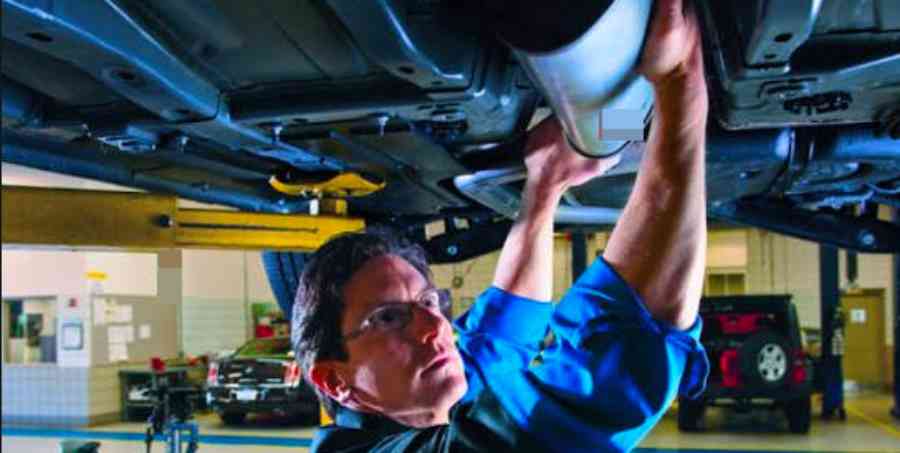
How Much Does Nissan Catalytic Converter Replacement Cost?
Nissan catalytic converter replacement typically costs $500 to $2,500 or more, including parts and labor. The final price depends on the Nissan model, model year, engine configuration, catalytic converter location, and whether the replacement uses an original equipment manufacturer (OEM) or aftermarket component. Some vehicles have multiple catalytic converters, and replacing a converter integrated into the exhaust manifold generally costs more than replacing an accessible underbody converter.
The catalytic converter itself accounts for a substantial portion of the repair expense. Aftermarket converters may cost approximately $200 to $1,000, while OEM units can exceed $1,500 for certain applications. Labor commonly adds $150 to $600 or more, depending on accessibility, local hourly rates, and the condition of the exhaust fasteners. These figures are broad planning estimates rather than verified quotes for a specific vehicle.
How Much Does a Nissan Catalytic Converter Cost by Model?
Nissan catalytic converter replacement costs vary across vehicle models because each model uses different exhaust layouts, engine configurations, and emissions-control components. For example, a Nissan Sentra with a four-cylinder engine has different converter requirements than a Nissan Pathfinder equipped with a V6 engine.
The following table provides approximate budgeting ranges for selected Nissan models. Actual estimates require the vehicle’s model year, engine, converter location, and emissions certification.
| Nissan Model | Estimated Replacement Cost |
|---|---|
| Nissan Altima | $600–$2,000+ |
| Nissan Sentra | $500–$1,800+ |
| Nissan Rogue | $700–$2,200+ |
| Nissan Maxima | $800–$2,500+ |
| Nissan Murano | $800–$2,500+ |
| Nissan Pathfinder | $800–$2,800+ |
| Nissan Frontier | $700–$2,500+ |
These ranges are illustrative estimates for parts and labor, not current model-specific market quotations. A particular repair can fall outside the listed range, especially when multiple converters require replacement or the vehicle needs additional exhaust repairs.
What Factors Affect Nissan Catalytic Converter Replacement Cost?
Five main factors determine Nissan catalytic converter replacement cost: vehicle configuration, replacement part type, labor requirements, emissions regulations, and additional repairs. Each factor changes either the price of the replacement component or the amount of work required to install it.
Vehicle configuration determines the number, design, and location of catalytic converters. Four-cylinder Nissan engines generally have simpler exhaust layouts than V6 configurations, which may use separate converters for different cylinder banks. Converter placement also affects accessibility and installation time.
Replacement part type directly affects component pricing. OEM catalytic converters are manufactured to meet Nissan’s specified fitment and performance requirements. Aftermarket converters offer alternative price points, but their suitability depends on the vehicle’s engine, model year, emissions certification, and applicable regulations.
Labor requirements depend on the converter’s location and the condition of surrounding exhaust components. A converter attached to the exhaust manifold may require additional disassembly, while corroded bolts, damaged mounting hardware, and restricted working space increase repair time. Labor charges therefore differ between vehicles and repair facilities.
Emissions regulations influence which replacement converters can legally be installed. Vehicles subject to California Air Resources Board (CARB) requirements may need an approved converter matched to the exact vehicle application. A less expensive federally compliant aftermarket converter is not automatically legal for every vehicle or jurisdiction.
Additional repairs increase the total cost when related engine or exhaust problems must be corrected. For example, an unresolved engine misfire can send unburned fuel into the exhaust system, overheating and damaging a new catalytic converter. Repairing faulty ignition components, exhaust leaks, or fuel-system problems before installation helps prevent repeated converter failure.
For an accurate Nissan catalytic converter replacement estimate, vehicle owners should provide the repair shop with the vehicle identification number (VIN), current mileage, diagnostic trouble codes, and any previous repair findings. A written estimate should identify the specific converter being replaced, part number, labor charges, emissions compatibility, and warranty coverage.
What Are the Symptoms of a Bad Nissan Catalytic Converter?
The most common symptoms of a bad Nissan catalytic converter include an illuminated check engine light, reduced engine power, poor acceleration, rattling noises, and unusual exhaust odors. These symptoms occur when the converter loses its ability to process exhaust pollutants efficiently, develops internal damage, or becomes restricted. However, individual symptoms do not confirm catalytic converter failure because ignition, fuel delivery, and oxygen sensor problems can produce similar results.
An illuminated check engine light is one of the most common indicators of a catalytic converter efficiency problem. Nissan vehicles use upstream and downstream oxygen sensors to monitor exhaust conditions and evaluate catalyst performance. When the engine control module (ECM) detects catalyst efficiency below its programmed threshold, it may store diagnostic trouble code P0420 or P0430. These codes indicate a catalyst efficiency problem but do not establish whether the converter itself or another exhaust-related component is responsible.
Poor acceleration and reduced engine power can indicate a clogged Nissan catalytic converter. A restricted converter prevents exhaust gases from leaving the engine efficiently, increasing exhaust backpressure and interfering with normal cylinder operation. As engine speed and exhaust flow increase, the restriction becomes more noticeable. For example, a Nissan Altima with a severely restricted converter may accelerate normally at low speeds but struggle to maintain power when climbing hills or accelerating onto a highway. Similar symptoms can also result from fuel delivery or ignition problems, making diagnostic testing necessary.
Rattling noises can indicate physical damage inside the catalytic converter. The converter contains a ceramic or metallic substrate coated with catalytic materials that facilitate exhaust emissions reactions. Excessive heat, physical impact, or prolonged engine problems can damage this internal structure. When sections of the substrate break apart, they may produce metallic rattling sounds during acceleration, deceleration, or engine startup. Loose exhaust heat shields can create similar noises and should be inspected before replacing the converter.
A rotten egg smell may indicate abnormal exhaust chemistry or reduced catalyst performance. The odor is associated with sulfur-containing compounds in exhaust gases and may become noticeable when combustion conditions or catalytic reactions are abnormal. An excessively rich air-fuel mixture, fuel-system malfunction, or deteriorating converter can contribute to the problem. Because exhaust odors alone cannot identify the failed component, technicians must evaluate engine operation and catalyst performance together.
A severely restricted catalytic converter may also cause excessive exhaust heat, increased fuel consumption, and engine hesitation. These symptoms become more concerning when accompanied by substantial power loss or a flashing check engine light. A flashing warning light can indicate an active misfire capable of damaging the catalytic converter, requiring prompt attention rather than continued driving.
How Do You Know If a Nissan Catalytic Converter Needs Replacement?
A Nissan catalytic converter needs replacement when diagnostic testing confirms that it is physically damaged, internally restricted, or unable to meet the required catalyst efficiency threshold after other causes have been ruled out. A check engine light or stored trouble code alone is insufficient evidence to justify replacement. Proper diagnosis includes retrieving fault codes, examining engine operating data, checking for exhaust leaks, and evaluating oxygen sensor behavior.
The diagnostic process should begin with an OBD-II scan to identify stored and pending trouble codes. Technicians should also review freeze-frame data, which records selected engine operating conditions when a fault was detected. Fuel trim readings, oxygen sensor signals, engine temperature, and related misfire codes help determine whether an engine performance problem is affecting the catalytic converter. For example, a Nissan Rogue displaying P0420 alongside a fuel mixture fault requires investigation of the underlying mixture problem before converter replacement is considered.
Does Nissan Code P0420 Mean the Catalytic Converter Is Bad?
Nissan code P0420 means the ECM has detected catalyst system efficiency below the required threshold on Bank 1. It does not automatically mean the catalytic converter is defective. The ECM evaluates catalyst performance using exhaust sensor information and predetermined operating conditions. When the monitored signals indicate insufficient oxygen-storage performance or catalyst efficiency, the system may register P0420.
Several conditions can trigger P0420 without requiring immediate catalytic converter replacement. Exhaust leaks near the monitored converter can introduce additional oxygen and distort sensor readings. Aging oxygen sensors, fuel mixture problems, and intermittent engine misfires can also affect catalyst monitoring. For example, a small exhaust leak upstream of the downstream oxygen sensor may contribute to an incorrect assessment of converter efficiency even when the catalyst remains functional.
Nissan code P0430 identifies catalyst system efficiency below threshold on Bank 2. The code applies to vehicles with a second monitored cylinder bank, such as certain Nissan V6 configurations. Bank 1 and Bank 2 refer to different cylinder groups, not the front and rear catalytic converters. A four-cylinder Nissan with a single cylinder bank generally uses P0420 rather than P0430 for its monitored catalyst efficiency fault.
When P0420 or P0430 appears, the technician should inspect related diagnostic codes and verify that the engine operates correctly before condemning the converter. Replacing the converter without correcting an engine misfire, exhaust leak, or abnormal fuel mixture can leave the original fault unresolved and damage the replacement component.
How Can You Test a Nissan Catalytic Converter Before Replacing It?
A Nissan catalytic converter can be evaluated through OBD-II diagnostics, exhaust leak inspection, oxygen sensor analysis, and exhaust restriction testing. The appropriate combination depends on whether the suspected problem involves catalyst efficiency, physical damage, or restricted exhaust flow.
OBD-II diagnostics establish the initial fault conditions. A technician retrieves stored and pending codes, reviews freeze-frame information, and examines live engine data. Short-term and long-term fuel trims help identify abnormal air-fuel mixture corrections, while misfire data can reveal combustion problems that affect catalyst operation. These checks are necessary because a converter cannot be evaluated reliably while significant engine faults remain unresolved.
Oxygen sensor analysis helps assess catalyst monitoring behavior. The upstream sensor provides information used for fuel control, while the downstream sensor helps monitor converter performance. On applicable Nissan systems, a downstream signal that closely follows upstream oxygen fluctuations under suitable test conditions may indicate reduced catalyst oxygen-storage capacity. However, sensor types, ECM strategies, and operating conditions differ by vehicle, so waveform similarity alone does not confirm failure.
Exhaust leak inspection identifies openings that can affect oxygen sensor readings and catalyst monitoring. Technicians examine exhaust manifold connections, converter flanges, gaskets, and nearby pipes for escaping exhaust gases. A leak upstream of or near the monitored catalyst can alter exhaust oxygen readings and contribute to efficiency-related trouble codes. Repairing these leaks before repeating catalyst tests helps prevent unnecessary converter replacement.
Exhaust restriction testing determines whether a damaged or clogged converter is limiting exhaust flow. Technicians may use a pressure gauge connected at an appropriate exhaust test port to measure backpressure under specified operating conditions. Excessive pressure can indicate a restriction, although additional testing may be needed to locate it within the exhaust system. Vehicle-specific service specifications should determine acceptable readings rather than relying on a universal pressure threshold.
Physical inspection can provide further evidence of converter damage. A cracked housing, loose internal substrate, or signs of severe overheating may support a replacement decision when combined with diagnostic findings. External temperature measurements alone are not reliable proof of catalyst failure because converter temperature changes with engine load, fuel mixture, and operating conditions.
Once testing confirms catalytic converter failure, the next step is to identify the correct replacement component using the Nissan model, model year, engine configuration, converter location, and emissions certification. Correcting the original cause of failure before installation reduces the risk of repeated damage and ensures the replacement addresses the actual problem.
How Do You Replace a Nissan Catalytic Converter?
Replacing a Nissan catalytic converter involves six main steps: confirming the replacement part, preparing the vehicle, disconnecting exhaust components, removing the old converter, installing the new converter, and verifying the repair. The procedure varies depending on the Nissan model, engine configuration, and converter location. For example, a catalytic converter integrated into the exhaust manifold of a Nissan Altima may require more extensive disassembly than an underbody converter connected between exhaust pipes.
Before replacement, the underlying cause of converter failure must be identified and corrected. Engine misfires, excessive fuel delivery, oil consumption, and exhaust leaks can damage a new converter or cause catalyst efficiency codes to return. The replacement component must also match the vehicle’s model year, engine, emissions certification, and installation position. Using an incompatible converter can create fitment problems, trigger diagnostic trouble codes, or violate emissions regulations.
What Tools Are Needed to Replace a Nissan Catalytic Converter?
Replacing a Nissan catalytic converter requires appropriate hand tools, vehicle support equipment, exhaust system tools, and new installation hardware. The exact requirements depend on the converter’s mounting location and the accessibility of its exhaust connections.
Commonly required equipment includes a socket and ratchet set, combination wrenches, torque wrench, oxygen sensor socket, penetrating oil, and replacement exhaust gaskets. A floor jack and properly rated jack stands or a professional vehicle lift may be necessary for underbody access. Safety glasses and heat-resistant work gloves provide protection against debris, sharp exhaust components, and residual heat.
Corroded exhaust fasteners may require additional tools or professional removal techniques. Exhaust bolts experience repeated heating and cooling cycles, which can accelerate corrosion and make removal difficult. Applying penetrating oil to accessible fasteners before disassembly can help loosen threaded connections, although severely seized hardware may still require replacement. Vehicle-specific service instructions should be consulted for fastener sizes, tightening sequences, and torque specifications.
What Are the Steps to Replace a Nissan Catalytic Converter?
The Nissan catalytic converter replacement process consists of six steps, beginning with vehicle preparation and ending with a post-installation inspection. These steps describe a general replacement procedure rather than a substitute for the factory service manual.
Step 1: Verify the replacement catalytic converter.
Confirm that the new converter matches the vehicle identification number (VIN), model year, engine configuration, and required emissions certification. Check whether the vehicle requires a manifold-mounted converter, an underbody converter, or a specific converter for Bank 1 or Bank 2. Compare the replacement part with the original component, including mounting flanges, oxygen sensor ports, and exhaust connections.
Step 2: Prepare the vehicle for safe access.
Park the vehicle on a stable, level surface, turn off the engine, and allow the exhaust system to cool completely. Raise the vehicle only when necessary and support it using properly rated equipment at manufacturer-approved lifting points. Never work beneath a vehicle supported only by a hydraulic jack. Remove any applicable underbody shields or surrounding components according to the Nissan service procedure.
Step 3: Disconnect the oxygen sensors and exhaust connections.
Locate the oxygen sensors or air-fuel ratio sensors associated with the converter. Disconnect their electrical connectors and remove the sensors when required for access or to prevent damage during removal. Loosen the exhaust flange bolts, mounting brackets, and related fasteners securing the converter. Protect sensor wiring and nearby components from excessive pulling, twisting, or contact with sharp metal edges.
Step 4: Remove the damaged catalytic converter.
Carefully separate the converter from its exhaust connections and remove it from the vehicle. Some Nissan configurations require additional removal of heat shields, support brackets, or exhaust manifold hardware. Inspect the surrounding exhaust pipes, mounting surfaces, and fasteners for corrosion, cracks, or deformation. Damaged components should be repaired or replaced before the new converter is installed.
Step 5: Install the replacement catalytic converter.
Position the new converter according to the manufacturer’s installation instructions. Install the required new gaskets, seals, and mounting hardware, then align the exhaust connections before tightening the fasteners to the specified torque. Reinstall the oxygen sensors and reconnect their electrical connectors, ensuring that wiring remains clear of hot exhaust surfaces. Reattach any removed brackets, shields, and supporting components.
Step 6: Inspect the installation and verify the repair.
Start the engine and inspect the exhaust connections for leaks using an appropriate, safe inspection method. Check for unusual exhaust noises, loose components, and sensor wiring problems. Use an OBD-II scanner to review diagnostic trouble codes and relevant engine operating data. Clear codes only after the underlying faults have been corrected, then complete the manufacturer-specified drive cycle or readiness verification procedure. Confirm that the catalyst monitor completes successfully and that the original fault does not return.
A Nissan catalytic converter replacement can be completed by an experienced DIY mechanic when the converter is accessible and the necessary equipment is available. However, manifold-integrated converters, severely corroded exhaust connections, and complex engine layouts increase the difficulty of the repair. Professional installation is the safer choice when the procedure requires extensive component removal, specialized equipment, or advanced diagnostic testing.
The repair is complete only when the exhaust system is properly sealed, the replacement converter meets the vehicle’s emissions requirements, and diagnostic testing confirms that the original problem has been resolved.
Should You Buy an OEM or Aftermarket Nissan Catalytic Converter?
An OEM Nissan catalytic converter is generally the preferred option for factory-matched fitment, while a certified aftermarket catalytic converter can provide a lower-cost replacement. Both options can restore proper exhaust emissions control when the converter is compatible with the vehicle and meets applicable emissions regulations. The best choice depends on the Nissan model, engine configuration, replacement budget, warranty coverage, and state emissions requirements.
OEM catalytic converters are original equipment replacement components supplied through Nissan’s approved parts network. They are designed to match the vehicle’s specified exhaust configuration, mounting points, sensor locations, and emissions requirements. For example, replacing a manifold-integrated catalytic converter on a Nissan Rogue with the correct OEM assembly reduces uncertainty about component alignment and compatibility. However, OEM converters generally carry higher purchase prices, particularly for vehicles with complex exhaust manifold assemblies.
Aftermarket catalytic converters are manufactured by independent parts companies and are available in direct-fit and universal configurations. Direct-fit converters are designed for specific vehicle applications and generally require fewer modifications during installation. Universal converters may require cutting, welding, or additional fabrication, increasing labor requirements. Aftermarket parts vary in catalyst construction, emissions certification, warranty terms, and compatibility, so a lower purchase price does not automatically mean a lower total repair cost.
The following table compares the main differences between OEM and aftermarket Nissan catalytic converters.
| Comparison Factor | OEM Catalytic Converter | Aftermarket Catalytic Converter |
|---|---|---|
| Manufacturer | Nissan-approved parts supplier | Independent parts manufacturer |
| Purchase Price | Generally higher | Often lower |
| Vehicle Fitment | Designed for specified Nissan applications | Depends on part and vehicle compatibility |
| Installation | Factory-style replacement | Direct-fit or fabrication may be required |
| Emissions Compliance | Matched to the specified original application | Requires appropriate EPA or CARB compliance |
| Warranty | Nissan replacement-part terms | Manufacturer-specific warranty |
| Availability | Nissan dealers and authorized parts channels | Automotive parts retailers and exhaust suppliers |
Emissions compliance is a critical factor when selecting an aftermarket Nissan catalytic converter. In the United States, replacement converters must satisfy applicable federal and state regulations. California requires qualifying aftermarket catalytic converters to have California Air Resources Board (CARB) approval for the specific vehicle application. Other states also apply California-based emissions requirements in relevant circumstances. A federally compliant converter is not automatically approved for installation on a vehicle subject to California aftermarket converter rules.
Vehicle owners should verify emissions requirements before purchasing a replacement. The underhood emissions label, VIN, model year, engine specification, and converter location help identify the correct application. For CARB-regulated installations, the replacement must have the appropriate approval and application listing. Installing an incompatible converter can result in emissions inspection failure, recurring catalyst efficiency codes, or additional replacement expenses.
Warranty coverage also influences the decision. OEM replacement parts and aftermarket converters have different warranty terms, which may include separate limitations for manufacturing defects, mileage, installation, and emissions performance. A vehicle may also qualify for existing emissions warranty coverage, making it important to check eligibility before paying for a replacement.
For Nissan owners prioritizing original fitment and factory specifications, an OEM catalytic converter is the stronger choice. For owners seeking a lower repair cost, a properly certified direct-fit aftermarket converter is a practical alternative. Regardless of the selected part, the replacement should match the vehicle’s emissions configuration, install without exhaust leaks, and operate correctly with the existing engine management system.
How Long Does a Nissan Catalytic Converter Last?
A Nissan catalytic converter can last 100,000 miles or longer when the engine operates correctly and the exhaust system remains in good condition. Catalytic converters do not have a fixed replacement interval because their lifespan depends on combustion efficiency, engine maintenance, operating conditions, and exposure to contaminants. Unlike engine oil or air filters, catalytic converters are generally replaced when testing confirms failure rather than at a predetermined mileage.
The catalytic converter contains a ceramic or metallic substrate coated with precious metals such as platinum, palladium, and rhodium. These materials facilitate chemical reactions that convert harmful exhaust pollutants into less harmful substances. Under normal operating conditions, the catalyst performs these reactions without being consumed in the process. However, excessive temperatures, chemical contamination, and physical damage can gradually reduce converter efficiency or destroy its internal structure.
Four major factors contribute to premature Nissan catalytic converter failure: engine misfires, excessive fuel delivery, oil or coolant contamination, and physical damage. Engine misfires allow unburned fuel to enter the exhaust system, where it can react inside the converter and generate excessive heat. A rich air-fuel mixture creates similar conditions by increasing the amount of unburned hydrocarbons entering the catalyst. Repeated overheating can damage the substrate and permanently reduce catalytic efficiency.
Oil and coolant contamination also shorten converter lifespan. Worn piston rings, defective valve stem seals, or certain engine ventilation problems can allow engine oil to enter the combustion chambers. Internal coolant leaks can introduce coolant into the combustion process. Residues from these substances can accumulate on catalyst surfaces, reducing their effectiveness. For example, replacing a catalytic converter on a Nissan Altima with unresolved oil consumption may result in another failure because the contamination source remains active.
Physical damage presents another risk, particularly for converters mounted beneath the vehicle. Road debris, impacts, corrosion, and damaged exhaust supports can crack the converter housing or internal substrate. A broken substrate may produce rattling noises, obstruct exhaust flow, or reduce emissions performance.
Preventing premature catalytic converter failure requires maintaining proper engine combustion and correcting related faults promptly. Nissan owners should address engine misfires, abnormal fuel trims, oil consumption, coolant leaks, and persistent check engine warnings. Following the manufacturer’s maintenance schedule for spark plugs, engine oil, and other relevant components helps maintain combustion efficiency. A properly functioning engine reduces the thermal and chemical stresses placed on the catalytic converter, extending its useful service life.
Read more: Chevy Equinox Catalytic Converter Replacement Guide
Is Nissan Catalytic Converter Replacement Covered Under Warranty?
Nissan catalytic converter replacement may be covered under the federal emissions warranty for 8 years or 80,000 miles, whichever occurs first, on qualifying vehicles sold in the United States. Under federal emissions warranty requirements, catalytic converters are among the specified major emissions-control components covered for this period. Coverage depends on the vehicle’s original in-service date, mileage, applicable warranty provisions, and the circumstances of the failure.
The federal emissions warranty is separate from Nissan’s standard limited vehicle warranty. For example, a Nissan vehicle that is six years old with 65,000 miles may still qualify for catalytic converter warranty coverage even if its basic vehicle warranty has expired. However, warranty eligibility must be confirmed because exclusions, vehicle history, and the cause of the failure can affect whether the repair is covered.
The most reliable way to verify Nissan catalytic converter warranty coverage is to contact an authorized Nissan dealership with the vehicle identification number (VIN). The dealership can review the vehicle’s original in-service date, mileage, warranty status, and applicable emissions coverage. Owners should also consult the warranty information booklet supplied for their specific Nissan model year.
Certain vehicles may qualify for additional emissions warranty protections under California emissions regulations or other applicable state requirements. These provisions vary by vehicle certification, model year, registered location, and covered component. Owners should review the vehicle’s emissions warranty documentation rather than assuming that every Nissan catalytic converter receives the same coverage.
Warranty claims generally require an authorized inspection to establish the failure and determine eligibility. A diagnostic trouble code such as P0420 or P0430 does not automatically establish a covered catalytic converter defect. The dealership may need to inspect oxygen sensors, exhaust connections, engine operating conditions, and the converter itself before approving replacement.
Nissan owners should check warranty eligibility before purchasing a replacement catalytic converter or authorizing a paid repair. Confirming coverage first can prevent unnecessary out-of-pocket expenses when the failed component qualifies for warranty replacement.
Can You Drive a Nissan With a Bad Catalytic Converter?
You can sometimes drive a Nissan with a failing catalytic converter for a limited period, but continued driving depends on the severity of the problem. A converter with reduced emissions efficiency may allow the engine to operate normally, while a severely clogged or overheating converter can cause substantial power loss, excessive exhaust temperatures, and engine performance problems. The safest decision depends on the vehicle’s symptoms, diagnostic trouble codes, and confirmed cause of failure.
A Nissan displaying a steady check engine light with code P0420 or P0430 may remain drivable when the engine runs smoothly, accelerates normally, and shows no signs of overheating or exhaust restriction. However, these codes indicate that the catalyst monitoring system has detected an efficiency problem, not necessarily that the converter itself has failed. Continued operation without diagnosis can allow an underlying fuel-system, ignition, or exhaust problem to worsen. A vehicle with an unresolved emissions fault may also fail a required emissions inspection.
Delaying replacement of a confirmed faulty catalytic converter can lead to three main problems: increased exhaust emissions, reduced engine performance, and additional exhaust system damage. A converter that no longer processes pollutants effectively allows higher levels of regulated emissions to leave the exhaust system. If its internal substrate becomes damaged or obstructed, exhaust backpressure can increase and interfere with normal engine operation. Excessive heat associated with converter damage or unresolved combustion problems can also affect nearby exhaust components, heat shields, and wiring.
A severely restricted catalytic converter can make a Nissan difficult to accelerate, particularly under heavy engine load. For example, a Nissan Rogue with a blocked converter may experience pronounced hesitation when climbing a hill or merging onto a highway because exhaust gases cannot exit the engine efficiently. Continuing to drive under these conditions can increase engine stress and create unsafe situations when adequate acceleration is required.
Stop driving and arrange professional assistance if the Nissan develops severe power loss, excessive exhaust heat, a flashing check engine light, or signs of overheating. A flashing check engine light commonly indicates an active engine misfire that can rapidly overheat and damage the catalytic converter. Strong burning odors, smoke near the exhaust system, or abnormal engine temperatures also require immediate attention. Pull over safely, shut off the engine when appropriate, and avoid touching hot exhaust components.
Replacing a defective catalytic converter without correcting the underlying cause does not guarantee a lasting repair. Engine misfires, rich fuel mixtures, exhaust leaks, and oil contamination must be diagnosed and addressed before the replacement is installed. Once repairs are completed, the exhaust system should be inspected for leaks and the engine management system checked for returning diagnostic trouble codes.
The safest approach is to diagnose catalytic converter problems promptly rather than continue driving until performance deteriorates. Early diagnosis helps distinguish an emissions efficiency fault from a dangerous exhaust restriction, reduces the risk of additional damage, and determines whether Nissan catalytic converter replacement is actually necessary.