The LT1 engine is one of the most important modern developments in General Motors performance engineering, representing a refined evolution of the legendary small block V8 family. Designed as part of the Gen 5 architecture, the LT1 6.2L V8 combines traditional pushrod simplicity with advanced technologies such as direct fuel injection and variable valve timing. This balance between classic American V8 character and modern efficiency has made it a core powertrain in several high performance vehicles including the Chevrolet Corvette Stingray C7 and the Chevrolet Camaro SS.
When users search for LT1 Engine Specs, they are typically looking for more than just numbers. They want a complete understanding of how this engine delivers power, how it behaves in real driving conditions, and why it remains relevant in a market increasingly dominated by turbocharged and hybrid systems. The LT1 answers this with a strong combination of torque rich low end response, high horsepower output, and improved fuel efficiency compared to older V8 generations.
In real applications, the LT1 engine is known for its smooth power delivery and strong acceleration, making it suitable for both street driving and track performance. Its engineering focus is not only raw output but also balance, reliability, and adaptability across different vehicle platforms. This is why it has become a key component in modern GM performance strategy.
This guide will break down the LT1 engine specs in detail, including technical architecture, performance data, real world behavior, reliability factors, and tuning potential. By the end, you will have a complete understanding of why the LT1 6.2L V8 remains one of the most respected naturally aspirated engines in the modern automotive world.
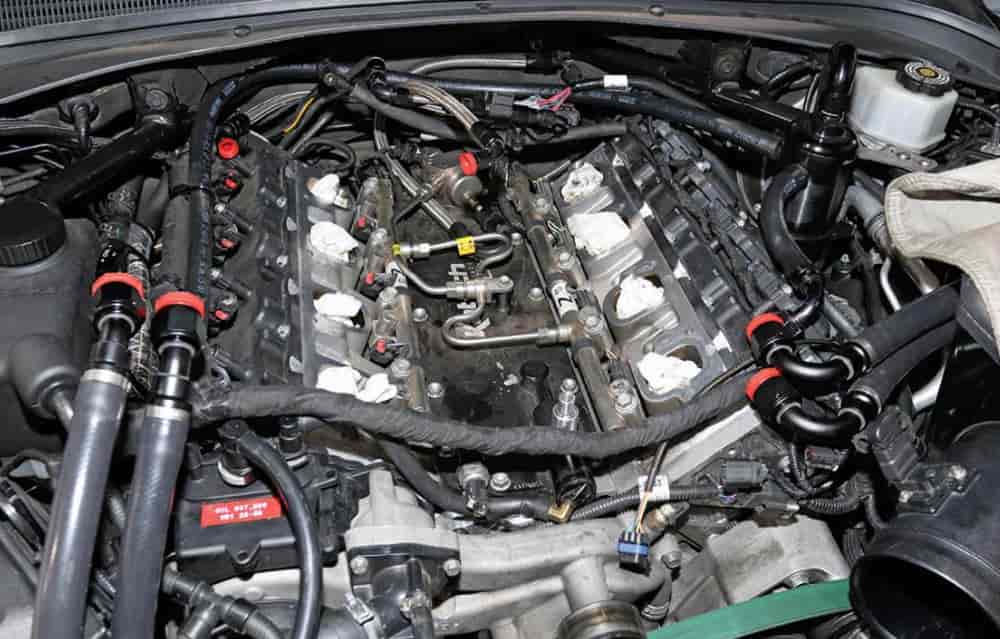
LT1 Engine Overview GM Gen 5 Small Block Architecture
The LT1 engine is part of General Motors Gen 5 small block V8 family. GM redesigned this engine to meet modern emissions standards while keeping strong performance and classic V8 feel. It replaces older LS based engines in several performance vehicles.
The LT1 uses a 6.2 liter naturally aspirated V8 layout with a pushrod overhead valve system. This design keeps the engine compact and lightweight. It also helps deliver strong low end torque, which improves real world driving performance. GM builds the block and cylinder heads from aluminum to reduce weight and improve heat control.
GM introduced direct fuel injection in the LT1. This system sprays fuel directly into the combustion chamber. It improves combustion efficiency and increases power output while reducing fuel consumption compared to older port injection systems.
The engine also uses variable valve timing. This system adjusts valve timing based on RPM and engine load. It improves efficiency at low speed and increases airflow at high RPM for better performance. Drivers get smoother power delivery across different driving conditions.
The LT1 includes Active Fuel Management technology. This system shuts down half of the cylinders during light load driving. It helps improve fuel economy on highways while keeping full V8 power available when needed.
Overall, GM designed the LT1 to balance performance and efficiency. It keeps the traditional V8 character but adds modern technologies that improve usability, fuel economy, and emissions performance. This makes the LT1 a strong evolution of the small block engine family.
LT1 Engine Specs Full Technical Data
The LT1 engine delivers a strong combination of displacement, efficiency, and modern combustion technology. General Motors designed it as a 6.2 liter naturally aspirated V8 to serve high performance applications while maintaining daily drivability.
The engine uses a 376 cubic inch displacement with a bore and stroke configuration of 103.25 millimeters by 92 millimeters. This setup creates a balance between torque and high RPM power delivery. The compression ratio reaches 11.5 to 1, which helps increase thermal efficiency and improves overall combustion performance.
The LT1 produces around 455 horsepower and 455 pound feet of torque in most factory applications. These numbers vary slightly depending on the vehicle tuning and exhaust setup. The engine reaches peak torque at low RPM, which improves acceleration and throttle response in real driving conditions.
General Motors equips the LT1 with direct fuel injection. This system delivers fuel directly into the combustion chamber under high pressure. It improves fuel atomization and increases combustion efficiency. The engine also uses a variable valve timing system that adjusts timing based on engine load and speed. This improves both performance and fuel economy across different driving conditions.
The LT1 uses a pushrod overhead valve layout with two valves per cylinder. This design keeps the engine compact and reduces mechanical complexity compared to overhead cam systems. The redline typically sits around 6,600 RPM depending on application.
In summary, the LT1 engine specs show a focus on balanced performance. It delivers strong horsepower, high torque output, and improved efficiency compared to older V8 designs. This makes it one of the most refined modern small block engines in the General Motors lineup.
LT1 Engine Performance in Real Vehicles
The LT1 engine shows its full potential when installed in real performance vehicles. General Motors tuned this 6.2 liter V8 for both street usability and track capability, which makes it one of the most balanced engines in its class.
In the Chevrolet Corvette Stingray C7, the LT1 delivers a strong combination of acceleration and precision handling. The engine responds quickly at low RPM and builds power smoothly through the mid range. This gives the Corvette strong launch performance and consistent power delivery during high speed driving. Drivers experience a direct connection between throttle input and engine response, which improves overall driving confidence.
In the Chevrolet Camaro SS, the LT1 focuses more on raw muscle car character. It produces strong torque at low RPM, which helps the car deliver fast straight line acceleration. The engine pairs well with both manual and automatic transmissions, giving drivers flexibility depending on driving style. The Camaro SS uses the LT1 to maintain traditional American V8 performance while still meeting modern efficiency standards.
Across both vehicles, the LT1 engine maintains consistent power output and thermal stability. It handles spirited driving well and performs reliably under repeated high load conditions. General Motors engineered it to support both daily commuting and aggressive performance driving without major compromise.
The driving experience of the LT1 is defined by strong mid range torque, linear power delivery, and a deep V8 exhaust note. Unlike turbocharged engines that rely on boost, the LT1 delivers immediate response through natural aspiration. This creates a more predictable and engaging driving feel.
Overall, the LT1 engine enhances the identity of both the Corvette and Camaro by combining modern engineering with traditional V8 performance characteristics.
LT1 Technology and Engineering Innovations
The LT1 engine integrates several modern technologies that improve performance, efficiency, and emissions control while maintaining the traditional V8 character. General Motors designed these systems to optimize both everyday driving and high performance situations.
One of the most important technologies is direct fuel injection. This system injects fuel directly into the combustion chamber at high pressure. It improves combustion precision and increases power output while reducing fuel consumption. Compared to older port injection systems, it also helps the engine operate more efficiently under different load conditions.
The LT1 also uses variable valve timing. This system adjusts the timing of the intake and exhaust valves based on engine speed and load. At low RPM, it improves fuel efficiency and smoothness. At higher RPM, it increases airflow and enhances power output. This creates a more flexible engine that adapts to different driving situations.
Another key feature is Active Fuel Management. This system disables half of the engine cylinders during light driving conditions. It reduces fuel consumption on highways without affecting performance when full power is needed. The system activates seamlessly, so drivers do not notice the transition between V8 and V4 operation.
Thermal management also plays an important role in the LT1 design. The engine uses improved cooling pathways and aluminum construction to maintain stable operating temperatures. This helps prevent heat soak during extended high performance driving.
Together, these technologies allow the LT1 engine to deliver a strong balance between power and efficiency. General Motors successfully combined modern electronic control systems with a traditional pushrod architecture. This makes the LT1 one of the most advanced small block V8 engines in its category.
LT1 Engine Reliability and Common Issues
The LT1 engine is generally considered a reliable modern V8 when properly maintained. General Motors designed it with durability in mind, combining a strong aluminum block with proven pushrod architecture and modern fuel management systems. However, like any high performance engine, it has a few known issues that owners should understand.
One of the most discussed concerns is oil consumption in some driving conditions. This issue does not affect all engines, but it can appear under heavy load or long term use. Regular oil checks and proper maintenance help reduce this risk and keep engine performance stable.
Another known issue involves the Active Fuel Management system. While this technology improves fuel economy, it can sometimes cause long term wear on lifters in certain usage patterns. Some owners choose to disable this system during performance builds to avoid potential complications.
The cooling system also requires attention, especially in high performance applications such as the Chevrolet Corvette Stingray C7 and Chevrolet Camaro SS. The LT1 generates significant heat under aggressive driving, so maintaining proper coolant levels and system health is essential for long term reliability.
Despite these concerns, most LT1 engines perform very well when serviced correctly. Regular oil changes, high quality fuel, and proper warm up procedures significantly improve engine lifespan. Many owners report high mileage durability without major mechanical failures.
Overall, the LT1 engine offers a strong balance between modern technology and proven V8 reliability. It is not a maintenance free engine, but it rewards proper care with consistent performance and long term durability in both daily driving and performance conditions.
LT1 vs LS3 vs LT2 Engine Comparison
The LT1 engine sits in the middle of General Motors small block evolution and represents a transition between older performance focused engines and newer efficiency oriented designs. To understand its position, it is important to compare it with the LS3 and LT2 engines.
The LS3 engine belongs to the previous generation of GM V8 platforms. It uses a larger displacement naturally aspirated setup and delivers strong peak power with a simpler fuel system. However, it lacks modern technologies such as direct fuel injection and advanced thermal management. As a result, the LS3 feels more mechanical and less efficient compared to the LT1.
The LT1 improves on the LS3 by introducing direct injection, variable valve timing, and active fuel management. These upgrades allow the LT1 to produce similar or better performance while improving fuel economy and emissions. It also delivers stronger low end torque, which makes it more responsive in everyday driving conditions.
The LT2 engine represents the next step in this evolution and appears in later Corvette models. It builds on the LT1 architecture but improves airflow, lubrication systems, and track focused performance tuning. The LT2 is more specialized for high performance driving, while the LT1 remains more balanced for both street and performance use.
In comparison, the LT1 offers the best balance between traditional V8 character and modern efficiency. The LS3 prioritizes simplicity and raw mechanical feel, while the LT2 focuses more on advanced performance optimization. Each engine serves a different purpose within the GM lineup.
Overall, the LT1 stands out as the most versatile option. It bridges the gap between older LS based engines and newer LT based performance systems, making it one of the most important developments in the GM small block family.
LT1 Engine Modifications and Performance Upgrades
The LT1 engine has strong tuning potential thanks to its robust small block architecture and modern fuel delivery system. General Motors designed it with enough engineering headroom to support performance upgrades without requiring major internal modifications in early stages.
One of the most common upgrades is ECU tuning. A performance tune can improve throttle response, increase horsepower output, and optimize fuel and ignition timing. This is often the first step for owners who want to unlock additional performance from the LT1 engine.
Another popular modification is upgrading the intake and exhaust system. A high flow air intake improves airflow into the engine, while a performance exhaust system reduces back pressure. These changes help the LT1 breathe more efficiently and increase power output across the RPM range.
Camshaft upgrades are also widely used in more advanced builds. A performance camshaft can significantly increase horsepower and torque, especially in mid to high RPM ranges. However, this modification requires careful tuning to maintain drivability and engine balance.
Forced induction is another major path for LT1 performance enhancement. Superchargers and turbo systems can dramatically increase horsepower output. The LT1 block is strong enough to handle boost when properly tuned and supported with upgraded fuel and cooling systems.
Supporting modifications such as improved fuel injectors, stronger cooling systems, and upgraded internal components become necessary for high power builds. These upgrades ensure long term reliability under increased stress.
Overall, the LT1 engine responds very well to modifications. It offers a flexible platform for both mild performance gains and extreme horsepower builds, making it highly popular among tuning enthusiasts and performance builders.
Conclusion
The LT1 engine represents a major step forward in General Motors small block V8 development. It combines traditional pushrod architecture with modern technologies such as direct fuel injection, variable valve timing, and active fuel management. This balance allows it to deliver strong performance while maintaining improved efficiency compared to older V8 generations.
Across its main applications in the Chevrolet Corvette Stingray C7 and Chevrolet Camaro SS, the LT1 engine consistently demonstrates strong torque delivery, smooth power response, and reliable real world performance. It performs well in both daily driving conditions and high demand performance scenarios, making it one of the most versatile engines in the GM lineup.
From a technical perspective, the LT1 engine specs show a well engineered 6.2 liter V8 designed for balance rather than extreme specialization. It does not focus solely on peak horsepower but instead optimizes overall drivability, thermal efficiency, and long term durability.
When compared to older LS engines and newer LT variants, the LT1 stands out as the bridge between simplicity and advanced engineering. It retains the classic V8 character while integrating modern systems that improve usability and emissions compliance.
For enthusiasts, the LT1 engine also offers strong tuning potential. With the right modifications, it can deliver significant performance gains while maintaining reliability when properly supported.
Overall, the LT1 Engine Specs highlight a well rounded powertrain that continues to define modern American V8 performance. It remains one of the most important and balanced engines in the General Motors portfolio.