Among General Motors performance V8 engines, few have earned the reputation of the LS2. Introduced as part of the Gen IV small block family, this 6.0 liter powerhouse quickly became known for blending strong factory horsepower, responsive torque delivery, and exceptional tuning potential. For enthusiasts researching LS2 engine specs, understanding more than just raw numbers is important. Bore, stroke, compression ratio, cylinder head design, and internal components all influence how this engine performs on the street, at the track, or in a swap project.
The LS2 produced an impressive 400 horsepower and 400 lb ft of torque from the factory, numbers that made it a major step forward from earlier LS platforms. Yet the appeal of the engine goes far beyond those headline figures. Builders often want to know how the 4.000 inch bore affects airflow, why the 3.622 inch stroke contributes to balanced power, and how much power a stock bottom end can realistically support before upgrades become necessary.
For buyers and builders, these details matter because choosing the wrong platform can lead to expensive mistakes, limited performance gains, or frustrating reliability issues. That is why this guide breaks down LS2 engine specs in depth, covering horsepower, torque, bore, stroke, internal design, and real world performance characteristics to help you understand why the LS2 remains one of the most respected V8 engines ever built.
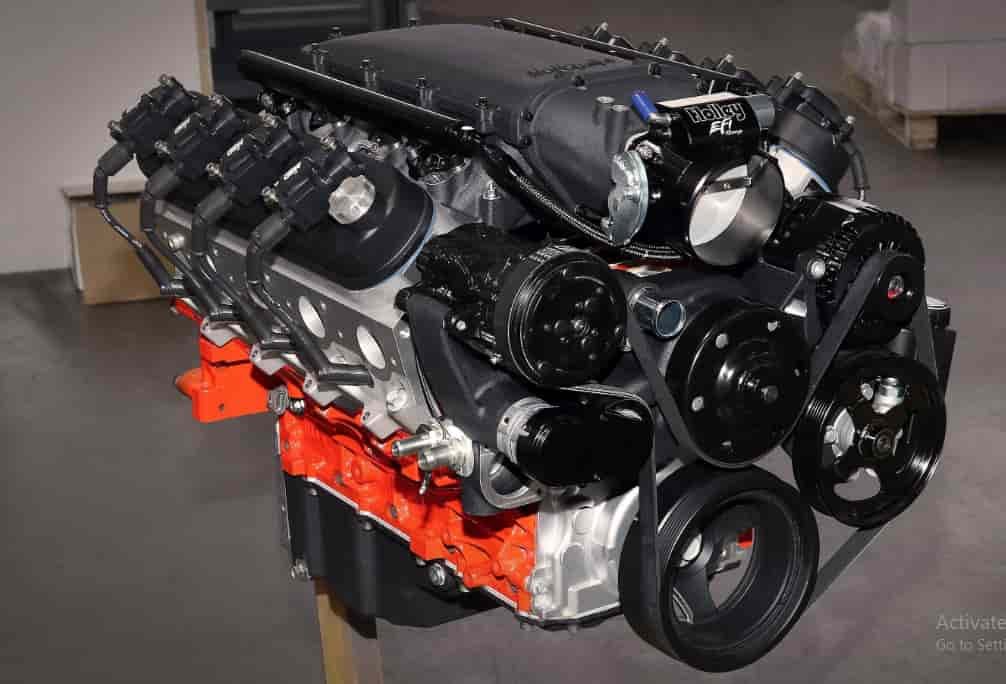
What Is the LS2 Engine
The LS2 is a 6.0 liter naturally aspirated V8 developed by General Motors as part of the Gen IV small block family. It launched in 2005 as an upgrade over the LS1. It delivered more displacement, higher output, and better airflow.
For enthusiasts researching LS2 engine specs, this engine stands out for combining factory reliability with strong performance potential. It is simple in design but highly effective in real world use.
The LS2 uses an aluminum block and aluminum cylinder heads. This design reduces weight and improves power to weight ratio. It has a 364 cubic inch displacement. This comes from a 4.000 inch bore and a 3.622 inch stroke. The balance between bore and stroke helps the engine deliver strong low end torque while still revving freely at higher rpm.
Airflow was a major improvement over earlier LS engines. The LS2 uses high flowing 243 cathedral port heads. It also uses a larger intake manifold and a 90 millimeter throttle body. These upgrades improve breathing efficiency. As a result, the engine produces 400 horsepower and 400 lb ft of torque from the factory.
The LS2 powered several well known performance vehicles. These include the Chevrolet Corvette C6, the Pontiac GTO, and the Chevrolet TrailBlazer SS. It was used in both sports cars and heavier performance platforms. This shows how flexible the engine platform is.
Many builders like the LS2 because it offers strong aftermarket support. The architecture is durable. It also responds well to upgrades. This makes it a popular choice for swaps, street builds, and track applications.
LS2 Engine Specs Overview
The LS2 delivers strong factory performance for a 6.0 liter V8. It belongs to the Gen IV small block family developed by General Motors. This engine was designed to improve airflow, increase displacement, and support higher power output compared to earlier LS platforms.
Below is a clear breakdown of the LS2 engine specs:
Engine Type: Naturally aspirated V8
Displacement: 6.0 liters or 364 cubic inches
Horsepower: 400 hp at 6000 rpm
Torque: 400 lb ft at 4400 rpm
Bore: 4.000 inches
Stroke: 3.622 inches
Compression Ratio: 10.9 to 1
Block Material: Aluminum
Cylinder Heads: 243 cathedral port aluminum heads
Fuel System: Sequential fuel injection
Redline: Around 6500 rpm
The LS2 uses a square bore and stroke design. This helps balance torque and high rpm power. The 4.000 inch bore improves airflow through the combustion chamber. The 3.622 inch stroke supports smooth torque delivery and engine stability at higher speeds.
The compression ratio of 10.9 to 1 gives the LS2 strong combustion efficiency. This helps the engine produce consistent power without requiring forced induction from the factory. It also improves throttle response in daily driving and performance situations.
Airflow is one of the key strengths of this engine. The 243 cylinder heads use a cathedral port design. This design improves intake velocity and supports better cylinder filling. Combined with a large throttle body and intake manifold, the LS2 breathes more efficiently than its predecessor.
These specifications explain why the LS2 became popular in performance cars like the Chevrolet Corvette C6 and the Pontiac GTO. It delivers a strong balance of power, reliability, and upgrade potential.
LS2 Horsepower and Torque Explained
The LS2 produces 400 horsepower and 400 lb ft of torque from the factory. These numbers come from its 6.0 liter displacement and efficient airflow design developed by General Motors. The engine was tuned to deliver strong performance without relying on forced induction.
Horsepower in the LS2 peaks at around 6000 rpm. This gives the engine a strong top end feel. It allows the car to pull hard at higher speeds. Torque peaks at about 4400 rpm. This provides strong mid range acceleration and good everyday drivability.
The torque curve of the LS2 is relatively flat. This means power delivery feels smooth and predictable. Drivers get strong response in both low and mid rpm ranges. This is one reason the LS2 feels powerful even before reaching peak rpm.
In real world driving, the LS2 often feels stronger than its official numbers suggest. The combination of aluminum construction, 4.000 inch bore, and 3.622 inch stroke helps the engine respond quickly to throttle input. The lightweight rotating assembly also improves engine responsiveness.
Compared to earlier LS engines, the LS2 benefits from improved cylinder head flow. The 243 cathedral port heads increase airflow into the combustion chamber. This improves combustion efficiency and helps maintain strong torque across the rpm range.
In performance vehicles like the Chevrolet Corvette C6, the LS2 delivers consistent acceleration and strong highway pull. In heavier platforms like the Chevrolet TrailBlazer SS, it still provides solid performance due to its torque characteristics.
For tuners, the LS2 responds well to modifications. Simple upgrades like intake systems, exhaust headers, and ECU tuning can increase both horsepower and torque noticeably. This makes it a flexible platform for both street and track use.
LS2 Bore and Stroke Specifications
The LS2 uses a 4.000 inch bore and a 3.622 inch stroke. These dimensions define its 6.0 liter or 364 cubic inch displacement. The engine was engineered by General Motors to balance airflow, torque delivery, and high rpm capability.
The 4.000 inch bore is relatively large for a small block V8. A larger bore allows bigger intake and exhaust valves. This improves airflow into and out of the combustion chamber. Better airflow helps the engine produce more power at higher rpm. It also supports performance upgrades such as camshaft changes and head porting.
The 3.622 inch stroke gives the LS2 a balanced character. It is not overly long, so the engine can rev freely. At the same time, it is long enough to produce strong mid range torque. This balance makes the LS2 feel both powerful and responsive in daily driving and performance use.
Together, the bore and stroke create a square design. This means the bore and stroke are close in size. A square engine design is known for balanced performance. It does not strongly favor either low end torque or high rpm horsepower. Instead, it delivers a mix of both.
This design also improves durability under performance conditions. The LS2 rotating assembly is stable at higher rpm. This allows safe operation near its 6500 rpm range without major stress under stock conditions.
In vehicles like the Chevrolet Corvette C6, this bore and stroke combination helps the engine deliver strong acceleration across the rev range. In swap projects, builders often choose the LS2 because this balance works well in both lightweight and heavier chassis applications.
The bore and stroke layout also explains why the LS2 responds well to modifications. Increasing airflow through heads, intake, and cam upgrades can significantly improve performance. The engine architecture supports these changes without losing drivability.
LS2 Internal Components and Compression Ratio
The LS2 uses a strong and lightweight internal design built for performance and durability. It was engineered by General Motors as part of the Gen IV small block family. The goal was to support higher airflow, better efficiency, and improved power delivery compared to earlier LS engines.
The engine block is made from aluminum. This reduces overall weight and improves vehicle balance. Inside, the LS2 uses a forged steel crankshaft. It is designed to handle high rpm operation and consistent torque loads. The connecting rods are powdered metal. They offer a good balance between strength and cost for factory performance use.
The pistons are hypereutectic aluminum. They are lightweight and help the engine rev quickly. These pistons are designed for a compression ratio of 10.9 to 1. This relatively high compression helps the LS2 produce strong power and efficient combustion without needing forced induction from the factory.
The cylinder heads are 243 cathedral port aluminum heads. These heads are known for strong airflow characteristics. They improve intake velocity and support better cylinder filling. This directly contributes to the LS2’s 400 horsepower and 400 lb ft torque output.
The camshaft is hydraulic roller type. It is designed for smooth operation and long term reliability. It also helps maintain stable valve timing at higher rpm. The valvetrain supports engine speeds up to around 6500 rpm in stock form.
The compression ratio plays a key role in engine behavior. At 10.9 to 1, the LS2 delivers strong throttle response and good fuel efficiency for a performance V8. It also helps improve low and mid range torque. However, this compression level requires good fuel quality to avoid knocking under heavy load.
In performance vehicles like the Pontiac GTO, this internal setup allows the engine to feel responsive and strong in real world driving. It also gives builders a solid foundation for upgrades such as cam swaps, intake improvements, and forced induction setups.
How Much Power Can a Stock LS2 Handle
The stock LS2 is stronger than many people expect. Built by General Motors, it was designed with a durable aluminum block and a forged steel crankshaft. This gives it a solid foundation for moderate performance upgrades without opening the engine.
In naturally aspirated form, a healthy stock LS2 can safely handle its factory rating of 400 horsepower without stress. With basic bolt on upgrades such as intake, exhaust, and ECU tuning, it can typically reach around 430 to 450 horsepower at the crank. These gains come mainly from improved airflow and better fuel and ignition timing.
When forced induction is introduced, limits become more important. With a proper tune and supporting fuel system, a stock internal LS2 can usually handle around 500 to 550 wheel horsepower in good condition. Some setups push higher, but reliability begins to depend heavily on tuning quality and fuel control.
The main weak points are the hypereutectic pistons and powdered metal connecting rods. These parts are not designed for extreme boost or detonation. If knock occurs under load, damage can happen quickly. This is why tuning precision is critical for boosted LS2 builds.
Cooling also plays a role in power limits. The LS2 performs best when intake air temperatures and engine coolant temperatures are controlled. Heat management becomes more important as power increases. Many builders add upgraded radiators, oil coolers, and better intake systems to maintain stability.
In performance platforms like the Chevrolet Corvette C6, the LS2 is often pushed beyond factory output with bolt ons alone. However, long term reliability depends on staying within safe tuning limits and avoiding excessive cylinder pressure.
Overall, the LS2 offers a strong balance between durability and performance potential. It is not a fully forged racing engine from the factory, but it provides a reliable platform for moderate builds and well tuned performance setups.
LS2 vs LS3 Specs Comparison
The LS2 and LS3 are both part of the Gen IV small block family developed by General Motors. They share a similar architecture, but the LS3 is a clear evolution with more airflow capacity and higher performance potential. For many enthusiasts comparing LS2 engine specs, this section is one of the most important.
The LS2 has a 6.0 liter displacement, while the LS3 increases to 6.2 liters. The LS3 achieves this through a larger bore of 4.065 inches compared to the LS2’s 4.000 inches. The stroke remains similar, but the increased bore significantly improves airflow and power potential.
In terms of factory output, the LS2 produces 400 horsepower and 400 lb ft of torque. The LS3 raises this to around 430 to 436 horsepower depending on application. The torque also increases slightly, giving the LS3 a stronger overall performance profile.
Cylinder head design is one of the biggest differences. The LS2 uses 243 cathedral port heads. The LS3 uses rectangular port heads, which allow much higher airflow. This is a key reason the LS3 supports higher horsepower more easily, especially at higher rpm.
The compression ratio is also slightly different. The LS2 runs at 10.9 to 1, while the LS3 typically runs around 10.7 to 1. Even with slightly lower compression, the LS3 still produces more power due to better airflow efficiency.
Both engines have aluminum blocks, but the LS3 benefits from improved internal flow design and updated components. This makes it more efficient in both stock and modified form.
In real world use, the LS2 feels strong and balanced, especially in vehicles like the Chevrolet Corvette C6 and Pontiac GTO. The LS3, however, delivers more top end power and responds better to high performance modifications.
For builders, the LS2 is often chosen for budget friendly swaps and solid street performance. The LS3 is preferred when higher horsepower goals and more airflow headroom are required.
Common LS2 Performance Upgrades
The LS2 responds very well to basic and advanced modifications. This is one of the reasons it remains popular among builders working with the platform developed by General Motors. Even small upgrades can deliver noticeable gains in horsepower and torque.
One of the most common upgrades is the intake system. A cold air intake or high flow intake manifold improves airflow into the engine. This helps the LS2 breathe more efficiently, especially at higher rpm. Gains are usually small individually, but they support overall performance when combined with other mods.
Exhaust upgrades are also very effective. Long tube headers and a high flow exhaust system reduce back pressure. This allows exhaust gases to exit the engine faster. The result is improved horsepower and a stronger mid range pull.
Camshaft upgrades are a major performance step. A performance camshaft changes valve timing and lift. This increases airflow into and out of the combustion chamber. It can significantly improve horsepower, but it also affects idle quality and drivability. Proper tuning is required to balance performance and reliability.
ECU tuning is another important modification. The factory tune is conservative. A custom tune adjusts fuel delivery, ignition timing, and throttle response. This alone can unlock noticeable gains, especially when combined with bolt on parts.
For more aggressive builds, forced induction is a popular option. Superchargers and turbochargers can push the LS2 well beyond factory output. However, internal components like pistons and rods become limiting factors at higher boost levels.
Many LS2 engines in vehicles like the Chevrolet Corvette C6 benefit from a combination of intake, exhaust, and tuning upgrades. These simple changes often bring the engine closer to LS3 level performance in real world driving.
The LS2’s strong aftermarket support and simple architecture make it easy to modify. This is why it remains a favorite for street builds, track setups, and engine swaps.
Is the LS2 Still Worth It Today
The LS2 still holds strong value in the performance engine market even though newer LS variants exist. It was developed by General Motors as a Gen IV small block designed to balance power, weight, and reliability. That balance is exactly why it continues to be relevant for modern builds.
For engine swaps, the LS2 is still a smart choice. It is lighter than many older iron block engines and delivers a strong factory output of 400 horsepower and 400 lb ft of torque. This makes it a good foundation for street cars, restomod projects, and performance upgrades without requiring immediate internal changes.
In performance driving, the LS2 offers a predictable and smooth power delivery. It responds well to basic bolt ons and tuning. This makes it attractive for builders who want noticeable gains without complex engine rebuilding.
However, compared to newer engines like the LS3, the LS2 has less airflow potential due to its cathedral port heads. This limits ultimate horsepower ceiling in naturally aspirated form. Builders aiming for very high output often choose the LS3 or newer platforms instead.
Even so, the LS2 remains widely used in vehicles such as the Chevrolet Corvette C6 and Pontiac GTO. Its proven reliability and strong aftermarket support keep it competitive in the swap and tuning community.
Conclusion
The LS2 remains one of the most balanced and respected engines in the Gen IV small block lineup developed by General Motors. Its combination of 6.0 liter displacement, aluminum construction, and well engineered airflow design gives it a strong foundation for both performance and reliability. With factory output rated at 400 horsepower and 400 lb ft of torque, it delivers a solid real world driving experience that still feels competitive today.
What makes the LS2 especially interesting is not just its stock performance, but its flexibility. The engine responds well to basic bolt on upgrades, ECU tuning, and even more advanced modifications like camshaft changes or forced induction. This adaptability is why it continues to be widely used in performance builds and engine swap projects around the world.
At the same time, the LS2 maintains a good balance between power and usability. It is not an overly complex platform, yet it still offers enough engineering quality to support serious performance goals. In vehicles such as the Chevrolet Corvette C6 and Pontiac GTO, it proves that a simple, well designed V8 can deliver long lasting value.
In the end, the LS2 is still worth considering today because it combines strength, simplicity, and upgrade potential in one package. For builders who want a reliable base with real performance headroom, the LS2 continues to be a smart and proven choice.