When people think about heavy duty trucks, many assume diesel engines are the only real choice for towing and hauling. However, gasoline engines have improved a lot in recent years. One of the best examples is the GM 6.6L V8, also known through its L8T Engine Specs.
General Motors designed the L8T engine as a strong and practical alternative to diesel. You can find it in models like the Chevrolet Silverado HD and GMC Sierra HD. This engine delivers solid torque and reliable performance. At the same time, it avoids the higher cost and complexity that often come with diesel engines.
Many buyers still worry about one key issue. Can a gas engine handle heavy workloads as well as diesel? This question matters for fleet owners, contractors, and anyone who wants both power and long term value.
In this complete guide to L8T Engine Specs, you will explore horsepower, torque, towing capability, and real world performance. More importantly, you will learn when this engine makes sense and when it does not. That way, you can make a smarter and more confident decision.
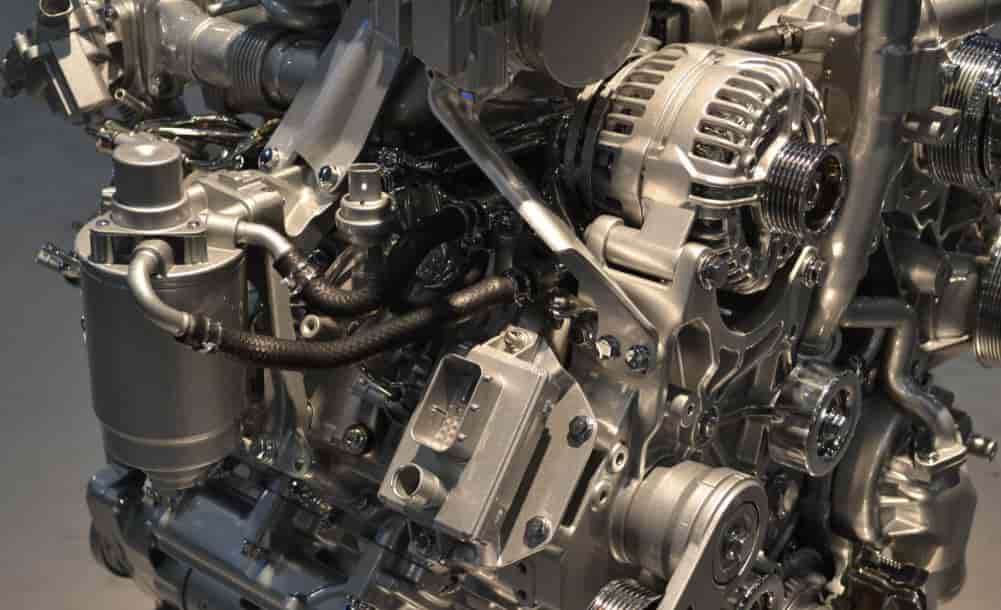
What Is the L8T Engine?
The L8T engine is a 6.6 liter V8 gasoline engine developed by General Motors for heavy duty trucks. It belongs to the fifth generation of GM small block engines, but it is built with a focus on strength, durability, and consistent performance under load.
GM designed the L8T engine mainly for work applications. You can find it in trucks like the Chevrolet Silverado HD and GMC Sierra HD. Unlike smaller V8 engines used in light duty vehicles, the L8T focuses more on torque delivery and long term reliability than high speed performance.
One of the key features of the L8T engine is its traditional overhead valve design. This setup keeps the engine structure simple and compact. It also improves durability, especially in demanding conditions such as towing and hauling. In addition, the engine uses a cast iron block instead of aluminum. This makes it heavier, but it also increases strength and resistance to wear.
The L8T engine uses direct fuel injection to improve efficiency and throttle response. It also works with a heavy duty automatic transmission that helps transfer power smoothly to the wheels. Together, these elements create an engine that feels predictable, stable, and capable under pressure.
In simple terms, the L8T engine is not built for speed or racing. It is built to handle real work. That includes pulling trailers, carrying heavy loads, and operating reliably over long periods of time.
L8T Engine Specs (Full Table Breakdown)
Understanding the L8T Engine Specs is essential if you want to evaluate its real capability. Instead of looking at marketing claims, this section breaks down the key technical numbers in a clear and practical way.
Below is a complete specification table of the GM 6.6L V8 L8T engine.
L8T Engine Specifications
| Specification | Details |
|---|---|
| Engine Type | V8 gasoline engine |
| Displacement | 6.6 liters (401 cubic inches) |
| Horsepower | 401 hp at 5200 rpm |
| Torque | 464 lb ft at 4000 rpm |
| Compression Ratio | 10.8 to 1 |
| Fuel System | Direct fuel injection |
| Valvetrain | Overhead valve design |
| Block Material | Cast iron |
| Transmission | 6 speed automatic |
| Fuel Type | Regular gasoline |
These numbers highlight a very important point. The L8T engine is not designed to chase high horsepower figures. Instead, it focuses on delivering strong and consistent torque, which is far more important for heavy duty trucks.
The 464 lb ft of torque allows the engine to handle towing and hauling tasks with confidence. While diesel engines may still offer higher torque, the L8T provides enough power for most real world workloads without the added cost of diesel ownership.
Another key advantage is its simple and proven design. The overhead valve system and cast iron block help improve durability. This makes the engine a reliable choice for long term use, especially in demanding environments.
For many buyers, these L8T Engine Specs show a clear balance between performance, cost, and reliability. It may not be the most powerful option on paper, but it delivers exactly what most truck owners actually need.
L8T Engine Performance Explained
To fully understand the L8T Engine Specs, you need to look beyond the numbers and focus on how this engine performs in real conditions. Performance in a heavy duty truck is not just about horsepower. It is mainly about how and when the engine delivers torque.
The L8T engine produces 401 horsepower and 464 lb ft of torque. While these numbers may seem lower than some diesel engines, the real strength lies in how the torque is delivered. The engine provides strong low to mid range power, which is exactly what drivers need when towing or carrying heavy loads.
In everyday use, this means the truck feels responsive even under pressure. When դուք accelerate with a trailer attached or climb steep roads, the engine does not struggle or feel delayed. Instead, it delivers steady and predictable power. This makes driving more confident, especially for users who rely on their truck for work.
Another important factor is throttle response. Gasoline engines like the L8T respond quicker than diesel engines. This gives drivers better control in situations such as city driving or stop and go traffic. It also makes the truck feel smoother and easier to handle when it is not fully loaded.
However, there is a trade off. The L8T engine does not offer the same level of peak torque as a diesel engine like Duramax. This means it may require higher engine speed when dealing with extremely heavy loads. For most users, this is not a problem, but it is something to consider if maximum towing is your priority.
Overall, the performance of the L8T engine is built around balance. It delivers enough power for demanding tasks while maintaining simplicity and ease of use. This is exactly why many buyers see it as a practical and cost effective alternative to diesel.
Towing and Payload Capacity
When evaluating a heavy duty truck, towing and payload capacity often matter more than raw engine numbers. This is where the L8T Engine Specs translate into real world capability.
The L8T engine supports strong towing performance when paired with trucks like the Chevrolet Silverado HD and GMC Sierra HD. Depending on configuration, these trucks can tow up to around 17000 pounds with the gasoline V8. This level of capacity is more than enough for most users, including trailers, boats, and work equipment.
Payload capacity is also impressive. In many setups, the truck can carry over 3500 pounds in the bed. This makes it suitable for construction work, materials transport, and daily heavy duty use. The engine delivers stable power even when the truck is fully loaded, which helps maintain control and safety.
One key advantage of the L8T engine is consistency. While diesel engines may offer higher maximum towing numbers, the L8T provides predictable performance without requiring complex systems. This makes it easier to operate, especially for drivers who do not want to deal with diesel maintenance or emissions systems.
However, there is still a clear difference when pushing limits. If you regularly tow extremely heavy loads close to maximum capacity, a diesel engine like Duramax may perform better. It offers higher torque at lower engine speeds, which reduces strain during extreme tasks.
For most users, the L8T engine hits a practical sweet spot. It delivers enough towing and payload capacity for real work while keeping ownership simpler and more affordable. This balance is what makes it a strong choice in the heavy duty truck segment.
Fuel Economy of the L8T Engine
Fuel economy is one of the biggest concerns for buyers considering the L8T Engine Specs. While gasoline engines offer simplicity and lower upfront cost, they often consume more fuel than diesel alternatives. This creates a common dilemma for truck owners who want to balance performance and long term expenses.
In real world conditions, the L8T engine typically delivers modest fuel efficiency. Most drivers report lower miles per gallon compared to diesel engines, especially when towing or carrying heavy loads. In city driving, fuel consumption can increase quickly due to the size and weight of heavy duty trucks. On highways, the engine performs more efficiently, but it still does not match diesel in long distance fuel savings.
However, fuel economy is only one part of the total cost equation. Gasoline is often cheaper than diesel in many markets. In addition, the L8T engine does not require expensive components such as diesel exhaust fluid systems or complex emissions equipment. This helps reduce maintenance costs over time.
For buyers who do not tow heavy loads every day, the L8T engine can still be a smart financial choice. The savings on purchase price and maintenance can offset the higher fuel consumption. On the other hand, if you drive long distances regularly or tow near maximum capacity, fuel costs may add up quickly.
In the end, the value of the L8T engine depends on how you use your truck. It may not be the most fuel efficient option, but it offers a simpler and more predictable ownership experience. For many users, that trade off is worth it.
Reliability and Durability
For many buyers, reliability is even more important than performance. This is where the L8T Engine Specs reveal one of the biggest advantages of this engine.
The L8T engine uses a simple and proven design. It follows the traditional overhead valve structure, which has been tested for decades in GM V8 engines. This design reduces complexity and lowers the risk of mechanical failure. As a result, the engine is easier to maintain and more predictable over time.
Another key strength is the cast iron block. While it adds weight, it significantly improves durability. The engine can handle high stress and heavy workloads without wearing down quickly. This makes it ideal for towing, hauling, and continuous use in demanding environments.
The L8T engine also avoids many of the common issues found in modern diesel engines. It does not rely on complex emissions systems or turbocharging. This reduces the chances of expensive repairs and downtime. For fleet owners and work truck users, this is a major advantage.
In real world use, many owners report that the L8T engine remains stable even after long periods of heavy use. It does not require frequent specialized maintenance, and most service tasks are straightforward. This helps reduce overall ownership stress and cost.
However, no engine is perfect. Like any gasoline engine, the L8T may show higher fuel consumption under load. It also does not deliver the same low end torque as diesel engines. Still, when it comes to reliability and durability, it stands out as a strong and dependable choice.
Overall, the L8T engine is built for longevity. It may not be the most advanced engine, but its simplicity is exactly what makes it reliable.
Common Problems with the L8T Engine
Even though the L8T Engine Specs highlight strong reliability, no engine is completely free from issues. Understanding the common problems helps you set realistic expectations and avoid surprises during ownership.
One of the most noticeable concerns is fuel consumption. The L8T engine can use a significant amount of gasoline, especially when towing or driving in the city. This is not a defect, but it can become a problem for users who expect diesel like efficiency. Over time, fuel costs may become higher than expected if the truck is used heavily.
Another limitation is high end power. While the engine delivers solid torque, it does not feel as strong at higher speeds compared to some turbocharged or diesel engines. When pushing the truck under extreme load, the engine may need to work harder and operate at higher RPM. This can affect driving comfort for some users.
Some drivers also mention that the engine feels less efficient when fully loaded for long distances. The performance remains stable, but fuel usage increases quickly. This creates a trade off between simplicity and long distance efficiency.
The good news is that most of these issues are not mechanical failures. They are more about characteristics of a naturally aspirated gasoline engine. With proper expectations and usage, these limitations are manageable.
To reduce these problems, drivers can focus on smoother acceleration, regular maintenance, and choosing the right workload for the engine. If your needs match what the L8T engine is designed for, these drawbacks will have minimal impact.
In short, the L8T engine does not suffer from serious or widespread mechanical issues. Most concerns come down to fuel consumption and performance expectations rather than reliability.
L8T vs Duramax Diesel Engine
When analyzing the L8T Engine Specs, many buyers naturally compare it to the Duramax diesel engine. This comparison is important because both engines target the same heavy duty truck segment, but they serve different needs.
The biggest difference lies in torque delivery. The Duramax diesel produces significantly higher torque at lower engine speeds. This makes it the better option for extreme towing and heavy commercial use. In contrast, the L8T engine delivers strong but more moderate torque, which is still sufficient for most real world tasks.
Fuel economy is another key factor. Diesel engines are more efficient over long distances and under heavy load. The Duramax clearly has an advantage in this area. However, this efficiency comes with higher upfront cost and more complex maintenance. The L8T engine, on the other hand, uses regular gasoline and avoids expensive diesel systems, making ownership simpler and more affordable.
Maintenance and reliability also differ. Diesel engines include advanced components such as turbochargers and emissions systems. These can increase repair costs over time. The L8T engine keeps a simpler design, which reduces potential failure points and makes servicing easier.
Driving experience is another consideration. The L8T engine offers quicker throttle response and smoother operation in daily driving. Diesel engines feel stronger under heavy load, but they may not feel as responsive in lighter conditions.
Choosing between these two engines depends on your usage. If you tow very heavy loads frequently and prioritize maximum efficiency, the Duramax is the better choice. If you want a reliable, lower cost, and simpler engine for mixed use, the L8T engine is often the smarter option.
Conclusion
After exploring the full L8T Engine Specs, it is clear that this 6.6L V8 offers a strong balance between performance, reliability, and cost. While it may not match diesel engines in peak torque or fuel efficiency, it delivers exactly what many truck owners actually need in daily use.
The L8T engine stands out for its simplicity and durability. Its proven design, solid torque output, and lower maintenance requirements make it a practical choice for both work and personal use. For buyers who want to avoid the complexity and higher costs of diesel ownership, this engine provides a reliable alternative without sacrificing essential capability.
At the same time, it is important to understand its limitations. Fuel consumption can be higher, especially under heavy load, and it may not be the best option for extreme towing on a regular basis. However, for most users, these trade offs are acceptable when compared to the overall value it delivers.
In the end, choosing the right engine depends on how you plan to use your truck. The L8T Engine Specs show that this engine is not about chasing maximum numbers, but about delivering consistent and dependable performance where it matters most.
So, the real question is simple. Do you need maximum diesel power, or do you prefer a balanced and cost effective gasoline solution?