The warning message Volvo DSTC Service Required is one of the most common alerts drivers may encounter in modern vehicles manufactured by Volvo. Even though the car may still feel normal while driving, this message is directly related to an important safety system that controls traction and stability in real time.
The Dynamic Stability and Traction Control system plays a critical role in helping the vehicle maintain grip on different road surfaces. It continuously monitors wheel speed, steering input, and vehicle movement to prevent skidding or loss of control. When the system detects abnormal signals or internal malfunction, it triggers the warning message to alert the driver.
Many drivers feel confused or even worried when this warning appears because it does not always come with obvious driving symptoms. In some cases, the vehicle continues to operate normally, which creates uncertainty about whether the issue is serious or not. However, ignoring this warning is not recommended because it may indicate a failure in one of the key safety systems.
In this guide, you will learn what the DSTC system actually does, why the warning appears, and how to properly diagnose and fix the issue. The goal is to help you understand whether this is a minor sensor issue or a deeper electronic problem that requires professional attention.
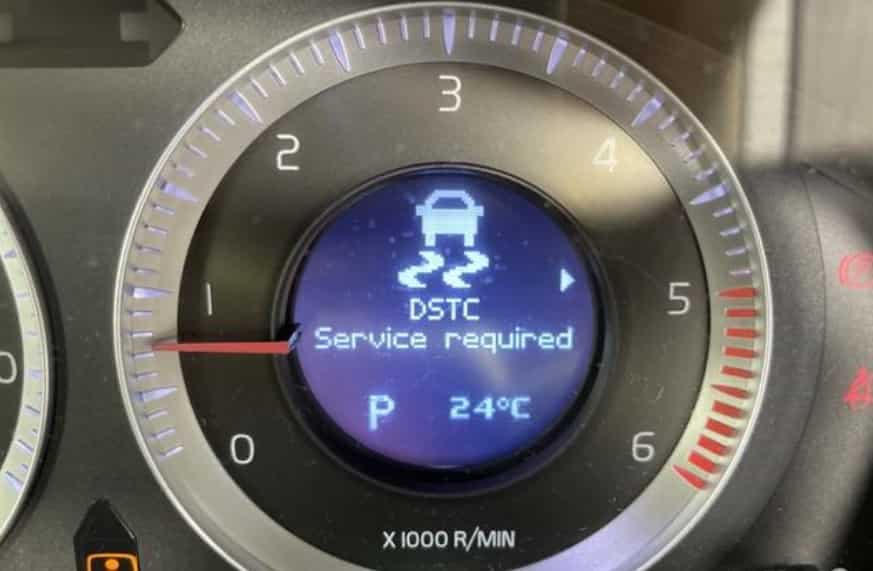
What Volvo DSTC Service Required Means
The Volvo DSTC Service Required warning tells you that the Dynamic Stability and Traction Control system has found a fault and cannot work properly. This system is part of modern safety technology in vehicles made by Volvo.
DSTC stands for Dynamic Stability and Traction Control. It helps the car stay stable by tracking wheel speed, steering input, and vehicle movement. The system reacts when it detects wheel slip or loss of grip. It can reduce engine power or apply brakes to specific wheels to help the driver maintain control.
When this warning appears, the system has detected wrong or missing data from key components. This often comes from a faulty wheel speed sensor or a steering angle sensor issue. Low battery voltage can also trigger the warning. In some cases, communication errors between control modules cause the alert.
The system usually turns off part of its function when it detects a problem. It does this to avoid wrong corrections that could affect safety. This is why the warning message appears on the dashboard.
This warning does not always mean a serious failure. Sometimes it appears due to temporary electrical issues or short sensor glitches. However, the DSTC system plays a key role in vehicle safety, so you should not ignore it.
The car will usually still drive normally. However, stability support may be reduced. This becomes more noticeable on slippery roads or during sudden steering changes. A proper diagnostic check helps identify the exact cause and prevents further issues.
Common Causes of Volvo DSTC Service Required
The Volvo DSTC Service Required warning appears when the system detects an issue in stability or traction control components. In most cases, the problem comes from sensors or electrical signals rather than major mechanical failure in vehicles made by Volvo.
One of the most common causes is a faulty wheel speed sensor. Each wheel has a sensor that tracks rotation speed. The system uses this data to control traction and stability. When one sensor fails or sends incorrect signals, the system cannot calculate accurate vehicle behavior and triggers the warning.
Another frequent cause is a steering angle sensor problem. This sensor tells the system how the driver turns the steering wheel. If the sensor loses calibration or gives incorrect readings, the stability system becomes unreliable and shuts down part of its function.
Low battery voltage is also a common trigger. Modern Volvo vehicles rely heavily on electronic modules. When voltage drops, communication between systems becomes unstable. This can cause temporary DSTC warnings even if no parts are damaged.
Wiring issues can also create this error. Damaged cables, loose connectors, or corrosion can interrupt signals between sensors and the control unit. These interruptions confuse the system and activate the warning message.
Software glitches inside control modules may also lead to false alerts. In some cases, the system needs a reset or software update to restore normal operation.
Although the causes may look serious, many of them are simple electrical or calibration issues. A proper diagnostic scan helps identify the exact source of the problem and prevents unnecessary part replacement.
Symptoms You May Notice
When the Volvo DSTC Service Required warning appears, the vehicle may still drive normally, but you can notice changes in stability and traction behavior. This happens in vehicles produced by Volvo because the DSTC system actively supports grip and steering control during driving.
One common symptom is reduced traction support. The car may feel less stable when you accelerate on wet or slippery roads. Wheel spin can occur more easily because the system no longer regulates power as effectively.
Another sign is the appearance of additional dashboard warnings. The ABS light or stability control light may turn on together with the DSTC message. This often indicates that multiple systems share the same sensor or communication issue.
You may also feel changes in steering response. The steering can feel slightly heavier or less precise. This happens because the system may reduce electronic assistance when it detects faults.
In some cases, the stability system shuts down completely. The car will still function, but it will not correct skidding or loss of grip. This increases the risk during sudden maneuvers or poor road conditions.
These symptoms may vary depending on the exact cause. Some drivers only see the warning light without any noticeable driving changes. Others experience clear differences in vehicle behavior, especially in challenging weather conditions.
Even if the car feels normal, the warning should not be ignored. The DSTC system plays an important role in maintaining safety and stability during everyday driving.
Diagnostic Process and Troubleshooting Steps
When the Volvo DSTC Service Required warning appears, a structured diagnostic process is needed to find the exact cause. This system is part of the safety architecture in vehicles from Volvo, so small sensor or voltage issues can trigger the alert.
The first step is to scan the vehicle with an OBD2 diagnostic tool. This tool reads fault codes stored in the control modules. These codes help identify whether the issue comes from sensors, wiring, or communication errors.
Next, technicians check wheel speed sensors on each wheel. These sensors must stay clean and properly connected. Dirt, damage, or corrosion can disrupt signals and cause incorrect readings. Even a small error can affect the stability system.
After that, the steering angle sensor is inspected. This sensor must match the real position of the steering wheel. If it loses calibration, the system can misinterpret driver input. In many cases, recalibration restores normal function.
Battery condition is also tested. Low voltage or unstable power supply often creates false DSTC warnings. A weak battery can interrupt communication between control modules and trigger multiple system errors.
Finally, the technician checks wiring and communication lines between ABS, traction control, and stability modules. Any broken wire or loose connector can block signals and activate the warning.
This step by step process helps isolate the root cause before replacing any parts. It reduces unnecessary repairs and ensures the system is restored correctly.
Repair Solutions and Fix Methods
Once the root cause is identified, the repair process for the Volvo DSTC Service Required warning becomes more straightforward. This system is integrated into the safety network of vehicles built by Volvo, so proper repair depends on accurate diagnosis.
If the issue comes from a faulty wheel speed sensor, the technician will clean or replace it. This is one of the most common repairs. A damaged sensor cannot send accurate wheel rotation data, so the system loses stability information.
When the steering angle sensor is the problem, recalibration is usually enough. The system must understand the exact steering position. If the calibration is off, resetting the sensor restores correct communication with the stability system.
If wiring or connectors are damaged, the repair focuses on restoring signal flow. Technicians may repair broken wires or replace corroded connectors. Stable communication between modules is essential for proper system function.
In cases related to low battery voltage, replacing the battery or fixing the charging system often solves the issue. Modern Volvo vehicles depend heavily on stable electrical supply, so even small voltage drops can trigger warnings.
If the problem comes from software errors, a system reset or software update may be required. This helps clear false warnings and restore normal operation without replacing hardware.
More serious cases involve ABS or control module failure. These components require specialized tools and professional repair. Replacement may be necessary if the module cannot process data correctly.
A proper repair approach always follows diagnosis first. This prevents unnecessary part replacement and ensures the DSTC system returns to full safety performance.
Is It Safe to Drive With DSTC Warning
Driving with the Volvo DSTC Service Required warning is usually possible, but it reduces the level of safety support in the vehicle. In cars produced by Volvo, the DSTC system plays a key role in maintaining stability during acceleration, cornering, and slippery road conditions.
When this warning appears, the system often disables part or all of its traction and stability functions. The car can still move normally, but it no longer actively corrects wheel slip or loss of grip. This increases the risk of reduced control, especially on wet roads or during sudden steering changes.
In many cases, ABS may still function, but full stability assistance is not guaranteed. This means braking performance remains, but electronic support for steering stability becomes limited. Drivers may notice this most during emergency maneuvers or uneven road surfaces.
For short and low speed trips, driving may still be acceptable. However, it is not recommended to drive long distances or at high speeds while the warning is active. The risk increases when road conditions become unpredictable.
Even if the vehicle feels normal, the absence of full DSTC support can affect safety in critical situations. That is why early diagnosis and repair are important. Restoring the system ensures the vehicle maintains full stability control and reduces the chance of unexpected handling issues.
Conclusion
The Volvo DSTC Service Required warning is an important alert that indicates a problem in the vehicle stability and traction control system. This system in vehicles from Volvo helps maintain grip, balance, and control in different driving conditions, so any malfunction should be taken seriously.
In most cases, the warning appears due to sensor issues, low battery voltage, wiring faults, or communication errors between control modules. These problems do not always involve major mechanical damage, but they still affect how the stability system works.
The vehicle can usually continue to drive when this warning appears. However, the level of safety assistance is reduced. This becomes more noticeable on slippery roads, during sharp turns, or in emergency situations where stability control is important.
Proper diagnosis is the most important step. A professional scan helps identify the exact cause and prevents unnecessary part replacement. Once the root issue is fixed, the system can return to normal operation and restore full safety performance.
Understanding this warning helps drivers respond correctly instead of ignoring it. Quick action reduces risk and keeps the vehicle operating safely under all conditions.