The LQ9 engine has earned a legendary reputation among GM enthusiasts, performance builders, and engine swap specialists. As one of General Motors’ most powerful Gen III iron-block V8 engines, it combines exceptional durability with impressive factory performance, making it a favorite for everything from daily-driven trucks to high-horsepower project cars. Whether you’re researching a used engine, planning a performance build, or simply comparing GM’s LS-based powerplants, understanding the LQ9 engine specs is essential.
Originally introduced as the High Output version of the Vortec 6000, the LQ9 was engineered to deliver more power than its LQ4 sibling while maintaining the rugged reliability required for heavy-duty trucks and premium SUVs. Its higher compression ratio, robust iron block, and excellent aftermarket support have made it one of the most sought-after truck engines ever produced by General Motors.
Unfortunately, many online resources only provide partial specifications or outdated information. Enthusiasts often struggle to find accurate details about horsepower, torque, compression ratio, bore and stroke, compatible vehicles, and upgrade potential in one comprehensive guide.
This article brings everything together in a single resource. You’ll discover complete LQ9 engine specs, detailed performance figures, internal component specifications, vehicle applications, common reliability issues, upgrade opportunities, and how the LQ9 compares with other popular LS-family engines. By the end, you’ll have all the information needed to determine whether the LQ9 is the right engine for your next project or performance build.
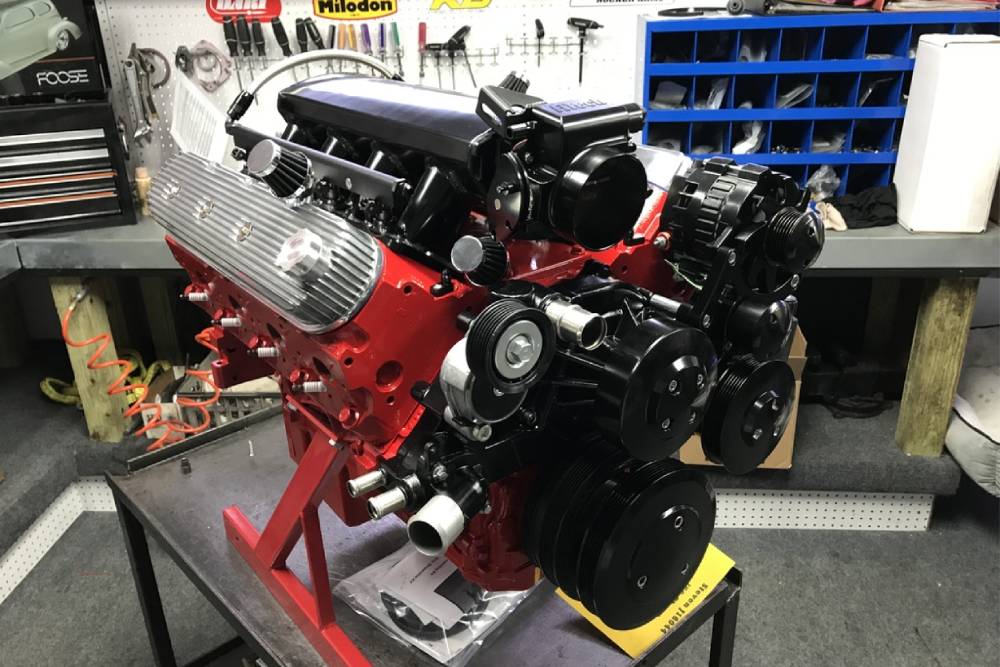
LQ9 Engine Overview
The LQ9 is a 6.0-liter naturally aspirated V8 engine developed by General Motors as part of the third-generation LS engine family. Introduced in 2002, it was designed to serve as the High Output variant of the Vortec 6000 engine, offering greater performance than the LQ4 while maintaining the durability required for full-size trucks and luxury SUVs. Its combination of a cast iron block, aluminum cylinder heads, and a higher compression ratio quickly made it one of GM’s most respected truck engines.
Unlike many performance engines that sacrifice longevity for power, the LQ9 was engineered to excel in both areas. The iron block provides exceptional structural strength, making it highly resistant to cylinder distortion under heavy loads or forced induction. This robust construction has earned the engine a reputation for handling significant horsepower increases with relatively few internal modifications.
The LQ9 belongs to the Gen III LS architecture, sharing many components with other popular GM V8 engines. This extensive parts compatibility makes maintenance easier and gives enthusiasts access to one of the largest aftermarket ecosystems available. From mild street upgrades to complete racing builds, nearly every component of the LQ9 can be upgraded using readily available performance parts.
Another factor contributing to the engine’s popularity is its versatility. The LQ9 performs equally well in factory-equipped trucks, custom muscle cars, off-road vehicles, and engine swap projects. Whether reliability or maximum horsepower is the goal, the LQ9 offers a solid foundation capable of supporting a wide range of performance objectives.
Key Features
- Member of the GM Gen III LS engine family
- 6.0L (364 cubic inch) V8 configuration
- Naturally aspirated gasoline engine
- Cast iron engine block for exceptional strength
- Aluminum cathedral-port cylinder heads
- Sequential multi-port fuel injection
- Hydraulic roller camshaft
- Coil-near-plug ignition system
- Higher compression ratio than the LQ4
- Outstanding aftermarket support and engine swap compatibility
Complete LQ9 Engine Specifications
The following table summarizes the factory specifications of the GM LQ9 engine. These figures represent stock production specifications and may vary slightly depending on the model year and vehicle application.
| Specification | Value |
|---|---|
| Engine Code | LQ9 |
| Engine Family | Gen III LS |
| Manufacturer | General Motors |
| Production Years | 2002–2007 |
| Engine Type | Naturally Aspirated V8 |
| Displacement | 5,967 cc (6.0L / 364 cu in) |
| Bore | 4.000 in (101.6 mm) |
| Stroke | 3.622 in (92 mm) |
| Compression Ratio | 10.1:1 |
| Horsepower | 345 hp at 5,200 rpm |
| Torque | 380 lb-ft at 4,000 rpm |
| Block Material | Cast Iron |
| Cylinder Head Material | Aluminum |
| Valvetrain | OHV, 2 Valves per Cylinder |
| Camshaft | Hydraulic Roller |
| Fuel System | Sequential Multi-Port Fuel Injection |
| Aspiration | Naturally Aspirated |
| Throttle Control | Electronic Drive-by-Wire |
| Firing Order | 1-8-7-2-6-5-4-3 |
| Fuel Requirement | Premium Recommended |
| Oil Capacity | 6.0 quarts (5.7 L) with filter |
| Recommended Oil | SAE 5W-30 |
| Cooling System Capacity | Approximately 16.5 L |
| Engine Weight | Approximately 560 lbs (254 kg) |
These specifications reveal why the LQ9 remains highly desirable among enthusiasts. The 10.1:1 compression ratio provides a noticeable increase in power compared to the LQ4, while the cast iron block offers exceptional durability for naturally aspirated and forced induction applications. Its relatively compact dimensions also make it a practical choice for a wide variety of engine swap projects.
One of the biggest advantages of the LQ9 is its balance between factory reliability and performance potential. Even in stock form, it produces impressive torque throughout the RPM range, making it ideal for towing, hauling, and spirited street driving. At the same time, the engine’s strong bottom end can support substantially higher horsepower levels with the proper tuning and supporting modifications.
LQ9 Performance Specifications
Factory-rated at 345 horsepower and 380 lb-ft of torque, the LQ9 was among the most powerful truck engines General Motors offered during the early 2000s. Its performance advantage over the LQ4 comes primarily from a higher compression ratio achieved through flat-top pistons rather than dished pistons. This seemingly small design difference improves combustion efficiency, resulting in stronger throttle response and increased power across the rev range.
Power delivery is smooth and predictable, with peak torque arriving at approximately 4,000 rpm. More importantly, the engine generates substantial low-end torque well below this point, allowing heavy trucks and SUVs to accelerate confidently while towing or carrying large loads. This broad torque curve also contributes to excellent drivability in everyday conditions.
Although designed primarily for trucks, the LQ9 responds exceptionally well to performance modifications. Basic upgrades such as a cold air intake, long-tube headers, ECU tuning, and a performance camshaft can increase output beyond 425 horsepower without sacrificing reliability. More aggressive naturally aspirated builds frequently exceed 500 horsepower, while turbocharged and supercharged combinations have demonstrated the capability to produce well over 700 horsepower using the factory iron block.
The engine’s robust construction is one of its greatest strengths. The cast iron block withstands high cylinder pressures that would challenge many aluminum engine blocks, making the LQ9 a preferred choice for forced induction applications. Builders seeking four-digit horsepower figures often begin with an LQ9 because of its proven ability to handle significant boost when equipped with upgraded pistons, connecting rods, and appropriate engine management.
In real-world driving, fuel economy varies depending on the vehicle and transmission combination. Most factory-equipped trucks and SUVs achieve approximately 12 to 15 mpg in city driving and 16 to 20 mpg on the highway. While efficiency is not the engine’s primary selling point, its combination of durability, torque, and modification potential continues to make it one of the most respected members of the LS engine family.
Internal Engine Components
The LQ9 engine was engineered with durability as a top priority, making it one of the strongest production truck engines in General Motors’ Gen III LS lineup. Its internal components were designed to withstand demanding workloads while providing an excellent platform for future performance upgrades. Many enthusiasts consider the factory LQ9 bottom end capable of supporting substantial horsepower increases before requiring forged aftermarket components.
Cylinder Block
At the heart of the LQ9 is a deep-skirt cast iron engine block that delivers exceptional structural rigidity. Compared to aluminum LS blocks, the cast iron design offers greater resistance to cylinder wall flex and distortion under heavy loads or high boost pressure. This is one of the primary reasons the LQ9 has become a favorite for turbocharged and supercharged applications.
The block features six-bolt main bearing caps with four vertical bolts and two cross bolts per cap. This cross-bolted design significantly increases crankshaft stability during high-RPM operation and improves overall engine durability.
Cylinder Block Specifications
- Material: Cast Iron
- Bore Diameter: 4.000 inches
- Deck Height: 9.240 inches
- Main Caps: Six Bolt Cross Bolted
- Main Bearing Diameter: 2.559 inches
- Camshaft Bearing Diameter: 2.165 inches
The iron construction also improves long-term reliability in heavy-duty applications such as towing, commercial use, and off-road driving. While it adds weight compared to aluminum LS engines, many builders gladly accept the additional mass in exchange for increased strength.
Pistons
One of the defining differences between the LQ9 and the LQ4 lies in the piston design. The LQ9 utilizes flat-top aluminum pistons instead of the dished pistons found in the LQ4. This design raises the compression ratio from 9.4:1 to 10.1:1, allowing the engine to generate additional horsepower and improved throttle response.
The factory pistons are manufactured using a hypereutectic aluminum alloy that provides excellent thermal stability and reduced expansion during operation. They perform exceptionally well in naturally aspirated applications and moderate forced induction builds.
Piston Specifications
- Material: Hypereutectic Aluminum
- Compression Ratio: 10.1:1
- Floating Wrist Pins
- Flat Top Design
- Pressed Powder Metal Connecting Rod Compatibility
Although factory pistons are remarkably durable, many builders replace them with forged alternatives when targeting horsepower figures above 700 horsepower.
Connecting Rods
The LQ9 is equipped with powdered metal connecting rods measuring 6.098 inches in length. These rods are lightweight yet surprisingly strong, making them suitable for a wide range of street and performance applications.
Factory connecting rods have proven capable of handling approximately 600 to 700 horsepower under conservative tuning. Their biggest limitation is typically encountered during prolonged high-RPM use or aggressive forced induction, where forged H-beam or I-beam rods become a worthwhile investment.
Crankshaft
General Motors equipped the LQ9 with a durable nodular cast iron crankshaft featuring a 3.622-inch stroke. While forged steel crankshafts are preferred for extreme racing builds, the stock crankshaft has earned an outstanding reputation for reliability.
Numerous performance builds exceeding 800 horsepower continue to use the original LQ9 crankshaft without issue, demonstrating the quality of its factory engineering.
Camshaft
The stock hydraulic roller camshaft is optimized for low-end torque and everyday drivability rather than maximum horsepower. Its conservative profile provides smooth idle characteristics while delivering strong torque throughout the operating range.
Factory Camshaft Specifications
- Hydraulic Roller Design
- Lift: Approximately 0.467 inch intake and exhaust
- Duration: Approximately 191°/190° at 0.050 inch
- Lobe Separation Angle: 114°
Most performance enthusiasts replace the factory camshaft early in the modification process because it represents one of the largest opportunities for horsepower gains.
Cylinder Heads
The LQ9 features aluminum cathedral-port cylinder heads that offer excellent airflow for a production truck engine. These heads share similarities with the highly respected 317 casting, known for supporting substantial horsepower with basic port work.
The aluminum construction improves heat dissipation while reducing engine weight compared to cast iron cylinder heads. Their efficient combustion chamber design complements the engine’s higher compression ratio and contributes to improved power output.
Intake Manifold
The factory composite intake manifold prioritizes low-end and mid-range torque, making it well suited for heavy trucks and SUVs. Although larger aftermarket intake manifolds can improve high-RPM airflow, the original manifold performs exceptionally well in stock and mildly modified applications.
Its lightweight composite construction also reduces heat absorption, helping maintain cooler intake air temperatures during extended driving.
Fuel Injectors
The LQ9 uses factory fuel injectors rated at approximately 28 pounds per hour, providing sufficient fuel delivery for stock horsepower levels. Builders pursuing significant performance upgrades typically install larger injectors to accommodate increased airflow and maintain safe air-fuel ratios.
Vehicles Equipped with the LQ9 Engine
The LQ9 was never intended as a mass-market truck engine. Instead, General Motors reserved it for premium performance trucks, luxury SUVs, and special high-output models. This limited production has contributed to the engine’s desirability in today’s used engine market.
Its combination of strong torque, smooth power delivery, and long-term reliability made it an excellent choice for vehicles that required both performance and utility.
| Vehicle | Production Years | Horsepower | Torque |
|---|---|---|---|
| Cadillac Escalade | 2002–2006 | 345 hp | 380 lb-ft |
| Cadillac Escalade EXT | 2002–2006 | 345 hp | 380 lb-ft |
| Cadillac Escalade ESV | 2003–2006 | 345 hp | 380 lb-ft |
| Chevrolet Silverado SS | 2003–2006 | 345 hp | 380 lb-ft |
| Chevrolet Silverado 1500 HD | Select Models | 345 hp | 380 lb-ft |
| GMC Sierra Denali | 2002–2006 | 345 hp | 380 lb-ft |
| GMC Yukon Denali | 2002–2006 | 345 hp | 380 lb-ft |
| GMC Yukon XL Denali | 2002–2006 | 345 hp | 380 lb-ft |
Among these vehicles, the Chevrolet Silverado SS remains one of the most iconic applications of the LQ9. Combining all-wheel drive with a high-output V8, it quickly became one of the fastest production pickup trucks of its era.
The Cadillac Escalade also benefited significantly from the LQ9’s additional horsepower. Despite its substantial size and luxury-focused design, the engine delivered smooth acceleration and strong towing performance, helping establish the Escalade as one of the most capable luxury SUVs available during the early 2000s.
Today, many of these original vehicles have become popular sources for engine swap projects because they provide complete drivetrain packages, wiring harnesses, engine control modules, and accessory systems that simplify installation into other vehicles.
LQ9 vs LQ4
The LQ9 and LQ4 share the same 6.0-liter displacement, cast iron block, aluminum cylinder heads, and Gen III LS architecture. Because of these similarities, many buyers mistakenly assume the two engines are virtually identical. In reality, several key differences give the LQ9 a measurable performance advantage while maintaining nearly identical reliability.
The most significant distinction is the compression ratio. The LQ9 uses flat-top pistons that increase compression to 10.1:1, while the LQ4 relies on dished pistons that produce a lower 9.4:1 compression ratio. This single design change allows the LQ9 to generate approximately 20 additional horsepower without requiring major mechanical differences elsewhere in the engine.
| Specification | LQ9 | LQ4 |
|---|---|---|
| Displacement | 6.0L | 6.0L |
| Block Material | Cast Iron | Cast Iron |
| Cylinder Heads | Aluminum | Aluminum |
| Compression Ratio | 10.1:1 | 9.4:1 |
| Horsepower | 345 hp | 325 hp |
| Torque | 380 lb-ft | 370 lb-ft |
| Pistons | Flat Top | Dished |
| Fuel Requirement | Premium Recommended | Regular Acceptable |
| Best For | Performance Builds | Heavy Duty Work |
For enthusiasts seeking maximum naturally aspirated performance, the LQ9 is generally the better choice because of its higher compression ratio and stronger factory output. It provides quicker throttle response and requires fewer modifications to achieve higher horsepower levels.
The LQ4 remains an excellent alternative for budget-conscious builders. Its lower compression ratio makes it slightly more forgiving for high-boost turbocharged applications, particularly when using factory internals. Since the LQ4 was produced in much larger numbers, it is often easier to find at a lower price.
Ultimately, both engines are exceptionally reliable and capable of producing impressive power. The best choice depends on your intended application, performance goals, and available budget. For most enthusiasts building a street-oriented performance vehicle, the LQ9’s additional factory horsepower and improved compression ratio make it the more desirable option.
LQ9 Reliability and Common Problems
One of the biggest reasons the LQ9 continues to be highly sought after is its exceptional reliability. When properly maintained, this 6.0L V8 routinely exceeds 250,000 to 300,000 miles (400,000 to 480,000 km) without requiring major internal repairs. Many fleet vehicles and work trucks equipped with the LQ9 have surpassed these mileage figures while retaining their original engine components.
The engine’s cast iron block, forged-strength crankshaft design, and proven LS architecture contribute to its outstanding longevity. Routine oil changes, quality coolant, and regular preventive maintenance are often all that’s needed to keep the engine operating reliably for decades.
However, like any engine, the LQ9 has several known issues that owners should monitor. Fortunately, most of these problems are relatively inexpensive to repair and rarely result in catastrophic engine failure if addressed promptly.
Knock Sensor Failure
Knock sensor failure is one of the most frequently reported issues on the LQ9. The sensors are mounted beneath the intake manifold, where moisture can accumulate over time due to deteriorating seals. Corrosion eventually causes inaccurate readings or complete sensor failure.
Symptoms
- Illuminated Check Engine Light
- Reduced engine performance
- Retarded ignition timing
- Poor fuel economy
- Diagnostic Trouble Codes P0327 or P0332
Causes
- Water intrusion beneath the intake manifold
- Aging sensor components
- Damaged wiring harness
- Failed rubber seals
Repair Difficulty
Moderate
Replacing the knock sensors requires removal of the intake manifold, making the repair somewhat time-consuming but straightforward for experienced DIY mechanics.
Prevention
Inspect the knock sensor valley whenever the intake manifold is removed. Replacing the sensor harness and installing updated rubber seals can significantly reduce the likelihood of future failures.
Oil Consumption
Some higher-mileage LQ9 engines may begin consuming more oil than expected. While mild oil consumption is generally considered normal for older LS engines, excessive oil usage should be investigated.
Symptoms
- Frequent need to add engine oil
- Blue exhaust smoke during acceleration
- Oil residue inside the intake tract
- Fouled spark plugs
Causes
- Worn piston rings
- Valve stem seal wear
- PCV system issues
- High engine mileage
Repair Difficulty
Low to High
Simple PCV valve replacement may resolve minor oil consumption, while worn piston rings require a complete engine rebuild.
Prevention
Use high-quality synthetic oil, maintain proper oil change intervals, and monitor oil levels regularly.
Exhaust Manifold Bolt Failure
Broken exhaust manifold bolts are common across many GM LS truck engines, including the LQ9. Repeated heating and cooling cycles eventually weaken the bolts, causing exhaust leaks.
Symptoms
- Ticking noise during cold startup
- Exhaust leak near the cylinder head
- Reduced fuel efficiency
- Slight loss of power
Causes
- Thermal expansion
- Bolt fatigue
- Corrosion
Repair Difficulty
Moderate
Extracting broken bolts can be challenging if they snap flush with the cylinder head.
Prevention
Replace factory bolts with upgraded aftermarket hardware when servicing the exhaust system.
Intake Manifold Gasket Leaks
Over time, the intake manifold gaskets may harden and lose their sealing capability. Vacuum leaks can develop, negatively affecting engine performance and idle quality.
Symptoms
- Rough idle
- Lean air-fuel mixture
- Reduced fuel economy
- Hissing sound around the intake manifold
Causes
- Aging gasket material
- Heat cycling
- Improper installation
Repair Difficulty
Moderate
Replacing the intake gaskets is relatively straightforward while the intake manifold is removed.
Prevention
Install high-quality replacement gaskets whenever the intake manifold is serviced.
Fuel Injector Wear
After many years of operation, fuel injectors can become partially clogged or develop inconsistent spray patterns.
Symptoms
- Rough idle
- Misfires
- Reduced fuel economy
- Hard starting
- Hesitation during acceleration
Causes
- Fuel contamination
- Carbon deposits
- Internal injector wear
Repair Difficulty
Low
Professional injector cleaning often restores proper performance, although severely worn injectors should be replaced.
Prevention
Use quality fuel and periodically add a reputable fuel system cleaner.
Lifter Wear
Although less common than on later Active Fuel Management engines, high-mileage LQ9 engines can develop hydraulic roller lifter wear.
Symptoms
- Valve train ticking
- Misfires
- Reduced engine power
- Check Engine Light
Causes
- Poor lubrication
- High mileage
- Extended oil change intervals
Repair Difficulty
High
Replacing lifters requires significant engine disassembly.
Prevention
Use premium engine oil and adhere to recommended maintenance intervals.
Cooling System Issues
Most cooling system problems are age-related rather than design flaws. Water pumps, thermostats, and radiator hoses eventually wear out after years of service.
Symptoms
- Engine overheating
- Coolant leaks
- Fluctuating temperature gauge
- Low coolant level
Causes
- Water pump failure
- Thermostat sticking
- Worn radiator hoses
- Aging radiator
Repair Difficulty
Low to Moderate
Routine replacement of cooling system components can prevent expensive engine damage.
Prevention
Flush the cooling system according to GM maintenance recommendations and inspect hoses and belts during every service.
Overall Reliability Rating
| Category | Rating |
|---|---|
| Engine Durability | ★★★★★ |
| Bottom End Strength | ★★★★★ |
| Maintenance Cost | ★★★★☆ |
| Daily Driving Reliability | ★★★★★ |
| Performance Potential | ★★★★★ |
| Long-Term Ownership | ★★★★★ |
Overall, the LQ9 is widely regarded as one of General Motors’ most dependable truck engines. Its simple pushrod design, durable cast iron block, and abundant parts availability make it an excellent choice for both stock daily drivers and high-performance builds. With proper maintenance, owners can expect hundreds of thousands of miles of reliable service.
LQ9 Performance Upgrades
The LQ9’s popularity extends far beyond its factory performance. Thanks to its strong iron block and extensive aftermarket support, it has become one of the most modified LS-based engines ever produced. Even modest upgrades can unlock significant horsepower gains while maintaining excellent reliability.
Cold Air Intake
Replacing the factory air intake with a high-flow cold air intake allows the engine to breathe more efficiently. Cooler, denser air improves combustion and sharpens throttle response.
Estimated Power Gain
- 8 to 15 horsepower
Benefits
- Improved throttle response
- Better induction sound
- Slight improvement in fuel efficiency
- Easy installation
Long Tube Headers
Factory exhaust manifolds restrict airflow, especially at higher engine speeds. Long tube headers reduce back pressure and improve exhaust scavenging.
Estimated Power Gain
- 15 to 25 horsepower
Benefits
- Increased horsepower
- Higher torque
- Improved exhaust tone
- Better performance when combined with ECU tuning
Performance Camshaft
A performance camshaft is one of the most effective upgrades for the LQ9. Increasing valve lift and duration dramatically improves airflow into and out of the combustion chambers.
Estimated Power Gain
- 50 to 80 horsepower
Benefits
- Significant horsepower increase
- More aggressive engine sound
- Improved mid-range and high-RPM performance
Many naturally aspirated LQ9 builds producing over 450 horsepower rely primarily on a quality camshaft upgrade.
ECU Tuning
Custom engine calibration optimizes ignition timing, fuel delivery, and throttle response to maximize the effectiveness of supporting modifications.
Estimated Power Gain
- 15 to 25 horsepower
Benefits
- Improved drivability
- Faster throttle response
- Better transmission behavior
- Enhanced fuel efficiency in some applications
Intake Manifold Upgrade
Higher-flow intake manifolds such as the LS6 or aftermarket performance designs improve airflow at elevated engine speeds.
Estimated Power Gain
- 10 to 25 horsepower
Benefits
- Better top-end power
- Increased airflow
- Excellent complement to camshaft upgrades
Supercharger Systems
A roots-style or centrifugal supercharger dramatically increases engine output while retaining excellent street manners.
Estimated Power Gain
- 500 to 700+ horsepower depending on boost level
Benefits
- Massive torque increase
- Instant throttle response
- Excellent street performance
- Reliable with proper tuning
Turbocharger Systems
The cast iron LQ9 block has earned an outstanding reputation in turbocharged applications. Many factory short blocks reliably support substantial boost pressure with appropriate tuning.
Estimated Power Potential
- 700 to 1,000+ horsepower with upgraded supporting components
Benefits
- Exceptional horsepower potential
- Outstanding boost capability
- Ideal for drag racing and high-performance street builds
- Excellent aftermarket support
Recommended Upgrade Path
For enthusiasts seeking the best balance of cost and performance, the following upgrade sequence delivers excellent results:
- Cold air intake
- Long tube headers
- ECU tune
- Performance camshaft
- Valve spring upgrade
- Higher-flow intake manifold
- Fuel system upgrades
- Forced induction if greater horsepower is desired
Following this progression allows owners to increase performance gradually while maintaining reliability and minimizing unnecessary expenses.
LQ9 Engine Swap Potential
The LQ9 is one of the most desirable engines for swaps because it combines affordability, durability, and exceptional power potential. Its compatibility with countless GM components simplifies installation into a wide variety of vehicles, while the massive aftermarket ensures that swap-specific parts are readily available.
Popular swap candidates include classic Chevrolet muscle cars, third-generation Camaros, C10 pickups, Jeep Wrangler builds, drift cars, off-road trucks, and even imported sports cars. The engine’s compact pushrod design makes it easier to fit into tight engine bays than many modern dual overhead cam V8 engines.
Transmission compatibility is another major advantage. The LQ9 bolts directly to many GM automatic and manual transmissions, including the 4L60E, 4L80E, T56 Magnum, TR6060, and several aftermarket racing transmissions. This flexibility allows builders to tailor the drivetrain to their intended use, whether it’s daily driving, towing, drag racing, or road course competition.
Successful swaps require careful attention to wiring and engine management. Most builders use the factory GM engine control module with a standalone wiring harness, while others choose aftermarket engine management systems for greater tuning flexibility. Proper ECU calibration is essential to ensure reliable starting, smooth drivability, and optimal performance.
The total cost of an LQ9 engine swap varies depending on the condition of the engine and the complexity of the project. A basic swap using a complete donor vehicle may cost between $4,000 and $8,000, while high-performance builds featuring upgraded internals, custom fabrication, and forced induction can exceed $20,000.
Despite the investment, the LQ9 remains one of the best values in the performance world. Its proven reliability, remarkable strength, and nearly limitless upgrade potential make it an outstanding foundation for builders who want a V8 capable of delivering reliable performance for years to come.
Frequently Asked Questions About the LQ9 Engine
Is the LQ9 an LS Engine?
Yes. The LQ9 belongs to General Motors’ Gen III LS engine family. Although it was originally developed for trucks and SUVs rather than passenger cars, it shares the same basic architecture as other LS engines, including the LS1, LS2, and LS6. This common platform means many internal and external components are interchangeable, making the LQ9 highly desirable for engine swaps and performance builds.
What Is the Displacement of the LQ9?
The LQ9 has a displacement of 6.0 liters, or 364 cubic inches (5,967 cc). It achieves this displacement with a 4.000-inch bore and a 3.622-inch stroke, a combination that provides an excellent balance of low-end torque and high-RPM performance.
How Much Horsepower Does the LQ9 Produce?
From the factory, the LQ9 is rated at 345 horsepower at 5,200 rpm and 380 lb-ft of torque at 4,000 rpm. These figures made it one of the most powerful truck engines available during its production years.
With basic bolt-on modifications such as headers, a cold air intake, ECU tuning, and a performance camshaft, many naturally aspirated LQ9 engines produce between 430 and 480 horsepower.
What Is the Compression Ratio of the LQ9?
The LQ9 features a 10.1:1 compression ratio, which is higher than the LQ4’s 9.4:1 ratio. This increase is achieved through the use of flat-top pistons instead of dished pistons, resulting in improved combustion efficiency and greater factory horsepower.
Which Vehicles Came with the LQ9 Engine?
The LQ9 was installed in several premium General Motors vehicles, including:
- Cadillac Escalade
- Cadillac Escalade EXT
- Cadillac Escalade ESV
- Chevrolet Silverado SS
- Chevrolet Silverado 1500 HD (select models)
- GMC Sierra Denali
- GMC Yukon Denali
- GMC Yukon XL Denali
Because these vehicles often serve as complete donor platforms, they remain popular sources for LQ9 engine swap projects.
Is the LQ9 Better Than the LQ4?
For most enthusiasts, yes.
Both engines share nearly identical architecture, but the LQ9 offers several advantages:
- Higher compression ratio
- Approximately 20 additional horsepower
- Better throttle response
- Greater naturally aspirated performance
The LQ4, however, is often less expensive and slightly better suited for high-boost turbocharged applications because of its lower compression ratio.
How Long Does an LQ9 Engine Last?
With proper maintenance, the LQ9 commonly lasts 250,000 to 300,000 miles, and many well-maintained examples exceed 350,000 miles without requiring a complete rebuild.
Routine maintenance plays a significant role in engine longevity, including:
- Regular oil changes
- Cooling system maintenance
- Spark plug replacement
- High-quality engine oil
- Proper ECU tuning after modifications
Can the Factory LQ9 Handle Forced Induction?
Yes.
The cast iron block is one of the strongest factory LS-based engine blocks ever produced.
Many builders safely run:
- 600 to 700 horsepower on completely stock internals
- 800 to 1,000 horsepower with upgraded fuel systems and careful tuning
- Well beyond 1,000 horsepower using forged pistons, connecting rods, and premium engine management systems
Its exceptional block strength is one of the primary reasons the LQ9 is so popular among turbocharger and supercharger enthusiasts.
Is the LQ9 Good for Engine Swaps?
Absolutely.
The LQ9 is considered one of the best engine swap candidates available because it offers:
- Excellent aftermarket support
- Affordable replacement parts
- Wide transmission compatibility
- Compact pushrod design
- Proven reliability
- Outstanding horsepower potential
These advantages make it suitable for classic muscle cars, pickups, Jeeps, drift cars, hot rods, and custom performance vehicles.
Does the LQ9 Require Premium Fuel?
General Motors recommended premium gasoline for maximum performance because of the engine’s 10.1:1 compression ratio.
Although some owners successfully operate the engine on regular gasoline, doing so may reduce ignition timing and slightly decrease horsepower. Premium fuel is generally the better choice, particularly for modified engines.
What Oil Is Recommended for the LQ9?
The factory recommendation is SAE 5W-30 engine oil.
High-quality full synthetic oil is preferred because it provides:
- Better wear protection
- Improved cold-start lubrication
- Enhanced oxidation resistance
- Longer service life
Most owners replace the oil every 5,000 to 7,500 miles, depending on driving conditions.
Is the LQ9 Worth Buying Today?
Despite being out of production for nearly two decades, the LQ9 remains one of the most desirable GM truck engines ever built.
Its combination of:
- Proven reliability
- Strong cast iron block
- Excellent aftermarket support
- High performance potential
- Affordable maintenance
- Extensive parts availability
continues to make it an outstanding investment for enthusiasts looking for a durable and highly upgradeable V8 engine.
Conclusion
The LQ9 engine has earned its reputation as one of General Motors’ finest truck-based V8 engines by delivering an exceptional balance of durability, performance, and versatility. Its 6.0-liter displacement, robust cast iron block, aluminum cylinder heads, and 10.1:1 compression ratio provide the ideal foundation for both dependable daily driving and serious high-performance applications.
Throughout this guide, we’ve explored the complete LQ9 engine specs, including its factory horsepower and torque ratings, internal components, vehicle applications, reliability, common issues, upgrade opportunities, and engine swap potential. These specifications highlight why the LQ9 continues to be one of the most respected members of the Gen III LS engine family.
Whether you’re searching for a reliable replacement engine, planning your first LS swap, or building a high-horsepower project car, the LQ9 offers exceptional value. Its extensive aftermarket support, broad parts compatibility, and proven ability to handle significant power increases make it a favorite among mechanics, racers, and automotive enthusiasts around the world.
If your goal is to own an engine capable of delivering years of dependable performance while providing nearly unlimited upgrade potential, the LQ9 remains one of the smartest choices available. With proper maintenance and thoughtful modifications, this legendary 6.0L V8 can continue to perform at an exceptionally high level for hundreds of thousands of miles.
If you found this guide helpful, consider exploring our other LS engine resources, including comparisons between the LQ9 and LQ4, detailed engine swap guides, and performance upgrade tutorials. Staying informed is the best way to maximize the performance, reliability, and longevity of your next GM V8 project.