The Silverado 4WD Switch No Lights issue on the Chevrolet Silverado often confuses drivers. The symptom looks simple, but the cause is usually more complex. The 4WD switch may stop lighting up, yet the problem does not always come from the switch itself.
The 4WD system on a Chevrolet Silverado depends on several connected components. The dashboard switch sends signals to the Body Control Module. The module then controls the transfer case actuator. If one part fails, the system may stop responding. The switch may also lose its indicator lights.
Many drivers replace the switch too early. This often happens because the real cause is not obvious. In many cases, a blown fuse or a bad relay interrupts power. Wiring damage can also break communication. A failing encoder motor inside the transfer case can also cause the same symptom. Some cases involve BCM communication errors.
This guide explains the full diagnostic process in a clear step-by-step way. You will learn how to check each possible cause in the correct order. This helps you avoid unnecessary part replacement and save repair costs.
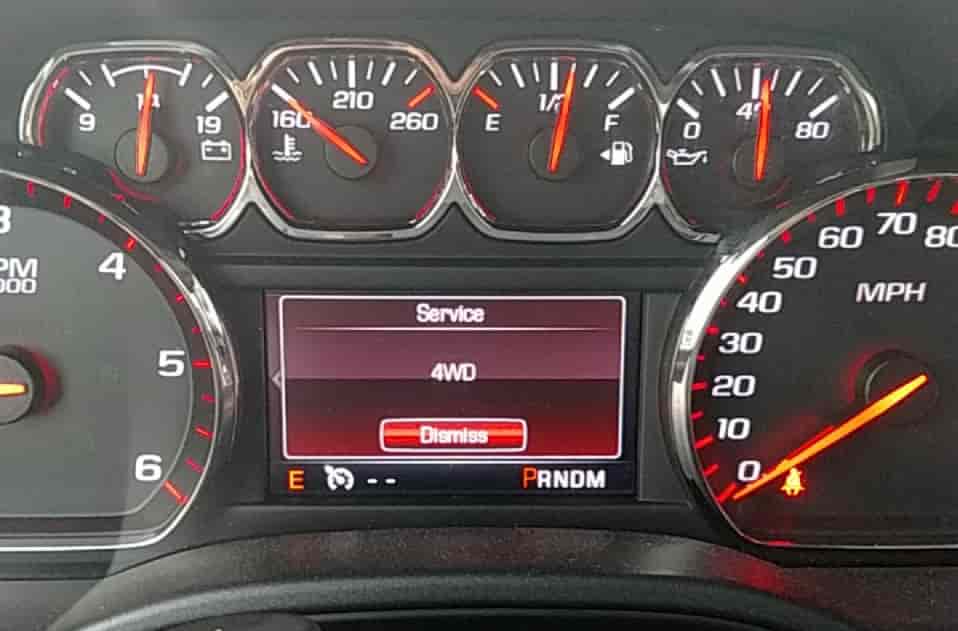
Understanding the 4WD System on Chevrolet Silverado
The 4WD system on a Chevrolet Silverado is designed to improve traction and stability in difficult driving conditions. It allows the vehicle to switch between rear-wheel drive and four-wheel drive modes depending on road needs. This system does not operate as a single unit. It depends on several electronic and mechanical components working together.
The 4WD switch on the dashboard sends driver input to the Body Control Module. The module processes the request and communicates with the transfer case system. The transfer case then distributes power to the front and rear axles. If any part of this communication chain fails, the system may stop responding.
The encoder motor inside the transfer case plays an important role. It positions the gears based on the selected driving mode. The Body Control Module monitors this movement and confirms whether the command is completed. If the module does not receive a correct signal, the system may disable operation.
The indicator lights on the switch reflect system status. When everything works correctly, the lights show the selected mode such as 2H, 4H, or 4L. If the lights do not turn on, the system may have lost electrical power, communication, or feedback from the transfer case.
Understanding this structure is important because the Silverado 4WD Switch No Lights issue does not always come from a single failed part. The system often fails due to communication breakdown between multiple components rather than a direct mechanical fault.
Common Causes of Silverado 4WD Switch No Lights
The Silverado 4WD Switch No Lights problem usually comes from electrical or communication failures rather than a single broken component. The system depends on stable power supply, accurate signals, and proper module coordination. When one of these elements fails, the switch may stop lighting up and the 4WD system may become unresponsive.
One of the most common causes is a blown fuse. The 4WD system uses dedicated fuses to protect electrical circuits. When a fuse burns out, the switch loses power and the indicator lights go off. A faulty relay can create a similar symptom by interrupting power delivery to the system.
Wiring issues also play a major role. Over time, wires can corrode, loosen, or break due to vibration and heat. This interrupts communication between the switch, the Body Control Module, and the transfer case system. Even a small wiring fault can disable the entire 4WD control signal.
The Body Control Module can also cause this issue. When the module fails or loses communication on the CAN bus network, it may stop sending or receiving signals correctly. This leads to a complete loss of switch illumination and system response.
Another important cause is a failing encoder motor in the transfer case. When the motor cannot report its position, the system may shut down to prevent incorrect engagement. This also results in no lights on the switch.
These causes often overlap, so proper diagnosis is required before replacing any parts.
Fuse and Relay Inspection
The first step in diagnosing the Silverado 4WD Switch No Lights issue is checking the fuse and relay system. These components control power delivery to the 4WD circuit. If either one fails, the switch may stop lighting up immediately.
The fuse protects the electrical system from overload. When it blows, power no longer reaches the 4WD switch or related modules. This causes a complete loss of indicator lights. In most cases, the fuse box is located under the hood or inside the cabin, depending on the model year of the Chevrolet Silverado.
The relay works as an electrical switch that controls higher current flow. If the relay fails, the system may still receive partial power, but it cannot activate the 4WD circuit properly. This can also result in a dead switch with no lights.
A visual inspection is not always enough. A fuse may look intact but still fail internally. A multimeter should be used to confirm continuity. The same applies to the relay. Swapping it with a known working relay is a quick way to test functionality.
If both fuse and relay are in good condition, the problem likely exists deeper in the system. This includes wiring faults, module communication issues, or transfer case components.
Checking these basic electrical parts first helps avoid unnecessary repairs and reduces diagnostic time.
4WD Switch and Wiring Diagnosis
After confirming the fuse and relay are working, the next step is checking the 4WD switch and its wiring. On a Chevrolet Silverado, the switch only sends a signal. It does not directly control the transfer case. That means any interruption in the wiring can stop the system and cause the Silverado 4WD Switch No Lights issue.
The 4WD switch receives power from the electrical system and sends input signals to the Body Control Module. If the switch does not receive stable voltage, it may stop lighting up completely. This often happens due to loose connectors or damaged wiring behind the dashboard.
Wiring harness problems are also common. Heat, vibration, and moisture can damage insulation over time. A broken or corroded wire can interrupt communication between the switch and the control module. Even a partial connection can cause intermittent failure.
A proper diagnostic process starts with checking voltage at the switch connector. If there is no power, the issue is upstream in the circuit. If power is present, the next step is checking the signal output when the switch is pressed. No response usually indicates a faulty switch or broken signal wire.
Connector pins should also be inspected carefully. Bent or oxidized pins can block signals without showing visible damage. Cleaning or reseating the connector sometimes restores normal operation.
If the switch and wiring test correctly, the issue likely exists in the control modules or transfer case system.
Body Control Module and Communication Issues
The Body Control Module plays a central role in the Silverado 4WD system. It acts as the communication hub between the dashboard switch and the transfer case. When this module fails or loses communication, the Silverado 4WD Switch No Lights issue can appear even if all physical components still work.
The 4WD switch sends a request to the Body Control Module. The module then processes the request and sends commands through the vehicle network. If the module cannot process data correctly, it may stop sending signals entirely. This leads to a complete loss of indicator lights on the switch.
Communication between modules happens through the CAN bus system. If there is interference, wiring damage, or a software error, the signal may not reach the transfer case. In some cases, other electronic systems may also behave abnormally, which helps confirm a module-level issue.
A failing Body Control Module often shows inconsistent behavior. The 4WD system may work sometimes and fail at other times. The switch lights may flicker or stay off completely. These irregular symptoms usually point to internal processing or communication faults rather than mechanical damage.
Diagnosing this issue requires a scan tool. Trouble codes related to communication loss or module failure can confirm the problem. Without proper scanning, replacing parts becomes guesswork and increases repair cost.
If the Body Control Module and communication network are stable, the next area to inspect is the transfer case and encoder motor system.
Transfer Case and Encoder Motor Inspection
The transfer case is a key mechanical component in the Chevrolet Silverado 4WD system. It controls how power is distributed between the front and rear axles. When the Silverado 4WD Switch No Lights issue appears, the transfer case system is often involved, especially when electronic signals are not being confirmed correctly.
Inside the transfer case, the encoder motor plays an important role. It receives commands from the control system and physically moves the gears into the selected mode. It also sends position feedback back to the module. If this feedback is missing or incorrect, the system may shut down the 4WD function to prevent damage.
When the encoder motor fails, the driver may notice that the switch does not light up or responds very slowly. In some cases, the vehicle may stay stuck in one drive mode. The system avoids switching because it cannot confirm gear position.
Electrical failure inside the encoder motor is a common issue. Internal sensors can wear out over time. Wiring connected to the motor can also become damaged or loose. Both conditions interrupt communication with the control module.
Mechanical wear inside the transfer case can also contribute to the problem. If the internal gears do not move smoothly, the motor may struggle to complete the shift. The system then disables operation as a safety response.
A proper diagnosis requires checking both electrical signals and physical movement. If the encoder motor does not respond correctly, replacement or repair may be necessary.
Step-by-Step Diagnostic Process
To properly fix the Silverado 4WD Switch No Lights issue, you need a structured diagnostic process. Checking parts in random order often leads to wrong conclusions and unnecessary replacement costs. A systematic approach helps isolate the real cause quickly.
The first step is checking the fuse system. You should confirm that all fuses related to the 4WD system have continuity. Even a small hidden break inside a fuse can cut power to the switch and modules.
The second step is testing the relay. You can swap it with a similar working relay in the fuse box. If the system starts working, the relay is the cause.
The third step is scanning the vehicle with an OBD2 tool. This helps detect communication errors, module failures, or transfer case codes. Any CAN bus related error is important because it often points to deeper electrical issues.
The fourth step is testing the 4WD switch itself. You should confirm that it receives power and sends a signal when pressed. If there is no output, the switch or wiring may be faulty.
The fifth step is checking the encoder motor on the transfer case. You need to verify if it responds to commands and reports correct position feedback. No movement or incorrect signals usually indicate failure.
The final step is inspecting the Body Control Module communication. If all other components work but signals do not pass through, the issue is likely inside the module or the network wiring.
Following this order helps avoid misdiagnosis and ensures each system layer is tested correctly.
When You Should Take Your Silverado to a Garage
Not every Silverado 4WD Switch No Lights issue can be solved at home. Some problems require professional diagnostic tools and advanced electrical testing. Knowing when to stop DIY troubleshooting helps you avoid making the issue worse.
If you have already checked fuses, relays, wiring, and the 4WD switch but the system still shows no response, the problem may be deeper inside the electronic control system. At this point, the issue often involves the Body Control Module or CAN bus communication errors. These systems require professional scan tools that can read manufacturer-level data.
You should also visit a garage if the transfer case encoder motor does not respond or shows inconsistent behavior. This component requires both electrical testing and mechanical inspection. Without proper equipment, it is difficult to confirm whether the fault is inside the motor or the transfer case itself.
Another clear sign is when multiple electronic systems fail at the same time. If dashboard lights, shifting behavior, or other controls become unstable, the issue likely involves central module failure. This cannot be accurately diagnosed without specialized tools.
Professional technicians can perform full system scans, run actuator tests, and check live data from modules. This allows them to pinpoint the exact failure instead of guessing.
Taking the vehicle to a qualified garage at the right time saves money, reduces repair mistakes, and ensures the 4WD system is restored safely.
Conclusion
The Silverado 4WD Switch No Lights issue on the Chevrolet Silverado is not a simple switch failure in most cases. It is usually the result of a breakdown in the electrical system, module communication, or transfer case feedback. Understanding this helps you avoid replacing parts without real evidence.
Throughout the diagnostic process, the most important step is to follow a logical order. You start with basic components like fuses and relays. Then you move to the 4WD switch and wiring. After that, you check system communication through the Body Control Module and CAN bus network. Finally, you inspect the transfer case and encoder motor for mechanical or electronic faults.
Many repair mistakes happen when drivers skip steps or assume the switch is the problem. In reality, the system is highly connected. A small electrical issue can disable the entire 4WD indicator and prevent mode changes.
By using a structured diagnostic approach, you reduce guesswork and avoid unnecessary costs. You also increase the chance of finding the real root cause on the first attempt.
If the issue becomes too complex or involves multiple systems failing at once, professional diagnosis is the safest option. Advanced scan tools can quickly identify hidden communication or module errors that are not visible during basic testing.
A correct diagnosis always leads to a faster and more cost effective repair of the 4WD system.