When it comes to building extreme horsepower machines, few engine platforms generate as much excitement as the LSX. From drag racing monsters to high performance street builds, LSX engines are often seen as the ultimate solution for drivers who want raw power without compromise. But here is the problem most enthusiasts face. They hear numbers like 700 horsepower or 600 lb ft of torque, yet they do not fully understand what those LSX engine specs actually mean in real world performance.
This confusion often leads to costly mistakes. Many builders choose an engine based only on peak horsepower, ignoring critical factors like torque curves, displacement, or compression ratio. The result can be poor drivability, overheating issues, or wasted money on an overbuilt setup that does not match their goals.
In this complete guide to LSX engine specs, you will learn exactly how to read and understand horsepower, torque, and performance data. More importantly, you will discover how these specifications translate into real world results, whether you are building a street car, a track weapon, or a drag racing beast. By the end, you will not only understand LSX engines, but also know how to choose the right setup with confidence.
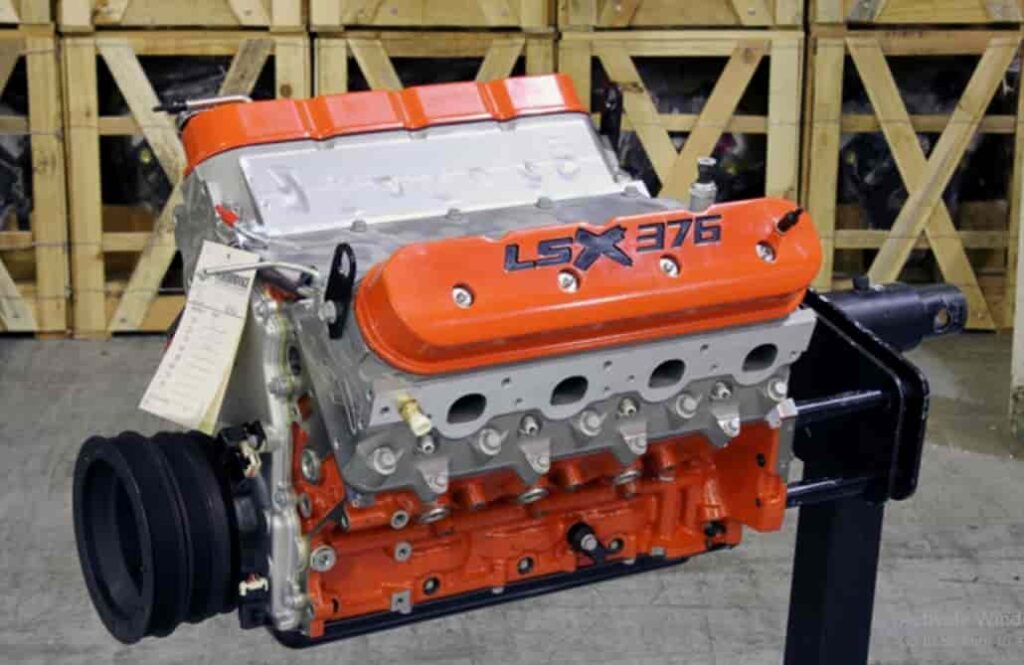
WHAT IS AN LSX ENGINE
An LSX engine represents a high performance version of the well known LS engine family. Engineers designed it specifically for extreme power applications. While standard LS engines already deliver strong performance and reliability, LSX engines push those limits much further.
The biggest difference comes from the engine block. LSX engines use a cast iron block instead of aluminum. This design increases strength and durability significantly. As a result, the engine can handle high boost, nitrous systems, and aggressive tuning without failure.
Builders often choose LSX engines when they target 700 horsepower or more. At that level, a standard LS block may struggle under pressure. The LSX platform solves this problem by providing a much stronger foundation.
Another key feature is the crate engine format. Manufacturers assemble LSX engines with optimized internal components. This setup reduces compatibility issues and saves time during installation. However, many buyers overlook an important detail. They focus on power numbers without understanding the full LSX engine specs.
This mistake can lead to poor results. Some builds become too aggressive for street use. Others fail to deliver expected performance because the setup does not match the intended purpose.
LSX engines are popular in drag racing and high performance street builds. They deliver massive power with excellent durability. Still, raw power alone does not define performance. To make the right decision, you need to understand the core LSX engine specs in detail.
CORE LSX ENGINE SPECS EXPLAINED
To fully understand LSX engine specs, you need to focus on the key metrics that define performance. These specifications are not just numbers. They directly affect how the engine behaves on the street or track.
Horsepower measures the engine’s ability to produce speed over time. A higher horsepower number usually means better top end performance. This is why drag racers and track drivers often prioritize horsepower. However, horsepower alone does not tell the full story.
Torque plays an equally important role. It represents the engine’s pulling force. Strong torque helps the car accelerate faster, especially from a standstill. Street cars benefit more from torque because it improves responsiveness in daily driving conditions.
Displacement refers to the total volume of all cylinders in the engine. Larger displacement allows the engine to burn more air and fuel, which increases both horsepower and torque. LSX engines often come in large displacement options, making them ideal for high power builds.
Compression ratio affects how efficiently the engine converts fuel into energy. A higher compression ratio can improve power output and efficiency. However, it also requires higher quality fuel and careful tuning. Ignoring this spec can lead to engine knock or long term damage.
Bore and stroke define the internal geometry of the engine. Bore refers to the cylinder diameter, while stroke measures how far the piston travels. A larger bore supports higher airflow, while a longer stroke increases torque. LSX engines balance these two factors to deliver both power and durability.
Many beginners make the same mistake. They focus on one number, usually horsepower, and ignore the rest. This approach often leads to an unbalanced build. The key is to understand how all LSX engine specs work together as a system.
When you read LSX engine specs correctly, you can predict how the engine will perform in real conditions. This knowledge helps you avoid costly upgrades and choose the right setup for your specific goals.
LSX ENGINE HORSEPOWER AND TORQUE BREAKDOWN
When you look at LSX engine specs, horsepower and torque are the two numbers that get the most attention. These figures define how powerful the engine feels in real driving conditions. However, many people misunderstand how they work together.
Horsepower represents how fast the engine can deliver power. LSX engines achieve high horsepower because of their strong internal structure and large displacement options. Depending on the configuration, LSX crate engines can produce around 450 horsepower on entry level setups. High performance builds can exceed 700 horsepower and even go beyond 1000 horsepower with forced induction.
Torque describes how much force the engine produces to move the vehicle. LSX engines deliver strong torque across most of their range. This gives the car strong acceleration, especially at lower speeds. A high torque LSX setup feels aggressive and responsive, even before reaching peak RPM.
LSX 376 engines usually deliver balanced performance. They focus on a mix of horsepower and drivability. LSX 454 engines push much higher torque and horsepower numbers, making them more suitable for heavy performance builds or drag racing applications.
Many builders make a common mistake here. They choose an engine based only on peak horsepower. This often leads to disappointing real world performance. A better approach is to match torque and horsepower characteristics with the intended use of the vehicle.
For street driving, strong low end torque often matters more than extreme horsepower. For racing, sustained horsepower at high RPM becomes more important. LSX engine specs allow both approaches, but only if you choose the right configuration.
Understanding the balance between horsepower and torque helps you predict how the engine will behave under load. This is the key to unlocking the full potential of an LSX build.
LSX ENGINE SPEC TABLE
To understand LSX engine specs clearly, you need to compare each major variant side by side. Each LSX engine model delivers different levels of displacement, horsepower, and torque. These differences determine how the engine performs in real applications such as street driving, drag racing, or high boost builds.
Below is a simplified breakdown of key LSX crate engine configurations.
LSX 376 focuses on balanced performance. It typically offers around 450 to 525 horsepower depending on the setup. This engine works well for street performance builds where drivability matters as much as power. It delivers solid torque while maintaining control and reliability.
LSX 454 targets high output performance. It usually produces around 620 to 770 horsepower. This engine is designed for aggressive builds that demand strong torque and high top end power. It performs best in drag racing or heavy performance applications.
Some custom LSX configurations exceed 1000 horsepower when combined with forced induction systems. These setups require advanced tuning and supporting modifications. They are not ideal for beginners but deliver extreme performance for professional level builds.
When comparing LSX engine specs, you should not only look at horsepower. You also need to evaluate torque, displacement, and intended usage. These factors determine how the engine behaves under load and how it responds in real driving conditions.
A proper comparison helps you avoid choosing an engine that is either underpowered or overbuilt for your needs. LSX engines offer flexibility, but only when matched correctly with the right application.
LSX VS LS ENGINES: SPEC DIFFERENCES
Understanding LSX engine specs becomes much clearer when you compare LSX engines with standard LS engines. Both belong to the same engine family, but they serve very different performance goals.
Standard LS engines focus on balance. They deliver solid horsepower, good fuel efficiency, and everyday usability. Engineers design them with aluminum blocks in many configurations to keep weight low and improve street performance. These engines work well for daily driving and moderate performance upgrades.
LSX engines take a different approach. They prioritize strength and maximum power potential. Most LSX blocks use cast iron construction. This design increases durability under extreme stress. It allows the engine to handle high boost pressure, nitrous systems, and aggressive tuning without failure.
In terms of horsepower, LS engines usually stay in a moderate range unless heavily modified. LSX engines, on the other hand, support much higher output levels. They often start where built LS engines stop. This makes LSX platforms more suitable for racing and extreme builds.
Torque delivery also differs significantly. LSX engines produce stronger and more consistent torque under high load conditions. This improves acceleration in performance scenarios, especially in drag racing environments. LS engines feel smoother but cannot sustain the same level of force under extreme setups.
Another key difference is cost and complexity. LS engines are more affordable and easier to maintain. LSX engines require higher investment and more careful tuning. Builders often choose LSX only when they need maximum performance potential.
When you compare LSX engine specs with LS engines, the key takeaway is simple. LS engines focus on versatility, while LSX engines focus on raw power and durability under pressure.
REAL WORLD PERFORMANCE: WHAT LSX SPECS MEAN
LSX engine specs look impressive on paper, but real world performance depends on how those numbers translate into driving conditions. Horsepower, torque, and displacement all work together to define how the engine behaves when it is under load.
In real driving, horsepower mainly affects high speed performance. A higher horsepower LSX engine delivers stronger acceleration at higher RPM ranges. This is why LSX setups often dominate in drag racing environments where sustained power matters more than efficiency.
Torque has a more immediate impact on how the car feels. A high torque LSX engine responds quickly when you press the accelerator. This creates strong low end acceleration, especially useful in street driving or heavy vehicles. Drivers often describe this as a “push back into the seat” feeling.
Displacement also plays a major role in real performance. Larger displacement LSX engines move more air and fuel per cycle. This improves both torque and horsepower potential. However, it can also increase fuel consumption and heat output. Builders must balance performance goals with practical limitations.
Compression ratio affects how efficiently the engine uses fuel under real conditions. A properly tuned LSX engine with a higher compression ratio can deliver stronger performance. However, it also requires high quality fuel and precise tuning to avoid engine knock.
Many enthusiasts focus only on peak numbers and ignore how the engine behaves in real use. This often leads to setups that perform well in short bursts but feel inconsistent during daily driving or long runs.
The true value of LSX engine specs becomes clear when you match them to your driving purpose. A well matched LSX build delivers smooth power delivery, strong acceleration, and reliable performance across different conditions.
COMMON MISTAKES WHEN READING LSX ENGINE SPECS
Many builders misinterpret LSX engine specs and end up making poor decisions during engine selection or tuning. These mistakes often lead to wasted money, weak performance, or unreliable setups.
One common mistake is focusing only on horsepower. Many people assume a higher horsepower number always means a better engine. In reality, horsepower without the right torque curve or displacement balance can result in poor drivability. The engine may feel strong at high RPM but weak in normal driving conditions.
Another frequent issue is ignoring torque characteristics. Torque defines how quickly the vehicle responds to throttle input. When builders overlook torque, they often end up with engines that feel slow off the line even if the horsepower looks impressive on paper.
Some users also underestimate the importance of compression ratio. They choose aggressive setups without considering fuel quality or tuning requirements. This often leads to engine knock, overheating, or long term damage.
Displacement is another spec that is often misunderstood. Bigger is not always better. A large displacement LSX engine can deliver more power, but it may also increase fuel consumption and reduce efficiency in street use.
Many beginners also compare LSX engines without considering the intended application. A setup designed for drag racing will not perform the same in daily driving. Without matching specs to purpose, even a powerful engine can feel disappointing.
The key takeaway is simple. LSX engine specs must be read as a complete system, not individual numbers. Each specification influences the others, and ignoring this relationship leads to unbalanced builds.
CONCLUSION
LSX engine specs give you a clear picture of how much performance these engines can deliver, but the real value comes from understanding how all the numbers work together. Horsepower shows top end potential, torque defines real world acceleration, and displacement sets the foundation for overall power output.
Throughout this guide, you have seen how LSX engines differ from standard LS engines, how each model delivers different levels of performance, and why real world behavior often matters more than peak numbers. You have also learned that specs like compression ratio, torque curves, and displacement are not isolated figures. They interact with each other and directly affect how the engine feels in practice.
The main challenge for most builders is not lack of power, but mismatch between engine specs and intended use. A high horsepower setup may feel impressive on paper but fail to deliver smooth drivability. On the other hand, a well balanced LSX configuration can provide both strong performance and reliable operation when chosen correctly.
LSX engines remain one of the most powerful and flexible platforms in the performance world. They can support everything from street builds to extreme racing applications, but only when the specs are properly understood and matched to the right goal.
If you are planning an LSX build, the smartest step is to focus on the full spec profile instead of a single number. This approach will help you avoid costly mistakes and unlock the true potential of your engine.