The phrase LSA engine specs often appears in discussions about high performance V8 engines, but not everyone truly understands what makes this powertrain so special. Why does a factory supercharged engine from General Motors still command respect years after its release? The answer lies in how it balances raw power, reliability, and real world usability.
The LSA engine is best known for powering iconic performance cars such as the Cadillac CTS V and the Chevrolet Camaro ZL1. These vehicles are not just fast on paper. They deliver aggressive acceleration, instant throttle response, and a driving experience that feels both controlled and explosive. However, many enthusiasts still struggle to interpret the actual specifications behind that performance. Horsepower numbers alone do not tell the full story, and torque delivery, supercharger design, and engine architecture all play critical roles.
This guide will break down LSA engine specs in a clear and practical way. You will learn how much horsepower and torque this supercharged 6.2L V8 produces, how the Eaton supercharger contributes to its performance, and why it remains a favorite among tuners and muscle car fans. If you have ever wondered whether the LSA engine is truly as powerful and reliable as people claim, this article will give you the answers you need.
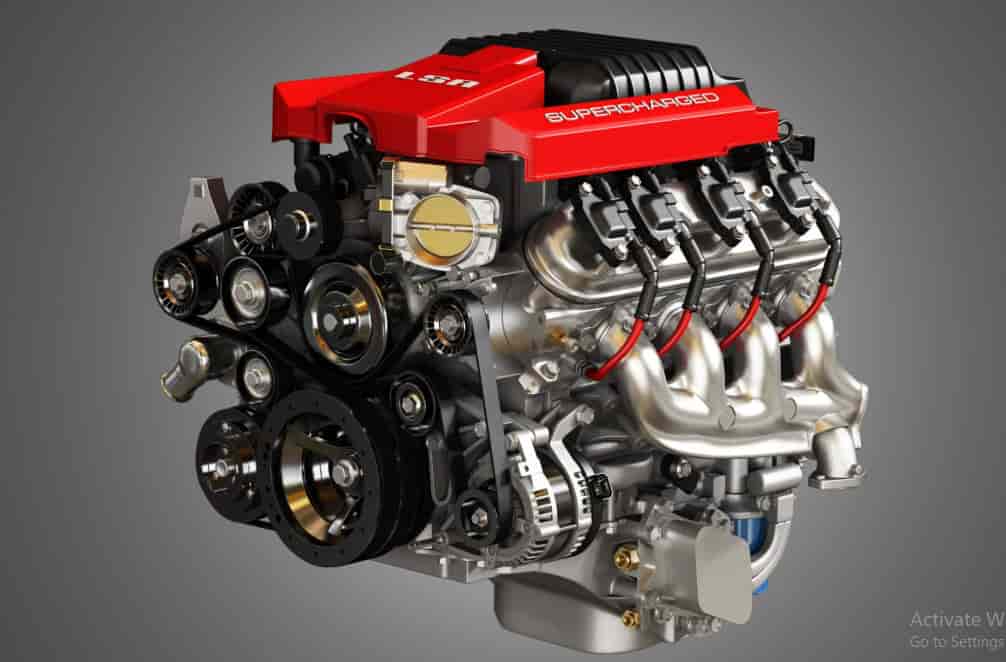
What Is the LSA Engine?
To understand LSA engine specs, you need to start with the engine’s core identity. The LSA is a high performance 6.2 liter supercharged V8 developed by General Motors. It belongs to the well known LS engine family, which has earned strong trust among enthusiasts.
GM designed the LSA to deliver high power without sacrificing reliability. Unlike many race focused engines, it works well on both the street and the track. This balance makes it stand out in the performance world.
The LSA is part of the Gen IV small block V8 lineup. This platform is known for its compact size, strong internals, and excellent tuning potential. Many builders prefer LS based engines because they are easier to modify and widely supported.
What makes the LSA different from engines like the LS3 is the supercharger. Instead of relying only on natural airflow, the LSA forces more air into the engine. This process increases combustion efficiency and boosts power instantly. As a result, the engine delivers strong acceleration with very little delay.
GM used the LSA in iconic performance cars such as the Cadillac CTS V and the Chevrolet Camaro ZL1. These vehicles became famous for their aggressive performance and smooth power delivery. Drivers could enjoy supercar level speed without losing everyday comfort.
Many people compare the LSA to the LS9 engine from the Corvette ZR1. While the LS9 produces more power, the LSA offers better practicality. It runs cooler, costs less, and handles daily driving more easily. Because of this, many enthusiasts see the LSA as a more balanced choice.
Understanding this foundation helps you read LSA engine specs more effectively. These numbers are not just technical data. They reflect a design focused on power, control, and real world performance.
LSA Engine Specs Breakdown
Understanding LSA engine specs requires more than just reading numbers. You need to see how each specification affects real performance. The LSA engine combines strong displacement, forced induction, and optimized airflow to deliver impressive results.
At its core, the LSA is a 6.2 liter supercharged V8 engine. It produces around 556 horsepower and 551 lb ft of torque in factory form. These numbers place it firmly in the high performance category, even by modern standards. More importantly, the engine delivers this power in a smooth and predictable way.
Here are the key LSA engine specs you should know:
- Engine type: Supercharged V8
- Displacement: 6.2 liters
- Horsepower: 556 hp
- Torque: 551 lb ft
- Compression ratio: 9.1 to 1
- Bore x stroke: 4.065 inches x 3.622 inches
- Fuel system: Electronic fuel injection
- Redline: Around 6200 rpm
One of the most important components in the LSA is the Eaton TVS 1900 supercharger. This system pushes pressurized air into the engine at around 9 psi of boost. Because of this, the engine can burn more fuel and generate more power without increasing its size.
The supercharger also improves throttle response. Power comes in quickly and feels immediate. Unlike turbocharged engines, the LSA does not rely on exhaust gases to build boost. This means there is almost no lag when you press the accelerator.
Another key factor is the compression ratio. At 9.1 to 1, it stays relatively low compared to naturally aspirated engines. This design helps the engine handle boost safely while maintaining durability under high load.
When you look at these LSA engine specs together, a clear picture appears. The engine is not just powerful on paper. It delivers consistent performance, strong mid range torque, and reliable operation. That is why many enthusiasts still choose it for both stock driving and high performance builds.
LSA Engine Horsepower and Torque Explained
When people talk about LSA engine specs, horsepower is usually the first number they notice. The LSA produces about 556 horsepower in factory configuration. This figure places it among the most powerful production LS based engines ever built by GM at its time.
However, horsepower alone does not explain how the engine feels on the road. Torque plays an equally important role. The LSA delivers around 551 lb ft of torque, and this is where the engine truly stands out. Torque represents pulling power, and it determines how quickly the car reacts when you press the throttle.
The most impressive aspect of the LSA is how it delivers power across the rev range. The engine produces strong low end torque, which means the car moves aggressively even at low RPM. This creates an instant and forceful acceleration feel that drivers often describe as effortless.
In real world driving, this combination of horsepower and torque makes a big difference. The car does not need high RPM to feel fast. Instead, it responds immediately in everyday conditions such as city driving or highway overtaking. This is one reason why many enthusiasts prefer supercharged engines over naturally aspirated ones.
Another important point is power consistency. The LSA maintains stable torque delivery as boost builds from the Eaton supercharger. This reduces hesitation and creates a smooth but aggressive acceleration curve. The result is a driving experience that feels controlled but still extremely powerful.
Many people misunderstand horsepower and assume it represents total performance. In reality, the balance between horsepower and torque defines how an engine behaves. The LSA engine achieves a strong balance between both, which makes it suitable for both daily use and high performance driving.
When you combine these factors, LSA engine specs reveal more than just numbers. They show why this engine delivers such a strong and predictable performance character.
How the LSA Engine Generates Power
To fully understand LSA engine specs, you need to look at how the engine produces power. The key difference is the supercharger system. The LSA uses an Eaton TVS 1900 supercharger, and this component changes how air enters the engine.
A naturally aspirated engine depends on atmospheric pressure. Air enters the cylinders only through suction. The LSA works differently. It forces air into the engine under pressure. This process increases the amount of oxygen available during combustion. More oxygen means more fuel can burn, and more fuel means more power.
The Eaton TVS 1900 is a positive displacement supercharger. It delivers boost instantly. There is no waiting for exhaust gases like in a turbocharged system. This is why the LSA feels responsive as soon as you press the throttle.
The system produces around 9 psi of boost in factory form. This level of pressure is carefully chosen. It increases performance while keeping the engine reliable for daily use. GM designed the system to balance power and durability rather than pushing extreme boost levels.
Another important factor is airflow efficiency. The supercharger uses a rotor design that improves air movement inside the unit. This reduces energy loss and increases efficiency. As a result, the engine produces strong power without excessive strain.
Heat management also plays a major role. Compressing air increases temperature. Higher temperature reduces performance and can affect engine safety. The LSA includes an intercooler system to reduce intake air temperature. Cooler air improves combustion stability and helps maintain consistent power output.
This combination of instant boost, controlled pressure, and thermal management explains why the LSA delivers such a strong performance character. It is not just about raw force. It is about controlled and efficient power delivery.
When you analyze LSA engine specs from this perspective, you can see how engineering choices directly shape driving performance.
LSA vs LS3 vs LT4 Comparison
To understand LSA engine specs in context, it is important to compare it with other well known GM performance engines. The LS3 and LT4 are the two most common benchmarks, but each one targets a different type of performance experience.
The LS3 represents a naturally aspirated 6.2 liter V8. It focuses on linear power delivery and mechanical simplicity. In most factory applications, it produces around 430 horsepower. Drivers often describe it as smooth and predictable, but it lacks the instant force of forced induction engines.
With the LSA, the driving character changes significantly. A factory supercharger increases airflow and boosts output to about 556 horsepower and 551 lb ft of torque. This setup creates a much stronger low RPM response compared to the LS3. Acceleration feels immediate, even without high revs.
By contrast, the LT4 introduces a more advanced generation of supercharged performance. It also uses a 6.2 liter V8 layout, but it integrates improved cooling, higher efficiency, and greater power potential. As a result, it delivers more horsepower than the LSA while maintaining better thermal control.
Each engine serves a distinct purpose in GM’s lineup. The LS3 prioritizes simplicity and reliability. The LSA focuses on balanced forced induction performance for street and track use. The LT4 pushes further into modern high output engineering with enhanced efficiency.
From a real world perspective, the LSA occupies a very practical position. It offers a clear step up from naturally aspirated engines without the complexity found in newer designs. This balance makes it attractive for both performance enthusiasts and engine swap projects.
Overall, LSA engine specs highlight a middle ground between simplicity and advanced performance. It delivers strong power, consistent behavior, and long term usability, which is why it remains relevant in the performance community.
LSA Engine Reliability and Common Issues
When evaluating LSA engine specs, performance alone is not enough. Reliability plays a major role in how the engine is perceived by enthusiasts and builders. The LSA is generally considered a strong and durable engine, especially when compared to many other high output performance engines in its class.
At its core, the LSA benefits from the proven GM LS architecture. This platform is known for strong iron or aluminum block construction, robust internals, and excellent long term durability. Because of this foundation, the LSA can handle significant power without requiring immediate internal upgrades.
However, no high performance supercharged engine is without limitations. One of the most common concerns is heat management. The supercharger generates additional temperature under load, and this can stress the cooling system during aggressive driving or track use. While GM included an intercooler system, sustained high temperature conditions can still impact performance consistency.
Another factor to consider is the supercharger system itself. The Eaton TVS 1900 is reliable, but like all forced induction components, it requires proper maintenance. Belt wear, pulley alignment, and intake heat buildup can all influence long term performance if neglected.
Fuel consumption is also a practical drawback. The LSA delivers strong power, but it does so at the cost of efficiency. Under heavy throttle, fuel usage increases quickly. This is expected for a large displacement supercharged V8, but it remains an important consideration for daily driving.
Some owners also mention carbon buildup over time, especially in engines that experience a lot of short trips. This is not unique to the LSA, but it can affect long term smoothness if the engine is not regularly driven under load.
Despite these issues, the LSA maintains a strong reputation for durability. Many engines run reliably for high mileage when properly maintained. Oil changes, cooling system care, and conservative tuning play a major role in long term health.
Overall, LSA engine specs reflect a performance oriented design that still respects real world reliability. It is not a fragile high strung engine. Instead, it offers a balanced approach where power and durability coexist when the engine is used correctly.
Is the LSA Engine Worth It?
When you look at LSA engine specs as a whole, the question is not just about power. The real question is whether this engine still makes sense today for enthusiasts, builders, and performance drivers.
The LSA offers a strong combination of factory supercharged performance and LS based simplicity. It delivers 556 horsepower and 551 lb ft of torque without requiring any modifications. This makes it highly attractive for people who want serious performance straight from the factory.
For performance enthusiasts, one of the biggest advantages is upgrade potential. The LSA responds well to basic modifications such as pulley changes, intake upgrades, and tuning. With the right setup, it can produce significantly more power while still maintaining good drivability.
Engine swap builders also value the LSA for its balance. It fits into many platforms that support LS based engines, and it brings forced induction performance without needing a full aftermarket turbo system. This reduces complexity during builds and improves reliability compared to custom setups.
However, the LSA is not perfect for every situation. Fuel consumption is high, especially under aggressive driving. Maintenance costs can also increase if the supercharger system is pushed beyond factory limits. For some users, this trade off may not be ideal for daily commuting.
Despite these limitations, the LSA remains a strong option in the performance engine market. It offers a rare mix of power, usability, and aftermarket support that is difficult to match at its price point.
Conclusion
The LSA engine stands out as one of the most balanced supercharged V8 engines developed by General Motors. It combines strong horsepower, high torque, and a proven LS based design into a package that still feels relevant today.
Through its LSA engine specs, we can see a clear focus on real world performance rather than extreme race only output. It delivers instant throttle response, strong mid range power, and consistent behavior across different driving conditions.
While newer engines like the LT4 offer higher efficiency and more advanced technology, the LSA continues to hold its place because of its simplicity and reliability. It remains a popular choice for enthusiasts who want factory built supercharged performance without excessive complexity.
In the end, the LSA is not just about numbers. It is about how those numbers translate into real driving experience. That is what keeps this engine respected in the performance community even years after its release.