The LS7 engine stands as one of the strongest naturally aspirated V8 engines from General Motors. Many enthusiasts search for LS7 Engine Specs because they want clear technical details and real performance insights. This engine delivers both raw power and advanced engineering in a single package.
GM designed the LS7 as a 7.0 liter V8 for high performance use. Engineers focused on airflow, displacement, and durability. The engine avoids forced induction and relies on natural aspiration. This design gives the LS7 a direct and responsive power delivery that many drivers still prefer today.
GM installed the LS7 in high performance platforms like the Chevrolet Corvette Z06. In this application, the engine shows its full potential on both road and track. It combines high horsepower with strong reliability when maintained properly.
The LS7 Engine Specs continue to attract attention because the engine balances simplicity and performance. It uses a large displacement V8 layout with advanced cylinder head design. This combination allows strong airflow and efficient combustion at high RPM.
In this article, you will learn the full LS7 Engine Specs in detail. We will cover horsepower, torque, internal design, and real world performance. You will also see how it compares with other GM LS engines and why it still matters in modern performance discussions.
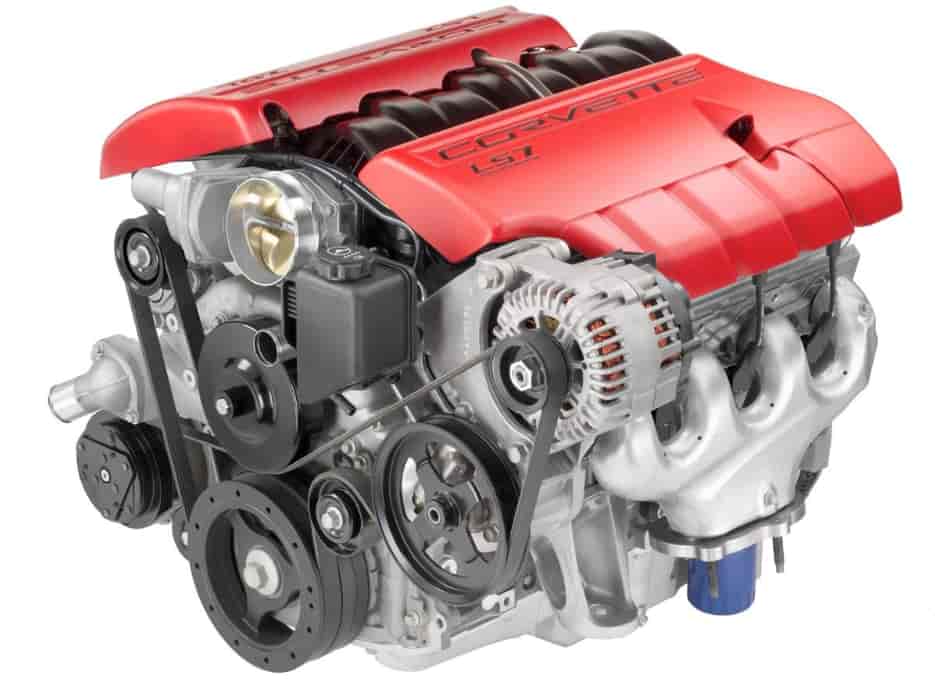
LS7 Engine Overview and Architecture
The LS7 engine belongs to General Motors LS engine family. Engineers designed it as a high performance 7.0 liter V8 for serious driving demands. GM focused on combining large displacement with lightweight construction to achieve strong output without forced induction.
The engine uses an aluminum block to reduce overall weight. This design improves vehicle balance and helps handling in performance applications. GM also optimized internal airflow by using high flow cylinder heads. These heads allow the engine to move more air into the combustion chamber, which increases power at higher RPM.
The LS7 uses a 427 cubic inch displacement layout. This large size gives it a strong advantage in natural aspiration. More displacement allows the engine to generate higher torque at lower RPM compared to smaller V8 engines.
GM also reinforced the LS7 for durability. Engineers designed it for high RPM operation under track conditions. The engine includes stronger internal components compared to lower LS variants. This makes it suitable for sustained high performance driving.
One important feature is the focus on simplicity. The LS7 avoids complex forced induction systems. Instead, it relies on mechanical efficiency and airflow optimization. This approach improves throttle response and gives the engine a more direct driving feel.
GM positioned the LS7 as a flagship naturally aspirated engine within the LS family. It represents the peak of displacement based performance before turbocharged and supercharged systems became more common in modern performance engines.
LS7 Engine Specs: Horsepower, Torque, and Key Performance Numbers
The LS7 engine produces 505 horsepower at 6,300 RPM. GM achieved this output through large displacement and highly efficient airflow design. The engine delivers strong top-end power while still maintaining usable low-end torque for street and track driving.
The torque output reaches around 470 lb-ft at 4,800 RPM. This level of torque gives the LS7 strong acceleration characteristics. Drivers feel immediate response when they press the throttle, especially in mid-range RPM conditions.
GM designed the LS7 with a high redline near 7,000 RPM. This allows the engine to stay in its power band longer during aggressive driving. The valvetrain supports stable operation at high engine speeds, which improves performance consistency on track conditions.
The compression ratio sits at approximately 11.0 to 1. This high compression helps the engine extract more energy from each combustion cycle. It also improves efficiency and power output when the engine runs on high quality fuel.
The LS7 uses a naturally aspirated configuration. It does not rely on turbochargers or superchargers. This design improves throttle response and creates a linear power delivery curve. Many enthusiasts value this feeling because it feels more direct and predictable compared to forced induction engines.
Overall, the LS7 Engine Specs show a strong balance between horsepower, torque, and high RPM capability. GM tuned this engine for performance driving rather than daily economy. This focus makes it one of the most respected naturally aspirated V8 engines in the GM lineup.
Performance Engineering Behind the LS7 Engine
GM engineered the LS7 to maximize airflow efficiency and mechanical strength. The goal was to extract the highest possible performance from a naturally aspirated 7.0 liter V8 without adding forced induction. This approach shaped every major design decision in the engine.
The large displacement plays a central role in performance. The LS7 moves a high volume of air and fuel with each combustion cycle. This increases torque output and improves acceleration, especially in mid-range RPM.
GM also designed the cylinder heads with a high flow structure. These heads improve intake and exhaust efficiency. Better airflow allows the engine to burn fuel more effectively, which increases both horsepower and responsiveness.
The LS7 uses lightweight valvetrain components to reduce internal inertia. This design helps the engine reach higher RPM more safely. It also improves throttle response because the engine reacts faster to driver input.
Another key element is the dry sump lubrication system. This system keeps oil pressure stable during high speed cornering and track use. It prevents oil starvation and protects the engine under extreme driving conditions. This feature makes the LS7 more suitable for performance driving compared to standard wet sump engines.
GM also optimized combustion efficiency through precise engineering of the intake and exhaust paths. The engine maintains strong airflow at both low and high RPM. This balance allows the LS7 to deliver consistent performance across different driving conditions.
The LS7 performance philosophy focuses on simplicity and efficiency rather than complexity. GM avoided turbocharging and instead refined every internal component to work with natural airflow. This design creates a direct power delivery that feels linear and predictable.
LS7 Applications in Real Cars and Performance Builds
GM installed the LS7 engine in select high performance vehicles where it could fully demonstrate its capabilities. The most famous application is the Chevrolet Corvette Z06 from the C6 generation. In this platform, GM paired the LS7 with a lightweight chassis to maximize power to weight ratio and track performance.
The Corvette Z06 uses the LS7 as its flagship naturally aspirated engine. This combination allows the car to deliver strong acceleration, high top speed, and consistent track performance. Drivers experience immediate throttle response and strong mid to high RPM pull.
Beyond factory applications, the LS7 also plays a major role in the aftermarket performance world. Many builders use it in engine swap projects due to its displacement, reliability potential, and strong power output. The engine fits well in performance oriented builds where naturally aspirated V8 power is preferred.
GM also offered the LS7 as a crate engine through its performance division. This allowed enthusiasts and builders to install the engine into custom projects, restomods, and track cars. The crate engine version helped expand the LS7 influence beyond factory vehicles.
In real world use, the LS7 performs best in environments where airflow and RPM range matter. Track driving, high speed road use, and performance builds highlight its strengths. The engine responds well to proper tuning and high quality maintenance.
The LS7 maintains a strong reputation among enthusiasts because it combines factory engineering with aftermarket flexibility. It works both as a complete OEM performance solution and as a foundation for custom high power builds.
LS7 Reliability and Common Issues
The LS7 engine delivers strong performance, but it also requires proper maintenance to stay reliable over time. GM designed it for high performance use, so it operates under more stress than standard V8 engines in the LS family.
One of the most discussed issues involves valve guide wear. Some LS7 engines experience premature wear in the cylinder heads. This problem can lead to oil consumption and reduced long term efficiency if owners do not address it early.
The high performance nature of the engine also increases thermal and mechanical stress. The LS7 runs at high RPM more often than standard engines. This operating style puts extra load on internal components such as valves, pistons, and bearings.
Oil quality plays an important role in LS7 reliability. The engine responds best to high quality synthetic oil and consistent oil change intervals. Poor maintenance increases the risk of wear and long term damage.
Another factor is driving style. The LS7 performs best when it reaches operating temperature before heavy use. Cold engine abuse increases wear and reduces lifespan. Track use also demands more frequent inspection and maintenance.
Despite these issues, the LS7 remains a durable engine when properly cared for. Many engines reach high mileage without major failure when owners follow correct maintenance practices. GM built the LS7 with performance in mind, so it rewards disciplined upkeep.
Overall, LS7 Engine Specs reflect a high output design that trades some long term comfort for performance capability. Enthusiasts accept this trade because the engine delivers a driving experience that few naturally aspirated V8s can match.
LS7 vs Other LS Engines: LS3 and LS9 Comparison
The LS7 engine sits near the top of the GM LS engine family in terms of naturally aspirated performance. To understand its position, it is important to compare it with other popular LS engines such as the LS3 and LS9.
The LS3 engine uses a 6.2 liter displacement. It produces less horsepower than the LS7 but offers strong reliability and wider availability. GM designed the LS3 for a balance between performance and everyday usability. It delivers smooth power but does not reach the same high RPM character as the LS7.
The LS7 increases displacement to 7.0 liters. This larger size gives it a clear advantage in torque and high RPM power. It also uses more advanced cylinder heads and a more aggressive performance setup. As a result, the LS7 delivers stronger track focused performance compared to the LS3.
The LS9 engine takes a different approach. GM added a supercharger to the 6.2 liter base design. This allows the LS9 to produce significantly higher horsepower than the LS7. However, the LS9 relies on forced induction, while the LS7 focuses on natural aspiration. This creates two very different driving experiences.
The LS7 delivers linear power and direct throttle response. The LS9 delivers higher peak power but with forced induction characteristics. The LS3 sits between them as a balanced daily performance engine.
In summary, the LS7 Engine Specs position it as a high performance naturally aspirated option within the LS family. It does not chase forced induction numbers. Instead, it focuses on displacement, airflow efficiency, and mechanical simplicity to deliver a pure V8 driving experience.
Conclusion: Why the LS7 Engine Specs Still Matter Today
The LS7 engine remains one of the most respected naturally aspirated V8 engines in GM history. Its combination of 7.0 liter displacement, high RPM capability, and advanced airflow design creates a performance package that still attracts enthusiasts today.
When you review the LS7 Engine Specs, the balance becomes clear. The engine produces strong horsepower and torque without relying on forced induction. GM focused on mechanical efficiency, cylinder head airflow, and lightweight internal components to achieve this result. This approach creates a direct and responsive driving experience that many modern engines no longer offer.
The LS7 also holds an important place in performance history through its use in the Chevrolet Corvette Z06. This platform highlights the engine’s ability to deliver track ready performance while still remaining usable on the road. It shows how far GM pushed naturally aspirated engineering before turbocharged and supercharged systems became dominant.
At the same time, the LS7 demands proper care. It performs best when owners follow correct maintenance practices and understand its high performance nature. This trade off between raw power and maintenance sensitivity is part of what defines the engine.
Today, the LS7 continues to attract attention in swaps, builds, and performance discussions. It stands as a benchmark for displacement based V8 engineering and remains a reference point for comparing modern engines.
If you are studying LS7 Engine Specs, you are really looking at more than numbers. You are looking at a piece of GM performance engineering history that still influences engine design and enthusiast culture today.