The “Chevy Silverado Service Brake Assist” warning often surprises drivers because it appears suddenly on the dashboard. Many owners of the Chevrolet Silverado feel unsure when they see this message, especially when the brakes still seem to work normally. This system is part of the truck’s electronic safety network, not just a simple mechanical brake function.
When this warning shows up, it means the brake assist system has detected a fault or performance issue. The system may not fully support emergency braking anymore. This does not always mean total brake failure. However, it does mean the vehicle may not provide full braking assistance when you need it most.
Modern trucks like the Silverado rely on multiple connected systems to manage braking safety. One of the most important is the Anti-lock Braking System (ABS), which helps prevent wheel lock during sudden stops. The brake assist function works alongside it to increase braking force in emergency situations. When one part fails, the system triggers a warning to protect the driver.
Drivers should not ignore the Chevy Silverado Service Brake Assist message. Even if the vehicle still drives normally, the system may lose critical safety functions. This can increase stopping distance and reduce control in sudden braking situations.
In this article, you will understand what this warning means, why it happens, and how to fix it step by step in a practical way.
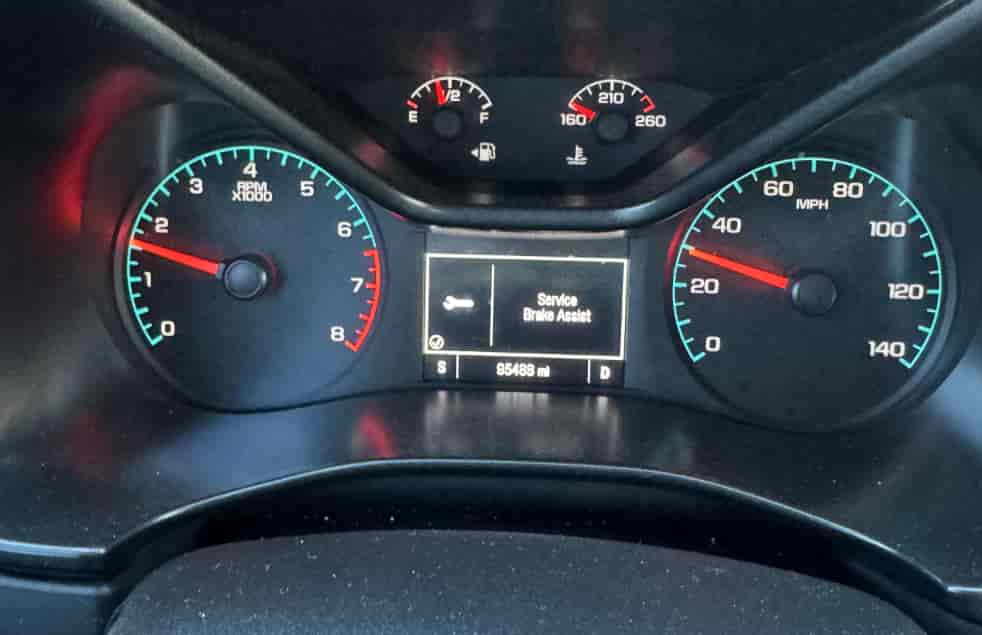
What Does “Service Brake Assist” Mean?
The “Service Brake Assist” message on a Chevrolet Silverado indicates that the vehicle has detected a malfunction in its brake assist system. This system is designed to help the driver apply maximum braking force during emergency situations. When it fails, the truck may still brake, but it may not deliver full stopping power in critical moments.
To understand this warning clearly, you need to look at how modern braking systems work. The Silverado does not rely only on hydraulic pressure from the brake pedal. It also depends on electronic systems that monitor how fast and how hard you press the brake. One of the core components involved is the Anti-lock Braking System (ABS). This system prevents wheel lock during sudden braking and helps maintain steering control.
Brake assist works together with ABS and stability systems. When you press the brake pedal quickly in an emergency, the system detects panic braking. It then increases braking force automatically to reduce stopping distance. This process depends on sensors, control modules, and software communication inside the vehicle.
When any part of this network fails, the truck triggers the “Service Brake Assist” warning. The issue may come from a faulty sensor, a weak electrical signal, or a communication error between control modules. In some cases, the system shuts off brake assist functions to prevent incorrect operation.
Even though normal braking may still work, the absence of brake assist reduces safety in sudden stop situations. That is why the system warns the driver immediately when it detects irregular behavior. Understanding this meaning helps you decide whether the issue is minor or requires urgent repair.
Common Causes of Chevy Silverado Service Brake Assist Warning
The “Chevy Silverado Service Brake Assist” warning appears when the vehicle detects a fault in one or more parts of the braking support system. In most cases, the issue does not come from a single failure but from a chain of small problems across sensors, electrical components, and control modules inside the Chevrolet Silverado.
One of the most common causes is a faulty brake pedal position sensor. This sensor tracks how fast and how far you press the brake pedal. When it sends incorrect signals, the system can no longer calculate emergency braking correctly, which triggers the warning.
Another frequent cause is a malfunction in the Anti-lock Braking System (ABS) module. The ABS unit communicates with the brake assist system to manage wheel speed and braking pressure. If the ABS module fails or loses communication, the brake assist function is often disabled as a safety measure.
Low brake fluid can also trigger the warning. When fluid levels drop, hydraulic pressure becomes unstable, and the system detects reduced braking performance. Electrical issues are another major factor. Damaged wiring, corroded connectors, or poor grounding can interrupt signals between sensors and control units.
In some cases, the problem starts after battery replacement or voltage drop. Modern braking systems rely on stable electrical power. When voltage fluctuates, the ECU or BCM may lose calibration and trigger false warnings.
Finally, software or communication errors between control modules can also activate the message. These issues often appear randomly and may come and go before becoming permanent.
Understanding these causes helps you narrow down the problem instead of guessing. It also allows you to decide whether the issue can be checked at home or requires professional diagnostics.
Symptoms You Should Not Ignore
When the “Chevy Silverado Service Brake Assist” warning appears on a Chevrolet Silverado, it is usually followed by noticeable changes in how the vehicle behaves during braking. These symptoms help you understand whether the issue is minor or potentially serious.
One of the first signs is a change in brake pedal feel. The pedal may feel harder than usual, and you may need to apply more force to slow the vehicle. This happens because the brake assist function is no longer helping amplify your braking input.
Another common symptom is longer stopping distance. Even when you press the brake with normal force, the vehicle may take more time to come to a complete stop. This becomes more noticeable during sudden or emergency braking situations.
In many cases, the dashboard may also show additional warning lights. The ABS light or traction control warning may appear alongside the brake assist message. This indicates that multiple systems, including the Anti-lock Braking System (ABS), are no longer working together properly.
Some drivers also notice that traction control becomes disabled. This reduces stability on slippery roads or during sharp turns. In certain situations, the warning may appear intermittently, disappearing and returning after restarting the vehicle.
You may also experience inconsistent braking response. The system may feel normal at times but behave differently under hard braking. This inconsistency is a key sign that electronic components or sensors are failing.
These symptoms should not be ignored because they directly affect driving safety. Even if the truck still stops normally in light driving conditions, the loss of brake assist support increases risk during emergency situations. Recognizing these early signs helps you decide when to inspect or repair the system before it becomes more serious.
How to Fix Chevy Silverado Service Brake Assist Warning
Fixing the “Chevy Silverado Service Brake Assist” warning on a Chevrolet Silverado depends on identifying the exact source of the fault. In many cases, you can perform basic checks before going to a mechanic.
Start by checking the brake fluid level. Low brake fluid can cause unstable hydraulic pressure and trigger the warning. If the level is low, refill it with the correct type recommended by the manufacturer. If it drops again quickly, there may be a leak in the system that needs professional inspection.
Next, check the vehicle battery condition. Modern braking systems rely heavily on stable voltage. A weak or recently replaced battery can disrupt calibration in control modules. If needed, recharge or replace the battery and see if the warning disappears after a short drive.
You should also scan the vehicle using an OBD2 scanner. This step helps identify error codes related to the brake system, ABS module, or sensor failures. The scan results guide you toward the exact faulty component instead of guessing.
If the issue continues, inspect the brake pedal position sensor. This sensor can become misaligned or fail over time. When it sends incorrect signals, the system may disable brake assist functions as a safety precaution.
Another useful step is resetting the system. You can disconnect the battery for a few minutes to reset electronic modules. In some cases, this clears temporary communication errors between systems like the Anti-lock Braking System (ABS) and the ECU.
If none of these steps solve the problem, the issue may involve the ABS module or internal wiring. These components require professional diagnostics and repair.
Following this step-by-step process helps you avoid unnecessary repairs and focus only on the real cause of the warning.
Is It Safe to Drive With the Service Brake Assist Warning?
When the “Chevy Silverado Service Brake Assist” warning appears on a Chevrolet Silverado, the vehicle does not automatically lose all braking ability. The basic hydraulic brakes usually still work, so the truck can still stop under normal driving conditions. However, the key concern is the loss of brake assist support during emergency situations.
The brake assist system works together with the Anti-lock Braking System (ABS) and stability control systems to improve braking performance when you need sudden stopping power. When this system is disabled, the vehicle may require more pedal force and longer distance to stop. This becomes especially risky on highways or during sudden obstacles.
In most cases, it is still technically possible to drive the vehicle for a short distance. However, it is not recommended to continue driving for long periods without diagnosing the issue. The risk increases if the warning appears together with ABS or traction control lights, as this suggests multiple safety systems are affected.
If the brake pedal feels harder than normal or braking distance increases, you should reduce driving immediately. Avoid high-speed driving and heavy traffic conditions. Instead, take the vehicle to a qualified mechanic or diagnostic center as soon as possible.
The safest approach is to treat this warning as an early alert rather than a minor inconvenience. Even if the vehicle feels normal in light driving, the reduced emergency braking support can become critical when you least expect it.
Repair Cost Overview
The repair cost for a “Chevy Silverado Service Brake Assist” issue on a Chevrolet Silverado can vary widely depending on the exact cause of the problem. Some issues are minor and inexpensive to fix, while others involve complex components that require higher repair costs.
If the issue comes from a brake pedal position sensor, the cost is usually moderate. This part is not very expensive, and replacement labor is also relatively simple. In many cases, this is one of the most common and affordable fixes.
When the problem involves the Anti-lock Braking System (ABS) module, the cost increases significantly. The ABS unit is a core safety component, and repairing or replacing it often requires specialized tools and professional diagnostics. This type of repair can become one of the most expensive scenarios.
Electrical issues such as damaged wiring or poor grounding are more unpredictable. The cost depends on how difficult it is to locate the fault. Simple wiring repairs are affordable, but deep electrical diagnostics can take more labor time, which increases the total cost.
Battery-related problems are usually the least expensive to fix. If the warning is caused by low voltage or a weak battery, replacing or recharging the battery often resolves the issue quickly.
Diagnostic fees also apply in most workshops. Mechanics typically scan the system to identify error codes before starting repairs. This helps pinpoint the exact failure and avoid unnecessary part replacements.
Overall, repair costs can range from low for simple sensor or battery issues to high for ABS module or complex electronic failures. Identifying the cause early helps reduce unnecessary expenses.
Prevention Tips
Preventing the “Chevy Silverado Service Brake Assist” warning on a Chevrolet Silverado is mostly about maintaining the health of your braking system and electrical components before problems appear.
One of the most important habits is checking brake fluid regularly. Low or contaminated fluid can affect hydraulic pressure and trigger false warnings. Keeping it at the correct level helps the braking system stay stable and responsive.
Battery maintenance is also critical. Modern trucks rely heavily on stable voltage to power sensors and control modules. A weak battery or unstable charging system can disrupt communication between components and cause brake assist errors.
You should also avoid ignoring small warning signs. If you notice changes in pedal feel or occasional dashboard alerts, early diagnosis can prevent more serious failures. Simple OBD2 scans can help detect hidden issues before they become critical.
Protecting electrical connectors and wiring is another key step. Moisture, corrosion, or physical damage can interrupt signals between systems like the Anti-lock Braking System (ABS) and the ECU. Regular inspections during servicing help prevent these issues.
Finally, schedule periodic professional inspections, especially if the vehicle is used frequently in heavy traffic or harsh driving conditions. Preventive maintenance is always cheaper and safer than emergency repairs.
Conclusion
The “Chevy Silverado Service Brake Assist” warning on a Chevrolet Silverado is not just a simple dashboard message. It is a signal that an important part of the vehicle’s braking support system is not functioning correctly. While the truck may still be drivable, the loss of brake assist can reduce safety during emergency braking situations.
Throughout this article, you have learned what the warning means, how it connects to systems like the Anti-lock Braking System (ABS), and why it appears in the first place. The issue can come from sensors, electrical faults, low brake fluid, or communication errors between control modules. In some cases, it may also relate to battery voltage or ABS system malfunctions.
The most important takeaway is that early diagnosis matters. Small issues can quickly develop into more serious braking problems if ignored. Simple checks like brake fluid inspection, battery testing, or OBD2 scanning can help identify the root cause before expensive repairs are needed.
If the warning persists, professional diagnostics are the safest option. Brake systems are critical safety components, and any uncertainty should be treated seriously.
Understanding and responding to the Chevy Silverado Service Brake Assist warning early not only protects your vehicle but also ensures your safety on the road. Taking action at the right time can prevent costly repairs and reduce driving risk significantly.