The debate around DSG vs DCT has become one of the most discussed topics in modern automotive technology as more manufacturers adopt dual clutch systems in their vehicles. Drivers today expect faster gear changes, better fuel efficiency, and a more engaging driving experience, which is exactly why the Dual-clutch transmission has gained so much attention in recent years.
However, confusion often arises because many people assume DSG and DCT are completely different technologies when in reality they share the same core principle. This misunderstanding leads to questions about reliability, driving smoothness, maintenance cost, and long term ownership experience. Some drivers praise the lightning fast shifting, while others complain about jerky low speed behavior and expensive repairs.
The purpose of this article is to clearly explain DSG vs DCT in a structured and practical way. You will understand how each system works, what makes them different in real world performance, and which one is more suitable depending on your driving needs. By the end, you will have a clear technical and practical understanding that helps you make a more informed decision when choosing a car equipped with a dual clutch transmission system.
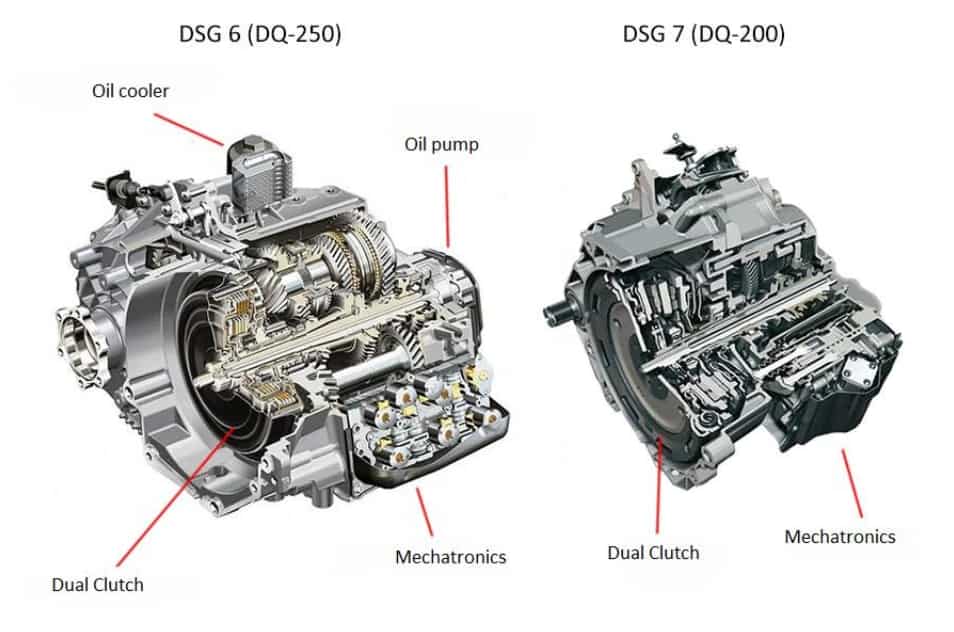
What Is DSG and How It Works
The Direct Shift Gearbox, commonly known as DSG, is a dual clutch transmission system developed and widely used by Volkswagen. It focuses on delivering fast and efficient gear changes by combining the control of a manual gearbox with the convenience of an automatic transmission.
The Direct-Shift Gearbox (DSG) uses two separate clutches. One clutch handles odd gears such as first, third, and fifth. The other clutch manages even gears such as second, fourth, and sixth. This setup allows the system to prepare the next gear before the current shift finishes. As a result, gear changes happen very quickly with minimal interruption in power delivery.
A mechatronic control unit manages the entire process. It coordinates hydraulic pressure, clutch engagement, and gear selection in real time. This control system constantly monitors speed, throttle input, and engine load. It then selects the most suitable gear in advance to improve response time and driving efficiency.
DSG systems come in two main types. A dry clutch DSG uses less fluid and improves fuel efficiency. However, it performs better in lighter vehicles and normal driving conditions. A wet clutch DSG uses oil cooling to handle higher torque and heat. It works better in performance cars and heavy traffic environments.
DSG improves acceleration and fuel economy compared to many traditional automatic transmissions. It also delivers a more direct driving feel. However, its complex structure requires proper maintenance to ensure long term reliability, especially in high stress driving conditions.
What Is DCT and How It Works
The Dual Clutch Transmission, commonly known as DCT, is an advanced transmission system that uses two clutches to improve shifting speed and driving efficiency. It appears in many modern vehicles from different manufacturers, including Hyundai and Kia.
The Dual-Clutch Transmission (DCT) operates by separating gear sets into two groups. One clutch controls odd gears, while the other controls even gears. The system pre selects the next gear before the shift occurs. This design reduces delay and helps maintain continuous power delivery during acceleration.
A key component in DCT systems is the electronic control unit. It monitors driving conditions such as speed, throttle input, and engine load. Based on this data, it selects the next gear in advance and manages clutch engagement with precision. This process helps create faster shifts compared to traditional automatic transmissions.
Different manufacturers tune DCT systems in different ways. Some prioritize comfort and smoothness for daily driving. Others focus on performance and quick response for sport oriented vehicles. Because of this, the driving experience can vary significantly between cars even if they use the same transmission concept.
DCT systems offer strong fuel efficiency and quick gear changes. However, they can behave differently in low speed traffic. In stop and go conditions, some drivers may notice slight hesitation or jerky movement depending on tuning and calibration. Despite this, DCT remains a popular choice for modern cars that aim to balance performance and efficiency in a compact design.
DSG vs DCT: Core Technical Differences
Although DSG and DCT share the same dual clutch principle, they differ in design philosophy, tuning approach, and real world behavior. Understanding these differences helps clarify why driving experiences vary across vehicles that use similar transmission concepts.
One major difference lies in system ownership and engineering control. DSG is a specific implementation developed by Volkswagen. It follows a tightly integrated design where hardware and software are optimized together. In contrast, DCT is a general category used by many manufacturers, including Hyundai and Kia. Each brand develops its own calibration strategy, which leads to different performance characteristics.
Another key difference comes from transmission tuning. DSG systems usually prioritize fast and consistent shift timing. They aim to reduce delay as much as possible, especially in performance oriented models. DCT systems vary more widely. Some focus on smoothness for comfort, while others prioritize aggressive response for sporty driving. This variation makes DCT behavior less predictable across different brands.
Heat management and durability also differ in practice. DSG systems often use wet clutch technology in higher torque versions to improve cooling and longevity. DCT systems may use either dry or wet clutch designs depending on cost and vehicle segment. This affects how each system handles traffic conditions and prolonged low speed driving.
Software logic is another important factor. DSG uses highly refined control algorithms that coordinate clutch timing and gear pre selection with precision. DCT systems rely on manufacturer specific software, which can lead to differences in shift smoothness, responsiveness, and low speed behavior.
Overall, DSG tends to feel more consistent across vehicles, while DCT offers more variation depending on manufacturer tuning and design priorities.
Performance Comparison (Acceleration, Smoothness, Responsiveness)
When comparing DSG vs DCT in terms of performance, both systems deliver significant improvements over traditional automatic transmissions. However, the driving feel and response characteristics can differ depending on tuning and manufacturer implementation.
In acceleration, both systems benefit from the dual clutch design, which allows the next gear to be pre selected before the shift happens. This reduces power interruption and creates a more continuous acceleration experience. The Direct-Shift Gearbox (DSG) often feels slightly more immediate during hard acceleration because it is tuned for fast and consistent shift execution.
The Dual-Clutch Transmission (DCT) also performs strongly in acceleration, but the result depends heavily on how each manufacturer calibrates the system. Some DCT setups prioritize comfort, which can slightly soften shift aggression, while performance oriented versions aim for sharper response.
In terms of smoothness, DSG systems usually feel more predictable once the transmission is warmed up and operating in optimal conditions. However, at low speeds, especially in traffic, DSG may still show minor hesitation or slight jerkiness depending on clutch type. DCT systems show similar behavior, but the level of smoothness varies more widely across brands and models.
Responsiveness is one of the strongest advantages of both systems. They respond quickly to throttle input and downshift rapidly when more power is needed. DSG tends to deliver a more consistent response pattern, while DCT may feel either smoother or more aggressive depending on tuning philosophy.
Overall, both DSG and DCT provide excellent performance, but DSG focuses more on consistency while DCT offers broader variation in driving character.
Reliability and Common Issues
When discussing DSG vs DCT, reliability is one of the most important factors for long term ownership. Although both systems are based on the same dual clutch principle, their durability depends heavily on design, cooling strategy, and driving conditions.
The Direct-Shift Gearbox (DSG) is known for its fast performance, but it can face issues if not properly maintained. Common problems include mechatronic unit failure, clutch wear, and overheating in dry clutch versions. These issues often appear in vehicles that are frequently driven in heavy traffic or experience aggressive driving without proper servicing.
On the other hand, the Dual-Clutch Transmission (DCT) also has its own reliability concerns. Some DCT systems may experience low speed hesitation, clutch shudder, or heat buildup during stop and go driving. However, reliability varies significantly depending on manufacturer tuning and engineering quality.
Cooling design plays a major role in durability. Wet clutch systems generally handle heat better and provide longer service life under stress. Dry clutch systems, while more efficient, tend to wear faster in urban driving conditions with frequent stops.
Maintenance is another critical factor. DSG systems often require strict service intervals for transmission fluid and calibration updates. DCT systems also need regular maintenance, but requirements differ depending on brand specifications.
Overall, neither system is inherently unreliable. Most issues arise from driving conditions, maintenance habits, and system tuning rather than the core technology itself.
Real World Driving Experience
In real world usage, DSG vs DCT differences become more noticeable, especially in city driving and traffic conditions. Both systems aim to improve efficiency and performance, but their behavior can feel different depending on speed and driving environment.
In urban traffic, the Direct-Shift Gearbox (DSG) can sometimes feel slightly less smooth at very low speeds. This happens because the clutch needs to constantly engage and disengage during stop and go movement. In some cases, drivers may notice mild hesitation when creeping forward in heavy traffic.
The Dual-Clutch Transmission (DCT) shows similar behavior, but the level of smoothness depends heavily on manufacturer tuning. Some DCT systems are calibrated for comfort and reduce jerkiness, while others focus more on performance and feel more aggressive at low speeds.
On highways and open roads, both systems perform very well. Gear changes happen quickly and smoothly, and the transmission maintains optimal engine speed for fuel efficiency. During acceleration, both DSG and DCT deliver a direct and responsive feel that improves driving confidence.
In stop and go conditions, heat buildup can become noticeable over long periods. This is more common in dry clutch setups where cooling is limited. Wet clutch systems generally handle this situation better and maintain more consistent performance.
Overall, driving experience depends not only on the transmission type but also on tuning, vehicle weight, and driving habits. DSG offers a more consistent feel, while DCT provides more variation depending on the vehicle design.
Maintenance and Ownership Cost
When comparing DSG vs DCT, ownership cost and maintenance requirements play a major role in long term satisfaction. Although both systems offer advanced performance, they require more attention than traditional automatic transmissions.
The Direct-Shift Gearbox (DSG) typically requires regular transmission fluid service, especially in wet clutch versions. This service is important to maintain hydraulic pressure stability and ensure smooth gear engagement. In addition, mechatronic components may require calibration or repair over time, which can increase long term maintenance cost.
The Dual-Clutch Transmission (DCT) also needs periodic maintenance, but the requirements vary depending on manufacturer design. Some systems are built for easier servicing, while others are more complex and may require specialized tools or software for diagnostics.
Clutch replacement is another cost factor for both systems. Driving style and traffic conditions strongly influence clutch lifespan. Frequent stop and go driving can accelerate wear, especially in dry clutch setups. Wet clutch systems generally last longer but may cost more to replace when needed.
Overall ownership cost depends on usage patterns. Highway driving tends to reduce stress on both DSG and DCT systems, while urban congestion increases wear and maintenance frequency. Proper servicing schedule and smooth driving habits can significantly extend transmission lifespan.
In conclusion, neither system is cheap to maintain compared to traditional automatics, but both can deliver reliable performance when properly cared for.
Which One Should You Choose
Choosing between DSG vs DCT depends mainly on your driving needs, budget, and expected ownership experience rather than the technology itself. Both systems are based on the same dual clutch principle, but their behavior differs depending on tuning and manufacturer design.
If you prioritize fast and consistent performance, the Direct-Shift Gearbox (DSG) is often the better choice. It delivers predictable shift behavior, strong acceleration, and a more refined driving feel in many Volkswagen group vehicles. This makes it suitable for drivers who want a balance between comfort and sporty performance.
If you prefer flexibility and wider driving characteristics, the Dual-Clutch Transmission (DCT) can be more appealing. Since different manufacturers tune DCT systems differently, you can find versions that focus on comfort, fuel efficiency, or sporty driving depending on the car model.
For city driving with heavy traffic, both systems require careful consideration. Stop and go conditions can increase wear and reduce smoothness, especially in dry clutch setups. In this case, drivers who value comfort above performance may want to consider other transmission types, but modern wet clutch versions have improved significantly.
For performance oriented drivers, both DSG and DCT offer quick response and engaging driving dynamics. However, DSG tends to provide more consistency across models, while DCT offers more variation depending on brand philosophy.
Ultimately, the best choice depends on how and where you drive, not just on the transmission name. Understanding your driving environment is more important than choosing based on popularity alone.
Conclusion
DSG vs DCT ultimately comes down to design philosophy and how each system is applied in real vehicles rather than a clear winner in performance. Both technologies rely on the same dual clutch principle, yet manufacturers shape them differently to match specific driving goals.
The Direct-Shift Gearbox (DSG) focuses on consistency and precise shift behavior. It delivers fast gear changes and maintains a stable driving feel across most driving conditions. This makes it a strong choice for drivers who want predictable performance without major variation between models.
The Dual-Clutch Transmission (DCT) follows a broader approach. Different manufacturers tune it in different ways, which creates a wide range of driving experiences. Some versions prioritize comfort, while others emphasize sporty responsiveness and faster reactions.
Both systems improve acceleration and efficiency compared to traditional automatic transmissions. Each one also requires proper maintenance to perform well over time, especially in heavy traffic or high stress environments. Driving conditions and user habits have a strong impact on long term reliability.
For most drivers, the best choice depends on how the vehicle is used daily. City traffic, highway driving, and performance expectations all influence which system feels more suitable. Understanding these factors helps avoid choosing based on assumptions or brand reputation alone.
Modern dual clutch systems continue to evolve, and both DSG and DCT remain important technologies shaping the future of efficient and responsive driving.