A Tesla frunk not opening is usually caused by problems with the electronic latch system, low-voltage power supply, software issues, or physical obstructions affecting the opening mechanism. When the front trunk does not respond, identifying the correct cause is the first step before attempting repairs or contacting Tesla Service.
Unlike traditional vehicle trunks that rely mainly on mechanical releases, Tesla frunks use an electronic opening system connected to the vehicle’s software, power system, and latch mechanism. This design allows owners to open the frunk through the touchscreen, Tesla mobile app, key card, or other access methods, but it also means that several connected components must work correctly for the system to respond.
This guide explains the most common reasons why a Tesla frunk will not open and provides troubleshooting steps from simple checks to more advanced solutions. Tesla owners can learn how to identify latch problems, check possible power-related issues, reset the vehicle system, manually access the frunk when necessary, and determine when professional service is required.
Understanding how the Tesla frunk system works helps prevent unnecessary damage and allows owners to solve minor issues before they become larger repair problems.
Why is my Tesla frunk not opening?
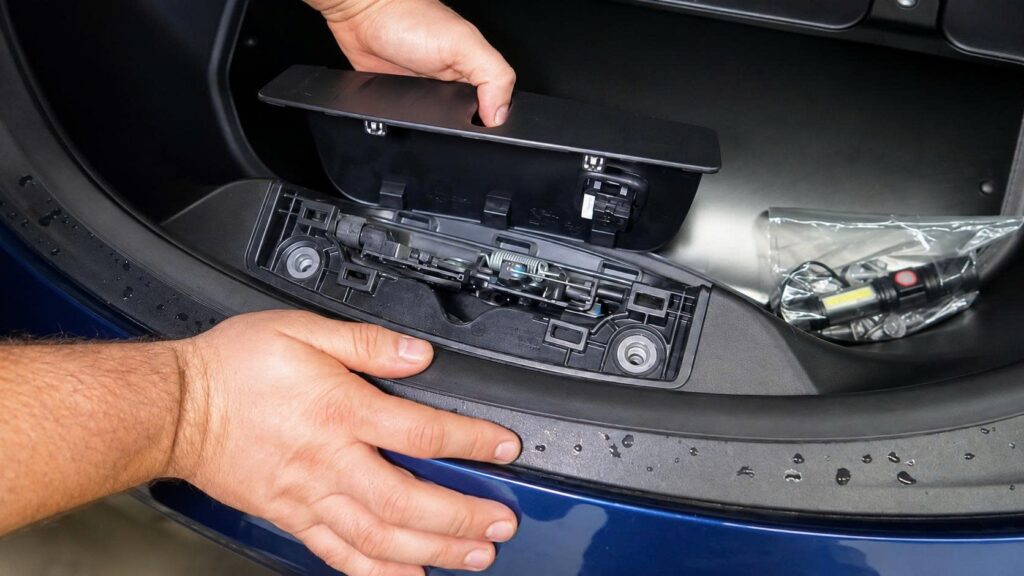
A Tesla frunk that does not open is usually caused by a problem with the electronic latch system, power supply, software communication, or a physical obstruction. The Tesla front trunk uses multiple connected components that must work together, including the frunk latch, actuator, low-voltage battery system, and vehicle control module. When one component fails or does not receive the correct signal, the frunk may remain locked even when the owner sends an opening command.
The most common symptom is that the Tesla app or touchscreen shows an open command, but the front trunk does not release. Some owners may hear a clicking sound from the latch area without the hood lifting, while others may experience no response at all. Identifying the type of failure helps determine whether the problem is a simple obstruction or a component-level issue.
A Tesla frunk not opening does not always indicate a major mechanical failure. In many cases, the issue comes from temporary software communication problems, a weak low-voltage battery, or misalignment around the latch area. Checking these areas first can prevent unnecessary service visits and help owners restore normal operation quickly.
The Tesla frunk system depends on an electronic latch mechanism rather than a traditional cable-based release. When the vehicle receives an opening request from the Tesla mobile app, touchscreen, or key access system, the vehicle control system sends a signal to the latch actuator. The actuator then releases the locking mechanism, allowing the frunk to open.
If the latch, actuator, or electrical connection does not respond correctly, the opening process stops. For example, a damaged latch actuator may receive the correct signal but fail to physically release the lock. Similarly, a weak low-voltage battery may prevent the vehicle from supplying enough power to operate certain electronic functions.
Physical conditions around the frunk can also prevent opening. Objects pressing against the hood, dirt around the latch area, or incorrect alignment after closing the frunk can create additional resistance. These problems are more common because the latch system requires precise positioning to engage and release correctly.
The main causes of a Tesla frunk not opening include:
- Frunk latch or actuator failure — The locking mechanism cannot release even when the vehicle sends the correct command.
- Low-voltage battery problems — A weak battery can reduce power available for electronic systems, including vehicle access functions.
- Software communication errors — Temporary vehicle software issues can prevent the opening command from reaching the latch system.
- Physical obstruction or latch misalignment — Objects, dirt, or incorrect hood positioning can stop the mechanism from releasing.
Understanding these causes helps Tesla owners choose the correct troubleshooting method instead of applying unnecessary force that could damage the frunk system.
How can I fix a Tesla frunk that will not open?
A Tesla frunk that will not open should be checked from the simplest causes to the more complex system failures. The correct troubleshooting order helps owners avoid damaging the latch mechanism or forcing the hood open when the problem is caused by software, power, or alignment issues.
The first step is to check whether the frunk has a physical obstruction. Objects inside the front trunk area, pressure on the hood, or debris around the latch can prevent the locking mechanism from releasing. The frunk latch requires accurate alignment between the hood striker and the locking assembly, so even a small misalignment can stop the system from opening.
Inspect the area around the frunk seam and latch location. Remove any items that may be pressing against the hood and check whether the hood sits evenly on both sides. If the frunk was recently closed with excessive force or an object was placed near the latch area, repositioning the hood may restore normal operation.
Cleaning the latch area is also important because dirt and debris can interfere with the movement of the locking mechanism. The latch contains moving parts that must engage and release smoothly when the vehicle sends an opening command. Regular inspection helps prevent repeated opening failures.
If there are no visible obstructions, the next step is to restart the Tesla system. Tesla vehicles rely heavily on software communication between the user interface, vehicle computers, and electronic components. A temporary software error can interrupt the command sent from the touchscreen or Tesla mobile app to the frunk latch.
To restart the system, Tesla owners can perform a vehicle reboot through the touchscreen controls. This process allows the vehicle computers to reload their operating state and may resolve temporary communication problems. A software reset is useful when other vehicle functions work normally but the frunk does not respond.
A reboot will not repair a damaged latch actuator, failed wiring connection, or weak low-voltage battery. If the problem continues after restarting the vehicle, the issue may involve a hardware component that requires additional diagnosis.
The low-voltage battery is another important component to check when a Tesla frunk does not open. Tesla vehicles use the low-voltage system to power many electronic functions, including access controls and vehicle communication systems. When this battery becomes weak, some features may stop working correctly.
Signs of a possible low-voltage battery problem include multiple electronic functions failing at the same time, delayed vehicle responses, warning messages, or difficulty connecting through the Tesla mobile app. A weak battery may not provide enough power for the frunk latch actuator to operate.
If the Tesla frunk remains locked after checking for obstructions, restarting the vehicle, and confirming power-related issues, owners may need to use a manual opening method or contact Tesla Service depending on the vehicle condition and model.
When should I contact Tesla Service for a frunk problem?
A Tesla frunk problem requires professional service when basic troubleshooting steps do not restore normal operation or when the issue involves a failed mechanical or electrical component. The frunk system contains electronic and physical parts that require accurate diagnosis, and forcing the hood open can damage the latch, actuator, or surrounding components.
The first sign that professional inspection may be needed is when the frunk does not respond after checking for obstructions, restarting the vehicle, and confirming that the vehicle has sufficient power. If the Tesla app, touchscreen, and other access methods all fail to open the frunk, the problem is more likely related to the latch assembly, actuator, wiring, or vehicle control system.
A damaged frunk latch is one of the most common hardware-related issues that requires repair. The latch is responsible for locking and releasing the front trunk when it receives an electronic command. If the latch mechanism becomes worn, misaligned, or mechanically stuck, the vehicle may send the correct signal but the frunk will remain closed.
Common signs of a faulty Tesla frunk latch include no release sound when opening the frunk, repeated failure after multiple attempts, unusual clicking noises, or a frunk that opens only occasionally. These symptoms indicate that the locking mechanism may not be operating consistently and should be inspected.
The frunk actuator is another component that may require replacement if it cannot create the movement needed to release the lock. The actuator converts the electronic signal from the vehicle into mechanical movement. When the actuator fails, the Tesla system may appear to function normally while the frunk remains inaccessible.
A low-voltage battery issue may also require Tesla Service if the battery cannot maintain proper performance. Because Tesla vehicles depend on electrical systems for many access functions, a weak or failing low-voltage battery can create multiple symptoms beyond the frunk problem. Professional testing can confirm whether the battery requires replacement.
Tesla owners should also contact service when warning messages appear on the vehicle screen, multiple electronic systems fail at the same time, or the frunk problem returns repeatedly after temporary fixes. Recurring failures usually indicate an underlying issue rather than a one-time software problem.
Before scheduling service, owners should collect useful information about the problem. Record when the issue started, whether the Tesla app shows an opening command, whether the vehicle produces any sound from the latch area, and whether other vehicle functions are affected. This information helps technicians identify the likely cause faster.
Professional service is especially important when the frunk cannot be opened and access to components inside the vehicle is limited. Tesla technicians have the correct procedures and tools to access the system without causing additional damage to the vehicle.
Does Tesla Model 3 or Model Y have different frunk opening problems?
Tesla frunk opening problems can appear across different Tesla models, but the cause and repair approach may vary depending on the vehicle design, production year, and system configuration. Tesla Model 3 and Tesla Model Y both use an electronic front trunk system, meaning the frunk depends on the interaction between the latch mechanism, vehicle software, and low-voltage electrical system.
The Tesla Model 3 frunk uses an electronically controlled latch that receives commands from the vehicle computer. When the system works correctly, owners can open the frunk through the touchscreen, Tesla mobile app, or key access methods. However, issues such as latch misalignment, actuator failure, or software communication errors can prevent the hood from releasing.
A common Tesla Model 3 frunk issue is a latch that does not fully release after receiving an opening command. The vehicle may recognize the request but fail to mechanically unlock the front trunk. This situation can happen when the latch becomes worn, the hood alignment changes, or the actuator cannot complete the release movement.
Tesla Model Y uses a similar electronic frunk design, but its larger body structure and front trunk configuration create slightly different conditions. Additional pressure on the hood area, changes in alignment, or objects stored inside the frunk can affect how the latch engages and releases.
Owners of Tesla Model Y may experience symptoms such as the frunk appearing unlocked in the Tesla app while remaining physically closed, delayed opening response, or repeated clicking sounds from the latch area. These signs usually indicate that the vehicle has received the command but the mechanical release process has not completed.
The troubleshooting approach for both models follows the same basic principles. Owners should first inspect the latch area, remove possible obstructions, check for software issues, and confirm that the low-voltage battery system is operating correctly. The difference between models is mainly related to design details rather than completely different failure types.
Tesla Model S and Model X can also experience frunk-related problems, but their vehicle platforms and features differ from Model 3 and Model Y. Older vehicles or vehicles with different hardware generations may require model-specific diagnostic procedures when the frunk system fails.
Understanding the Tesla model is important when searching for solutions because replacement parts, manual opening methods, and service procedures may not be identical across all vehicles. Owners should always confirm their exact Tesla model and production year before following repair instructions.
How can I prevent Tesla frunk opening problems?
Preventing Tesla frunk opening problems requires regular inspection of the latch system, proper vehicle maintenance, and early detection of electrical or software issues. The Tesla frunk mechanism depends on several connected components, so maintaining one area alone is not enough to guarantee reliable operation.
The first prevention step is keeping the frunk latch area clean and free from debris. Dirt, dust, and small objects can interfere with the movement of the latch mechanism and prevent the locking system from releasing correctly. Regularly checking the area around the latch helps maintain smooth mechanical operation.
Owners should also avoid placing excessive pressure on the frunk hood. Heavy objects stored incorrectly or items pressing against the inside of the front trunk can affect the alignment between the hood and latch. When the latch and striker do not align properly, the electronic release command may not result in the frunk opening.
Monitoring the low-voltage battery condition is another important preventive measure. The low-voltage system powers many electronic functions in Tesla vehicles, including access systems and communication components. A battery that is losing performance may create warning signs before complete failure, such as delayed responses, connection problems, or multiple electronic errors.
Keeping Tesla software updated can also reduce the risk of temporary system-related problems. Tesla vehicles receive software updates that improve vehicle functions and fix known issues. Although software updates cannot repair mechanical failures, maintaining current software helps ensure proper communication between vehicle systems.
Owners should pay attention to early warning signs instead of waiting until the frunk stops working completely. A slower opening response, unusual sounds from the latch area, intermittent failures, or repeated app commands that do not work may indicate an emerging issue.
A simple maintenance routine can help prevent many Tesla frunk problems:
- Inspect the latch area regularly to remove dirt or debris.
- Avoid forcing the frunk closed when objects prevent proper alignment.
- Check vehicle alerts related to the low-voltage battery system.
- Install available Tesla software updates.
- Address unusual frunk behavior before the system fails completely.
Preventive maintenance does not eliminate every possible Tesla frunk failure because electronic and mechanical components can still wear over time. However, regular inspection helps identify problems earlier, reduces the chance of being unable to access the front trunk, and helps maintain reliable operation throughout vehicle ownership.
Conclusion
A Tesla frunk not opening is usually caused by a specific issue within the vehicle’s access system rather than a random failure. The most common causes include a misaligned or damaged latch, low-voltage battery problems, software communication errors, and physical obstructions around the frunk mechanism.
Before contacting Tesla Service, owners should follow a structured troubleshooting process by checking for objects blocking the latch, restarting the vehicle system, and confirming that the low-voltage battery is operating correctly. These steps can resolve many temporary problems without requiring professional repair.
However, repeated failures, unusual latch sounds, warning messages, or complete lack of response from all opening methods indicate a potential hardware or electrical issue that requires expert inspection. Understanding how the Tesla frunk system works helps owners avoid forcing the hood open, prevent unnecessary damage, and maintain reliable access to the front trunk.
Regular maintenance, software updates, and early attention to warning signs are the most effective ways to reduce future Tesla frunk problems and support a better ownership experience.