When a driver sees the “Service StabiliTrak” message on the dashboard of a Chevrolet Tahoe, it often causes immediate concern. This warning signals a problem in the vehicle stability system. It is not a simple reminder. It relates directly to traction and control functions that help keep the vehicle stable on the road.
The StabiliTrak system helps the driver maintain control in difficult driving conditions. It works with traction control and the anti lock braking system. These systems adjust engine power and braking when the vehicle loses grip. When one of these components fails, the system turns off support functions. Then it shows the warning message on the dashboard.
In many cases, drivers notice the warning after a battery change or a sensor issue. Electrical fluctuations can also trigger it. Sometimes the warning disappears for a short time. This makes the problem harder to understand without proper diagnosis.
This guide explains the main causes behind the Service StabiliTrak warning. It also shows how to diagnose the issue step by step. Finally, it covers the most effective repair methods. You will learn when the issue is minor and when it requires urgent attention. This helps you make a safer decision before continuing to drive.
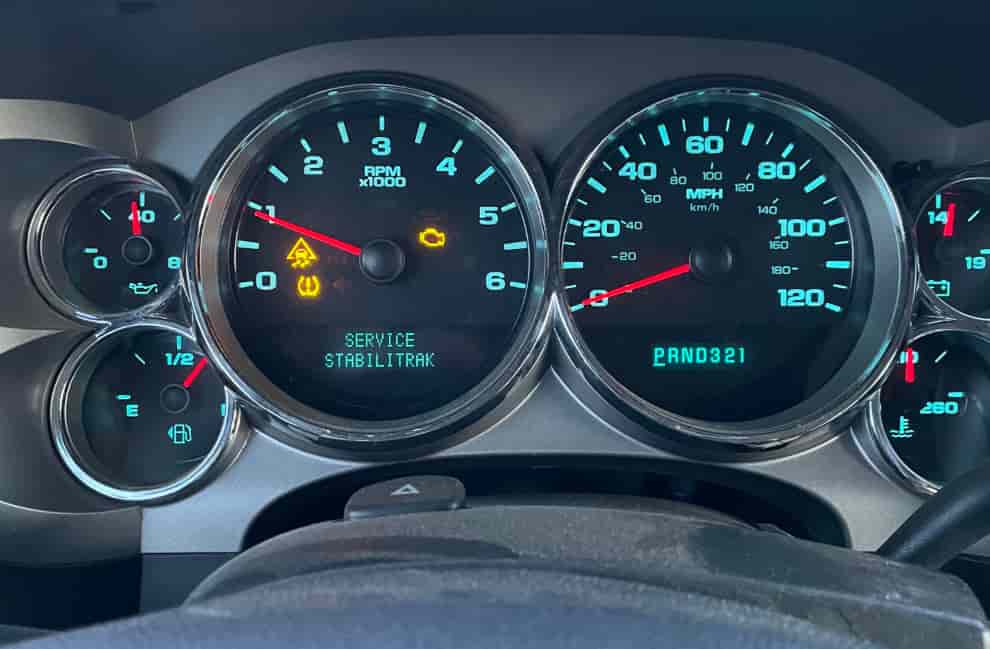
What Is the StabiliTrak System in Chevy Tahoe?
The StabiliTrak system in a Chevrolet Tahoe is an electronic stability control system designed to help the driver maintain control of the vehicle. It works by monitoring steering input, wheel speed, and vehicle movement. When the system detects a difference between what the driver intends and how the vehicle actually behaves, it intervenes automatically.
StabiliTrak works closely with traction control and the anti lock braking system. These systems share data in real time to keep the vehicle stable during acceleration, braking, and cornering. If the system detects wheel slip, it can reduce engine power or apply braking force to individual wheels. This helps prevent skidding and loss of control.
The system relies on several key components. Wheel speed sensors measure how fast each tire rotates. A steering angle sensor tracks the direction of the steering wheel. The stability control module processes all incoming data and decides when to intervene. If any of these components fail or send incorrect signals, the system may shut down and trigger a warning.
StabiliTrak is especially important in low traction conditions. It becomes active during rain, snow, or sudden steering movements. Without it, the vehicle depends only on the driver’s input, which increases the risk of instability.
Understanding how this system works is important because it helps explain why the Service StabiliTrak warning appears. It is not just a random alert. It is a signal that one or more safety systems are no longer functioning correctly and need attention.
What Does “Service StabiliTrak” Warning Mean?
The “Service StabiliTrak” warning on a Chevrolet Tahoe means the stability control system has detected a malfunction. When this happens, the system stops providing full assistance to the driver. It may still allow the vehicle to run, but it reduces or disables key safety functions.
This warning usually appears when the control module cannot trust the data it receives. It may detect incorrect signals from wheel speed sensors, steering angle sensors, or the ABS system. When the data becomes unreliable, the system shuts itself down to avoid applying wrong corrections while driving.
In some cases, the vehicle enters a reduced power mode. This limits engine performance to prevent further risk. The driver may notice slower acceleration or reduced traction support. The warning light can also appear together with traction control or ABS alerts.
This message does not always mean a major failure. Sometimes it comes from temporary electrical issues. Low battery voltage or a brief sensor error can trigger it. However, if the warning stays on, it indicates a real fault that needs diagnosis.
Ignoring the warning can reduce vehicle stability, especially on slippery roads. The system plays a key role in keeping the vehicle under control during sudden steering or braking. When it stops working, the driver must rely fully on manual control.
Understanding this warning helps identify whether the issue is temporary or mechanical. It also guides the next step, which is finding the exact cause behind the system failure.
Common Causes of Chevy Tahoe Service StabiliTrak Warning
The “Service StabiliTrak” warning on a Chevrolet Tahoe usually appears when one or more components in the stability control system stop working correctly. This system relies on continuous communication between sensors, control modules, and braking components. When that communication breaks down, the system disables itself and triggers the warning light to protect driving safety.
One of the most common causes is a faulty wheel speed sensor. Each wheel has a sensor that monitors rotation speed and sends data to the control module. If one sensor fails, becomes dirty, or sends inconsistent signals, the system interprets it as a traction problem and activates the warning. Even a small sensor error can affect the entire stability system.
Another frequent issue comes from the steering angle sensor. This sensor tracks the direction of the steering wheel and helps the system understand driver intent. When it loses calibration or sends incorrect readings, the vehicle’s movement data becomes unreliable. This mismatch often leads to a system shutdown.
Problems with the ABS module can also trigger the warning. The ABS system works closely with StabiliTrak to manage braking force and prevent wheel slip. When the ABS module fails, the stability system loses key input data and stops functioning properly.
Electrical issues are another major factor. A weak battery, unstable voltage, or recent jump-start can interrupt communication between control modules. This is especially common after battery replacement.
Finally, damaged wiring or corroded connectors can break the signal between sensors and the control unit. These issues may appear intermittently, making diagnosis more difficult. In many cases, the warning is caused by a combination of small faults rather than a single failure.
Symptoms When StabiliTrak Fails
When the stability control system on a Chevrolet Tahoe starts to fail, the vehicle usually shows more than just the “Service StabiliTrak” warning. The symptoms often appear in driving behavior and dashboard alerts, and they can vary depending on the severity of the fault.
One of the most common symptoms is reduced traction control. The vehicle may struggle to maintain grip on wet, icy, or uneven roads. You might notice wheel spin during acceleration or a delay in power delivery. This happens because the system can no longer adjust engine output or braking force correctly.
Another frequent sign is inconsistent braking behavior. The ABS system may become less responsive, especially during sudden stops. In some cases, the brake pedal may feel different or less stable than usual. This indicates that communication between the ABS module and stability system is disrupted.
Drivers may also experience reduced engine power. The vehicle can enter a safety mode that limits acceleration to prevent further system damage. This is often described as “limp mode,” where the Tahoe feels slower and less responsive.
The steering response can also feel slightly off. The vehicle may not follow steering input as precisely as before, especially during sharp turns. This is a result of the system no longer assisting with stability corrections.
In many cases, multiple warning lights appear together, including traction control and ABS indicators. When these symptoms occur at the same time, it strongly suggests a system-wide issue rather than a single sensor fault.
How to Diagnose Chevy Tahoe Service StabiliTrak Problem
Diagnosing the “Service StabiliTrak” issue on a Chevrolet Tahoe requires a structured approach because the system depends on multiple sensors and control modules. A correct diagnosis helps avoid replacing unnecessary parts and reduces repair costs.
The first step is to use an OBD2 scanner. This tool reads diagnostic trouble codes from the vehicle’s computer. These codes often point directly to the faulty system, such as wheel speed sensors, ABS modules, or steering angle sensors. Without these codes, troubleshooting becomes guesswork.
Next, check ABS and traction control related codes specifically. Since StabiliTrak works closely with these systems, errors in one area often affect the other. Look for codes that indicate sensor failure, communication errors, or voltage issues. These codes help narrow down the root cause quickly.
After reading the codes, inspect the wheel speed sensors physically. Dirt, rust, or damage can affect signal accuracy. Even a small amount of debris near the sensor can trigger incorrect readings and activate the warning.
It is also important to test the battery voltage. Low or unstable voltage is a common trigger, especially after a battery change or jump-start. A weak battery can disrupt communication between electronic modules and cause false warnings.
Finally, check wiring and connectors around the ABS and stability control system. Loose plugs, corrosion, or damaged wires can interrupt signals and create intermittent faults. These issues are often missed but are very common in real-world cases.
A proper diagnosis combines scan data with physical inspection. Relying on only one method can lead to incomplete or incorrect conclusions.
How to Fix Chevy Tahoe Service StabiliTrak Warning
Fixing the “Service StabiliTrak” warning on a Chevrolet Tahoe depends on the exact cause found during diagnosis. Since the system is connected to multiple sensors and control modules, the repair process can range from simple resets to full component replacement.
A common first step is resetting the system. In some cases, the warning appears due to temporary electrical glitches or low battery voltage. Disconnecting the battery for a short period or using a diagnostic scanner to clear codes can reset the system. If the issue was temporary, the warning may disappear after restarting the vehicle.
If the problem comes from a faulty wheel speed sensor, replacement is usually required. These sensors are relatively affordable and easy to replace. Once installed, the system needs recalibration to restore proper data flow to the control module.
When the steering angle sensor is the issue, recalibration is often enough. However, if the sensor is damaged, replacement is necessary. This step is important because incorrect steering data can directly affect vehicle stability.
For ABS module failures, repair becomes more complex. In some cases, the module can be reprogrammed or repaired, but severe faults often require full replacement. This is one of the more expensive repairs in the system.
Electrical issues such as damaged wiring or corroded connectors must also be fixed carefully. Cleaning connectors, repairing broken wires, or replacing damaged harness sections can restore communication between systems.
After any repair, it is important to clear all diagnostic codes and perform a test drive. This confirms that the system is working correctly and that the warning does not return.
Can You Drive with Service StabiliTrak Warning On?
When the “Service StabiliTrak” warning appears on a Chevrolet Tahoe, the vehicle is often still drivable, but that does not mean it is operating normally. The warning indicates that the stability control system is not functioning, which reduces one of the key safety layers designed to help the driver maintain control.
In normal conditions, the StabiliTrak system assists during sudden steering, hard braking, or low traction situations. When it is disabled, the vehicle relies entirely on the driver’s reaction. This increases risk, especially on wet roads, gravel, or icy surfaces where traction loss can happen quickly.
In many cases, the car may also show reduced engine power or traction control limitations. This can affect acceleration and responsiveness. While this may not stop the vehicle from moving, it can make driving less predictable and more difficult in traffic or highway conditions.
Short distance driving to a repair shop is usually possible if the vehicle feels stable and no additional critical warnings appear. However, continued driving for long distances or under poor weather conditions is not recommended. The risk increases if the warning is combined with ABS or brake system alerts.
The safest approach is to treat this warning as a signal that the vehicle’s stability support is partially or fully disabled. Even if the car seems normal, the hidden safety functions are not active. This means emergency handling capability is reduced.
For this reason, the issue should be diagnosed and repaired as soon as possible rather than ignored or delayed.
Repair Cost for Chevy Tahoe Service StabiliTrak Issue
The cost to fix the “Service StabiliTrak” warning on a Chevrolet Tahoe can vary widely depending on the root cause of the problem. Since the system involves multiple sensors, control modules, and electrical components, the final repair cost depends on which part has failed and whether reprogramming or replacement is needed.
If the issue comes from a wheel speed sensor, the repair is usually on the lower end. Each sensor is relatively affordable, and labor is not very complex. This type of repair is often the most common and least expensive fix for StabiliTrak warnings.
When the problem involves the steering angle sensor, the cost is slightly higher. In many cases, recalibration is enough, but if replacement is required, both parts and labor increase the total expense. This repair is still moderate compared to more complex system failures.
If the ABS module is the source of the problem, the cost becomes significantly higher. This component is central to both braking and stability control systems. Replacement or reprogramming requires specialized equipment, which increases labor charges. This is often the most expensive repair scenario.
Electrical issues such as damaged wiring or corroded connectors usually fall into a mid-range cost category. The price depends on how difficult it is to locate and repair the fault. Intermittent wiring problems can take more time to diagnose, which also increases labor cost.
In some cases, simple voltage issues caused by a weak battery may require only a battery replacement or system reset. This is the lowest-cost scenario but still needs proper diagnosis to confirm.
Overall, repair costs can range from low minor fixes to high module replacements, making accurate diagnosis the most important step before spending money.
How to Prevent StabiliTrak System Failure and Final Conclusion
Preventing future “Service StabiliTrak” warnings on a Chevrolet Tahoe mainly depends on maintaining the health of the vehicle’s electrical system and sensors. Since the stability control system relies on continuous and accurate data, even small issues can trigger warnings if the system is not well maintained.
One of the most effective prevention methods is regular inspection of wheel speed sensors. These sensors are exposed to dirt, moisture, and road debris, which can affect signal accuracy over time. Cleaning and checking them during routine maintenance helps reduce the risk of false readings and system errors.
It is also important to maintain a stable battery and charging system. Low voltage is a common trigger for StabiliTrak warnings, especially after battery replacement or jump-start situations. Keeping the battery in good condition ensures that all electronic modules communicate properly without interruption.
Regular brake system maintenance also plays a key role. Since the StabiliTrak system works closely with ABS components, worn brake parts or neglected brake fluid can indirectly affect system performance. Keeping the braking system in good condition helps maintain overall stability control reliability.
Finally, addressing small warning signs early is crucial. Intermittent alerts or unusual driving behavior often indicate early-stage sensor or wiring issues. Fixing these problems early prevents them from developing into more serious system failures.
In conclusion, the Service StabiliTrak warning is not just a simple dashboard message. It is a signal that the vehicle’s stability support system has been affected. Understanding the causes, symptoms, and repair options helps drivers respond correctly and maintain safe driving conditions. Proper maintenance and timely diagnosis are the best ways to avoid recurring issues and ensure long-term system reliability.