Why is your Chevy Silverado AC blowing warm air right when you need it most? Imagine driving under intense summer heat, expecting a blast of cool air, but instead getting nothing but warm airflow. This is one of the most frustrating problems Silverado owners face, especially during long drives or daily commutes.
In many cases, the root cause is surprisingly simple. Your AC system may just be low on refrigerant. However, the real problem is that most drivers either ignore early warning signs or spend hundreds of dollars at repair shops without understanding what is actually wrong. This leads to unnecessary costs, repeated issues, and even long term damage to critical components like the compressor.
This complete guide to Chevy Silverado AC recharge is designed to solve that problem. You will learn how the system works, how to identify whether your truck actually needs a recharge, and how to fix warm air fast without wasting money. More importantly, you will understand when a simple recharge is enough and when a deeper issue might be affecting your AC performance.
By the end of this guide, you will have the confidence to take control of your Silverado’s cooling system and avoid the common mistakes that cost drivers time, money, and comfort.
What Is AC Recharge and Why It Matters
To understand why your Chevy Silverado AC is blowing warm air, you first need to understand what AC recharge actually means and why it plays a critical role in your truck’s cooling performance.
An AC recharge is the process of adding refrigerant back into your vehicle’s air conditioning system. This refrigerant is the substance responsible for absorbing heat from inside your cabin and releasing it outside. Without the correct level of refrigerant, the entire cooling process becomes inefficient or stops working completely.
Your Silverado AC system is made up of several key components that work together in a closed loop. The compressor pressurizes the refrigerant and pushes it through the system. The condenser releases heat, allowing the refrigerant to cool down. The evaporator then absorbs heat from the cabin, producing the cold air you feel through the vents. When refrigerant levels drop, this cycle breaks down and results in warm airflow.
One of the biggest mistakes many drivers make is assuming that low cooling always means low refrigerant. While that is often true, it is not always the case. However, refrigerant loss remains one of the most common and easiest problems to fix. Ignoring it can lead to more serious issues, especially when the compressor is forced to work harder under low pressure conditions.
On the other hand, adding too much refrigerant can be just as damaging. Overcharging the system increases internal pressure and can lead to compressor failure, which is one of the most expensive AC repairs.
Understanding AC recharge is not just about adding refrigerant. It is about maintaining the balance of your entire cooling system so your Chevy Silverado can deliver consistent cold air when you need it most.
Signs Your Chevy Silverado Needs AC Recharge
When your Chevy Silverado starts blowing warm air, the immediate assumption is often that the system needs a recharge. While this is a common cause, recognizing the exact signs of low refrigerant will help you avoid unnecessary repairs and fix the issue faster.
The most obvious symptom is warm air coming from the vents even when the AC is set to maximum cooling. Instead of delivering cold air, the system struggles to remove heat from the cabin. This usually indicates that the refrigerant level has dropped below the optimal range, reducing the system’s ability to absorb and transfer heat effectively.
Another common sign is weak or inconsistent cooling. You may notice that the air feels slightly cool at first but quickly turns warm during longer drives. This inconsistency often points to unstable pressure inside the AC system, which is typically caused by low refrigerant or a small leak.
Pay attention to how your compressor behaves. If it frequently turns on and off in short cycles, this is a strong indication of pressure imbalance. The system is trying to regulate itself, but without enough refrigerant, it cannot maintain a stable cooling cycle.
Unusual noises can also be a warning sign. A clicking or hissing sound may suggest that refrigerant is escaping or that internal components are under stress. While not always obvious, these sounds often appear before complete cooling failure.
It is important to understand that not every warm air issue means your Silverado simply needs an AC recharge. In some cases, the root cause could be a refrigerant leak, a faulty compressor, or even a blocked condenser. Identifying these signs early gives you a clear advantage, helping you fix the problem quickly instead of wasting time and money on the wrong solution.
How to Recharge Chevy Silverado AC Step by Step
If your Chevy Silverado is showing clear signs of low refrigerant, performing an AC recharge can be a fast and cost effective solution. The good news is that you do not need to be a professional mechanic to do this, as long as you follow the correct process and pay attention to system pressure.
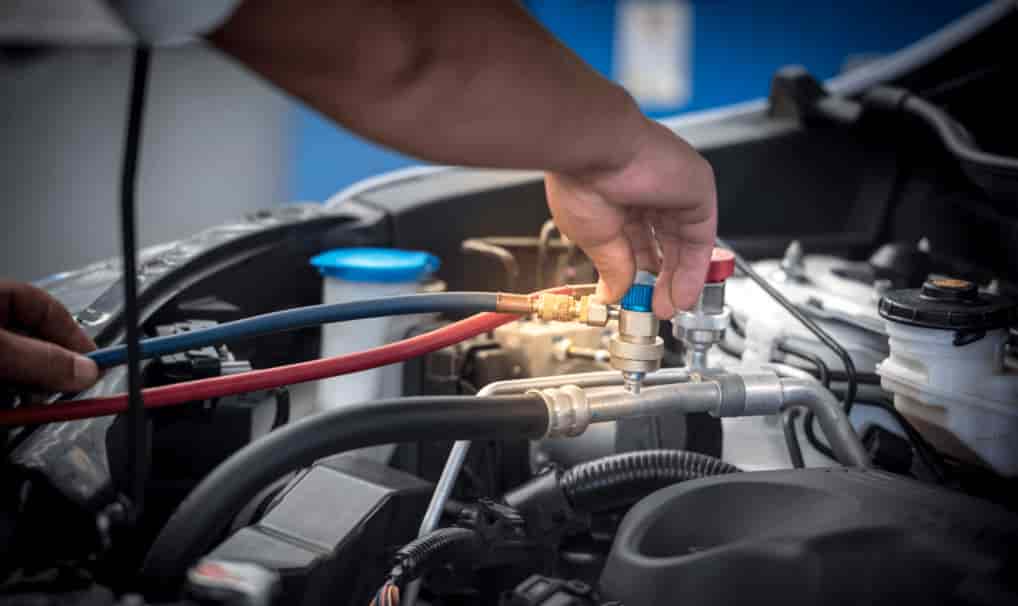
Start by locating the low pressure service port. This is where you will connect your AC recharge kit. On most Silverado models, the low pressure port is found along the larger diameter AC line, usually near the firewall or compressor. It is typically marked with a black or blue cap labeled “L”.
Next, attach the recharge hose from your kit to the port. Make sure the connection is secure before proceeding. Most modern kits come with a pressure gauge, which is essential for monitoring the system and avoiding overcharging.
Turn on your engine and set the AC to maximum cooling with the fan at the highest speed. This ensures the system is actively circulating refrigerant during the recharge process. Once the system is running, slowly begin adding refrigerant by pressing the trigger on the recharge can.
As you add refrigerant, keep a close eye on the pressure gauge. The goal is to bring the pressure into the recommended range for your Silverado, which is usually indicated on the gauge itself. Do not rush this step. Adding refrigerant too quickly or exceeding the recommended pressure can damage the system.
After reaching the correct pressure level, stop the recharge and disconnect the hose. Replace the cap on the service port and let the system run for a few minutes. Check the airflow from the vents. If everything is working correctly, you should notice a significant improvement in cooling performance.
One critical thing to remember is that AC recharge is not about filling as much refrigerant as possible. It is about restoring the correct balance within the system. Taking your time and following each step carefully will help you fix warm air fast without creating new problems.
Cost of Chevy Silverado AC Recharge
Understanding the cost of a Chevy Silverado AC recharge can help you decide whether to handle the job yourself or take your truck to a professional. Many drivers end up overspending simply because they are unsure of what the service should actually cost.
If you choose the DIY route, the cost is relatively low. Most AC recharge kits range from 30 to 80 dollars depending on the brand and whether the kit includes a pressure gauge. This makes it an attractive option for drivers who want a quick fix without paying labor fees. In many cases, a single recharge can restore cooling performance immediately, especially if low refrigerant is the only issue.
On the other hand, taking your Silverado to a repair shop can cost anywhere from 150 to 300 dollars or more. This price usually includes labor, refrigerant, and a basic system check. While this may seem expensive, it often comes with the benefit of professional diagnostics. A technician can identify hidden problems such as leaks or failing components that a simple recharge kit cannot detect.
The real pain point for most drivers is not just the price, but the uncertainty. Without understanding the problem, it is easy to agree to additional services that may not be necessary. Some shops may recommend full system repairs when a basic recharge would have solved the issue.
In general, if your AC was working fine and gradually started losing cooling power, a DIY recharge is a reasonable first step. However, if the system loses cooling quickly again after recharge, it is a strong sign of a deeper issue that requires professional attention.
Making the right choice is not just about saving money. It is about knowing when a simple solution is enough and when your Chevy Silverado needs a more thorough inspection.
Common Mistakes to Avoid When Recharging Your Silverado AC
Recharging your Chevy Silverado AC can be simple, but small mistakes can lead to serious damage and expensive repairs. Many drivers focus only on adding refrigerant quickly without understanding the risks behind improper handling.
One of the most common mistakes is using the wrong type of refrigerant. Older Silverado models typically use R134a, while newer models require R1234yf. These two types are not interchangeable. Using the wrong refrigerant can damage seals, reduce efficiency, and in some cases ruin the entire AC system. Always check your vehicle specifications before starting the recharge process.
Another major issue is overcharging the system. It might seem logical that more refrigerant equals colder air, but the opposite is often true. Too much refrigerant increases internal pressure, forcing the compressor to work harder and potentially leading to failure. This is one of the most expensive AC components to replace, so monitoring the pressure gauge carefully is critical.
Many drivers also skip checking for leaks before recharging. If refrigerant is leaking, adding more will only provide a temporary fix. The system will lose cooling again, sometimes within days. Over time, repeated recharges without fixing the leak can lead to bigger problems and higher costs.
Ignoring safety is another mistake that should not be overlooked. Refrigerant is stored under pressure and can cause injury if handled improperly. Wearing gloves and working in a well ventilated area helps reduce risks during the process.
Avoiding these mistakes is essential if you want your Chevy Silverado AC recharge to actually solve the problem instead of creating new ones. A careful and informed approach will save you both time and money while keeping your cooling system running efficiently.
Why Your AC Is Still Not Cold After Recharge
You have completed the Chevy Silverado AC recharge, followed all the steps, and expected instant cold air. But the AC is still blowing warm or only slightly cool air. This situation is more common than most drivers think, and it usually means the problem goes beyond just low refrigerant.
One of the most likely causes is a refrigerant leak. Even if you successfully recharged the system, the refrigerant can escape through small cracks in hoses, seals, or connections. In this case, the cooling effect may return briefly but disappear quickly. This is a clear sign that the system cannot hold pressure properly.
Another possible issue is a failing compressor. The compressor is responsible for circulating refrigerant through the system. If it is weak or damaged, it will not be able to maintain the pressure needed for proper cooling. You might notice unusual noises or inconsistent performance when this happens.
A blocked or dirty condenser can also reduce cooling efficiency. When airflow is restricted, the system cannot release heat effectively, which results in warm air inside the cabin. This often happens due to debris, dirt buildup, or even bent fins.
Electrical or sensor issues are another hidden cause. Modern Silverado models rely on sensors to regulate temperature and pressure. If a sensor provides incorrect data, the system may not function as expected even if the refrigerant level is correct.
The key insight here is that an AC recharge is a solution, not a universal fix. If your Chevy Silverado AC is still not cold after recharge, the system is telling you that something deeper needs attention. Identifying the exact cause early will prevent repeated failures and help you avoid wasting money on temporary fixes.
Refrigerant Types for Chevy Silverado
Choosing the correct refrigerant is a critical part of any Chevy Silverado AC recharge. Using the wrong type does not just reduce cooling performance, it can cause serious damage to the entire system.
Chevy Silverado models generally use two types of refrigerant depending on the production year. Older models, typically manufactured before 2015, use R134a. This refrigerant has been widely used for many years and is still common in many vehicles on the road today. It is relatively affordable and easy to find, which makes it convenient for DIY recharges.
Newer Silverado models use R1234yf, a more advanced and environmentally friendly refrigerant. It was introduced to meet stricter environmental regulations and has a lower impact on global warming compared to R134a. However, it is more expensive and requires compatible equipment for proper handling.
One of the biggest mistakes drivers make is assuming these two refrigerants are interchangeable. They are not. Each system is specifically designed for one type, including seals, pressure levels, and oil compatibility. Mixing them or using the wrong type can lead to reduced efficiency, system contamination, and even complete AC failure.
To avoid this, always check the label under the hood of your Silverado or refer to the owner manual. This label clearly states the correct refrigerant type and the required amount. Following these specifications ensures your AC system operates safely and efficiently.
Understanding refrigerant types is not just a technical detail. It is a key factor that determines whether your Chevy Silverado AC recharge will solve the problem or create a more expensive one.
Conclusion
Fixing warm air in your truck does not always require a costly visit to the repair shop. In many cases, a proper Chevy Silverado AC recharge can restore your cooling system quickly and effectively. The key is understanding how the system works and recognizing the signs before the problem becomes more serious.
Throughout this guide, you have learned how to identify low refrigerant symptoms, perform a recharge step by step, avoid common mistakes, and diagnose situations where a recharge alone is not enough. This knowledge gives you a clear advantage, helping you save money while maintaining your vehicle’s performance.
At the same time, it is important to remember that not every AC issue can be solved with refrigerant alone. Problems like leaks, compressor failure, or blocked components require deeper inspection. Acting early will always cost less than waiting until the system fails completely.
If your Chevy Silverado AC recharge successfully restores cold air, you have solved the problem efficiently. If not, you now have the insight to move forward with the right solution instead of guessing.
Have you tried recharging your Silverado AC yet? Share your experience or questions and keep your truck running cool no matter how hot the road gets.