Choosing the wrong transmission can cost you thousands in repairs and lost performance. Many drivers assume that the 4L60E vs 4L65E are almost the same. They look similar and even fit in many of the same vehicles. This assumption often leads to expensive mistakes.
In reality, the difference between 4L60E vs 4L65E is significant. Each transmission serves a different purpose. One focuses on affordability and daily driving. The other targets higher torque and better durability. If you tow heavy loads or upgrade your engine, the wrong choice can cause slipping gears, overheating, and early failure.
You need clear information before making a decision. This guide explains the key differences, torque capacity, and reliability of both transmissions. It also helps you choose the right option based on your driving needs. By the end, you will know exactly which transmission fits your vehicle and how to avoid costly problems.
What Is the 4L60E Transmission?
The 4L60E is one of the most widely used automatic transmissions from General Motors. GM introduced it in the early 1990s as an evolution of the older 700R4. The “E” stands for electronic control, which means the transmission uses sensors and a control module to manage shifting.
This transmission features a 4 speed automatic design. It delivers smooth shifting for daily driving and light duty tasks. Many popular vehicles use the 4L60E, including the Chevrolet Silverado, Tahoe, Suburban, and GMC Sierra. Its wide availability makes it a common choice for both repairs and replacements.
One of the biggest advantages of the 4L60E is affordability. Parts are easy to find, and most mechanics know how to rebuild it. This reduces maintenance costs and repair time. For drivers who use their vehicles for commuting or light hauling, this transmission performs well.
However, the 4L60E has clear limitations. It handles around 360 lb ft of torque in stock form. When drivers push beyond this limit, problems start to appear. Common issues include slipping gears, overheating, and weak internal components such as the sun shell. These problems become more serious under heavy loads or performance upgrades.
Because of these limits, the 4L60E works best for stock vehicles or moderate use. It struggles in high performance or heavy towing situations. This is where the comparison of 4L60E vs 4L65E becomes important, especially for drivers who demand more strength and durability.
What Is the 4L65E Transmission?
The 4L65E is an upgraded version of the 4L60E. General Motors designed it to handle more power and improve durability. At a glance, both transmissions look almost identical. However, the internal components tell a different story.
The 4L65E uses stronger parts to support higher torque. It features a reinforced input shaft and improved planetary gear set. These upgrades increase its torque capacity to around 380 lb ft in stock form. This makes it a better choice for vehicles with more power or heavier workloads.
GM installed the 4L65E in performance oriented models and higher output trucks. You can find it in vehicles like the Chevrolet Silverado with bigger engines, the Tahoe, and even performance cars such as the Camaro SS. These vehicles demand more strength, and the 4L65E delivers that extra reliability.
Another key advantage is durability under stress. The 4L65E handles towing, hauling, and aggressive driving better than the 4L60E. It reduces the risk of internal failure when drivers push the vehicle harder. This makes it popular among enthusiasts and those who upgrade engine performance.
Despite these benefits, the 4L65E comes with higher costs. Parts and rebuild expenses are more expensive. Not every driver needs this level of strength. For basic daily driving, the extra investment may not provide noticeable value.
When comparing 4L60E vs 4L65E, the 4L65E clearly stands out in strength and performance. It offers a more robust design for drivers who need reliability under pressure.
4L60E vs 4L65E: Key Differences Explained
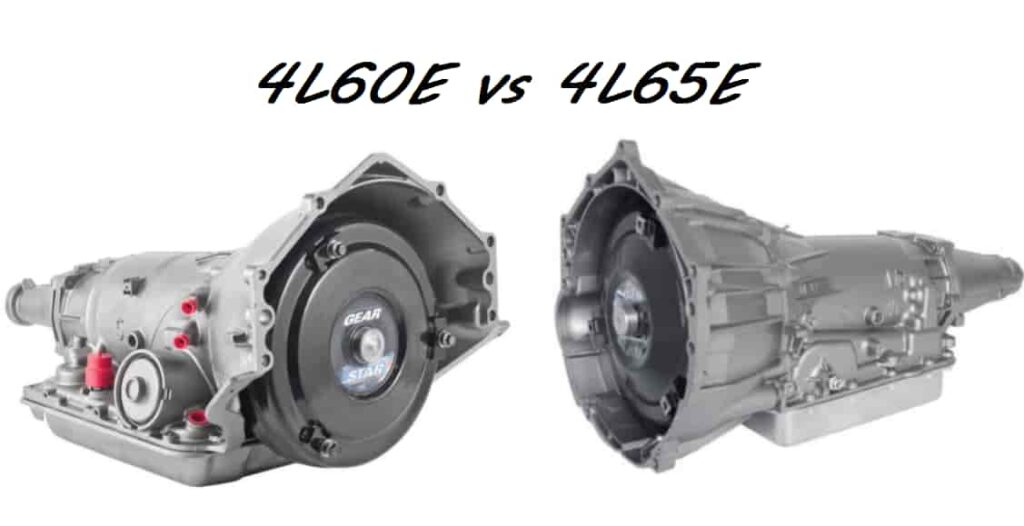
At first glance, the 4L60E vs 4L65E look nearly identical. They share the same size, design, and basic structure. Many people even assume they are interchangeable without any real difference. However, the internal upgrades set them apart in performance and durability.
The most important difference lies in internal strength. The 4L65E uses a stronger input shaft and a reinforced planetary gear set. These components allow it to handle more torque and resist wear under stress. In contrast, the 4L60E uses lighter components, which wear out faster under heavy loads.
Another key difference is torque capacity. The 4L60E supports around 360 lb ft of torque in stock form. The 4L65E increases that limit to about 380 lb ft. While the numbers seem close, this difference becomes critical in real world driving, especially when towing or upgrading engine power.
Both transmissions use electronic control systems. However, the 4L65E often comes with improved calibration. This helps optimize shifting under higher loads. As a result, it delivers smoother performance in demanding conditions.
Manufacturing intent also separates the two. GM designed the 4L60E for general use and daily driving. The 4L65E targets higher performance applications. It focuses on strength, durability, and reliability under pressure.
Quick Comparison Table
| Feature | 4L60E | 4L65E |
|---|---|---|
| Torque Capacity | ~360 lb ft | ~380 lb ft |
| Internal Strength | Standard | Reinforced |
| Intended Use | Daily driving | Performance and towing |
| Durability | Moderate | Higher |
| Cost | Lower | Higher |
In the 4L60E vs 4L65E comparison, the differences may look small on paper. In real use, they have a major impact. Choosing the right one depends on how much stress you put on your vehicle.
Torque Capacity and Performance Comparison
Torque capacity plays a critical role in the 4L60E vs 4L65E comparison. It directly affects how well a transmission handles power, load, and stress over time. Even a small difference can lead to major performance gaps in real driving conditions.
The 4L60E supports around 360 lb ft of torque in stock form. This level works well for daily driving and light duty use. It performs smoothly in normal conditions such as commuting or highway cruising. However, problems begin when drivers push beyond this limit. Heavy towing or engine upgrades often cause slipping, overheating, and internal wear.
The 4L65E increases torque capacity to about 380 lb ft. While the difference may seem small, it delivers noticeable improvements under load. The stronger internal components allow it to handle stress more efficiently. This reduces the risk of failure when towing heavy trailers or driving aggressively.
In real world scenarios, the gap becomes clear. A 4L60E may struggle when paired with a modified engine or large tires. It often fails under repeated stress. In contrast, the 4L65E maintains stability and performance in the same conditions. This makes it a better choice for drivers who demand more from their vehicles.
Performance also depends on heat management and durability. The 4L65E handles heat better due to its reinforced design. This helps extend its lifespan under pressure. The 4L60E, on the other hand, tends to overheat faster when pushed beyond its limits.
When evaluating 4L60E vs 4L65E, torque capacity is not just a number. It defines how reliable the transmission will be in real use. If you plan to tow, haul, or upgrade your engine, the 4L65E provides a safer and more durable solution.
Which Transmission Lasts Longer?
Reliability often decides the winner in the 4L60E vs 4L65E debate. Most drivers do not care only about specs. They want a transmission that lasts, avoids breakdowns, and reduces repair costs over time.
The 4L60E offers decent reliability in stock conditions. It performs well in daily driving and light duty use. Many units can last between 150,000 to 200,000 miles with proper maintenance. Regular fluid changes and careful driving help extend its lifespan. However, problems appear when drivers push it too hard. High torque, towing, and aggressive driving shorten its life quickly.
Common issues include slipping gears, worn clutches, and overheating. The sun shell is also a known weak point. Once these problems start, repair costs can rise fast. In many cases, drivers face a full rebuild sooner than expected.
The 4L65E improves reliability by strengthening key internal components. It handles stress better and resists wear under higher loads. This gives it an advantage in demanding situations such as towing or performance driving. While it still requires maintenance, it tends to last longer under pressure.
That said, no transmission is immune to failure. Poor maintenance, excessive heat, and aggressive driving can damage both models. The difference is how well each one handles stress before problems begin.
In the 4L60E vs 4L65E comparison, the 4L65E stands out as the more reliable option for high demand use. The 4L60E remains a solid choice for normal driving, but it reaches its limits much faster when pushed beyond its design.
Can You Swap 4L60E with 4L65E?
Many drivers consider upgrading when comparing 4L60E vs 4L65E. A common question is whether you can swap one for the other without major complications. The short answer is yes, but you need to understand a few key factors.
Both transmissions share a similar design and size. In many cases, the 4L65E can bolt directly in place of a 4L60E. This makes the swap relatively straightforward compared to other transmission upgrades. Mounting points, bell housing, and overall fit usually match without major modifications.
However, the swap is not always plug and play. The electronic control system plays a critical role. You may need to update or reprogram the ECU to ensure proper shifting. Without correct tuning, the transmission may not perform as expected.
Wiring and sensors also require attention. While many connectors remain compatible, differences can still exist depending on the vehicle model and year. Ignoring these details can lead to shifting issues or error codes.
Cost is another important factor. The 4L65E is more expensive than the 4L60E. You also need to consider labor, tuning, and possible additional parts. While the upgrade improves durability, the total cost can add up quickly.
Despite these challenges, the swap offers clear benefits. Drivers who tow, haul, or increase engine power often see better performance and reliability. The 4L65E handles stress more effectively and reduces the risk of failure under load.
In the 4L60E vs 4L65E comparison, upgrading makes sense if you push your vehicle beyond stock limits. If you only use your vehicle for daily driving, the swap may not deliver enough value to justify the cost.
Which Transmission Should You Choose?
Choosing between 4L60E vs 4L65E depends on how you use your vehicle. Each transmission serves a different type of driver. Making the right choice helps you avoid unnecessary costs and long term issues.
You should choose the 4L60E if you drive under normal conditions. It works well for daily commuting, light hauling, and stock engines. It costs less to buy and repair. Parts are widely available, and most mechanics can service it بسهولة. If you do not push your vehicle hard, this transmission delivers solid performance at a lower cost.
However, the 4L60E becomes a weak point when you increase power or add heavy loads. It struggles with towing and performance upgrades. Many drivers experience early wear when they push it beyond its limits. If you plan to modify your engine, this transmission may not keep up.
The 4L65E fits drivers who need more strength and reliability. It handles higher torque and performs better under stress. This makes it ideal for towing, hauling, and performance builds. It also reduces the risk of failure when you upgrade horsepower.
The higher cost may seem like a drawback at first. However, it often saves money in the long run. A stronger transmission reduces repair frequency and improves durability. This makes it a smart investment for demanding use.
In the 4L60E vs 4L65E decision, the right choice depends on your needs. If you value affordability and simple use, the 4L60E is enough. If you want durability and performance, the 4L65E is the better option.
Final Verdict
The 4L60E vs 4L65E comparison shows that both transmissions serve different purposes. Each one fits a specific type of driver and usage. Understanding this difference helps you avoid costly mistakes and choose the right option from the start.
The 4L60E stands out for its affordability and availability. It works well for daily driving and light duty use. If you keep your vehicle stock and follow regular maintenance, it can deliver reliable performance over time. For many drivers, this is a practical and budget friendly choice.
The 4L65E takes things further with stronger internal components and better durability. It handles higher torque and performs better under stress. This makes it the right choice for towing, performance upgrades, and demanding driving conditions. While it costs more upfront, it often reduces long term repair risks.
When deciding between 4L60E vs 4L65E, you should focus on how you use your vehicle. Choosing based on real needs will always deliver better results than choosing based on price alone.
If you plan to push your vehicle beyond stock limits, upgrading is not optional. It becomes a necessary step to protect your investment and ensure long term reliability.