The Hyundai Tucson Tire Pressure Guide helps drivers understand the correct PSI for safety, performance, and fuel efficiency across all models and tire sizes. Many drivers ignore tire pressure until a warning light appears or the ride feels different, but correct PSI is one of the most important parts of vehicle maintenance.
For the Hyundai Tucson, tire pressure directly affects handling, tire wear, and fuel consumption. Low pressure increases fuel use and causes uneven wear. High pressure reduces comfort and lowers road grip.
This guide explains the recommended tire pressure for different Tucson models and tire sizes. It also shows how driving conditions and seasonal changes affect PSI. You will also learn how the TPMS system works and how to respond when it shows a warning.
By the end of this guide, you will know how to maintain correct tire pressure, avoid common mistakes, and improve the overall performance of your Hyundai Tucson in daily driving conditions.
What is Hyundai Tucson Tire Pressure (PSI Basics)
Tire pressure refers to the amount of air inside a tire, measured in PSI. PSI stands for pounds per square inch. It shows how much force the air inside the tire applies against the tire walls. This number directly affects how the vehicle performs on the road.
Correct tire pressure helps maintain stability, improves braking response, and supports even tire wear. When pressure drops too low, the tire becomes softer and creates more rolling resistance. This increases fuel consumption and reduces steering precision. When pressure becomes too high, the tire turns harder and loses part of its contact with the road surface.
For the Hyundai Tucson, tire pressure plays an important role in balancing comfort and performance. The correct PSI helps the suspension system work more efficiently and keeps the tires in proper shape under different driving conditions.
Many drivers only check tire pressure when a problem appears. This leads to uneven wear and lower safety over time. Regular PSI checks help prevent these issues and extend tire lifespan.
Tire pressure also changes with temperature. Cold air reduces PSI, while hot weather increases it. This natural change makes regular monitoring important for safe driving.
Recommended Hyundai Tucson Tire Pressure by Factory Standard
The recommended tire pressure for the Hyundai Tucson comes from the vehicle manufacturer. This standard PSI is designed to balance safety, comfort, and fuel efficiency under normal driving conditions.
You can find the correct PSI for your vehicle in three main places. The first is the sticker inside the driver door frame. The second is the owner’s manual. The third is the tire pressure monitoring system, also known as TPMS. All of these sources show the factory recommended values for your specific model.
For the Hyundai Tucson, the standard PSI usually stays within a balanced range for both front and rear tires. This balance helps the vehicle maintain stable handling during city driving and highway speeds.
Different driving conditions can slightly change the ideal PSI. City driving often works well with standard factory settings. Highway driving may benefit from slightly adjusted pressure to improve fuel efficiency. When the vehicle carries heavy loads, drivers may need to increase PSI within the safe range recommended by the manufacturer.
Following factory tire pressure settings helps protect the suspension system and improves tire lifespan. It also reduces the risk of uneven wear, which often happens when drivers inflate tires based on guesswork instead of specifications.
Hyundai Tucson Tire Size and PSI by 17 inch 18 inch and 19 inch
Tire size plays an important role in determining the correct tire pressure. Different rim sizes change how the tire contacts the road and how weight distributes across the surface. This is why PSI is not always identical across all tire sizes.
For 17 inch tires on the Hyundai Tucson, manufacturers often design the setup for comfort. These tires usually need a slightly balanced PSI that supports smooth driving and absorbs road bumps better. This setup works well for daily city driving and longer commutes with a focus on ride comfort.
For 18 inch tires, the balance shifts more toward performance. The PSI range supports both comfort and stability. This tire size offers a more controlled driving feel, especially at medium to high speeds. It also helps maintain even tire wear when the vehicle is used in mixed driving conditions.
For 19 inch tires, the focus moves toward road grip and high speed stability. These tires often require more precise PSI management. Proper inflation helps maintain contact with the road and supports better cornering performance. If PSI drops too low or rises too high, the handling quality can change noticeably.
Each tire size reacts differently to pressure changes. That is why checking PSI regularly becomes even more important when the vehicle uses larger wheels. Correct pressure helps maintain safety, performance, and tire durability across all driving situations.
Hyundai Tucson Tire Pressure by Model Year and Trim
Tire pressure can vary depending on the model year and trim level of the Hyundai Tucson. Each version is designed with different weight distribution, engine options, and tire configurations. These differences affect the ideal PSI range for safe and efficient driving.
Newer versions of the Hyundai Tucson often include updated suspension systems and improved tire designs. These updates can slightly change the recommended tire pressure compared to older models. Drivers should always follow the specifications listed for their exact model year instead of assuming all versions use the same PSI.
Base trims usually focus on comfort and daily commuting. These versions often use tire pressure settings that support a softer ride and better shock absorption. Higher trims, including sport or premium versions, may use slightly different PSI settings to support stability at higher speeds and improved handling.
Hybrid versions can also have unique weight distribution due to battery placement. This can influence how pressure is balanced between front and rear tires. In these cases, following the manufacturer label becomes even more important.
Using the correct PSI for each model and trim helps maintain consistent performance. It also prevents uneven tire wear and reduces stress on the suspension system over time.
TPMS Warning Light in Hyundai Tucson
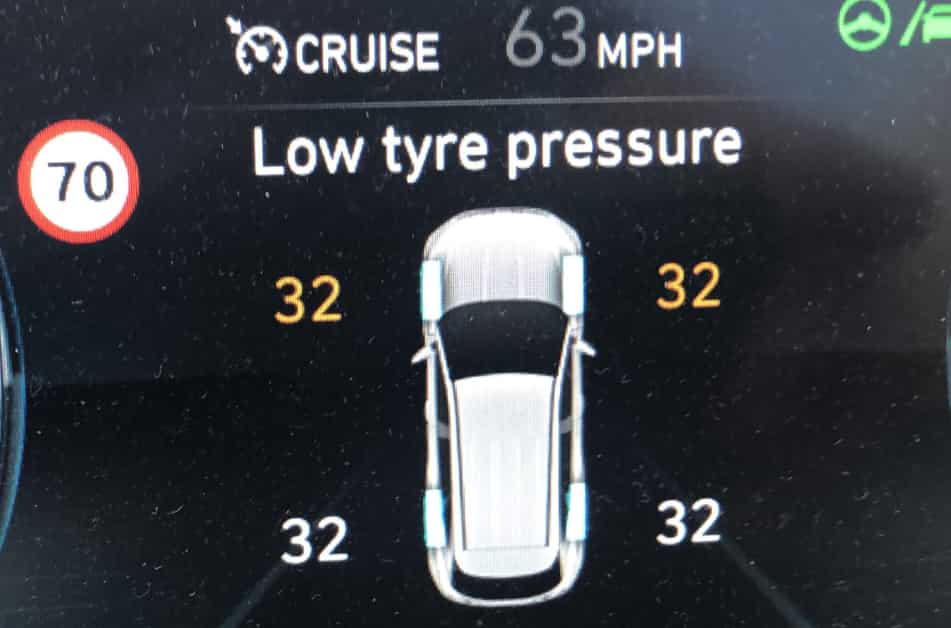
The TPMS warning light is part of the tire pressure monitoring system. It alerts the driver when tire pressure becomes too low or when the system detects an issue with the sensors. This system helps improve safety by giving early warnings before tire problems become serious.
In the Hyundai Tucson, the TPMS system continuously checks air pressure in all tires. When it detects a drop below the safe level, it turns on the warning light on the dashboard. This allows the driver to react quickly and prevent unsafe driving conditions.
Several factors can trigger the TPMS light. Low tire pressure is the most common cause. Temperature changes can also affect PSI and activate the warning. In some cases, a sensor malfunction or weak battery inside the sensor can cause incorrect readings.
When the TPMS light appears, the first step is to check all tire pressures manually. If any tire is low, it should be inflated to the recommended level. After adjusting the pressure, the system may need a reset depending on the model year.
Ignoring the TPMS warning can lead to poor handling, increased tire wear, and higher risk of tire failure. Regular attention to this system helps maintain safe driving conditions and ensures accurate pressure monitoring at all times.
Underinflated vs Overinflated Tires in Hyundai Tucson
Tire pressure has a direct impact on how a vehicle handles and how long the tires last. Both underinflated and overinflated tires create problems that affect safety, comfort, and performance.
When tire pressure is too low, the tire becomes softer and spreads more on the road surface. In the Hyundai Tucson, this condition increases rolling resistance. It also raises fuel consumption and causes the edges of the tire to wear faster. Drivers may notice slower steering response and reduced stability during cornering.
Underinflated tires also generate more heat during driving. This heat buildup increases the risk of tire damage over long distances. In extreme cases, it can lead to tire failure.
When tire pressure is too high, the tire becomes harder and loses some contact with the road. This reduces grip and makes the ride less comfortable. The center of the tire wears faster, which shortens tire lifespan. High pressure can also reduce braking performance on uneven surfaces.
Overinflated tires may feel more responsive at first, but they reduce safety in real driving conditions. The reduced contact patch makes it harder for the tire to maintain traction, especially on wet or rough roads.
Maintaining the correct PSI helps balance comfort, safety, and durability. It ensures that the tire performs as designed under all normal driving conditions.
Tire Pressure Adjustment by Weather Conditions
Tire pressure does not stay constant because it changes with temperature. Air expands when it is hot and contracts when it is cold. This natural effect directly influences PSI levels in all tires.
In cold weather, tire pressure tends to drop. Drivers may notice a warning light on the dashboard even if the tires were correctly inflated before. For the Hyundai Tucson, this situation is common during seasonal temperature changes. A small drop in PSI can affect handling and fuel efficiency if not corrected.
In hot weather, tire pressure increases. The heat from the road and sunlight causes the air inside the tire to expand. This can lead to slightly higher PSI than the recommended level. If the pressure becomes too high, the tire may feel harder and less comfortable.
Driving conditions also affect tire pressure needs. Highway driving creates more heat, which can increase PSI during long trips. Heavy loads also place more stress on tires and may require slight adjustments within the manufacturer’s safe range.
The best approach is to check tire pressure regularly and adjust it based on real conditions instead of relying on a single fixed value. This helps maintain stable performance and improves safety in all weather situations.
Hyundai Tucson Tire Pressure Maintenance Tips
Regular maintenance of tire pressure helps keep the vehicle safe, efficient, and stable on the road. Many drivers overlook this simple task, but it has a major impact on long term tire health and driving performance.
For the Hyundai Tucson, checking tire pressure at least once a month is recommended. This routine helps detect slow leaks and prevents uneven tire wear before it becomes a serious issue. It is also important to check pressure before long trips, especially when the vehicle carries passengers or heavy cargo.
The best time to measure tire pressure is when the tires are cold. This means the vehicle has been parked for a few hours and has not been driven recently. Measuring pressure after driving can give inaccurate readings because heat increases PSI temporarily.
Drivers should always use a reliable tire pressure gauge. Relying only on visual inspection is not accurate and can lead to incorrect assumptions about tire condition. Small underinflation is often not visible but still affects safety and fuel efficiency.
Common mistakes include overinflating tires, ignoring seasonal temperature changes, and delaying pressure checks until the TPMS warning light appears. Avoiding these mistakes helps extend tire life and improves overall driving comfort.
Consistent tire pressure maintenance supports better fuel economy, safer braking, and more predictable handling in all road conditions.
Conclusion
Maintaining correct tire pressure is one of the simplest but most important aspects of vehicle care. Throughout this Hyundai Tucson Tire Pressure Guide, we have covered how PSI affects safety, fuel efficiency, tire wear, and overall driving performance.
For the Hyundai Tucson, correct tire pressure helps ensure stable handling, better braking response, and longer tire lifespan. It also reduces the risk of uneven wear and unexpected tire failure during daily driving or long distance travel.
Understanding how tire size, model year, and weather conditions affect PSI allows drivers to make better maintenance decisions. It also helps prevent common issues such as underinflation, overinflation, and TPMS warning confusion.
By checking tire pressure regularly and following manufacturer recommendations, drivers can improve both safety and driving comfort. This simple habit also helps reduce long term maintenance costs and keeps the vehicle performing at its best.
In the end, proper tire pressure management is not just a technical detail. It is a key part of responsible vehicle ownership that directly impacts every journey.