Seeing a Mazda Charging System Malfunction warning on your dashboard can be stressful. Many drivers immediately assume the battery has failed. Others worry that the engine could suddenly stop. While these concerns are understandable, the warning does not always indicate a major failure. Instead, it tells you that the vehicle has detected an issue within the charging system.
Your Mazda depends on a reliable charging system every time you drive. The system supplies power to the engine, headlights, climate control, infotainment screen, and many other electrical components. It also keeps the battery charged while the engine is running. If any part of this system stops working correctly, the warning message may appear. In many cases, the vehicle can still be driven for a short distance. However, the remaining battery power will continue to decrease.
A Mazda Charging System Malfunction can have several different causes. A weak battery is one possibility. A failing alternator is another common reason. The problem may also come from a worn serpentine belt, loose battery terminals, damaged wiring, a faulty battery current sensor, or an issue with the charging control module. Because several components work together, replacing parts without proper testing can lead to unnecessary expenses.
Understanding the real cause is the best way to avoid costly repairs. Early diagnosis can also prevent an unexpected breakdown. This guide explains what the Mazda Charging System Malfunction warning means and why it appears. You will learn the most common symptoms, practical diagnostic steps, effective repair methods, and typical repair costs. By the end of this article, you will know how to identify the problem and decide on the right solution with confidence.
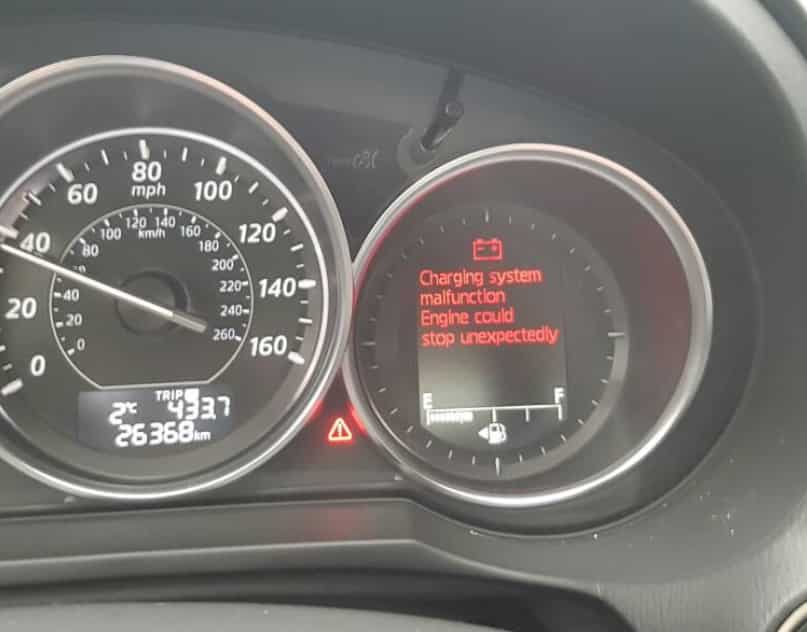
What Does a Mazda Charging System Malfunction Mean?
A Mazda Charging System Malfunction warning indicates that the vehicle has detected an abnormal condition in its charging system. This does not automatically mean the battery has failed. Instead, it means the system cannot maintain the charging voltage within the expected range. As a result, the battery may not receive enough power while the engine is running.
The charging system performs one essential job. It supplies electricity to every major electrical component while keeping the battery charged. When the engine starts, the alternator becomes the primary source of electrical power. At the same time, it replaces the energy used during starting. If this process is interrupted, the battery begins to lose its charge.
Several components work together to keep the system operating correctly. The battery stores electrical energy and provides power during engine startup. The alternator generates electricity after the engine is running. The voltage regulator controls charging output to prevent overcharging or undercharging. In addition, the serpentine belt drives the alternator, while sensors and control modules continuously monitor system performance.
Modern Mazda vehicles use intelligent charging technology. The system constantly adjusts charging voltage according to driving conditions, battery condition, and electrical demand. This approach improves fuel efficiency and extends battery life. However, it also means that even a small fault can trigger a warning message before noticeable symptoms appear.
For example, a loose battery terminal may create an unstable electrical connection. A worn serpentine belt may prevent the alternator from spinning at the correct speed. Likewise, a failing battery current sensor may send incorrect information to the control module. In each case, the vehicle may display the same Mazda Charging System Malfunction warning even though the root cause is different.
Some drivers ignore the warning because the vehicle still starts and drives normally. Unfortunately, this can be a costly mistake. A charging problem often becomes worse over time. Once the battery can no longer receive enough power, electrical accessories may begin to fail. Eventually, the engine may stall because the ignition and fuel systems no longer receive sufficient voltage.
For this reason, the warning should never be dismissed. Identifying the actual cause early is the safest and most cost effective approach. It also helps prevent unnecessary part replacement and reduces the risk of an unexpected roadside breakdown.
Common Symptoms of a Mazda Charging System Malfunction
A Mazda Charging System Malfunction rarely appears without warning signs. Some symptoms develop slowly, while others become obvious within a short time. Recognizing these early signs can help you diagnose the problem before it leads to a complete charging system failure.
Battery Warning Light
The battery warning light is often the first sign of trouble. It may stay on continuously or appear only while driving. In some cases, it turns off after restarting the engine. Although the light resembles a battery symbol, it does not always indicate a failed battery. Instead, it shows that the charging system is not operating as expected.
Dim or Flickering Lights
Headlights may become dim, especially at idle or during low speed driving. Interior lights and dashboard illumination may also flicker. You may even notice that the infotainment screen changes brightness unexpectedly. These symptoms usually occur because the electrical system is receiving inconsistent voltage.
Slow Engine Cranking
A healthy battery should crank the engine quickly and smoothly. If the engine turns over slowly, the battery may not have enough stored power. This problem often becomes worse after the vehicle has been parked overnight. As the charging system weakens, starting the engine becomes increasingly difficult.
Electrical Accessories Stop Working Properly
Modern Mazda vehicles rely on stable electrical power for many comfort and safety features. A charging system problem can reduce the performance of these components. The air conditioning may become weaker. Power windows may move more slowly than usual. You may also notice delayed responses from the infotainment system or other electronic controls.
Multiple Warning Messages
A charging system problem can affect more than one control module. As battery voltage drops, additional warning lights may appear. Messages related to the ABS, traction control, power steering, or i Stop system may also be displayed. These warnings do not always mean those systems have failed. They often result from low system voltage.
Engine Stalling
One of the most serious symptoms is an engine that suddenly stalls while driving. This happens when the battery can no longer supply enough electricity after the alternator stops charging. Once the available voltage falls below the required level, the engine management system cannot continue operating normally.
Burning Smell or Unusual Noises
Mechanical problems can also produce noticeable warning signs. A worn serpentine belt may create a high pitched squealing sound. A failing alternator bearing can produce grinding or whining noises. In more severe cases, overheating electrical components may create a burning smell. These symptoms should never be ignored because they often indicate an active mechanical failure.
The severity of these symptoms depends on the underlying cause. Some vehicles continue operating for several miles, while others lose electrical power within minutes. Regardless of how minor the warning appears, diagnosing the problem early can prevent expensive repairs and reduce the risk of being stranded unexpectedly.
Most Common Causes of a Mazda Charging System Malfunction
A Mazda Charging System Malfunction can result from several different problems. Although the warning message looks simple, identifying the real cause often requires careful inspection. Some failures are inexpensive to fix. Others involve major electrical components. Understanding each possibility helps you avoid unnecessary repairs and make informed decisions.
Weak or Failing Battery
A weak battery is one of the most common reasons for a charging system warning. Every battery loses capacity as it ages. Extreme temperatures, frequent short trips, and long periods without driving can accelerate this process. Once the battery can no longer hold a proper charge, the vehicle may detect an abnormal voltage level.
A failing battery often causes slow engine cranking, dim lights, and intermittent warning messages. In many cases, the engine still starts normally during the early stages of battery failure. However, the available reserve capacity continues to decrease with every drive.
Battery corrosion can create similar symptoms. Corrosion increases electrical resistance and reduces current flow between the battery and the vehicle. Even a healthy battery may appear defective if the terminals are heavily corroded or loose.
Many drivers replace the alternator as soon as they see a charging system warning. Unfortunately, this is a common mistake. A simple battery load test can often identify the actual problem and prevent unnecessary repair costs.
Faulty Alternator
The alternator is responsible for generating electricity after the engine starts. It powers the electrical system while recharging the battery at the same time. If the alternator fails, the battery becomes the only remaining source of electrical power.
Alternators can fail in several ways. Internal bearings may wear out over time. The brushes can become worn. The rectifier diodes may fail and reduce charging efficiency. In some cases, the voltage output becomes unstable instead of stopping completely.
A defective alternator usually causes the battery warning light to remain illuminated. Drivers may also notice flickering headlights, weak electrical accessories, or repeated battery failures. Eventually, the battery becomes completely discharged because it is no longer receiving sufficient charging current.
Testing the alternator output with a multimeter is much more reliable than replacing the component based on symptoms alone. Proper diagnosis reduces unnecessary expenses and confirms whether the alternator is truly responsible for the warning.
Failed Voltage Regulator
The voltage regulator controls how much electricity the alternator produces. Its primary function is to keep charging voltage within a safe operating range. Stable voltage protects the battery and every electronic component in the vehicle.
If the regulator fails, charging voltage may become too low or too high. Low voltage prevents the battery from charging correctly. High voltage can damage the battery and shorten the lifespan of sensitive electronic modules.
Drivers may notice inconsistent warning lights, fluctuating dashboard brightness, or unusual battery behavior. These symptoms often appear before complete charging system failure. Because the voltage regulator is integrated into many modern alternators, replacing the entire alternator may be necessary when the regulator fails.
Loose or Worn Serpentine Belt
The serpentine belt transfers engine power to the alternator. If the belt slips or loses tension, the alternator cannot spin at the correct speed. As a result, charging output decreases and the battery receives less electricity.
A worn belt often develops cracks, polished surfaces, or frayed edges. These signs become more common as mileage increases. Moisture or oil contamination can also reduce belt grip and cause slipping.
Drivers may hear a squealing noise during startup or acceleration. The sound often becomes louder when several electrical accessories are operating at the same time. Ignoring these symptoms allows the belt to wear even faster.
If the belt breaks completely, the alternator stops charging immediately. The vehicle will continue running only until the battery is discharged. For this reason, routine belt inspections are an important part of preventive maintenance.
Corroded or Loose Battery Terminals
Battery terminals create the main electrical connection between the battery and the vehicle. Even a small amount of corrosion can increase electrical resistance. This reduces current flow and creates unstable voltage.
White, blue, or green deposits around the battery posts are common signs of corrosion. Loose terminal clamps can produce similar symptoms. Both conditions may trigger a Mazda Charging System Malfunction warning even when the battery and alternator are functioning normally.
Poor electrical contact may also cause slow engine cranking, random warning lights, or intermittent power loss. In some situations, the vehicle may fail to start because the battery cannot deliver enough current.
Cleaning the terminals and tightening the connections often restores proper operation. This simple inspection should always be performed before replacing expensive components.
Damaged Wiring or Blown Fuse
The charging system depends on several power cables, ground connections, connectors, and protective fuses. Damage to any of these parts can interrupt the flow of electricity.
Heat, vibration, moisture, and road debris gradually weaken electrical wiring. Rodents may also chew through insulation and expose the conductors. As the damage becomes worse, voltage loss increases and charging performance declines.
A blown charging system fuse can create similar problems. The battery may stop charging even though the alternator is still producing electricity. Because wiring faults are sometimes hidden beneath protective covers, they can be difficult to identify without a careful inspection.
Technicians often perform a voltage drop test to locate excessive electrical resistance. This method is more accurate than relying on visual inspection alone.
Faulty Battery Current Sensor
Many modern Mazda models use a battery current sensor to monitor charging performance. This sensor measures battery current and sends real time information to the control module.
If the sensor provides inaccurate data, the charging system may adjust voltage incorrectly. In some cases, the vehicle assumes the battery is fully charged when it is actually losing power. In other situations, the control module may display a warning even though the charging system is operating normally.
A faulty sensor often produces intermittent warning messages that are difficult to diagnose. Professional scan tools can compare sensor readings with actual charging voltage to confirm whether the sensor is functioning correctly.
Replacing the sensor is usually less expensive than replacing the alternator. Accurate diagnosis helps prevent unnecessary repairs.
Charging Control Module or PCM Problems
Modern Mazda vehicles use electronic control modules to manage charging performance. These modules continuously calculate charging demand based on battery condition, engine load, and electrical consumption.
Software errors, communication faults, or internal module failures can interrupt this process. As a result, the charging system may receive incorrect commands and operate outside the expected voltage range.
Drivers may notice recurring warning messages even after replacing the battery or alternator. In these cases, updating the control module software or performing additional diagnostic tests may resolve the issue.
Control module failures are far less common than battery or alternator problems. However, they should not be overlooked when all other components have been tested and verified.
Incorrect Battery Replacement
Replacing the battery may seem straightforward, but using the wrong battery can create unexpected charging problems. Every Mazda model is designed for a specific battery size, capacity, and technology.
Installing a battery with the wrong specifications can confuse the charging system. Loose terminals, poor ground connections, or an incomplete installation may produce similar results. Some models also require the battery management system to recognize the new battery after installation.
If the Mazda Charging System Malfunction warning appears soon after replacing the battery, the installation should be inspected before assuming another component has failed. A simple correction may eliminate the warning and restore normal charging performance.
Is It Safe to Drive With a Mazda Charging System Malfunction?
It depends on what is causing the Mazda Charging System Malfunction warning. If the charging system has only a minor fault, your Mazda may continue running for a short time without any noticeable issues. However, this does not mean it is safe to ignore the warning. Once the charging system stops working properly, the battery becomes the vehicle’s only source of electrical power. As the battery loses its charge, every electrical system begins to rely on a shrinking energy reserve.
At first, the changes may seem insignificant. The headlights may become slightly dimmer, the dashboard lights may flicker, or the power windows may move more slowly than usual. Because these symptoms often appear gradually, many drivers continue driving without realizing the problem is becoming more serious. As battery voltage continues to drop, the engine control module and other electronic systems may no longer receive enough power to operate correctly. This can lead to poor engine performance, unexpected warning lights, or even an engine stall.
If you must continue driving, limit your trip to the nearest repair shop or another safe location. Reducing electrical demand can help preserve the remaining battery power. Turn off unnecessary accessories such as the air conditioning, heated seats, rear window defroster, and audio system whenever possible. These simple steps may provide enough time to reach your destination before the battery is completely discharged.
If the engine begins to misfire, the steering becomes unusually heavy, multiple warning lights appear, or you notice a burning smell, stop driving as soon as it is safe to do so. These symptoms often indicate a serious charging system failure. Prompt diagnosis can prevent additional damage, reduce repair costs, and lower the risk of being stranded on the road.
How to Diagnose a Mazda Charging System Malfunction
Diagnosing a Mazda Charging System Malfunction begins with understanding that the warning message does not identify the exact faulty component. Instead, it indicates that the charging system is no longer operating within the expected voltage range. Replacing the battery or alternator without proper testing can waste both time and money. A systematic inspection is the most effective way to identify the real cause.
Start by checking the battery. Look for swollen sides, leaking fluid, or excessive corrosion around the terminals. Loose battery connections can interrupt the flow of electricity and trigger the warning even when the battery is still in good condition. If the terminals appear dirty, clean them before moving to the next step.
Next, measure the battery voltage with a digital multimeter while the engine is off. A fully charged battery should show a healthy resting voltage. If the reading is unusually low, recharge the battery and test it again. If the voltage continues to drop after charging, the battery may no longer be able to hold a proper charge.
Once the battery has been inspected, start the engine and check the charging voltage. If the alternator is working correctly, the voltage should increase and remain stable while the engine is running. Large voltage fluctuations or unusually low readings often indicate a problem with the alternator, voltage regulator, or charging circuit.
The serpentine belt should also be inspected carefully. A worn or loose belt can prevent the alternator from producing enough electricity, even if the alternator itself is functioning normally. Finally, scan the vehicle with an OBD II diagnostic tool. Stored fault codes can provide valuable information about charging system performance, sensor faults, or communication errors. Combining these basic tests makes it much easier to identify the true cause of a Mazda Charging System Malfunction and avoid replacing parts unnecessarily.
How to Fix a Mazda Charging System Malfunction
The correct solution for a Mazda Charging System Malfunction depends entirely on the underlying cause. Since several components work together to keep the charging system operating, repairing the wrong part will not solve the problem. For this reason, diagnosis should always come before replacement.
If the battery is weak or unable to hold a charge, replacing it is usually the most effective solution. Before installing a new battery, inspect the terminals for corrosion and make sure every connection is clean and secure. A poor connection can create the same warning message, even when the battery is in excellent condition.
When testing confirms that the alternator is not producing enough voltage, replacement is often necessary. However, the alternator should not be replaced until the serpentine belt has also been inspected. A loose or worn belt can reduce alternator output and create symptoms that closely resemble alternator failure.
Damaged wiring or poor ground connections should be repaired as soon as they are discovered. Even a small amount of resistance can affect charging performance and confuse the vehicle’s control modules. Cleaning electrical connectors, repairing damaged wires, and tightening loose grounds often restore normal operation without replacing expensive components.
Some Mazda models may also display the warning because of a faulty battery current sensor or outdated control module software. In these situations, replacing the sensor or updating the control module may eliminate the problem. These repairs usually require professional diagnostic equipment to confirm the fault and complete the programming process correctly.
After every repair, clear the diagnostic trouble codes and test drive the vehicle. Monitor the charging voltage and verify that the warning message does not return. If the system maintains stable voltage under different driving conditions, the repair has likely resolved the issue. Taking the time to verify the repair is just as important as replacing the faulty component, as it ensures the Mazda Charging System Malfunction has been corrected completely rather than temporarily hidden.
Mazda Charging System Malfunction Repair Cost
The cost of fixing a Mazda Charging System Malfunction depends on the component that causes the warning. Some repairs require only a quick inspection and minor adjustments, while others involve replacing expensive electrical parts. For this reason, you should always identify the root cause before approving any repair. A proper diagnosis helps you avoid unnecessary expenses and ensures that technicians repair the correct component.
Simple problems usually cost the least to fix. Cleaning corroded battery terminals or tightening loose connections often restores normal charging performance with very little labor. If testing shows that the battery has reached the end of its service life, replacing it is usually the next step. Addressing battery problems early can also prevent additional strain on the alternator and other electrical components.
Repair costs increase when the alternator fails because the replacement requires more labor and higher priced parts. Before replacing the alternator, inspect the serpentine belt and belt tensioner carefully. A worn belt can reduce charging performance and create symptoms that closely resemble alternator failure. Repairing damaged wiring or poor ground connections may also increase the final bill, especially when technicians need extra time to locate hidden electrical faults.
Some Mazda models use advanced charging management systems that rely on sensors and electronic control modules. If these components fail, technicians may need to replace the faulty sensor or update the control module software. Although these repairs add to the total cost, they restore proper charging performance and help prevent the warning from returning. Investing in an accurate diagnosis often saves money in the long run because it eliminates guesswork and reduces the risk of replacing parts that still function correctly.
How to Prevent Future Charging System Problems
Preventing a Mazda Charging System Malfunction is often easier and less expensive than repairing one. Most charging system failures develop gradually rather than occurring without warning. Regular inspections can help identify small problems before they become major repairs.
Start by checking the battery at least twice a year. Make sure the terminals are clean, secure, and free of corrosion. If you notice white or green deposits around the battery posts, clean them promptly to maintain a reliable electrical connection.
The serpentine belt also deserves regular attention. Look for cracks, frayed edges, or signs of excessive wear during routine maintenance. A worn belt may still operate normally for a while, but it can eventually slip and reduce alternator performance.
Pay attention to changes in the way your Mazda starts. Slow engine cranking, flickering lights, or repeated battery warning messages should never be ignored. These early symptoms often appear long before a complete charging system failure.
If your vehicle is not driven regularly, consider using a battery maintainer to keep the battery fully charged. This is especially helpful during long storage periods or in cold weather, when battery performance naturally declines.
Finally, have the charging system tested during scheduled maintenance, especially before long road trips. A simple inspection of the battery, alternator, and charging voltage can detect hidden problems early. Taking these preventive steps can improve reliability, reduce repair costs, and significantly lower the chance of seeing a Mazda Charging System Malfunction warning in the future.
Frequently Asked Questions
What causes a Mazda Charging System Malfunction?
The warning usually appears when the charging system cannot maintain the correct voltage. Common causes include a weak battery, a failing alternator, a worn serpentine belt, loose battery terminals, damaged wiring, or a faulty battery current sensor.
Can a bad battery trigger a charging system warning?
Yes. A battery that cannot hold a proper charge may cause unstable voltage, leading the vehicle to display a Mazda Charging System Malfunction warning even if the alternator is working correctly.
Can I drive with a Mazda Charging System Malfunction warning?
You may be able to drive for a short distance, but it is not recommended. Once the battery loses its remaining charge, the engine can stall and the vehicle may not restart.
Does this warning always mean the alternator is bad?
No. Although a faulty alternator is a common cause, the warning can also result from battery problems, loose connections, damaged wiring, sensor faults, or charging system control issues.
Why did the warning appear after replacing the battery?
The new battery may have incorrect specifications, the terminals may not be fully tightened, or the charging system may have another underlying problem. Some Mazda models also require the battery management system to recognize the new battery.
How much does it cost to repair a Mazda Charging System Malfunction?
Repair costs vary depending on the faulty component. Minor repairs such as cleaning battery terminals may cost less than one hundred dollars, while replacing an alternator or repairing major electrical components can cost several hundred dollars or more.
Conclusion
A Mazda Charging System Malfunction warning should never be ignored, even if the vehicle appears to be driving normally. The warning indicates that the charging system is no longer maintaining the correct voltage, and the problem can quickly become more serious if left unresolved. While a weak battery or loose connection may be responsible, other components such as the alternator, serpentine belt, wiring, battery current sensor, or charging control module can produce the same warning.
The most effective approach is to diagnose the problem methodically instead of replacing parts based on assumptions. Inspect the battery, test the charging voltage, examine the belt, and scan the vehicle for diagnostic trouble codes before making any repair decisions. This process not only saves money but also reduces the risk of replacing components that are still functioning properly.
Routine maintenance is equally important. Regular battery inspections, clean electrical connections, and periodic charging system tests can help prevent unexpected failures and extend the life of critical components. By understanding the causes, symptoms, and repair options, you can respond confidently whenever a Mazda Charging System Malfunction warning appears and keep your Mazda operating safely and reliably for years to come.