Modern Hyundai vehicles rely on advanced emission control and engine monitoring systems to ensure efficiency, performance, and compliance with environmental standards. However, when something goes wrong within this system, drivers are often alerted by the check engine light along with a diagnostic trouble code. One of the most common and confusing alerts is the Hyundai P0420 Code, which often leaves car owners uncertain about the severity of the issue and the next steps to take.
The Hyundai P0420 Code Explained refers to a situation where the vehicle’s engine control module detects that the catalytic converter is not operating at the required efficiency level. While this may sound serious, the issue does not always indicate immediate engine failure. In many cases, the car may still drive normally, but the emissions system is no longer functioning as intended.
Understanding the Hyundai P0420 Code Causes, Symptoms, and How to Fix It Step by Step is essential for avoiding unnecessary repairs and reducing long-term vehicle damage. The root cause may vary from a failing catalytic converter to oxygen sensor issues, exhaust leaks, or fuel mixture problems. Without proper diagnosis, many drivers end up replacing expensive parts unnecessarily.
This guide will help you clearly understand what the code means, why it appears, and how to accurately diagnose and fix it using a structured and practical approach.
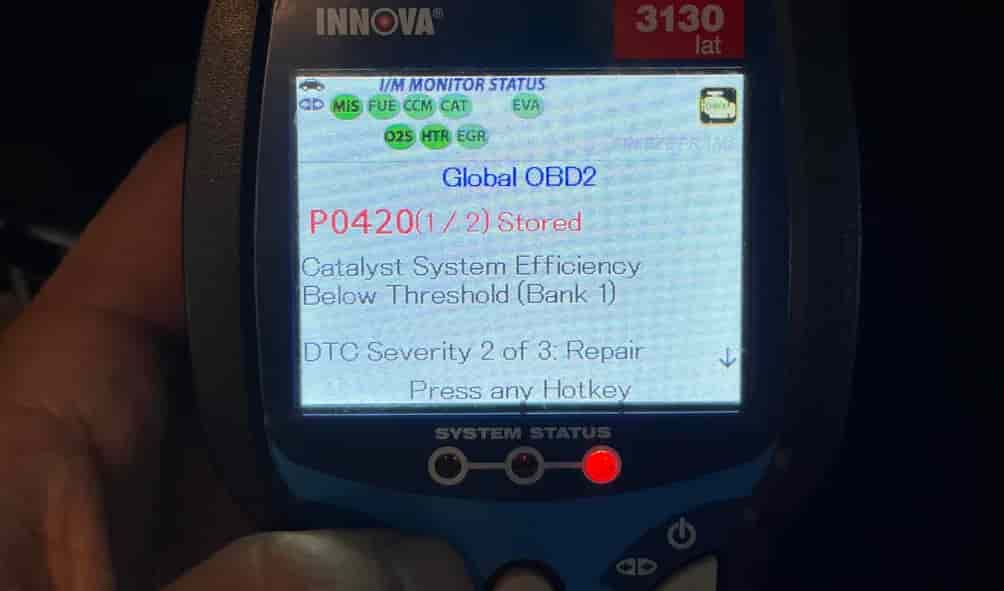
WHAT IS HYUNDAI P0420 CODE?
The Hyundai P0420 Code is an OBD-II diagnostic trouble code that signals a problem with the efficiency of the catalytic converter in Bank 1. This code appears when the engine control module detects that the catalytic converter no longer performs within the required emissions threshold. In most cases, the vehicle still runs normally, but the emissions system fails to work as intended.
In Hyundai vehicles, the catalytic converter plays a key role in reducing harmful exhaust gases. It converts carbon monoxide, hydrocarbons, and nitrogen oxides into safer gases before they exit the exhaust system. The engine control unit monitors this process using oxygen sensors placed before and after the catalytic converter. These sensors track changes in exhaust gases and send data to the ECU.
When the ECU compares signals from both oxygen sensors and finds little difference between them, it concludes that the catalytic converter is not storing or processing gases correctly. At this point, it triggers the Hyundai P0420 Code to alert the driver.
This code does not always mean the catalytic converter is damaged. Other issues can also trigger it. Faulty oxygen sensors, small exhaust leaks, or an incorrect fuel mixture can all cause similar readings. That is why accurate diagnosis is necessary before replacing any parts.
COMMON CAUSES OF HYUNDAI P0420 CODE
The Hyundai P0420 Code can appear for several reasons. Although many drivers assume the catalytic converter has failed, the root cause is often different. Understanding these causes helps avoid unnecessary replacement costs and leads to a more accurate diagnosis.
One of the most common causes is a worn or inefficient catalytic converter. Over time, the internal structure of the converter can degrade due to heat stress, contamination, or aging. When this happens, it cannot properly convert exhaust gases, and the ECU detects reduced efficiency.
Another frequent cause is a faulty oxygen sensor. The Hyundai engine system uses two oxygen sensors to monitor exhaust gas levels before and after the catalytic converter. If either sensor sends incorrect or unstable signals, the ECU may misinterpret the data and trigger the Hyundai P0420 Code even if the catalytic converter is still working.
Exhaust leaks also play an important role. Even a small leak near the manifold or pipes can introduce extra oxygen into the system. This distorts sensor readings and affects the comparison between upstream and downstream oxygen sensors. As a result, the system may incorrectly report low catalytic efficiency.
Fuel system problems can also contribute to this code. If the engine runs too rich or too lean, it affects combustion quality. Poor combustion creates abnormal exhaust gases that place extra stress on the catalytic converter and can trigger the warning code.
Engine misfires are another possible cause. When misfires occur, unburned fuel enters the exhaust system. This can overheat or damage the catalytic converter over time and lead to efficiency loss detected by the ECU.
SYMPTOMS OF HYUNDAI P0420 CODE
The Hyundai P0420 Code usually appears without causing immediate engine failure, which makes it confusing for many drivers. However, the vehicle often shows several warning signs that indicate a problem in the emissions system.
The most common symptom is the check engine light turning on. This is the first and most obvious indicator. The light may stay on continuously or appear intermittently depending on driving conditions.
Another common symptom is reduced fuel efficiency. When the catalytic converter or related components do not function properly, the engine may burn more fuel than normal. Drivers often notice that they need to refuel more frequently than before.
Some vehicles may also experience a slight loss of engine performance. Acceleration may feel less responsive, especially during uphill driving or when the vehicle is under load. This symptom is not always severe, but it can become more noticeable over time.
A strong or unusual smell from the exhaust is another possible sign. In some cases, drivers report a sulfur or rotten egg smell. This happens when the catalytic converter fails to process exhaust gases effectively.
The vehicle may also fail an emissions test. Since the catalytic converter is responsible for reducing harmful gases, any inefficiency can cause the car to exceed legal emission limits.
Although these symptoms vary in severity, they all indicate that the emissions system is not working correctly and should be diagnosed as soon as possible.
HOW TO DIAGNOSE HYUNDAI P0420 CODE STEP BY STEP
Proper diagnosis is essential before replacing any parts when the Hyundai P0420 Code appears. Many drivers replace the catalytic converter too early and spend unnecessary money. A structured diagnostic process helps identify the real cause.
The first step is to use an OBD-II scanner. This tool reads the diagnostic trouble code stored in the engine control module. It may also show additional codes that help identify related issues. After reading the code, you should check freeze frame data to understand the conditions when the error occurred.
The second step is to inspect oxygen sensor data. The Hyundai system uses upstream and downstream oxygen sensors to monitor catalytic converter performance. You should compare the signals from both sensors. If both readings look too similar, it often indicates a catalytic efficiency problem. If one sensor behaves abnormally, it may be faulty.
The third step is to check the exhaust system for leaks. Even small cracks or loose connections can affect sensor readings. You should inspect pipes, gaskets, and joints near the catalytic converter. Any leak can distort the air-fuel ratio data and trigger the Hyundai P0420 Code.
The fourth step is to review fuel trim values. These values show how the engine adjusts the air-fuel mixture. Abnormal readings may indicate a rich or lean condition that affects combustion quality and emissions.
The final step is to reset the ECU after inspection or minor repairs. If the code returns after reset and driving, the issue is still present and requires further investigation.
HOW TO FIX HYUNDAI P0420 CODE STEP BY STEP
Fixing the Hyundai P0420 Code requires a correct diagnosis before any replacement. The repair process depends on the root cause, not just the code itself. Many cases do not require replacing the catalytic converter immediately.
The first step is to replace or test the oxygen sensors. Faulty oxygen sensors often send incorrect signals to the engine control module. In many situations, replacing the upstream or downstream sensor can resolve the issue and restore normal system readings.
The second step is to repair any exhaust leaks. Even small leaks can affect sensor accuracy and trigger the Hyundai P0420 Code. You should inspect the exhaust manifold, pipes, and joints carefully. Sealing or replacing damaged parts can correct the readings and fix the problem.
The third step is to evaluate the catalytic converter condition. If the converter is clogged, damaged, or has lost efficiency, replacement may be necessary. However, this step should only be done after confirming that sensors and exhaust components are working correctly.
The fourth step is to fix engine performance issues such as misfires or fuel mixture problems. Poor combustion can produce abnormal exhaust gases that damage the catalytic converter over time. Repairing ignition components or fuel system issues helps prevent the code from returning.
The final step is to reset the engine control module after completing repairs. After resetting, you should monitor the vehicle during driving cycles. If the Hyundai P0420 Code does not return, the issue has been successfully resolved.
COST TO FIX HYUNDAI P0420 CODE
The cost to fix the Hyundai P0420 Code varies widely depending on the root cause of the problem. There is no single fixed price because the issue can come from small sensors or major exhaust components.
If the problem comes from a faulty oxygen sensor, the repair cost is usually relatively low. Oxygen sensors are not expensive compared to other engine components, and replacement is considered one of the most common and cost effective solutions for this code.
If the issue is related to an exhaust leak, the cost depends on the location and severity of the damage. Minor leaks near joints or gaskets are usually inexpensive to repair. However, if pipes or multiple sections are damaged, the cost can increase.
The most expensive repair involves replacing the catalytic converter. This component is one of the most critical parts of the emissions system. In Hyundai vehicles, catalytic converter replacement can be significantly costly, especially if using original equipment manufacturer parts. Aftermarket options may reduce the price, but quality can vary.
Labor costs also affect the total expense. Diagnostic time, inspection, and installation can differ depending on the repair shop and region. Some cases require only simple adjustments, while others involve full system replacement.
Because of these variations, accurate diagnosis is essential before making any repair decision. Replacing parts without confirming the root cause can lead to unnecessary high costs.
IS IT SAFE TO DRIVE WITH HYUNDAI P0420 CODE?
In most cases, a Hyundai P0420 Code does not cause immediate engine failure, so the vehicle can still be driven. However, this does not mean the issue should be ignored. The code indicates a problem in the emissions system, which can worsen over time if left untreated.
Short term driving is usually safe. Many drivers continue using their Hyundai for daily commuting without noticeable performance issues. The engine may still run normally, and the vehicle may not show any major symptoms besides the check engine light.
However, long term driving with this code can lead to more serious problems. If the catalytic converter is failing, it may continue to degrade and lose efficiency. This can increase fuel consumption and reduce overall engine performance.
In some cases, ignoring the Hyundai P0420 Code can also cause damage to other components. A failing catalytic converter may overheat or become clogged, which can affect exhaust flow and place additional stress on the engine system.
Another important risk is emissions failure. Vehicles with this issue often fail emissions tests because the catalytic converter is not properly reducing harmful gases. This can create legal or inspection problems depending on local regulations.
For these reasons, it is safe to drive only for a short period while planning a proper diagnosis and repair. Delaying too long can increase repair costs and lead to more complex issues.
CONCLUSION
The Hyundai P0420 Code is a common diagnostic trouble code related to catalytic converter efficiency. While it does not always indicate a severe engine failure, it clearly shows that the emissions system is not working as expected. Understanding this code helps vehicle owners avoid unnecessary repairs and reduce long term maintenance costs.
In many situations, the issue is not caused by a failed catalytic converter. Faulty oxygen sensors, exhaust leaks, or fuel system problems can also trigger the Hyundai P0420 Code. This is why proper step by step diagnosis is essential before replacing any expensive components.
A structured approach helps identify the real cause and prevents unnecessary spending. Simple fixes such as sensor replacement or exhaust repairs can often solve the problem without needing a full catalytic converter replacement. However, ignoring the issue for too long can lead to higher fuel consumption, failed emissions tests, and potential damage to the exhaust system.
If your Hyundai shows the P0420 Code, the best action is to diagnose it early and follow a logical repair process. This ensures better engine performance, improved efficiency, and long term reliability.