The “Start Stop Service Required” warning often appears suddenly on the dashboard and causes immediate concern for many drivers. This message is common in modern vehicles from Volvo Cars that use Start-Stop technology to improve fuel efficiency and reduce emissions.
This system automatically shuts off the engine when the vehicle stops and restarts it when the driver continues driving. When the warning shows up, the system has detected an abnormal condition and has turned itself off to protect the vehicle. In most cases, the car still runs normally, but the Start-Stop function no longer works.
Many drivers worry when they see this message because it can appear without clear symptoms. The issue usually does not indicate a serious engine failure. Instead, it often relates to battery performance, charging stability, or sensor accuracy. Short trips, weak batteries, or small voltage drops can trigger the warning.
This article explains the meaning of the warning in simple terms. It also breaks down the main causes and shows how to fix the issue step by step. The goal is to help you identify the real problem quickly and avoid unnecessary repairs.
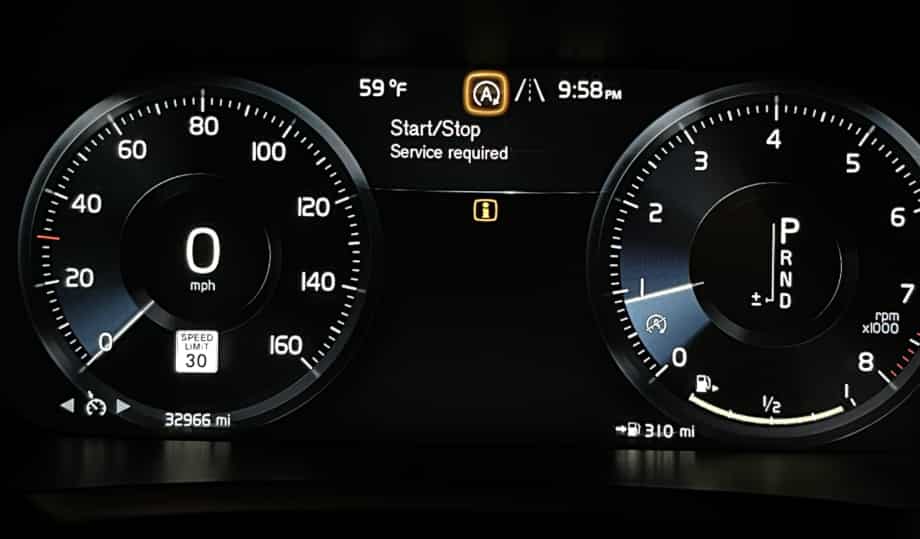
What Does Volvo Start Stop Service Required Mean
The “Start Stop Service Required” message appears when the Start-Stop system detects an operating problem and shuts itself down. This system is designed to reduce fuel consumption by turning the engine off when the car stops and restarting it when the driver moves again. In vehicles from Volvo Cars, this function depends heavily on stable electrical performance and accurate sensor data.
When the system shows this warning, it means the vehicle has identified conditions that are not safe or efficient for automatic engine restart. The car does not stop working, but it disables the Start-Stop function to prevent irregular engine behavior. This is a protective action taken by the control system rather than a sign of immediate engine failure.
The warning usually links to the Battery Management System, which constantly monitors battery health, voltage stability, and charging performance. If the system detects low voltage or unstable power supply, it disables Start-Stop to maintain reliable engine operation. The Engine Control Unit also plays a role by evaluating input from multiple sensors before allowing the system to function.
In simple terms, this message means the vehicle cannot guarantee stable conditions for automatic start and stop operation. It prioritizes safety and reliability over fuel-saving features. In many cases, the driver will not notice any major driving issues except that the Start-Stop function no longer activates.
Understanding this warning is important because it helps you avoid unnecessary repairs. Most cases relate to electrical conditions rather than mechanical failure, and identifying the root cause early can prevent further system limitations.
Main Root Causes of the Error
The “Start Stop Service Required” warning appears when the system detects unstable operating conditions and disables the Start-Stop function to protect the vehicle. In most cases, the issue is not caused by a single failure but by several related factors inside Volvo Cars vehicles, especially those connected to electrical stability and battery performance.
One of the most common causes is a weak or aging battery. The Start-Stop system requires a stable voltage level to restart the engine smoothly at every stop. When the battery loses capacity over time, voltage drops can occur during idle situations. The system then shuts itself down because it cannot guarantee reliable restarts. This issue is especially common with AGM batteries that are near the end of their service life.
Another frequent cause is alternator charging instability. The alternator is responsible for maintaining battery charge while the engine runs. If it produces inconsistent or insufficient voltage, the vehicle cannot maintain the energy balance needed for Start-Stop operation. Even small fluctuations in power delivery can trigger the warning and disable the system.
Battery sensor issues also play an important role. Modern Volvo vehicles rely on intelligent sensors to measure voltage, temperature, and charge level. When these sensors fail or send incorrect readings, the system may incorrectly assume that the battery is not in a safe condition. As a result, Start-Stop is automatically turned off.
Software or ECU misinterpretation can also cause the warning. Outdated calibration or temporary glitches in the control modules may lead the system to disable Start-Stop even when hardware components are working normally. In addition, frequent short trips prevent the battery from fully charging, which gradually creates a low energy state and increases the likelihood of this error.
Symptoms You May Notice Before the Warning Appears
Before the “Start Stop Service Required” message shows up, the vehicle often gives early signals that the system is not operating under ideal conditions. In many vehicles from Volvo Cars, the Start-Stop function will first become inconsistent rather than fail completely. You may notice that the engine no longer shuts off at traffic lights even though driving conditions look normal.
Another common symptom is delayed or slightly rough engine restart when the vehicle starts moving again. This happens because the system is struggling to maintain stable electrical conditions. In some cases, fuel consumption may also increase slightly because the Start-Stop system is no longer active to save fuel during idle periods.
Drivers may also see intermittent battery-related icons on the dashboard, especially during cold starts or after short trips. These signals indicate that the battery is operating near its lower voltage threshold. The system then disables Start-Stop functionality to prevent unstable engine behavior.
In addition, some drivers report that electrical comfort features such as auto stop at lights or energy-saving functions become less responsive before the warning appears. These small changes often happen gradually, which makes them easy to ignore until the full service message appears.
Recognizing these early symptoms is important because they help identify the problem before it becomes more severe. In most cases, the issue is still manageable at this stage and can often be resolved with battery testing, charging system inspection, or basic recalibration rather than major repairs.
How to Diagnose the Problem Properly
A correct diagnosis is important because the “Start Stop Service Required” warning can come from several different systems working together in Volvo Cars vehicles. The first step is to check the battery condition under both rest and load. A healthy battery should maintain stable voltage even when electrical demand increases. If the voltage drops quickly, the battery is often the main cause of the issue.
The next step is to use an OBD2 scanner to read fault codes from the vehicle’s control modules. These codes help identify whether the problem is related to the Battery Management System, the Engine Control Unit, or sensor communication errors. In many cases, the system stores hidden warnings before the dashboard message appears, which makes scanning very important for accurate diagnosis.
After that, the alternator output should be tested while the engine is running. The voltage must remain stable within the required range. If the alternator produces irregular or weak charging, the Start-Stop system will disable itself to protect the electrical network.
It is also necessary to inspect the battery sensor data. Modern Volvo systems rely on real-time communication between sensors and control units. If the sensor sends incorrect readings, the system may misjudge battery health and trigger the warning even when the battery is still usable.
A proper diagnosis combines all these checks instead of focusing on a single component. This approach helps identify the real cause quickly and avoids unnecessary replacement of parts that are still functioning normally.
How to Fix Volvo Start Stop Service Required Permanently
Fixing the “Start Stop Service Required” warning depends on identifying the exact root cause in Volvo Cars vehicles. In most cases, the solution is related to restoring stable electrical conditions rather than repairing mechanical failures. The Start-Stop system is sensitive, so even small voltage or communication issues can disable it.
If the battery is weak or aged, replacement is usually the most effective solution. The system requires a high-performance AGM or EFB battery that can handle frequent charge and discharge cycles. Once a new battery is installed, the vehicle often needs a system reset so the Battery Management System can recalibrate and recognize the new power source.
If the issue comes from software or control logic, updating the Engine Control Unit or performing a system reset can restore normal operation. These updates help correct incorrect battery readings and improve how the Start-Stop system evaluates driving conditions.
When the problem is related to the battery sensor, recalibration or replacement may be required. A faulty sensor can send inaccurate data about voltage or temperature, which leads the system to shut down Start-Stop functionality even when the battery is healthy.
In cases where driving patterns contribute to the issue, adjusting usage habits can help. Longer driving sessions allow the alternator to fully recharge the battery and restore stable voltage levels. After repairs or resets, the system should be tested under normal driving conditions to confirm that Start-Stop functionality returns.
A complete fix usually combines hardware repair, software correction, and proper system recalibration rather than a single isolated action.
Is It Safe to Drive With This Warning
In most cases, it is safe to continue driving when the “Start Stop Service Required” warning appears in vehicles from Volvo Cars. The message mainly affects the Start-Stop function, not the core engine or driving performance. This means the car will still operate normally, but the automatic engine stop and restart feature will be disabled.
However, the system disables itself for a reason. It detects unstable electrical conditions such as weak battery voltage, inconsistent charging, or sensor errors. While these issues may not affect immediate drivability, they can indicate that the electrical system is under stress. Over time, this may lead to reduced battery lifespan or less reliable performance of other electronic features.
In some situations, ignoring the warning for a long period can cause additional strain on the alternator and battery system. This is especially true if the root cause is related to battery degradation or charging instability. The vehicle will continue to function, but fuel efficiency benefits from the Start-Stop system will be lost.
Drivers should treat the warning as an early maintenance signal rather than an emergency breakdown alert. A proper diagnosis is still recommended to ensure the battery and charging system are in good condition. Once the underlying issue is resolved, the Start-Stop system usually returns to normal operation without any long-term damage.
How to Prevent This Issue in the Future
Preventing the “Start Stop Service Required” warning requires consistent care of the electrical system in vehicles from Volvo Cars. Since the Start-Stop function depends heavily on stable voltage and battery health, most preventive actions focus on maintaining a strong and fully charged battery.
One of the most effective methods is to drive longer distances regularly. Short trips often prevent the alternator from fully recharging the battery, which slowly leads to low voltage conditions. When the battery remains undercharged for long periods, the Start-Stop system becomes more likely to disable itself.
Regular battery inspections also play an important role. A simple voltage and load test can help detect early signs of battery degradation before the system generates a warning. Replacing the battery at the right time prevents unexpected shutdowns of Start-Stop functionality.
Keeping the vehicle software updated is another important step. Updates to the Engine Control Unit and Battery Management System improve how the car monitors voltage and system stability. This reduces the chance of false warnings caused by outdated calibration.
It is also helpful to avoid leaving electrical systems on when the engine is off. High energy usage without engine support can drain the battery and reduce overall performance. In colder weather, checking battery condition becomes even more important because low temperatures reduce battery efficiency.
With proper maintenance and balanced driving habits, most Start-Stop system issues can be avoided, and the warning message is far less likely to appear again.
Conclusion
The “Start Stop Service Required” message in vehicles from Volvo Cars is not usually a sign of a serious engine failure. It is a protective warning that appears when the Start-Stop system detects unstable electrical conditions and temporarily disables itself to maintain safe operation.
In most cases, the issue is related to battery health, charging performance, or sensor communication rather than mechanical damage. A weak or aging battery is the most common cause, followed by alternator instability and incorrect sensor readings. Software calibration issues and short-trip driving habits can also contribute to the problem.
Understanding the meaning of this warning helps drivers avoid unnecessary concern and expensive repairs. Instead of ignoring it, a proper diagnosis should be carried out to identify the exact cause. Once the root problem is fixed, the Start-Stop system usually returns to normal without long-term effects on the vehicle.
Regular maintenance, stable driving patterns, and timely battery replacement are the most effective ways to prevent the warning from appearing again. With the right care, the system continues to improve fuel efficiency and reduce emissions as designed.