The “Volvo Engine System Service Required” message appears on the dashboard and often causes immediate concern for drivers. This warning signals that the engine system has detected a problem that needs attention.
In Volvo vehicles such as the XC60, XC90, and S60, the engine control system constantly monitors key components. These include sensors, air intake, fuel delivery, turbo pressure, and electronic signals. When the system detects abnormal data, it triggers this warning to protect the engine.
This message does not always indicate a serious failure. A simple sensor error or a temporary voltage drop can trigger it. However, the warning can also point to more serious issues. These include oxygen sensor failure, mass airflow sensor problems, turbo issues, or ECU malfunctions.
You need to understand this warning clearly. If you ignore it, the engine may lose performance. Fuel consumption may increase. In some cases, the damage can become expensive if you delay diagnosis.
This guide explains what the message means, what causes it, how to diagnose it, and how to fix it step by step. You will learn how to make the right decision before the issue becomes worse.
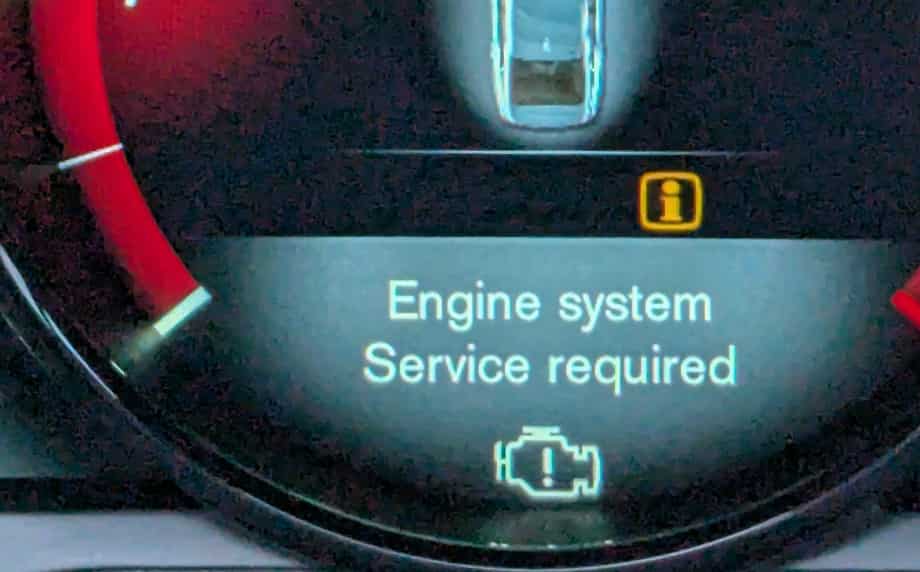
What Does “Volvo Engine System Service Required” Mean?
The “Volvo Engine System Service Required” message means the engine control system has detected a fault that affects normal engine operation. The system triggers this warning when one or more engine parameters move outside the safe operating range.
In Volvo vehicles, the Engine Control Unit, also called ECU, manages and monitors many systems at the same time. It checks air intake, fuel injection, ignition timing, turbo boost, and emissions control. When the ECU detects inconsistent data from any of these systems, it activates the warning message to protect the engine.
This warning does not point to a single fixed problem. It works as a general alert. It tells you that the vehicle needs diagnosis, not that one specific part has failed. The exact cause depends on the fault codes stored in the system.
In some cases, the issue comes from a small sensor malfunction. In other cases, the problem relates to airflow imbalance, fuel delivery errors, or ECU communication faults. That is why two Volvo cars can show the same message but require completely different repairs.
The warning often appears alongside reduced engine performance or the Check Engine Light. In certain situations, the car may enter limp mode to limit damage and reduce engine stress.
You should treat this message as an early diagnostic signal. It does not confirm engine failure, but it confirms that the system has already detected abnormal behavior. Proper scanning with an OBD2 tool or Volvo VIDA system is necessary to identify the root cause accurately.
Main Causes of the “Volvo Engine System Service Required” Warning
The “Volvo Engine System Service Required” warning appears when the engine control system detects abnormal data from one or more key components. This does not point to a single fixed failure. It reflects a group of possible issues related to air intake, fuel delivery, sensors, electrical stability, or turbo performance. The Engine Control Unit or ECU uses continuous monitoring to protect the engine, so even small irregularities can trigger this message.
One of the most common causes is a faulty oxygen sensor. This sensor measures oxygen levels in the exhaust and helps the ECU adjust the air fuel mixture. When it fails or sends incorrect data, the engine may run too rich or too lean. This leads to higher fuel consumption, unstable combustion, and reduced efficiency.
Another frequent cause is a malfunctioning mass air flow sensor. The MAF sensor measures the amount of air entering the engine. If it becomes dirty or fails, the ECU cannot calculate the correct air fuel ratio. This often results in rough idling, hesitation during acceleration, and noticeable power loss.
Turbocharger issues can also trigger this warning, especially in Volvo turbocharged engines. Problems such as air leaks, worn components, or incorrect boost pressure can create performance imbalance. The ECU detects this inconsistency and activates the warning to prevent further damage.
Fuel system problems also play a major role. Faulty injectors or a weak fuel pump can disrupt fuel delivery and cause unstable combustion. In addition, electrical issues such as a weak battery or unstable alternator output can confuse the ECU and trigger false or temporary warnings.
Finally, ECU software glitches or communication errors between control modules may also cause the message to appear even when no mechanical failure exists. In such cases, a diagnostic scan or software update is required to confirm the exact cause.
Symptoms You Should Never Ignore
When the “Volvo Engine System Service Required” warning appears, it is often accompanied by noticeable changes in engine behavior. These symptoms help you understand how serious the issue is and whether you need immediate attention or a simple diagnostic check.
One of the most common signs is reduced engine performance. The vehicle may feel slower during acceleration, and the throttle response becomes less sensitive. This often happens when the engine enters limp mode to protect itself from further damage. In this state, the ECU limits power output and restricts performance.
Another clear symptom is increased fuel consumption. When sensors like the oxygen sensor or mass air flow sensor send incorrect data, the engine burns more fuel than necessary. You may notice that the fuel tank empties faster even under normal driving conditions.
Rough idling is also a strong warning sign. The engine may vibrate more than usual when the car is stationary. In some cases, the RPM becomes unstable and fluctuates without driver input. This often points to air-fuel imbalance or sensor malfunction.
Engine misfires can also occur. You may feel hesitation, jerking, or uneven power delivery while driving. This usually indicates issues with fuel injection, ignition timing, or airflow measurement.
In many cases, the Check Engine Light appears together with the service message. This confirms that the ECU has stored a fault code that requires diagnostic scanning.
You should never ignore these symptoms, especially when they appear together. When multiple signs occur at the same time, the probability of a serious underlying issue increases significantly. Early diagnosis helps prevent expensive engine damage and keeps the vehicle operating safely.
Is It Safe to Drive With the “Volvo Engine System Service Required” Warning?
Whether it is safe to drive depends entirely on the root cause behind the warning. This message does not always mean immediate engine failure, but it always indicates that the engine management system has detected abnormal behavior. You need to evaluate the situation carefully before continuing to drive.
In low risk cases, the warning appears due to temporary sensor glitches or minor voltage fluctuations. The car may still drive normally without any noticeable performance loss. In this situation, you can usually continue driving for a short distance, but you should schedule a diagnostic check as soon as possible.
In medium risk cases, the engine may still run but with reduced performance. You may notice rough idling, slow acceleration, or increased fuel consumption. These symptoms often point to issues with sensors, airflow, or fuel delivery. Driving in this condition for long periods can increase engine stress and may lead to more expensive repairs over time.
In high risk cases, the vehicle may enter limp mode or show strong performance loss. This usually indicates serious problems such as turbo failure, fuel system malfunction, or critical ECU communication errors. In this situation, you should avoid driving the vehicle unless absolutely necessary, because continued operation may cause additional engine damage.
You should also pay attention to warning combinations. If the service message appears together with the Check Engine Light, engine shaking, or abnormal noises, the risk level increases significantly. In this case, stopping the car and performing a diagnostic scan is the safest decision.
In general, the safest approach is not to ignore the warning. Even if the car still drives normally, the ECU has already detected an issue that requires attention. Early diagnosis reduces repair cost and prevents escalation into serious engine damage.
How to Diagnose the Problem Step by Step
When the “Volvo Engine System Service Required” warning appears, the most important step is proper diagnosis. You cannot rely on the message alone because it only indicates that the engine control system has detected abnormal data. You need to identify the exact fault using diagnostic tools and structured checks.
The first step is using an OBD2 scanner. This tool connects to the vehicle’s diagnostic port and reads stored fault codes from the Engine Control Unit. These codes usually start with a letter and number format such as P0xxx. Each code points to a specific system like fuel, air intake, ignition, or emissions. Reading these codes helps narrow down the root cause quickly.
The second step is interpreting the fault codes correctly. A single warning message can hide multiple underlying issues. For example, a code related to oxygen sensor failure may also be linked to fuel mixture imbalance or air intake problems. That is why code interpretation requires context, not just reading the number.
For more accurate results, Volvo vehicles can be diagnosed using the VIDA system. This is the official diagnostic platform used by Volvo service centers. VIDA provides deeper access to system modules, live data, and software status. It can identify issues that a basic OBD2 scanner may miss, especially communication errors between control units.
You should also check basic electrical conditions during diagnosis. A weak battery or unstable alternator output can create false readings. In some cases, clearing codes and rechecking after a short drive helps confirm whether the issue is temporary or permanent.
A proper diagnosis always combines fault codes, live data, and vehicle behavior. This approach ensures that you do not replace parts unnecessarily and that the real root cause is identified accurately before repair begins.
Complete Fix Guide
Fixing the “Volvo Engine System Service Required” warning depends on the exact cause found during diagnosis. There is no single universal repair because the message can come from sensors, fuel system issues, turbo problems, or ECU communication errors. You need to follow a structured approach from simple checks to advanced repairs.
The first step is to perform a basic reset after diagnosis. If the issue is temporary, clearing the fault code with an OBD2 scanner may remove the warning. However, this should only be done after reading and recording the codes. Resetting without understanding the cause can hide an active problem.
If the issue comes from sensors, you may need to clean or replace components such as the mass air flow sensor or oxygen sensor. A dirty MAF sensor can sometimes be cleaned using specialized spray, while a failed sensor must be replaced to restore accurate air fuel readings.
For fuel related problems, you should inspect fuel injectors and the fuel pump. Clogged injectors can be cleaned in some cases, but weak fuel pumps usually require replacement. These components directly affect combustion stability and engine performance.
Electrical stability also plays an important role. A weak battery or failing alternator can trigger false warnings. In this case, testing voltage output and replacing the battery may solve the issue without deeper engine repair.
For more complex cases, ECU software updates or reprogramming may be required. Volvo service centers use VIDA software to update modules and fix communication errors between systems. This step is necessary when the warning is caused by software glitches rather than mechanical failure.
If the problem involves turbocharger damage or internal engine issues, professional repair is required. These repairs are more complex and should not be handled as DIY work due to risk of further damage.
A correct fix always starts with accurate diagnosis. Once the root cause is confirmed, the repair becomes straightforward and prevents unnecessary part replacement.
Estimated Repair Costs for This Issue
The cost to fix the “Volvo Engine System Service Required” warning varies widely because the message can come from many different systems. The final price depends on the root cause, the Volvo model, and whether you use a dealer service center or an independent garage.
For basic diagnostics, an OBD2 scan at an independent workshop is usually affordable. In many cases, the cost stays low because it only involves reading and clearing fault codes. However, if you go to an official Volvo service center, the diagnostic fee is higher because they use advanced VIDA systems and deeper system checks.
Sensor related repairs are among the most common costs. A mass air flow sensor or oxygen sensor replacement can range from moderate to relatively expensive depending on the model and OEM parts used. Labor costs also increase if the sensor is difficult to access.
Fuel system repairs such as injector cleaning or fuel pump replacement are more expensive. Cleaning injectors is usually affordable, but replacing a fuel pump can significantly increase the total cost due to both parts and labor.
Electrical issues like battery replacement are generally lower cost compared to engine repairs. However, alternator replacement can be more expensive due to labor complexity.
Software updates or ECU reprogramming are typically handled by Volvo dealers. These services can cost more than basic repairs but are necessary when the issue is related to system communication or software glitches.
The most expensive scenarios involve turbocharger failure or internal engine problems. These repairs can become high cost because they require specialized labor and genuine parts.
In general, independent garages offer lower pricing, while Volvo dealerships provide higher accuracy and warranty support. The best approach is always to diagnose first, then compare repair options based on confirmed fault codes.
How to Prevent the “Volvo Engine System Service Required” Warning
Preventing the “Volvo Engine System Service Required” warning starts with consistent maintenance and proper driving habits. This warning often appears when small issues build up over time in sensors, airflow systems, fuel delivery, or electrical stability. Regular care helps you reduce these risks before the ECU detects a fault.
One of the most important steps is following a strict maintenance schedule. Engine oil, air filters, and fuel filters must be replaced on time. A clogged air filter can restrict airflow and affect the air fuel ratio, while old engine oil can reduce engine efficiency and trigger abnormal sensor readings.
Fuel quality also plays a key role. Poor quality fuel can leave deposits in injectors and combustion chambers. Over time, this can lead to unstable combustion and trigger engine system warnings. Using high quality fuel helps keep the fuel system clean and stable.
Battery health should not be ignored. Modern Volvo vehicles rely heavily on stable voltage for ECU communication and sensor accuracy. A weak battery or unstable alternator can create false signals and trigger warning messages. Regular battery testing helps prevent unexpected electrical issues.
Software updates are another important factor. Volvo often releases ECU and system updates to improve performance and fix communication bugs. Keeping the software up to date reduces the chance of system errors that may trigger false warnings.
You should also avoid aggressive driving habits. Frequent hard acceleration and sudden load changes increase stress on the turbocharger, fuel system, and sensors. Smooth driving helps maintain system balance and reduces long term wear.
Finally, early diagnostics are essential. If you notice small symptoms such as rough idling or reduced performance, checking the system early prevents minor issues from turning into major engine faults.
Conclusion
The “Volvo Engine System Service Required” warning is not a random message. It is a structured alert from the engine control system that signals abnormal behavior in key engine components. This can involve sensors, airflow, fuel delivery, turbo performance, or ECU communication.
In many cases, the issue starts small. A weak sensor signal, unstable voltage, or airflow imbalance can trigger the warning before any serious damage occurs. In other cases, it can point to more advanced problems that require immediate diagnosis and repair.
The most important takeaway is that this warning should never be ignored. Even if the car still drives normally, the ECU has already detected irregular data. Driving without proper diagnosis increases the risk of performance loss, higher fuel consumption, and expensive engine damage.
A correct approach always starts with OBD2 or VIDA diagnostic scanning. Once the fault codes are identified, the repair becomes more precise and cost effective. This prevents unnecessary part replacement and ensures the real root cause is fixed.