Seeing the “SOS Inoperative” warning appear on your Mercedes dashboard can be alarming, especially if it shows up without any other obvious signs of trouble. Many drivers immediately wonder whether it’s safe to continue driving, if the vehicle has a serious electrical problem, or whether an expensive repair is just around the corner. While the warning doesn’t usually indicate an immediate threat to the engine or braking system, it should never be ignored because it affects one of your vehicle’s important safety features.
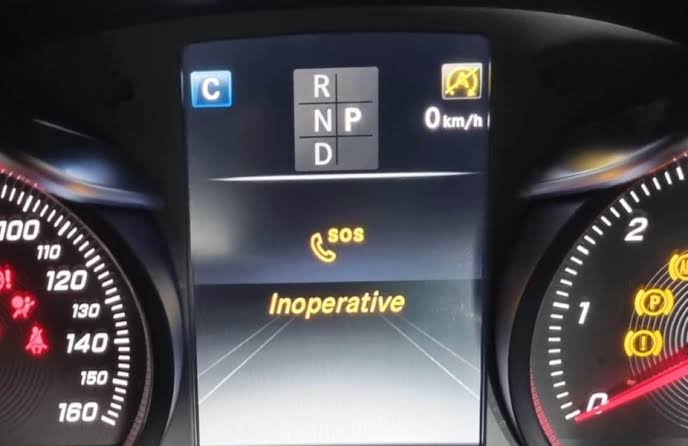
The Mercedes SOS Inoperative message indicates that the vehicle’s Emergency Call System, also known as the eCall system, is unable to function correctly. This system is designed to automatically contact emergency services if the vehicle detects a severe collision, while also allowing occupants to manually request assistance by pressing the SOS button. When the system becomes inoperative, your Mercedes may no longer be able to make emergency calls if an accident occurs.
Fortunately, this warning is often caused by relatively common issues such as a weak main battery, a failing auxiliary battery, software glitches, or communication module faults. In many cases, the problem can be diagnosed quickly and repaired without replacing major components.
In this comprehensive guide, you’ll learn exactly what the Mercedes SOS Inoperative warning means, why it appears, whether it’s safe to continue driving, the most common causes behind the error, step-by-step troubleshooting methods, estimated repair costs, and the most effective solutions to restore your vehicle’s emergency communication system.
What Does Mercedes SOS Inoperative Mean?
The Mercedes SOS Inoperative warning means that your vehicle’s emergency communication system is not working as intended. Depending on the model and production year, Mercedes may refer to this feature as the Emergency Call System, eCall, mbrace, or Mercedes me emergency support.
Under normal conditions, the system can contact an emergency response center after a serious accident. It may transmit important information such as the vehicle’s location, identification details, and the direction of travel. The occupants can also press the SOS button manually when medical help, police assistance, or another emergency service is required.
When the message appears, the car is warning you that one or more parts of this communication network may be unavailable. The problem could involve the backup battery, telematics control unit, cellular connection, GPS antenna, wiring, fuse, or vehicle software. In some cases, low voltage from the main battery can temporarily interrupt the system and trigger the warning even though no major component has failed.
The message does not normally mean that the SOS button itself is physically damaged. Instead, it indicates that the complete emergency call process cannot be guaranteed. The system may be unable to determine the vehicle’s position, connect to a mobile network, transmit crash data, or establish a voice connection with an emergency operator.
This distinction is important because drivers sometimes assume the warning is only a minor infotainment fault. In reality, the engine, transmission, brakes, and steering may continue to work normally, but an important safety and communication feature may be offline.
You may also notice related symptoms, including:
- A red or inactive SOS button
- A warning message that returns after every restart
- Problems with Mercedes me services
- Navigation or GPS location errors
- Loss of mobile connectivity
- Other battery or electrical warnings
Sometimes the message disappears after the vehicle is restarted or driven for a short period, especially when it was caused by temporary low voltage. However, if the Mercedes SOS Inoperative warning repeatedly returns, the system should be diagnosed rather than ignored.
Can You Still Drive with an SOS Inoperative Warning?
In most cases, you can continue driving when the Mercedes SOS Inoperative warning appears because the fault usually does not directly affect the engine, transmission, brakes, or steering. The vehicle may still start, accelerate, stop, and handle normally.
However, the warning means the automatic emergency call feature may not work during an accident. If a severe collision occurs, the vehicle might not contact emergency services or share your location automatically. You may need to use a mobile phone to request help, which could become difficult if you are injured, disoriented, or unable to reach the device.
For that reason, the issue is usually not an immediate mechanical emergency, but it is still a safety concern. You should avoid treating it like a harmless dashboard notification.
You can generally drive the vehicle for a short period when:
- The car starts and operates normally
- There are no additional battery, charging, brake, steering, or airbag warnings
- The dashboard lights are not flickering
- The vehicle does not lose power
- You have a working mobile phone available for emergencies
You should arrange an inspection soon if the message remains after several restarts or returns every time the vehicle is started.
Stop driving and seek professional assistance if the SOS warning appears together with:
- A red battery or charging system warning
- Multiple electrical malfunctions
- A no start or difficult starting condition
- Flickering interior or dashboard lights
- Power steering problems
- Airbag or restraint system warnings
- A burning smell, visible smoke, or signs of damaged wiring
These additional symptoms may indicate a larger battery, alternator, power distribution, or electrical system problem. In that situation, continuing to drive could lead to a breakdown or leave the vehicle unable to restart.
Before driving, make sure your phone is charged and that you know how to contact local emergency services manually. This simple precaution reduces the risk created by the unavailable emergency call system.
The safest approach is to view the warning as a prompt for diagnosis rather than a reason to panic. You may not need to stop immediately, but you should identify the cause before depending on the vehicle for long journeys or remote travel.
Common Causes of Mercedes SOS Inoperative
The Mercedes SOS Inoperative warning can be triggered by several electrical, software, and communication problems. Some causes are inexpensive and relatively easy to correct, while others require specialized Mercedes diagnostic equipment.
1. Weak or Failing Main Battery
A weak main battery is one of the first things to check when the warning appears. Modern Mercedes vehicles contain numerous control modules that require a stable voltage supply. When battery voltage drops too low, the vehicle may temporarily shut down nonessential systems or record communication faults.
The SOS system can be especially sensitive to voltage fluctuations during startup. If the battery struggles to provide enough power while the starter motor is operating, the telematics control unit may fail to initialize correctly. The dashboard can then display an inoperative warning even though the vehicle starts.
Common signs of a weak main battery include:
- Slow engine cranking
- Dim interior lights
- Multiple warning messages after startup
- Start and stop system unavailable
- Clock or memory settings resetting
- Electrical faults that disappear after driving
Cold weather often makes the problem more noticeable because low temperatures reduce battery performance. Vehicles that are rarely driven may also experience low voltage because the battery does not receive enough time to recharge.
A battery voltage test and load test can help determine whether the battery is healthy. Recharging may solve the issue if the battery is only discharged. Replacement may be necessary if it can no longer hold sufficient capacity.
2. Failed Emergency Call Backup Battery
Many Mercedes emergency call systems include a small internal backup battery. Its purpose is to keep the SOS system operational after a severe accident, even if the main vehicle battery becomes disconnected or damaged.
Like any rechargeable battery, the backup battery loses capacity over time. Once it can no longer pass the system’s self test, the vehicle may display the Mercedes SOS Inoperative message.
This failure often appears suddenly even when the main battery is still in good condition. In some vehicles, the backup battery is built into the telematics or communication module. That design can make replacement more complicated because the battery may not be offered as a separate manufacturer service part.
Typical signs include:
- The vehicle starts normally
- No major electrical symptoms are present
- The SOS warning remains after every restart
- The fault returns immediately after being cleared
- Diagnostic trouble codes refer to an internal battery or emergency power supply
A proper scan can confirm whether the backup battery is the cause. Depending on the model, the solution may involve replacing the battery, repairing the module, or replacing the complete telematics unit.
3. Faulty Telematics Control Unit
The telematics control unit manages communication between the vehicle, GPS system, mobile network, emergency response center, and connected Mercedes services. It may also be known as the communication module, emergency call control unit, HERMES module, or telematics module.
If this module fails, the vehicle may lose more than the SOS function. Drivers may also notice problems with remote services, location tracking, mobile connectivity, or navigation data.
Common reasons for module failure include:
- Internal electronic damage
- Age related component failure
- Water or moisture intrusion
- Overheating
- Voltage spikes
- Corroded connectors
- Software corruption
Moisture damage is particularly serious because telematics modules are sometimes installed in areas that can be affected by roof leaks, blocked drainage channels, or water entering the luggage compartment. Corrosion may continue spreading even after the original leak appears to have dried.
Replacing the module is rarely a simple plug and play repair. A new or used unit may require programming, coding, activation, and synchronization with the vehicle identification number. Some connected services may also need to be reactivated.
Because this repair can be expensive, the battery, fuse, wiring, antenna, power supply, and software should be checked before the module is condemned.
4. Software or Communication Glitch
Not every SOS warning is caused by damaged hardware. A temporary software error may prevent one control module from communicating with another during startup.
This can happen after:
- The main battery has been disconnected
- A new battery has been installed
- The vehicle has been jump started
- Battery voltage has dropped very low
- A control module has been updated
- The infotainment system has restarted unexpectedly
- The vehicle has remained unused for an extended period
In some cases, switching the vehicle off, locking it, allowing the control modules to enter sleep mode, and restarting later may clear the warning. However, repeatedly disconnecting the battery is not recommended as a universal reset method because it can create additional faults or erase learned settings.
A dealer level diagnostic tool can check whether the software versions are current and whether the telematics system has stored communication errors. The repair may involve clearing fault codes, resetting the module, completing a software update, or performing control unit programming.
If the warning appeared immediately after battery replacement, the problem may be related to low voltage history, an incomplete initialization process, or a battery registration issue rather than a defective SOS component.
5. GPS Antenna Problems
The Mercedes Emergency Call System relies on GPS data to determine the vehicle’s exact location before transmitting it to emergency responders. If the GPS antenna fails or receives a weak signal, the telematics system may be unable to identify your vehicle’s position accurately, causing the Mercedes SOS Inoperative warning to appear.
GPS antenna issues are less common than battery or software problems, but they should not be overlooked, particularly on older vehicles or those that have experienced water leaks or collision repairs.
Common causes include:
- Damaged GPS antenna
- Loose antenna connector
- Corroded wiring
- Water intrusion around the roof antenna
- Physical damage after an accident
- Signal interference from aftermarket electronics
Symptoms of a GPS-related fault may include inaccurate navigation, delayed GPS positioning, loss of real-time traffic information, or intermittent Mercedes me connectivity. In some situations, the navigation system may continue working while the emergency call system fails because both systems use different communication paths.
A Mercedes diagnostic scan can verify whether the telematics control unit is receiving valid GPS signals. If the antenna is faulty, replacement is usually straightforward and considerably less expensive than replacing the entire communication module.
6. Cellular Network or SIM Card Issues
Besides GPS positioning, the Mercedes Emergency Call System also depends on a cellular network connection. Most modern Mercedes vehicles contain an integrated SIM card that allows the telematics module to communicate with emergency service centers without requiring the driver’s mobile phone.
If the system cannot establish a reliable cellular connection, the vehicle may display the Mercedes SOS Inoperative message even though every other component is functioning correctly.
Several conditions can interrupt communication with the mobile network, including:
- Temporary carrier outages
- Poor cellular coverage
- Internal SIM card failure
- Damaged communication hardware
- Software synchronization errors
- Expired connected service subscriptions on certain models
Drivers often notice that the warning appears only in specific locations with weak mobile coverage. Once the vehicle returns to an area with a stronger signal, the warning may disappear automatically after the communication module reconnects to the network.
However, if the message remains regardless of location, further diagnosis is necessary. A technician can verify network registration, inspect the communication module, and determine whether the integrated SIM card or cellular hardware has failed.
Although this issue does not affect engine performance, it prevents the vehicle from contacting emergency services automatically during a collision, making timely repairs highly recommended.
7. Blown Fuse or Damaged Wiring
Electrical faults are another common reason for the Mercedes SOS Inoperative warning. The Emergency Call System depends on a continuous power supply delivered through several fuses, wiring harnesses, and electrical connectors. If any part of this circuit is interrupted, communication between the telematics module and other vehicle systems may stop.
A blown fuse is one of the simplest causes to diagnose and repair. Fuses are designed to protect sensitive electronic components from excessive current. If a fuse fails, replacing it may restore the system immediately. However, if the replacement fuse blows again shortly afterward, an underlying electrical fault must be located before another fuse is installed.
Potential wiring problems include:
- Corroded electrical connectors
- Loose wiring harnesses
- Pinched cables after previous repairs
- Rodent damage
- Water intrusion
- Broken ground connections
- Oxidized terminals
Electrical damage often develops gradually. Moisture entering the luggage compartment, roof area, or dashboard can corrode connectors over time, eventually disrupting communication between the emergency call module and the vehicle’s central gateway.
Professional technicians typically perform a visual inspection before using wiring diagrams and multimeters to measure voltage, resistance, and continuity throughout the circuit. This approach helps identify damaged wires without unnecessarily replacing expensive control modules.
Repair costs vary depending on the extent of the damage. Replacing a fuse may cost only a small amount, while repairing a damaged wiring harness can require several hours of labor. Fortunately, once the electrical connection is restored, the Mercedes SOS Inoperative warning often clears after fault codes are erased using a compatible diagnostic scanner.
How to Diagnose Mercedes SOS Inoperative
Diagnosing the Mercedes SOS Inoperative warning should always begin with the simplest and least expensive checks before considering the replacement of major components. Because the warning can be triggered by low voltage, communication failures, or hardware faults, following a logical diagnostic process can save both time and money.
Step 1: Check the Main Battery Voltage
The first step is to inspect the condition of the main battery. Modern Mercedes vehicles rely on a stable power supply to operate dozens of electronic control units. Even a slight voltage drop can interrupt communication between modules and trigger multiple warning messages.
Using a digital multimeter, measure the battery voltage after the vehicle has been sitting for several hours.
General voltage guidelines include:
- 12.6 to 12.8 volts indicates a fully charged battery.
- 12.4 volts suggests the battery is partially discharged.
- Below 12.2 volts often indicates a weak battery that should be charged or tested.
- Below 12.0 volts usually requires immediate attention.
If the battery is several years old or fails a load test, replacing it may resolve the warning without further repairs.
Step 2: Inspect the Auxiliary Battery
Many Mercedes models use a secondary battery to support safety and electronic systems. This auxiliary battery commonly triggers the Mercedes SOS Inoperative warning when it reaches the end of its service life.
Look for additional messages such as:
- Auxiliary Battery Malfunction
- Start/Stop Inoperative
- Electrical Consumers Switched Off
- Visit Workshop
If these warnings appear together, the auxiliary battery becomes one of the most likely causes.
Step 3: Restart the Vehicle
Occasionally, the warning results from a temporary communication interruption during startup.
To perform a proper restart:
- Turn the ignition off.
- Remove the key or switch off the engine completely.
- Lock the vehicle.
- Wait approximately 10 to 15 minutes to allow all control modules to enter sleep mode.
- Restart the vehicle.
If the warning disappears permanently, the issue may have been caused by a temporary software synchronization problem.
Step 4: Check Relevant Fuses
Consult the owner’s manual or fuse diagram for the telematics and communication system fuses.
Inspect each fuse carefully for:
- Broken internal elements
- Signs of overheating
- Corrosion
- Loose contacts
Replace only with a fuse of the identical amperage rating.
Step 5: Scan the Vehicle with a Professional Diagnostic Tool
A generic OBD-II scanner may read engine-related fault codes, but it usually cannot communicate with every Mercedes control module.
Professional diagnostic systems such as Mercedes XENTRY, STAR Diagnosis, or advanced aftermarket scanners can retrieve manufacturer-specific fault codes from:
- Emergency Call Module
- Telematics Control Unit
- Central Gateway
- Communication Module
- Instrument Cluster
The stored diagnostic trouble codes often identify the exact subsystem responsible for the warning, significantly reducing unnecessary parts replacement.
Step 6: Inspect GPS and Communication Components
If diagnostic results indicate communication failures, inspect:
- GPS antenna
- Cellular antenna
- Wiring harnesses
- Electrical connectors
- Moisture intrusion
- Corrosion around module locations
Physical inspection frequently reveals problems that electronic testing alone cannot detect.
Step 7: Consult a Mercedes Specialist
If none of the previous steps resolve the warning, professional diagnosis is recommended. Certain repairs require software programming, module coding, or online activation that can only be completed using Mercedes-approved equipment.
Attempting to replace expensive electronic modules without confirming the root cause may result in unnecessary repair costs.
How to Fix Mercedes SOS Inoperative
Once the underlying cause has been identified, the appropriate repair becomes much more straightforward. Some solutions can be completed by experienced DIY owners, while others require specialized diagnostic equipment and programming.
Recharge or Replace the Main Battery
If battery voltage is low, recharge the battery using a compatible smart charger. Should the battery fail a capacity or load test, replacement is the most reliable solution.
After installing a new battery, some Mercedes models require battery registration or adaptation to ensure proper charging management.
Replace the Auxiliary Battery
The auxiliary battery is considered a wear item and typically lasts between four and seven years, depending on climate and driving habits.
Replacing a failed auxiliary battery often clears the warning immediately or after stored fault codes are erased.
Install Available Software Updates
Mercedes periodically releases software updates to improve communication between electronic control units.
Software updates may resolve:
- False SOS warnings
- Communication errors
- System initialization problems
- Compatibility issues following battery replacement
These updates are usually performed by authorized dealerships or qualified independent Mercedes specialists.
Replace a Blown Fuse
If inspection reveals a failed fuse, install a replacement with the correct amperage.
Never install a higher-rated fuse because doing so may damage sensitive electronic components or create a fire hazard.
If the replacement fuse fails repeatedly, further electrical diagnosis is required before operating the vehicle.
Repair Wiring or Electrical Connectors
Damaged wiring should be repaired using manufacturer-approved techniques.
Common repairs include:
- Replacing corroded terminals
- Repairing broken wires
- Cleaning electrical connectors
- Removing moisture contamination
- Restoring damaged insulation
Proper electrical repairs help prevent recurring communication faults.
Replace the GPS Antenna
If the GPS antenna fails to provide accurate positioning data, replacing the antenna usually restores normal communication with the Emergency Call System.
In some vehicles, recalibration or software synchronization may be required after installation.
Replace the Telematics Control Unit
When the telematics module has suffered internal hardware failure, replacement may be unavoidable.
Because the new module must communicate securely with multiple vehicle systems, installation generally includes:
- VIN programming
- Control unit coding
- Software installation
- Mercedes online activation
- Functional testing
This repair should be performed only by technicians with access to Mercedes diagnostic equipment.
Mercedes SOS Inoperative Repair Cost
Repair costs vary considerably depending on the vehicle model, production year, labor rates, and the specific component responsible for the warning. Fortunately, many cases involve relatively inexpensive repairs rather than complete module replacement.
Below are typical repair cost estimates.
| Repair | Estimated Cost (USD) |
|---|---|
| Main battery replacement | $180 to $450 |
| Auxiliary battery replacement | $80 to $250 |
| Battery diagnostic test | $30 to $80 |
| Fuse replacement | $20 to $80 |
| Software update | $120 to $300 |
| Professional diagnostic scan | $100 to $220 |
| GPS antenna replacement | $180 to $500 |
| Wiring repair | $150 to $600 |
| Telematics control unit replacement | $700 to $2,000 |
| Complete module programming and coding | $150 to $500 |
The total repair bill depends largely on whether the problem is electrical, software-related, or caused by hardware failure. Battery replacement, fuse repairs, and software updates are generally affordable, while telematics module replacement represents the highest repair expense.
Before authorizing major repairs, request a complete diagnostic report from the repair facility. Many owners have avoided replacing expensive modules after discovering that the actual cause was a weak battery, corroded connector, or outdated software.
Investing in an accurate diagnosis first is almost always the most cost-effective approach when dealing with the Mercedes SOS Inoperative warning.
Which Mercedes Models Experience This Warning Most?
The Mercedes SOS Inoperative warning is not limited to one specific model. It can appear across a wide range of Mercedes-Benz vehicles equipped with the Emergency Call System. However, some models report the issue more frequently due to their electronic architecture, aging auxiliary batteries, or telematics hardware.
Mercedes C-Class
The C-Class is one of the most commonly reported models for this warning, particularly the W205 generation. Many owners experience the message after the auxiliary battery reaches the end of its lifespan or after replacing the main battery.
Typical causes include:
- Auxiliary battery failure
- Low main battery voltage
- Software synchronization issues
- Telematics control unit faults
Mercedes E-Class
The E-Class features a sophisticated network of electronic control units, making it more sensitive to voltage fluctuations.
Owners commonly report the warning after:
- Battery replacement
- Long periods without driving
- Software updates
- Communication module failures
Mercedes S-Class
As Mercedes’ flagship luxury sedan, the S-Class incorporates one of the most advanced communication systems in the lineup. While highly reliable, repairs can be more expensive because of the complexity of its electronics.
Common issues include:
- Telematics module failure
- GPS antenna malfunction
- Water intrusion
- Internal communication errors
Mercedes GLC and GLE
Luxury SUVs such as the GLC and GLE frequently display the Mercedes SOS Inoperative warning after auxiliary battery deterioration.
Because these vehicles often include numerous comfort and safety features, battery voltage becomes especially important for maintaining proper communication between control modules.
Mercedes CLA and A-Class
Compact Mercedes models also experience this warning, although software-related issues are more common than hardware failures.
Owners often report the message after:
- Disconnecting the battery
- Installing a replacement battery
- Updating infotainment software
- Low vehicle battery charge
Regardless of model, the troubleshooting process remains largely the same. Starting with battery testing before replacing expensive electronic modules is always the most practical approach.
Frequently Asked Questions
Why does Mercedes SOS Inoperative appear after replacing the battery?
After a battery replacement, the vehicle’s control modules may temporarily lose communication while adapting to the new power supply. In some cases, the battery may also require registration or coding. If the warning remains after several drive cycles, a diagnostic scan should be performed to identify any stored fault codes.
Can I reset the Mercedes SOS Inoperative warning myself?
Sometimes yes. If the warning was triggered by temporary low voltage or a software communication glitch, restarting the vehicle or correcting the battery issue may allow the message to disappear. However, if a hardware fault exists, the warning will usually return until the underlying problem has been repaired.
Is it safe to drive with the SOS Inoperative warning?
In most situations, yes. The warning does not usually affect engine performance, braking, steering, or transmission operation. However, the Emergency Call System may not be able to contact emergency services automatically after a serious collision. For this reason, the issue should be repaired as soon as practical.
Will the warning disappear on its own?
It depends on the cause. Temporary voltage drops or communication interruptions may clear automatically after the battery is fully charged or after the vehicle completes another startup cycle. Persistent warnings generally indicate a fault that requires diagnosis and repair.
Can a generic OBD-II scanner clear the warning?
Most standard OBD-II scanners only access engine-related systems and cannot communicate with Mercedes-specific telematics modules. While some scanners may erase general fault codes, the Mercedes SOS Inoperative warning often requires a professional diagnostic tool capable of accessing all vehicle control units.
How long does it take to repair the problem?
Simple repairs such as replacing a battery or fuse may take less than one hour. Software updates generally require one to two hours. More complex repairs involving the telematics control unit or wiring harness can take several hours or even a full day, depending on the extent of the damage.
How can I prevent the warning from returning?
Regular maintenance significantly reduces the likelihood of future issues. Test the main battery periodically, replace the auxiliary battery before it reaches the end of its service life, keep electrical connections clean and dry, and install recommended software updates during routine servicing. Preventive maintenance is often far less expensive than repairing communication modules after a failure occurs.
Conclusion
The Mercedes SOS Inoperative warning can be frustrating, but it does not automatically mean that your vehicle has a major mechanical problem. In many cases, the issue stems from something relatively straightforward, such as a weak main battery, a failing auxiliary battery, outdated software, or a temporary communication error within the vehicle’s electronic systems.
Although the warning usually does not affect your ability to drive, it does indicate that the Emergency Call System may not function correctly during a serious accident. Because this feature is designed to contact emergency responders automatically and transmit your vehicle’s location, restoring it to full operation should be treated as a priority.
The most effective approach is to begin with the basics. Check the condition of both batteries, inspect the relevant fuses, and perform a comprehensive diagnostic scan before replacing expensive components. Many owners discover that a simple battery replacement or software update resolves the issue without the need for major repairs.
If diagnostic testing identifies a faulty telematics control unit, damaged wiring, or a failed GPS antenna, professional repair is recommended. These components often require specialized equipment, programming, and coding to ensure proper integration with the vehicle’s electronic systems.
By understanding the meaning of the Mercedes SOS Inoperative warning and following a systematic troubleshooting process, you can avoid unnecessary expenses, restore your vehicle’s emergency communication capabilities, and continue driving with greater confidence.
If you have experienced the Mercedes SOS Inoperative warning on your own vehicle, share your model, model year, and symptoms in the comments. Your experience may help other Mercedes owners diagnose the issue more quickly and identify the most effective solution.