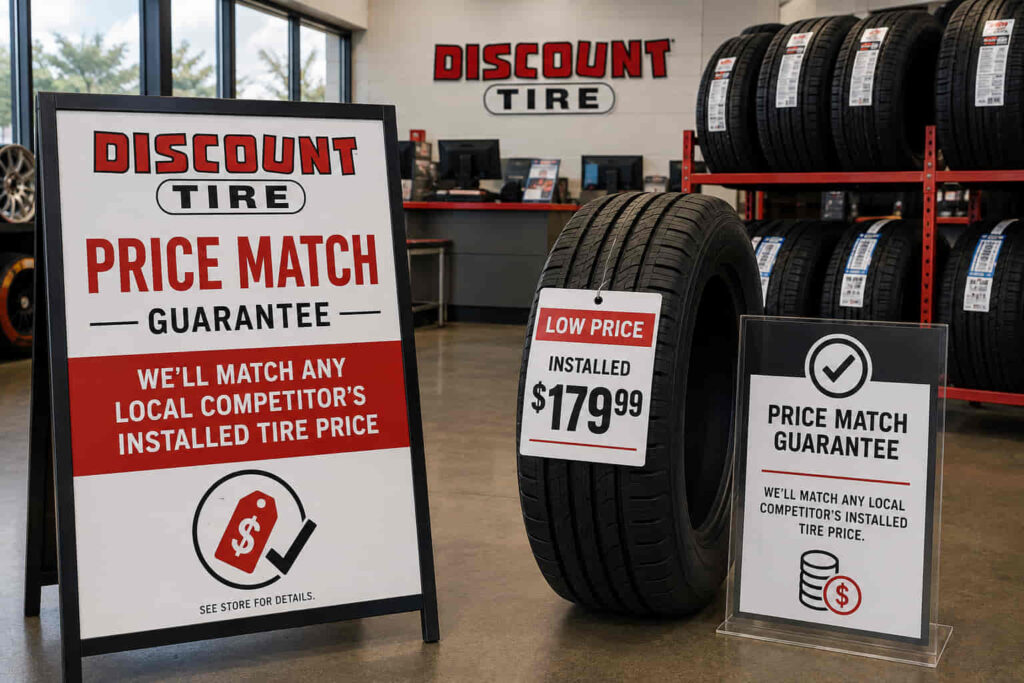
Discount Tire price match policy is an important consideration for customers comparing tire prices because it helps determine whether they can receive competitive pricing when purchasing tires. Before buying a new set of tires, many drivers compare prices from different retailers to find the best combination of product quality, service, warranty, and overall value.
A price match policy allows customers to evaluate competing offers instead of making a purchase decision based only on the first available price. However, comparing tire prices requires more than looking at a single number because tire models, installation costs, warranties, and included services can affect the actual value of the purchase.
Tires are long-term vehicle components that directly influence safety, comfort, and maintenance costs. A lower initial price may not always represent the best deal if the tire has different specifications, fewer support services, or reduced long-term value compared with another option.
Understanding how Discount Tire approaches price comparison helps shoppers make more informed decisions before purchasing tires. This guide explains the key factors related to Discount Tire price matching, how customers should compare offers, what affects tire pricing, and how to determine the best overall value when buying tires.
Does Discount Tire Match Prices From Other Tire Retailers?
Discount Tire price comparison depends on whether the competing offer represents a comparable tire product and a valid market price. When customers compare tire prices, the comparison needs to consider more than just the displayed number because different retailers may offer different tire models, service packages, warranties, or installation options.
A fair price comparison requires matching important product details, including the same tire brand, model, size, and specifications. Two tires may appear similar but provide different performance characteristics, tread warranties, or construction features that affect their actual value.
Tire pricing also changes based on additional services included in the purchase. Installation, balancing, warranties, maintenance support, and service availability can influence the total cost of ownership. A lower advertised price from another retailer may not represent the same overall purchase value if those factors are different.
For example, a customer comparing the same tire model between two retailers should evaluate whether both offers include similar installation services and warranty coverage. Comparing only the tire price without considering the complete package can create an inaccurate view of which option provides the better deal.
Understanding how to compare tire prices helps customers make better purchasing decisions. Price comparison is most effective when the products and services being compared are truly equivalent.
What Requirements Are Needed for a Discount Tire Price Match?
A Discount Tire price comparison requires accurate information about the competing offer because price adjustments depend on verifying that the products and conditions are comparable. Retailers need clear details to determine whether another offer represents a legitimate comparison rather than a different product or service package.
The most important factor is product similarity. A valid comparison should involve the same tire brand, tire model, tire size, and specifications. Differences in these areas can significantly affect performance, durability, and price, making direct comparison unreliable.
The competing price should also represent a current and available offer. Tire prices can change frequently due to promotions, seasonal demand, inventory levels, and retailer-specific discounts. A temporary offer or a different purchase condition may not provide the same value as a standard retail price.
Customers should also consider whether the competing offer includes additional costs. A tire listed at a lower price may require separate charges for installation, balancing, disposal fees, or other services that affect the final purchase amount.
For example, a tire package with installation and warranty support may provide better overall value than a lower tire-only price from another seller. Evaluating the complete purchase helps ensure that price comparisons reflect the real cost and benefits of the transaction.
A clear understanding of comparison requirements allows shoppers to approach tire purchases with realistic expectations and focus on long-term value rather than only the lowest advertised price.
Read more: Does Costco Repair Tires
How Can You Compare Tire Prices Before Buying?
Comparing tire prices before buying requires evaluating the complete purchase value instead of looking only at the advertised tire price. The actual cost of a tire purchase includes factors such as tire specifications, installation services, warranty coverage, maintenance support, and expected lifespan.
The first step in comparing prices is identifying the exact tire model that fits the vehicle. Tire size, speed rating, load rating, tread design, and performance category all affect pricing. Two tires from different brands or product lines may have similar prices but deliver different levels of durability, traction, and driving comfort.
Installation-related costs should also be considered because the final purchase amount often includes more than the tire itself. Services such as mounting, balancing, disposal fees, and warranty options can change the total value of an offer. A tire with a slightly higher upfront cost may provide better long-term value if it includes stronger support and longer usable life.
For example, a driver comparing an all-season tire from Discount Tire with another retailer should evaluate whether both products have the same tread warranty, installation services, and performance characteristics. A simple price comparison without checking these details may lead to choosing an option that is not actually more affordable.
A complete comparison allows customers to understand the true cost of ownership. The best tire purchase is not always the one with the lowest initial price, but the one that provides the right balance between cost, performance, durability, and service support.
Does a Lower Tire Price Always Mean Better Value?
A lower tire price does not always mean better value because the total benefit of a tire depends on performance, durability, warranty coverage, and ownership costs over time. Price is only one factor in a tire purchase decision, and focusing only on the cheapest option can overlook important differences in quality and support.
Tire lifespan is one of the biggest factors affecting long-term value. A tire with a higher purchase price may provide longer tread life, better traction, or stronger performance in specific driving conditions. Over several years of ownership, these advantages can reduce the frequency of replacement and lower the overall cost per mile.
Warranty coverage and service support also influence the value of a tire purchase. A retailer that provides installation assistance, maintenance services, or customer support can add benefits that are not reflected in the initial price tag.
For example, two tires may have a similar purchase price, but one may include a longer tread warranty and stronger performance characteristics. If that tire lasts significantly longer or performs better in challenging conditions, the higher initial cost may provide better value.
The goal of price comparison should be finding the most suitable tire for the vehicle and driving needs. A smart purchase decision considers both immediate savings and long-term ownership benefits.
How Does Discount Tire Pricing Compare With Other Tire Sellers?
Discount Tire pricing should be evaluated by comparing the complete tire purchase experience rather than focusing only on the lowest advertised price from another seller. Different tire retailers may have different pricing structures, product selections, service packages, and customer support options that affect the overall value received.
Online tire retailers, warehouse clubs, and local tire shops may offer competitive prices, but each option can include different advantages. Some sellers may focus on lower upfront pricing, while others provide additional services such as installation support, maintenance options, warranty programs, or easier access to local service locations.
The tire itself is also an important part of the comparison. Different retailers may carry different product selections, even when they sell similar categories of tires. Factors such as tire brand availability, performance ratings, tread warranty, and driving suitability can influence whether a purchase provides good long-term value.
For example, a customer comparing Discount Tire with another tire retailer may find a lower advertised price elsewhere, but the final decision should consider whether both offers include the same tire model, installation costs, warranty protection, and service benefits.
A strong tire purchase decision requires evaluating the complete ownership experience. Price is an important factor, but the best value comes from finding the right combination of cost, tire performance, service quality, and long-term reliability.
What Are the Best Ways to Save Money at Discount Tire?
The best way to save money at Discount Tire is to evaluate tire value carefully, compare available options, and choose products that match the vehicle’s actual driving requirements. Saving money on tires does not always mean selecting the cheapest available option because poor tire selection can increase replacement costs and reduce long-term value.
Choosing the correct tire type is one of the most effective ways to control costs. Drivers who select tires based on their climate, driving habits, and vehicle usage are more likely to receive better performance and longer service life. Buying a tire designed for conditions that do not match actual use may result in unnecessary spending.
Comparing prices before purchasing can also help customers understand available options. Reviewing similar tire models, checking warranty differences, and evaluating service benefits provide a clearer picture of the total purchase value.
Proper tire maintenance is another important way to reduce long-term expenses. Maintaining correct tire pressure, rotating tires regularly, and addressing alignment issues can extend tread life and delay replacement costs.
For example, a driver who chooses a durable all-season tire for regular commuting and maintains it properly may spend less over time than a driver who repeatedly replaces cheaper tires that wear faster.
The most effective savings strategy combines smart purchasing decisions with proper maintenance. A tire that provides reliable performance and lasts longer often delivers greater financial value than the lowest-priced option.
Should You Use Discount Tire Price Match Before Buying Tires?
Using Discount Tire price comparison before buying tires can help customers make more informed decisions, but the best purchase choice should be based on overall value rather than price alone. Comparing prices is useful because it allows drivers to understand whether they are receiving competitive pricing and whether another offer provides a better financial option.
However, tire value depends on multiple factors beyond the initial purchase amount. Tire quality, tread life, warranty coverage, installation services, and long-term maintenance costs all influence the actual value of a tire investment. A lower price may appear attractive at first, but a tire that wears faster or provides fewer benefits may create higher costs over time.
A careful comparison should focus on matching equivalent products and evaluating the complete purchase package. The same tire model, specifications, services, and warranty conditions should be considered before deciding which offer provides the better value.
Discount Tire price comparison can be a useful tool for shoppers who want to control costs while still choosing reliable tires. It helps customers approach tire purchases with more information and confidence instead of relying only on the first available price.
Ultimately, the best tire purchase decision balances affordability, performance, durability, and service support. Price matters, but choosing the right tire at the right overall value creates greater long-term benefits.