Ford F-150 wheel bearing replacement involves removing the worn bearing or wheel hub assembly, installing a compatible replacement, and securing the components to the manufacturer’s specifications. The exact procedure depends on the truck’s model year, drivetrain configuration (2WD or 4WD), and whether the damaged bearing is located at the front or rear wheel.
A failing Ford F-150 wheel bearing commonly produces humming, grinding, or growling noises that increase with vehicle speed. Other warning signs include wheel vibration, excessive wheel play, and uneven tire wear. Because similar symptoms can result from tire damage or suspension problems, confirming the bearing failure before replacing parts helps prevent unnecessary repairs.
Front wheel bearing replacement may involve removing the brake caliper, rotor, axle-related components, and wheel hub assembly. Rear wheel bearing replacement can require additional work involving the axle shaft, differential components, and bearing seals, depending on the axle design. Both procedures require proper lifting equipment, compatible replacement parts, and accurate torque specifications.
This guide explains how to diagnose a faulty Ford F-150 wheel bearing, identify the necessary tools, replace front and rear bearings, and estimate parts and labor costs. It also covers repair time, driving safety, and the differences between 2WD and 4WD configurations.
How Do You Replace a Wheel Bearing on a Ford F-150?
To replace a wheel bearing on a Ford F-150, identify the faulty bearing, safely lift the truck, remove the wheel and necessary brake components, extract the worn bearing or hub assembly, and install the replacement according to Ford’s specifications. The procedure varies by model year, axle design, drivetrain configuration, and bearing location.
The replacement process involves six main steps:
- Identify the faulty wheel bearing. Listen for humming or grinding noises that change with vehicle speed. Inspect the suspected wheel for excessive play, rough rotation, and visible damage. Rule out tire noise, brake problems, and worn suspension components before confirming the diagnosis.
- Lift and secure the Ford F-150. Park on a level surface, secure the wheels remaining on the ground, and loosen the wheel lug nuts before lifting. Raise the truck at an approved lifting point and support it with properly rated jack stands. Remove the wheel only after confirming the vehicle is stable.
- Remove the components blocking bearing access. Front wheel bearing replacement generally requires removing the brake caliper, caliper bracket, and brake rotor. Depending on the drivetrain and model year, additional components such as axle hardware or 4WD hub components may require removal. Rear axle bearing replacement can involve removing the axle shaft and accessing the differential.
- Extract the damaged bearing or hub assembly. Remove the retaining hardware and separate the worn component from its mounting surface. Some Ford F-150 configurations use replaceable hub assemblies, while others require separate bearing removal procedures. Use an appropriate puller or press when specified, and avoid damaging the steering knuckle, axle shaft, or surrounding components.
- Install the replacement bearing. Verify that the new bearing or hub assembly matches the truck’s model year, axle configuration, and original equipment specifications. Clean the mounting surfaces, install the replacement in the correct orientation, and tighten fasteners using the applicable Ford service specifications. Replace single-use fasteners and seals where required.
- Reassemble and inspect the wheel. Reinstall the removed brake and axle components, reconnect any disconnected sensors, and torque the wheel lug nuts correctly. Before driving, restore proper brake pedal operation and check for abnormal wheel movement, unusual noises, or warning lights. Complete a cautious road test after confirming that the repair is safe.
Front and rear wheel bearing replacement procedures are not interchangeable. Front hub assemblies and rear axle bearings differ in mounting design, removal methods, and required tools. Ford F-150 2WD and 4WD configurations can also require different disassembly steps.
A successful replacement depends on identifying the correct bearing design and following the service procedure for the specific truck. Incorrect bearing installation, damaged seals, or improper fastener torque can cause premature bearing failure and compromise wheel safety.
How Can You Tell If a Ford F-150 Wheel Bearing Is Bad?
A bad Ford F-150 wheel bearing typically produces a humming, grinding, or growling noise that becomes more noticeable as vehicle speed increases. Other signs include excessive wheel play, vibration, rough wheel rotation, and, in certain cases, an ABS warning light. These symptoms develop when the bearing’s internal rolling elements or raceways become worn, damaged, or contaminated, preventing the wheel from rotating smoothly.
Humming or growling noise is one of the most recognizable symptoms of a failing Ford F-150 wheel bearing. The sound generally increases in frequency with wheel speed and may change in intensity when the truck turns. For example, a damaged left-side bearing may become louder during a right turn because the vehicle’s weight shifts toward the left wheels. However, sound location alone cannot reliably identify the defective bearing, especially when tire noise or drivetrain components produce similar sounds.
Excessive wheel play indicates possible bearing wear or another loose wheel-end component. To check for movement, securely support the Ford F-150 with jack stands, grasp the tire at the 12 and 6 o’clock positions, and gently rock it inward and outward. Noticeable movement may indicate a worn wheel bearing, but loose ball joints or suspension components can produce similar results. A second inspection at the 3 and 9 o’clock positions helps identify movement associated with steering components. Some damaged bearings produce noise without detectable wheel play, so this test should not be used as the only diagnostic method.
Wheel vibration and rough rotation can indicate advanced bearing damage. Internal bearing wear creates irregular contact between rolling elements and bearing surfaces, which can generate vibration and rotational resistance. When the wheel is safely elevated, rotating it by hand may reveal grinding, binding, or an uneven feel. Brake pad contact can also create resistance, making it necessary to distinguish normal brake drag from mechanical roughness inside the bearing.
An ABS warning light can accompany wheel bearing or hub assembly problems on certain Ford F-150 models. Some wheel hub assemblies incorporate components used by the wheel speed sensing system. Damage to the sensor, encoder ring, wiring, or related components can interrupt wheel speed signals and trigger an ABS fault. However, a failed bearing does not automatically activate the ABS warning light, and an illuminated warning light does not confirm bearing failure. Reading the ABS diagnostic trouble codes helps identify the affected circuit before replacing parts.
A complete Ford F-150 wheel bearing diagnosis combines road noise evaluation, wheel play inspection, rotational checks, and examination of surrounding components. Uneven tire wear, cupped tires, worn ball joints, and brake problems can imitate bearing failure. Confirming the source of the symptoms before replacement reduces unnecessary parts costs and helps ensure the actual mechanical problem is repaired.
What Tools Do You Need to Replace a Ford F-150 Wheel Bearing?
Replacing a Ford F-150 wheel bearing requires basic automotive hand tools, properly rated lifting equipment, a torque wrench, and specialized bearing removal tools for certain axle configurations. The exact equipment depends on the truck’s model year, whether it has 2WD or 4WD, and whether the repair involves a front hub assembly or rear axle bearing.
The essential tools for Ford F-150 wheel bearing replacement include:
- Floor jack and jack stands: Lift and securely support the truck during wheel removal and bearing replacement. Both must have sufficient load ratings for the vehicle and be positioned at approved lifting points.
- Socket and ratchet set: Remove wheel-end fasteners, brake caliper brackets, and hub mounting bolts. Socket sizes vary by model year and component.
- Torque wrench: Tighten hub bolts, axle nuts, brake fasteners, and wheel lug nuts to the manufacturer’s specified torque values. Incorrect torque can damage components or compromise wheel retention.
- Breaker bar: Loosen tightly secured axle nuts and mounting bolts without placing excessive force on a standard ratchet.
- Hub puller or slide hammer: Separate seized hub assemblies from their mounting surfaces when ordinary removal methods are insufficient.
- Bearing puller or hydraulic press: Remove and install press-fit bearings on axle designs that require separate bearing replacement rather than complete hub replacement.
- Brake caliper hanger: Support the removed brake caliper without placing tension on the flexible brake hose.
- Pry bar and cleaning tools: Assist with component removal and clean corrosion or debris from mounting surfaces without damaging critical parts.
Replacement parts must match the Ford F-150’s specific axle and drivetrain configuration. Depending on the design, the repair may require a complete wheel hub assembly, a separate wheel bearing, an axle seal, retaining hardware, or replacement fasteners. Some 4WD configurations also require specialized tools for axle-related components.
A vehicle-specific Ford service manual is essential for identifying the correct removal sequence, special tools, and torque specifications. Using incompatible tools or applying incorrect installation force can damage the bearing, axle shaft, steering knuckle, or ABS components. For rear axle repairs involving differential disassembly or press-fit bearings, professional equipment and mechanical experience may be necessary.
How Do You Replace the Front Wheel Bearing on a Ford F-150?
To replace the front wheel bearing on a Ford F-150, remove the wheel and brake components, disconnect or remove the axle-related hardware required for the specific configuration, extract the damaged bearing or hub assembly, and install a compatible replacement. Many F-150 models use a front wheel hub assembly containing an integrated bearing, although the exact design and removal procedure vary by model year and drivetrain.
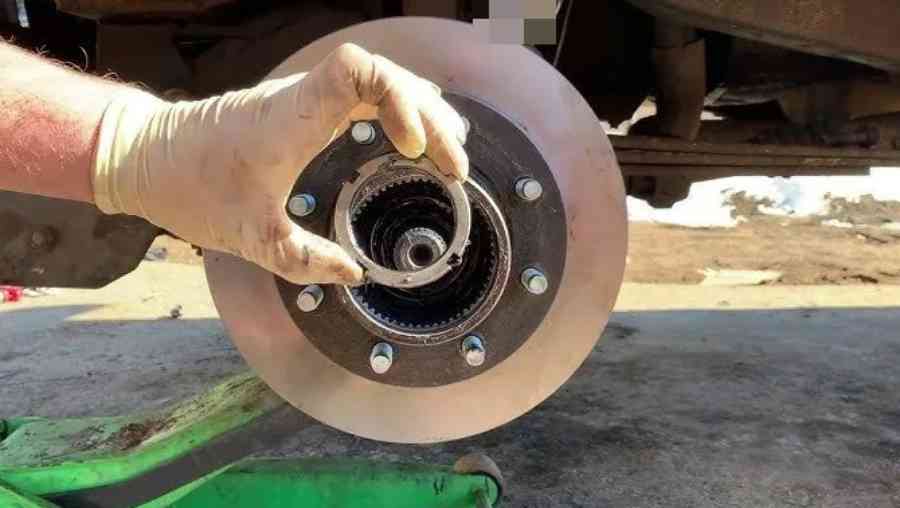
Front wheel bearing replacement requires particular attention to the steering knuckle, axle connections, ABS wheel speed sensor, and hub mounting hardware. On 4WD models, the procedure may also involve disconnecting the front axle shaft or servicing the integrated wheel-end components. Confirm the truck’s model year and axle design before beginning, because incorrect disassembly can damage the hub, axle engagement mechanism, or surrounding components.
How Do You Remove the Front Wheel Hub Assembly?
Removing the front wheel hub assembly on a Ford F-150 involves accessing the hub mounting bolts, separating the assembly from the steering knuckle, and protecting the brake and axle components during removal. The following procedure describes the general sequence used on configurations equipped with a bolt-on front hub assembly.
- Secure and raise the truck. Park the Ford F-150 on level ground, apply the parking brake, and chock the wheels that remain on the ground. Loosen the front wheel lug nuts before lifting the truck. Raise the vehicle using an approved lifting point, position appropriately rated jack stands, and remove the wheel.
- Remove the brake caliper and rotor. Unbolt the brake caliper and its mounting bracket as required. Suspend the caliper using a suitable hanger to prevent strain on the brake hose. Remove the brake rotor to expose the hub assembly and surrounding mounting components.
- Disconnect the necessary axle and sensor components. Identify the wheel speed sensor wiring and any axle-related hardware that obstructs hub removal. On applicable 4WD models, follow the Ford service procedure for disconnecting the axle shaft and integrated wheel-end components. Avoid pulling on ABS wiring or forcing axle components out of engagement.
- Remove the hub mounting bolts. Locate the bolts securing the wheel hub assembly to the steering knuckle. Remove them using the appropriate socket and breaker bar. Corrosion may make the bolts or hub difficult to remove, particularly on trucks exposed to road salt and moisture.
- Separate the hub assembly from the steering knuckle. Use an approved hub removal tool when the assembly is seized. Apply force only to suitable surfaces and avoid damaging the steering knuckle, axle shaft, or sensor components. Once removed, inspect the mounting surface for corrosion, damage, and remaining debris.
A seized hub assembly should not be removed by uncontrolled hammering against the axle shaft or steering knuckle. Excessive impact can damage the axle threads, surrounding suspension components, or wheel-end engagement mechanisms. A hub puller or other manufacturer-approved removal method provides better control when corrosion prevents separation.
How Do You Install a New Front Wheel Bearing or Hub Assembly?
Installing a new Ford F-150 front wheel bearing requires confirming part compatibility, preparing the mounting surface, positioning the replacement correctly, and tightening the hardware to the specified torque. Proper installation maintains bearing alignment and prevents unnecessary loading on the internal rolling elements.
- Verify the replacement hub assembly. Compare the new component with the removed assembly, including mounting dimensions, bolt patterns, sensor provisions, and axle compatibility. Confirm fitment using the truck’s VIN, model year, and drivetrain specifications.
- Clean and inspect the steering knuckle. Remove corrosion and debris from the hub mounting surface using appropriate cleaning tools. Inspect the mounting holes and surrounding metal for damage. A clean, undamaged mounting surface allows the hub assembly to seat correctly.
- Position the replacement assembly. Align the new hub with the steering knuckle and mounting holes. Install the hub without forcing it into position or applying impact directly to the bearing. Where a separate press-fit bearing is used, follow the specified pressing procedure and support the correct bearing race to prevent internal damage.
- Install and torque the mounting hardware. Start the fasteners by hand to prevent cross-threading. Tighten them in the sequence and to the torque specified for the exact Ford F-150 configuration. Replace fasteners identified as single-use in the service instructions.
- Reconnect the axle and ABS components. Reinstall the axle-related hardware and reconnect the wheel speed sensor components removed during disassembly. On applicable 4WD models, confirm that the wheel-end engagement mechanism has been correctly assembled and that the axle hardware meets the required specifications.
- Reinstall the brake components and wheel. Refit the brake rotor, caliper bracket, and caliper. Tighten all brake fasteners to their specified values. Reinstall the wheel, lower the truck appropriately, and torque the lug nuts using the correct tightening pattern and manufacturer specifications.
Correct torque is essential for front wheel bearing reliability. Excessive or insufficient tightening of axle nuts and mounting fasteners can damage components or compromise wheel-end safety. Ford F-150 torque specifications differ across model years and configurations, so a single universal torque value should not be used.
After installation, inspect the wheel for excessive play and abnormal rotational resistance. Confirm that the brake components are correctly positioned, the brake pedal feels firm, and all disconnected electrical connectors are secured. Check for ABS warning lights and verify proper operation of the 4WD system where applicable.
Complete a cautious road test only after confirming that the vehicle is safe to operate. Listen for abnormal humming or grinding noises, check for unusual vibration, and verify normal braking and steering behavior. Persistent noise or wheel movement requires further diagnosis before the truck returns to regular service.
How Do You Replace the Rear Wheel Bearing on a Ford F-150?
To replace a rear wheel bearing on a Ford F-150, remove the components securing the rear axle shaft, extract the damaged bearing, install a compatible replacement, and reassemble the axle according to Ford’s service specifications. The procedure depends on the truck’s model year and rear axle design. Many F-150 models use a semi-floating rear axle with bearings pressed into the axle housing, while other configurations require different removal and installation methods.
Unlike front wheel bearing replacement, rear bearing service on certain Ford F-150 axles requires opening the differential housing and removing the axle shaft. This exposes internal differential components and requires careful handling of the axle retaining hardware, bearing surfaces, and axle seals. Incorrect installation can cause gear oil leaks, axle damage, or improper wheel support.
How Do You Remove a Ford F-150 Rear Axle Bearing?
Removing a Ford F-150 rear axle bearing requires accessing the bearing inside the axle housing after releasing the axle shaft from its retaining mechanism. On applicable C-clip-style semi-floating axles, the process involves differential disassembly before the axle shaft can be withdrawn.
- Secure and lift the rear of the truck. Park on a level surface, chock the front wheels, and loosen the rear wheel lug nuts. Raise the rear axle using approved lifting points and support the truck with appropriately rated jack stands. Remove the affected rear wheel.
- Remove the rear brake components. Remove the brake caliper, caliper bracket, and brake rotor as required to expose the axle flange. Support the brake caliper without stretching its hose. Release the parking brake and follow the model-specific procedure if parking brake components obstruct rotor removal.
- Access the differential housing. Position a drain pan beneath the rear differential and remove the differential cover where required. Allow the gear oil to drain, then identify the axle retaining mechanism. Inspect the lubricant for metal particles that could indicate additional internal wear.
- Release the axle shaft retaining hardware. On applicable C-clip axles, follow the service procedure for removing the differential pinion shaft retaining hardware and pinion shaft. Push the axle shaft inward to access its retaining clip, then remove the clip using an appropriate tool. Other axle designs use different retention methods and must not be disassembled using this sequence.
- Withdraw the axle shaft. Carefully slide the axle shaft out of the housing while protecting the bearing contact surface and axle seal area. Inspect the shaft for scoring, pitting, grooves, or discoloration where it contacts the bearing. Significant shaft damage may require additional repairs rather than bearing replacement alone.
- Extract the worn bearing and axle seal. Remove the axle seal using an appropriate seal removal tool. Use a compatible internal bearing puller and slide hammer to extract the bearing from the axle housing. Avoid scoring the housing bore or damaging the bearing mounting surface.
Inspecting the axle shaft is essential during rear wheel bearing replacement. On designs where the bearing rollers contact the axle shaft directly, a worn or grooved shaft can damage a new bearing and cause premature failure. Installing a replacement bearing without addressing significant axle shaft wear does not correct the underlying problem.
How Do You Install a New Ford F-150 Rear Axle Bearing?
Installing a new Ford F-150 rear axle bearing requires preparing the axle housing, seating the bearing correctly, replacing the axle seal, and securing the axle shaft using the appropriate retention procedure. Bearing dimensions, installation depth, lubrication requirements, and differential assembly procedures must match the specific rear axle.
- Inspect and clean the axle housing. Remove debris, corrosion, and old seal material from the bearing bore. Check for damage that could prevent the replacement bearing from seating properly. Ensure that cleaning materials and loose particles do not enter the differential.
- Install the replacement rear axle bearing. Position the bearing squarely in the housing bore. Use a suitable bearing driver that applies installation force to the outer race when fitting a bearing into the housing. Drive or press the bearing to the specified depth without transmitting installation force through its rolling elements.
- Replace the axle seal. Install a compatible axle seal using the correct seal driver and orientation. Lubricate the sealing lip as specified in the service instructions. A damaged or incorrectly seated seal can allow differential lubricant to escape and contaminate the rear brake components.
- Reinstall the axle shaft. Carefully guide the axle shaft through the new bearing and seal without damaging their contact surfaces. On applicable C-clip axles, reinstall the retaining clip and differential pinion shaft hardware according to the manufacturer’s procedure. Verify that the axle shaft is correctly retained before closing the differential.
- Reassemble and refill the differential. Clean the differential cover and housing mating surfaces, then install the specified gasket or sealant. Tighten the cover bolts to the correct torque and refill the differential with the lubricant specified for the truck’s axle. Use the required friction modifier where applicable to the differential design.
- Reinstall the brakes and wheel. Refit the brake rotor, caliper bracket, and caliper. Reinstall the wheel and tighten the lug nuts to the vehicle-specific specifications. Confirm that the parking brake and service brakes operate correctly before moving the truck.
Proper bearing seating, axle retention, and differential lubrication determine the reliability of the repair. A misaligned bearing can create abnormal loading, while an improperly installed axle seal can cause lubricant loss. Incorrect axle retaining hardware installation can create a serious wheel-end safety hazard.
After reassembly, inspect the axle housing and differential cover for leaks. Check for abnormal wheel movement, verify brake operation, and perform a cautious road test only after confirming that the axle shaft is securely retained. Recheck the repaired area for lubricant leakage after the test.
Rear wheel bearing replacement is more mechanically involved on axle designs requiring differential disassembly. Owners without the necessary bearing extraction tools, axle service information, or differential repair experience should use a qualified automotive technician to avoid damage to the axle assembly.
How Much Does Ford F-150 Wheel Bearing Replacement Cost?
Ford F-150 wheel bearing replacement typically costs approximately $250–$650 per wheel at a repair shop, including parts and labor. Front wheel hub assembly replacement generally costs $250–$550, while rear wheel bearing replacement can range from $300–$650 or more, depending on the axle design and labor requirements. These are general U.S. repair estimates rather than verified quotes for a specific model year or location.
The total replacement cost depends on three primary factors: the price of the replacement bearing or hub assembly, the labor required to access the damaged component, and the truck’s model year and drivetrain configuration. A front bolt-on hub assembly may require less labor than a rear axle bearing that requires differential disassembly.
The following table shows approximate replacement costs for one wheel:
| Replacement Type | Parts Cost | Labor Cost | Total Estimated Cost |
|---|---|---|---|
| Front wheel hub assembly | $80–$250 | $150–$300 | $230–$550 |
| Rear wheel bearing | $40–$150 | $250–$500 | $290–$650 |
| DIY front hub replacement | $80–$250 | $0 | $80–$250 |
| DIY rear bearing replacement | $40–$150 | $0 | $40–$150 |
These estimates exclude taxes, specialized tool purchases, and additional repairs. Rear axle service may also require axle seals, differential fluid, and replacement retaining hardware.
Replacement parts account for a substantial portion of front wheel bearing repair costs. Aftermarket Ford F-150 hub assemblies vary in price according to manufacturer, bearing quality, ABS compatibility, and drivetrain fitment. OEM replacement components may cost more than aftermarket alternatives, but compatibility and installation requirements are more important than choosing the lowest-priced part.
Labor costs increase when bearing replacement requires additional axle disassembly. Front hub replacement commonly involves removing brake components and hub mounting hardware. Rear bearing replacement on certain axle configurations requires removing the axle shaft, opening the differential, and replacing the axle seal. Corroded mounting bolts, seized hub assemblies, and damaged axle shafts can further increase repair time and cost.
DIY wheel bearing replacement eliminates professional labor charges but introduces equipment and installation requirements. A Ford F-150 owner with appropriate mechanical experience may save approximately $150–$500 in labor, depending on the repair. However, purchasing a torque wrench, bearing puller, hydraulic press, or other specialized tools can reduce those savings.
Professional replacement is generally the better option when the repair involves differential disassembly, damaged axle components, or unfamiliar 4WD hub mechanisms. Before authorizing repairs, request an itemized estimate identifying the replacement parts, labor hours, and any additional components that require service.
How Long Does It Take to Replace a Ford F-150 Wheel Bearing?
Ford F-150 wheel bearing replacement generally takes 1–3 hours per front wheel and 2–4 hours per rear wheel for a professional mechanic. DIY replacement can take 3–6 hours or longer, depending on mechanical experience, available tools, and the truck’s axle configuration. These are approximate working times rather than model-specific labor estimates.
Front wheel bearing replacement is generally faster on Ford F-150 models equipped with bolt-on hub assemblies. The mechanic removes the wheel and brake components, disconnects the necessary axle hardware, replaces the hub assembly, and reassembles the wheel-end components. Corroded mounting bolts or a seized hub can extend the repair because additional extraction work is required.
Rear wheel bearing replacement takes longer on axle designs that require differential disassembly. Removing the differential cover, releasing the axle shaft, extracting the bearing, installing a new seal, and refilling the differential add several operations. For example, a rear axle bearing replacement involving a C-clip axle requires additional work compared with replacing an accessible front bolt-on hub assembly.
Four factors determine the actual repair time: model year, drivetrain configuration, bearing location, and component condition. Certain 4WD front wheel assemblies require additional axle or wheel-end engagement procedures. Rust, damaged fasteners, worn axle shafts, and unavailable replacement parts can also delay completion.
A professional repair shop can provide a more accurate labor estimate after identifying the Ford F-150’s model year, axle type, and affected wheel. DIY owners should allow additional time for inspection, correct torque application, and post-repair safety checks rather than rushing the installation.
Can You Drive a Ford F-150 With a Bad Wheel Bearing?
Driving a Ford F-150 with a bad wheel bearing is unsafe because bearing damage can compromise wheel stability, steering control, and braking performance. A worn bearing may initially produce only a humming noise, but continued operation can accelerate internal damage and increase the risk of serious wheel-end failure. The safest approach is to have the bearing inspected promptly and avoid unnecessary driving until its condition is confirmed.
A failing wheel bearing develops excessive friction and irregular movement as its rolling elements and raceways deteriorate. This damage can generate heat, increase wheel play, and place additional stress on surrounding components. In severe cases, bearing failure can lead to wheel binding, loss of proper wheel support, or separation of wheel-end components, depending on the axle design and extent of damage.
Four warning signs indicate that a Ford F-150 should not be driven until it has been professionally inspected:
- Loud grinding or metal-on-metal noises: These sounds may indicate advanced bearing deterioration or damage to nearby brake and wheel-end components.
- Noticeable wheel wobble or excessive play: Significant movement can indicate that the bearing or another critical suspension component is no longer maintaining proper wheel alignment.
- Severe vibration or unstable steering: Abnormal wheel movement can affect vehicle control, particularly during turns, braking, or highway driving.
- Excessive wheel-end heat or visible damage: Unusual heat, smoke, or lubricant leakage near the affected wheel can indicate serious mechanical problems requiring immediate attention.
There is no reliable mileage limit for driving with a damaged Ford F-150 wheel bearing. The rate of deterioration depends on bearing condition, vehicle load, road conditions, and operating speed. A bearing producing mild noise may already have significant internal damage, while a bearing with noticeable wheel play may be approaching a more serious failure.
Stop driving in a safe location and arrange towing if the truck develops severe grinding, wheel wobble, unstable handling, or signs of overheating. A qualified mechanic should inspect the wheel bearing and related components before the vehicle returns to service. Replacing a confirmed faulty bearing promptly helps prevent additional damage to the wheel hub, axle, brakes, and suspension components.
How Long Do Ford F-150 Wheel Bearings Last?
Ford F-150 wheel bearings can last 100,000 miles or longer under favorable driving conditions, although there is no fixed replacement interval that applies to every truck. Bearing lifespan depends on road conditions, vehicle loading, exposure to contaminants, installation quality, and the design of the wheel hub or axle assembly. Some bearings remain functional well beyond 150,000 miles, while others fail earlier due to damage or excessive wear.
Driving conditions significantly influence Ford F-150 wheel bearing longevity. Repeated impacts from potholes, rough roads, and off-road obstacles transmit high loads through the wheel hub and bearing surfaces. These forces can damage the internal raceways and rolling elements, eventually producing vibration, rough rotation, or abnormal noise. Trucks regularly operated on uneven terrain face different bearing stresses than vehicles primarily driven on paved highways.
Water contamination and excessive loading are additional causes of premature bearing wear. Damaged seals can allow moisture and abrasive particles to enter the bearing, degrading lubrication and accelerating corrosion. Frequent heavy hauling or towing also increases loads on wheel-end components, particularly when the truck operates near its rated capacity. Properly maintained bearings are designed to handle the vehicle’s specified loads, but overloading increases the risk of mechanical damage.
Ford F-150 wheel bearings should be inspected when symptoms appear rather than replaced solely because the truck reaches a particular mileage. Humming noises, grinding, excessive wheel play, or abnormal vibration warrant further diagnosis. Regular wheel-end inspections during brake and suspension maintenance help identify damaged seals, loose components, and developing bearing problems before they result in more extensive repairs.
Read more: Subaru Catalytic Converter Replacement: Cost & Guide
What Causes Ford F-150 Wheel Bearings to Fail?
Ford F-150 wheel bearings fail primarily because of lubrication breakdown, water contamination, excessive loading, road impacts, and improper installation. These conditions damage the bearing’s rolling elements, raceways, or seals, increasing friction and accelerating wear. Although wheel bearings are designed to withstand normal driving loads, repeated mechanical stress and environmental exposure can shorten their service life.
Lubrication breakdown is a major cause of wheel bearing failure. Bearings rely on lubricant to reduce friction between their internal rolling elements and raceways. When grease deteriorates, becomes contaminated, or escapes through damaged seals, metal surfaces experience increased contact and heat. This accelerates surface fatigue, producing pitting, rough rotation, and eventually humming or grinding noises. Sealed front hub bearings are generally not designed for routine regreasing, so internal lubrication failure typically requires assembly replacement.
Water and dirt contamination accelerate bearing corrosion and abrasive wear. Moisture can enter through deteriorated seals, while sand, mud, and road debris introduce particles that damage precision bearing surfaces. Ford F-150 trucks used for off-road driving, water crossings, or operation on heavily salted roads face greater exposure to these contaminants. Once water compromises the lubricant, corrosion and surface damage can continue even after the bearing dries.
Excessive loads and repeated road impacts increase stress on wheel bearing components. Driving over deep potholes, striking curbs, or operating the truck beyond its rated load capacity can subject bearings to forces that exceed normal operating conditions. These loads can create microscopic indentations in the raceways or accelerate rolling-contact fatigue. For example, a heavily loaded F-150 repeatedly driven on rough construction roads places greater stress on its wheel-end components than the same truck operating within its load limits on smooth pavement.
Improper installation can cause premature failure even when the replacement bearing is new. Incorrect axle nut torque, uneven mounting surfaces, excessive pressing force, or damaged seals can interfere with proper bearing operation. Press-fit bearings are particularly vulnerable when installation force passes through the rolling elements instead of the appropriate bearing race. Using incompatible hub assemblies or reusing fasteners that Ford specifies as single-use can also compromise repair reliability.
Preventing premature Ford F-150 wheel bearing failure requires maintaining proper tire and wheel condition, respecting vehicle load ratings, avoiding unnecessary impacts, and inspecting wheel-end seals during maintenance. When replacing a failed bearing, the technician should also identify the original cause of damage. Correcting contamination, axle shaft wear, or installation problems helps prevent the replacement bearing from developing the same failure.
Do Ford F-150 2WD and 4WD Trucks Use the Same Wheel Bearings?
Ford F-150 2WD and 4WD trucks do not always use the same wheel bearings or front wheel hub assemblies. Bearing compatibility depends on the model year, drivetrain configuration, axle design, and original equipment specifications. Although some configurations share similar bearing designs, differences in axle connections, hub construction, and wheel-end components can make replacement parts incompatible.
Front wheel bearing assemblies have the most significant drivetrain-related differences. On many 2WD Ford F-150 models, the front wheels are not driven by axle shafts, allowing the wheel hub to operate without a front drive axle connection. Depending on the model year, the front wheel assembly may use serviceable bearings or an integrated hub-and-bearing unit. In contrast, 4WD models transmit engine torque through front axle shafts and require wheel-end components designed to accommodate the drivetrain.
Certain Ford F-150 4WD models also use an Integrated Wheel End (IWE) system that engages or disengages the front axle connection. This system includes components that interact with the wheel hub and axle assembly. During wheel bearing replacement, incorrect removal or reassembly of IWE-related components can cause engagement problems, grinding noises, or damage to the wheel-end mechanism. The exact service procedure must match the truck’s model year and 4WD system.
Rear wheel bearing compatibility depends primarily on axle specifications rather than the 2WD or 4WD designation alone. Some Ford F-150 configurations use similar rear axle bearing arrangements across both drivetrains, while others differ in axle housing dimensions, shaft specifications, bearing sizes, and retaining mechanisms. Trucks equipped with different rear axle assemblies may require different replacement bearings even when they share the same model year.
The most reliable way to identify a compatible Ford F-150 wheel bearing is to verify the replacement part using the vehicle identification number (VIN). The VIN helps parts suppliers identify the truck’s original configuration, but axle identification and the applicable Ford parts catalog may still be necessary when multiple axle options exist. Confirm the bearing’s dimensions, mounting arrangement, ABS compatibility, and axle specifications before purchasing.
Installing the wrong wheel bearing or hub assembly can prevent proper mounting, interfere with axle engagement, or compromise wheel-end operation. Matching the replacement component to the exact Ford F-150 configuration ensures the bearing fits correctly and supports the intended drivetrain and suspension loads.