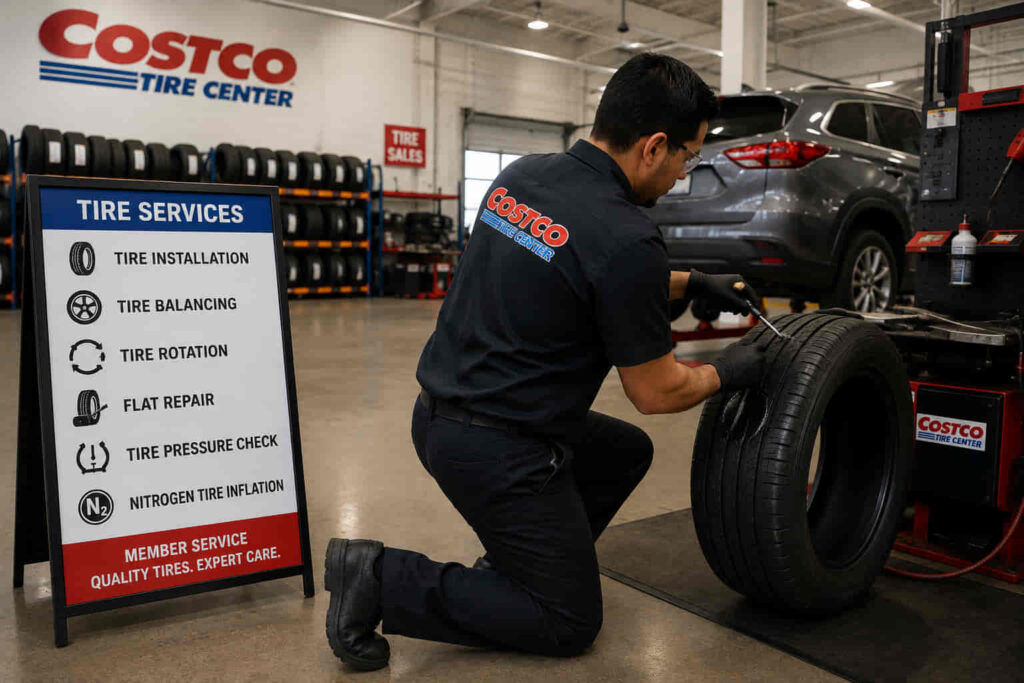
Costco Tire Center provides tire services, but whether a damaged tire can be repaired depends on the type of damage, tire condition, and whether the repair meets safety requirements. A flat tire does not always mean the tire must be replaced because some punctures can be repaired when the damage is limited and the tire structure remains intact.
Tire repair begins with an inspection to identify the source of air loss and evaluate the overall condition of the tire. The location of the puncture, the size of the damage, tread condition, and previous repairs all influence whether a tire is suitable for repair.
A small puncture in the main tread area may be handled differently from damage affecting the sidewall or internal structure. While a proper repair can restore the tire’s ability to hold air, it cannot restore a tire that has suffered serious structural damage.
Understanding how Costco evaluates damaged tires helps drivers make better decisions when dealing with a flat tire. Instead of focusing only on whether a tire can be fixed, the repair decision should consider safety, tire condition, and long-term reliability.
This guide explains how Costco tire repair service works, what types of damage may be repairable, when replacement becomes necessary, and what drivers should know before visiting Costco Tire Center.
What Happens During a Costco Tire Repair Inspection?
A Costco tire repair inspection begins by identifying the cause of the tire problem and evaluating whether the tire can be safely repaired. The purpose of the inspection is not only to stop air loss but also to determine whether the tire still has enough structural strength for continued use.
The first step is finding the source of the issue, such as a puncture, leak, or damage affecting air pressure. Technicians need to examine the damaged area because the location of the problem directly affects repair eligibility. A puncture in the tread area is evaluated differently from damage near the shoulder or sidewall.
The overall condition of the tire is also an important part of the inspection. Factors such as tread depth, previous repairs, uneven wear, and signs of internal damage help determine whether repairing the tire is a reliable solution. A tire with adequate tread and limited damage may remain safe after repair, while a worn or structurally damaged tire may require replacement.
For example, a tire that loses air after running over a nail may only need evaluation for a possible puncture repair. However, a tire that was driven for an extended distance while flat may have internal damage caused by heat and friction, making repair unsafe.
The inspection process allows Costco Tire Center to determine the most appropriate solution based on safety rather than simply restoring air pressure. A repair is only valuable when the tire can continue operating reliably after the service.
What Types of Tire Damage Can Costco Repair?
Costco can repair certain types of tire damage when the puncture is located in a repairable area and the tire structure has not been compromised. The most common repairable damage involves small punctures caused by objects such as nails or screws that penetrate the tread area.
The tread area is generally the most suitable location for repair because it contains the strongest part of the tire structure. When a puncture is small and does not affect the internal components, a professional repair can restore the tire’s ability to maintain air pressure.
The size and condition of the puncture are also important factors. A small, clean puncture may be repairable, while a large hole, irregular cut, or damage caused by impact may require a different solution. The tire must be evaluated as a complete system rather than judging only the visible hole.
For example, a tire with a small nail puncture in the center of the tread may have a good chance of being repaired, while a tire with damage extending toward the sidewall may not meet safety requirements for repair.
Proper tire repair focuses on maintaining structural safety and long-term performance. A successful repair should allow the tire to continue functioning under normal driving conditions without creating additional risks.
Read more: Does Discount Tire Rotate Tires for Free
What Tire Damage Cannot Be Repaired?
Some tire damage cannot be repaired because it affects the structural integrity of the tire and creates safety risks that a patch or plug cannot resolve. A tire repair can seal a puncture and restore air retention, but it cannot rebuild damaged internal components or restore strength lost from severe damage.
Sidewall damage is one of the most common reasons a tire cannot be repaired. The sidewall flexes continuously during driving and supports a significant amount of the vehicle’s weight. A puncture, cut, or bulge in this area may indicate internal damage that cannot be safely corrected through a standard repair.
Large punctures and irregular damage may also require tire replacement. A hole that exceeds safe repair limits or damage caused by impacts, such as hitting a sharp object or road hazard at high speed, can compromise the tire structure beyond repair.
Driving on a flat tire can create additional internal damage even if the original puncture appears small. When a tire operates without enough air pressure, the sidewalls can overheat and become weakened. For example, a driver who continues driving several miles after a tire loses air may damage the internal layers, making replacement necessary.
Severe tread wear, cracking, and previous unsuccessful repairs are additional factors that may prevent a tire from being safely repaired. In these situations, replacing the tire provides better reliability than attempting another repair.
Understanding these limitations helps drivers recognize that tire repair is not always the best solution. The safest decision depends on whether the tire can maintain its structural performance after service.
Does Costco Repair Tires You Did Not Buy There?
Whether Costco repairs tires that were not purchased there depends on the specific service situation, tire condition, and current Costco Tire Center policies. Tire repair decisions are generally based on whether the tire can be safely serviced rather than only where the tire was originally purchased.
When a customer brings in a damaged tire, the inspection process determines whether the tire is suitable for repair. Technicians evaluate factors such as puncture location, tire condition, tread depth, and previous damage before recommending a solution.
Customers should understand that tire service policies can vary depending on membership status, store procedures, available services, and the condition of the tire. A tire that meets repair requirements may receive a different recommendation compared with a tire that has structural damage or safety concerns.
For example, a customer with a tire that has a small tread puncture may have a repair option available, while another customer with a worn tire or sidewall damage may need replacement regardless of where the tire was purchased.
Checking with the local Costco Tire Center before visiting can help confirm available services and expectations. However, the final decision should always be based on whether the tire can safely return to normal operation after inspection.
What Is the Difference Between Tire Repair and Tire Replacement?
The difference between tire repair and tire replacement is that repair restores a tire with limited damage, while replacement is required when the tire can no longer maintain safe structural performance. A repair is designed to address specific problems such as a small puncture, but it cannot correct damage that affects the fundamental strength of the tire.
A repairable tire usually has damage that is limited to an acceptable area, such as a small puncture in the tread section. When the internal structure remains intact, a professional repair can restore air retention and allow the tire to continue operating under normal conditions.
Tire replacement becomes necessary when the damage creates a safety concern. Conditions such as sidewall punctures, large cuts, severe tread wear, internal damage, or repeated repairs can reduce the tire’s ability to handle normal driving forces. In these cases, installing a new tire provides a safer and more reliable solution.
The age and overall condition of the tire also influence the decision. A newer tire with a minor puncture may be worth repairing, while an older tire with worn tread and previous damage may not provide enough remaining service life to justify repair.
For example, repairing a small nail puncture on a tire with good tread condition may help extend its usable life. However, replacing a tire with a damaged sidewall prevents the risk of failure caused by weakened internal components.
The goal of tire service is not simply to restore movement but to maintain safe vehicle operation. Choosing between repair and replacement requires evaluating the entire condition of the tire rather than focusing only on the immediate problem.
How Can You Maintain Tires After a Repair?
You can maintain tires after a repair by monitoring air pressure, checking for new damage, and following regular tire maintenance practices. A successful repair restores the tire’s ability to hold air, but continued performance depends on how well the tire is maintained afterward.
Proper tire pressure is one of the most important factors after a repair. Underinflated tires create additional heat and stress because the sidewalls flex more during driving. Overinflated tires can reduce road contact and increase the risk of impact damage. Keeping tires at the manufacturer-recommended pressure helps preserve balanced performance.
Regular inspections also help identify potential problems early. Drivers should monitor pressure changes, inspect tread condition, and pay attention to warning signs such as vibration, unusual noise, or repeated air loss. These symptoms may indicate that the tire requires additional evaluation.
Tire rotation and alignment checks are also important because they help prevent uneven wear. A repaired tire should wear at a similar rate to the other tires on the vehicle to maintain predictable handling and maximize tire lifespan.
For example, a tire that has been professionally repaired and maintained with regular pressure checks and rotations can continue providing reliable service. However, ignoring maintenance after a repair may allow new issues to develop and reduce the remaining life of the tire.
A tire repair is only the beginning of proper tire care. Consistent maintenance ensures that the repaired tire continues to perform safely and efficiently over time.
What Should You Know Before Using Costco Tire Repair Service?
Costco tire repair service can help drivers address certain tire problems, but the final solution depends on whether the tire can be repaired safely after inspection. A flat tire does not always require replacement, but a repair is only effective when the damage is limited and the tire structure remains strong enough for continued use.
The most important factor in tire repair is safety. Small tread punctures may be suitable for repair when the tire has proper tread depth and no additional damage, while sidewall problems, severe wear, and structural damage often require replacement. A professional evaluation helps determine whether repairing the tire is a reliable option or whether installing a new tire is the safer decision.
Understanding how Costco Tire Center evaluates damaged tires allows drivers to make better choices when dealing with tire issues. The inspection process considers the location of damage, tire condition, previous repairs, and overall safety before recommending a solution.
Regular maintenance also plays an important role after any tire service. Maintaining correct tire pressure, rotating tires, checking tread condition, and responding quickly to air loss can help extend tire life and prevent more serious problems.
Overall, Costco tire repair service is most valuable when the tire remains a safe repair candidate. The right decision should focus on long-term reliability and driving safety rather than only the immediate cost of repair.