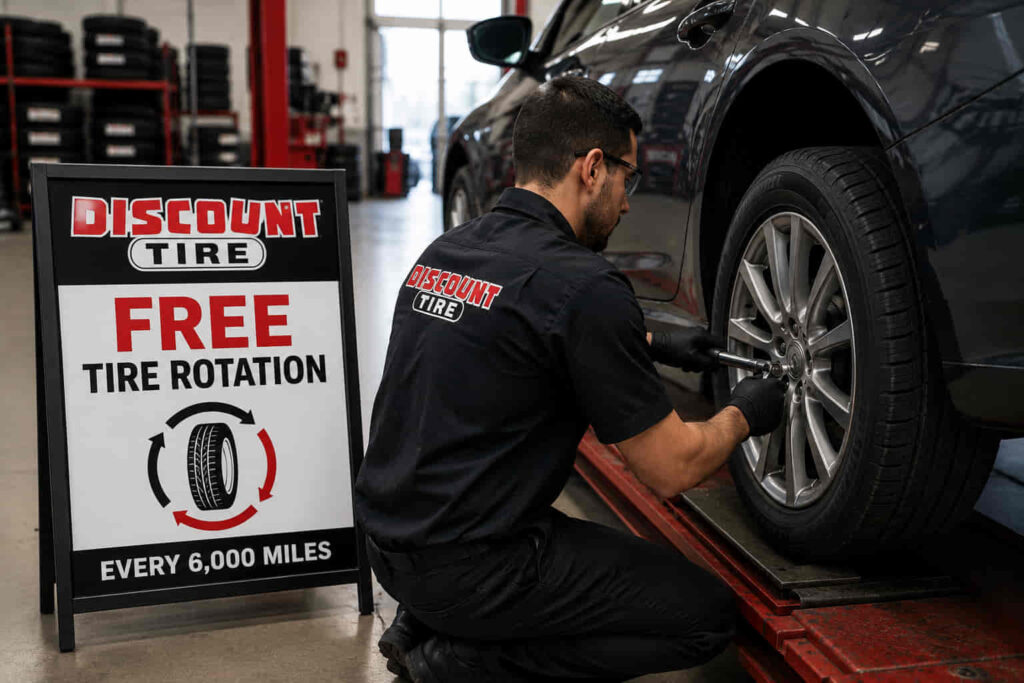
Discount Tire provides tire maintenance services that may include tire rotations, but whether the service is free depends on the service situation, customer eligibility, and current store policies. Tire rotation is a preventive maintenance procedure designed to distribute tread wear more evenly across all four tires, helping improve tire lifespan, traction, and overall driving performance.
Many drivers consider tire rotation a simple service, but it plays an important role in maintaining tire health. The front and rear tires experience different forces during acceleration, braking, and steering, which causes uneven wear patterns over time. Regular rotation helps balance these differences by changing the position of each tire on the vehicle.
Before performing a tire rotation, a service center may inspect the tires to identify uneven wear, incorrect inflation, damage, or other conditions that could affect tire performance. This inspection helps determine whether rotation is appropriate and whether additional maintenance may be needed.
Understanding how Discount Tire handles tire rotation services helps drivers know what to expect before visiting a store. This guide explains the availability of free tire rotations, how the service works, why rotation matters, and how regular maintenance can help extend tire life.
What Happens During a Discount Tire Rotation Service?
A Discount Tire rotation service involves changing the position of the tires on the vehicle to promote more even tread wear and maintain balanced performance over time. Tires do not wear at the same rate because each wheel position experiences different forces during driving, including steering input, braking force, acceleration, and vehicle weight distribution.
During a tire rotation, technicians evaluate the current condition of the tires and determine the appropriate rotation pattern based on the vehicle type and tire design. The goal is to move tires between positions so that areas experiencing higher stress do not continue wearing faster than the rest of the set.
A proper tire rotation service often includes checking tire condition, inspecting tread wear patterns, and verifying tire pressure. These additional checks are important because uneven wear can indicate other problems, such as incorrect inflation, alignment issues, or suspension-related concerns.
For example, vehicles with front-wheel drive often experience faster wear on the front tires because those tires handle steering, braking, and power delivery. Rotating the tires helps distribute this workload more evenly across the entire set, allowing the tires to maintain better performance for a longer period.
Tire rotation is not a repair service that fixes damaged tires, but a preventive maintenance process that helps protect the investment in a tire set. Regular rotations allow drivers to identify wear problems earlier and maintain more consistent handling characteristics.
Why Is Tire Rotation Important for Tire Life?
Tire rotation is important for tire life because it reduces uneven tread wear and helps each tire wear at a more consistent rate throughout its service life. Without regular rotation, certain tires may experience significantly more stress than others, causing premature replacement of individual tires instead of maximizing the lifespan of the complete set.
The front and rear tires perform different tasks during normal driving. Front tires often handle steering forces and a greater percentage of braking forces, while rear tires may experience different loading patterns depending on the vehicle design. Because of these differences, one axle can develop faster tread wear than another.
Uneven tire wear can affect more than just lifespan. It can reduce traction, create additional road noise, and change the way the vehicle responds during cornering or braking. Maintaining balanced tread wear helps preserve predictable handling and improves overall driving stability.
For example, a front-wheel-drive vehicle may show faster wear on the front tires because they provide both steering control and engine power. Regular rotation allows the rear tires to share some of this workload, helping the entire set reach a more similar wear level.
Tire rotation is one of the simplest maintenance actions that can extend tire usability. Combined with proper inflation and alignment checks, regular rotation helps drivers get more value from their tires while maintaining safer driving performance.
Read more: Is Nitrogen in Tires Worth It
How Often Should You Rotate Tires?
Tires should generally be rotated at regular intervals to maintain even tread wear, but the ideal rotation schedule depends on the vehicle type, tire design, driving habits, and manufacturer recommendations. Regular tire rotation helps prevent one set of tires from wearing faster than the others and allows drivers to maximize the usable life of the complete tire set.
Many vehicles benefit from tire rotation approximately every several thousand miles, but the exact interval varies depending on the vehicle manufacturer’s maintenance schedule and tire specifications. Drivers who frequently carry heavy loads, drive in stop-and-go traffic, or operate vehicles in demanding conditions may need to monitor tire wear more closely.
Driving conditions directly affect how quickly tires develop uneven wear patterns. Highway driving, city driving, aggressive acceleration, frequent braking, and road surface quality all influence how much stress each tire position experiences. A vehicle used primarily for short urban trips may develop different wear patterns compared with a vehicle used for long-distance highway travel.
Regular inspections are also important because visible wear patterns can indicate when rotation is needed sooner. Uneven tread depth between tires, increased road noise, vibration, or changes in handling may suggest that the tires are not wearing evenly.
Following a consistent rotation schedule helps maintain tire performance and reduces the chance of replacing tires prematurely. Tire rotation works best as part of a complete maintenance routine that includes proper inflation, alignment checks, and regular tire inspections.
Does Discount Tire Rotate Tires You Did Not Buy There?
Whether Discount Tire rotates tires that were not purchased there depends on the specific service situation and current store policies, but tire rotation availability is generally determined by service eligibility and tire condition rather than only the original purchase location. A tire service provider must evaluate whether the tires are suitable for rotation and whether the service can be performed safely.
When customers request a tire rotation, the condition of the tires remains an important factor. Technicians may inspect tread wear, tire pressure, damage, and other conditions before completing the service. This ensures that moving the tires between positions will support better performance rather than simply changing their location.
Customers should understand that service policies can vary between locations and situations. Factors such as existing customer relationships, previous tire purchases, warranty coverage, and store procedures may affect how services are handled.
For example, a vehicle with properly maintained tires and normal tread wear may be suitable for a routine rotation, while a vehicle showing severe uneven wear or damaged tires may require additional inspection before any maintenance procedure is performed.
Checking with the local Discount Tire location before visiting can help confirm service availability and expectations. Regardless of where tires were purchased, proper tire maintenance remains important for maximizing tire life and maintaining safe vehicle performance.
What Is the Difference Between Tire Rotation and Tire Alignment?
Tire rotation and tire alignment are different maintenance services because rotation changes the position of the tires, while alignment adjusts the angles of the wheels to ensure proper contact with the road. Both services affect tire wear and vehicle performance, but they solve different problems within the tire and suspension system.
Tire rotation focuses on balancing wear between tire positions. Since front and rear tires experience different forces during driving, moving them to different positions helps distribute tread wear more evenly. Rotation does not change the direction the wheels point or correct suspension-related issues.
Wheel alignment focuses on correcting the relationship between the tires and the vehicle’s suspension system. Incorrect alignment can cause tires to point in the wrong direction, creating uneven wear on the inside or outside edges of the tread. Alignment problems may develop after hitting potholes, curbs, or experiencing suspension component changes.
Tire balancing is another related service that addresses a different issue. Balancing corrects weight distribution around the wheel and helps prevent vibrations at certain speeds. A vehicle may require balancing when new tires are installed or when vibration problems appear.
For example, a vehicle with evenly worn tires but steering vibration may need balancing, while a vehicle with rapid edge wear may need alignment. A vehicle with normal wear patterns may only require regular rotation to maintain tire performance.
Understanding these differences helps drivers choose the correct maintenance service instead of performing unnecessary repairs. Tire rotation, alignment, and balancing work together to support longer tire life and better driving stability.
What Are the Signs Your Tires Need Rotation?
Your tires may need rotation when you notice uneven tread wear, changes in vehicle handling, increased road noise, or differences in tire wear between the front and rear positions. These signs indicate that certain tires may be carrying more stress than others and are wearing faster than the rest of the tire set.
Uneven tread wear is one of the most common indicators that tires are not wearing properly. One tire may have noticeably less tread depth than another, or specific areas of the tread may appear more worn. Regular rotation helps prevent these differences by redistributing tire positions before excessive wear develops.
Changes in driving feel can also indicate the need for tire rotation. Drivers may notice reduced stability, vibration, or changes in steering response when tire wear becomes uneven. These symptoms occur because tires with different wear levels may no longer provide consistent contact with the road.
Road noise can also increase when tires develop irregular wear patterns. Certain tread areas may wear unevenly and create additional sound during driving, especially at higher speeds.
For example, a front-wheel-drive vehicle that has not received regular rotations may show significantly more wear on the front tires because they handle steering, braking, and acceleration forces. Rotating the tires helps balance this workload across all four tires.
Recognizing these signs early allows drivers to maintain tire performance and avoid premature replacement. Regular tire inspections make it easier to identify rotation needs before uneven wear affects safety and tire lifespan.
Can Regular Tire Rotation Help You Save Money?
Regular tire rotation can help you save money by extending tire lifespan, improving wear consistency, and reducing the risk of replacing tires earlier than necessary. Although tire rotation is a simple maintenance procedure, it plays an important role in protecting the investment made when purchasing a complete set of tires.
Without regular rotation, certain tires may wear faster because they handle more stress during driving. Front tires often experience additional forces from steering, braking, and acceleration, especially on front-wheel-drive vehicles. Over time, uneven wear can reduce tire performance and force drivers to replace tires before the entire set reaches its expected service life.
Tire rotation also helps maintain more consistent traction and handling. Tires with significantly different wear levels may respond differently on the road, which can affect vehicle stability during braking, cornering, and changing road conditions.
For example, rotating tires according to a recommended maintenance schedule allows all four tires to share the workload more evenly. This can help maximize tread life and delay the expense of purchasing replacement tires.
Discount Tire tire rotation services can be a valuable part of regular vehicle maintenance because proper tire care reduces long-term costs and supports safer driving performance. However, rotation works best when combined with correct tire pressure, regular inspections, and proper wheel alignment.
Understanding when and why tires need rotation helps drivers make better maintenance decisions and get the maximum value from their tires.