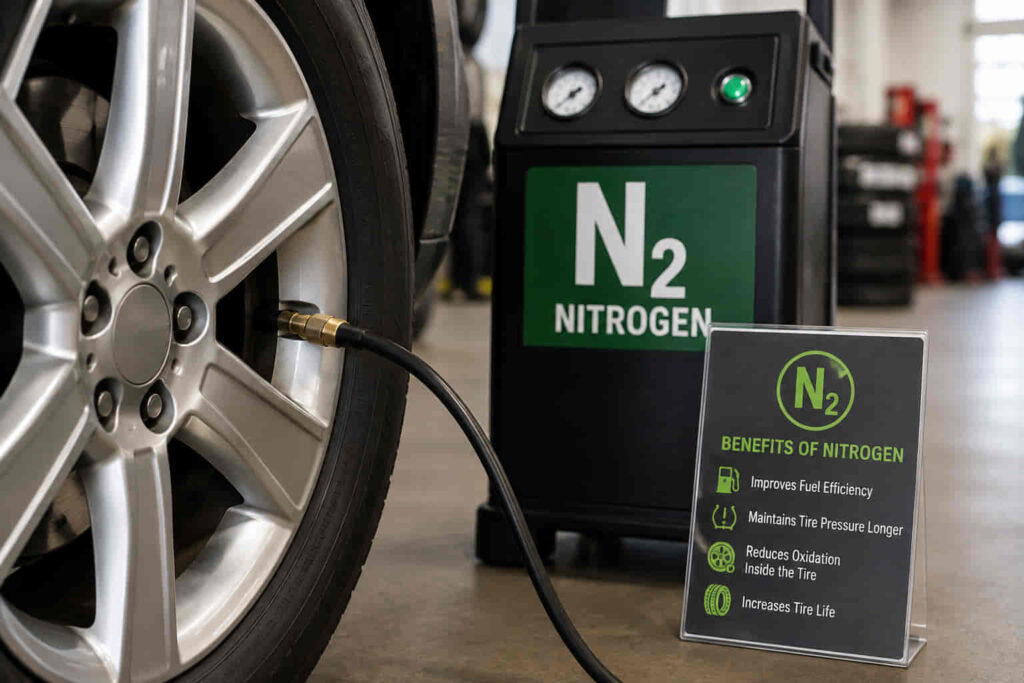
Nitrogen in tires may be worth the cost for drivers who want more consistent tire pressure, reduced moisture inside the tire, and improved pressure stability over time. However, the actual value of nitrogen tire inflation depends on driving conditions, maintenance habits, and whether the benefits justify the additional service cost compared with using regular compressed air.
Nitrogen tire inflation works by replacing most of the air inside a tire with nitrogen gas, which has different physical properties compared with a mixture of gases found in normal air. The main reason drivers consider nitrogen is its ability to maintain more stable tire pressure under changing temperatures and reduce the amount of moisture introduced into the tire.
Proper tire pressure is one of the most important factors affecting tire performance, safety, and lifespan. A tire that consistently operates below the recommended pressure can experience increased heat buildup, uneven tread wear, and higher rolling resistance. Nitrogen does not eliminate the need for maintenance, but it may help some drivers maintain pressure consistency.
While nitrogen has advantages, it is not automatically the best choice for every vehicle owner. Drivers who regularly check tire pressure and maintain their tires properly may see limited differences. This guide explains the main reasons nitrogen tires may be worth the cost and when this service provides real value.
Does Nitrogen Help Tires Maintain Pressure Longer?
Nitrogen can help tires maintain pressure longer because nitrogen molecules are less likely to escape through the tire structure compared with the mixture of gases found in regular compressed air. However, the difference in pressure retention is most noticeable when tires are maintained over long periods and exposed to conditions where temperature changes and moisture levels affect pressure stability.
Regular air contains approximately 78% nitrogen along with oxygen, water vapor, and other gases. When temperature changes occur, moisture inside compressed air can expand and contract, contributing to pressure fluctuations. Nitrogen inflation reduces the amount of moisture inside the tire, creating a more stable internal environment.
Maintaining correct tire pressure is important because underinflated tires create additional rolling resistance, generate more heat, and wear unevenly. A tire operating below the recommended pressure may experience increased stress on the tread and sidewalls, which can reduce performance and shorten service life.
For example, vehicles that experience large temperature changes, such as commercial vehicles, performance vehicles, or vehicles stored for long periods, may benefit more from improved pressure consistency. A driver who rarely checks tire pressure may also notice advantages because nitrogen can reduce the rate of pressure loss over time.
However, nitrogen does not prevent all pressure loss. Tires can still lose air through punctures, valve leaks, and normal permeation. Regular pressure checks remain necessary even when tires are filled with nitrogen.
Can Nitrogen Make Tires Last Longer?
Nitrogen can help support longer tire life by helping maintain proper inflation pressure, but it does not directly make the tire rubber or internal structure stronger. The primary connection between nitrogen and tire lifespan comes from pressure maintenance rather than a direct improvement in tire materials.
Proper inflation pressure allows the tire to maintain the correct contact area with the road surface. When a tire is underinflated, the sidewalls flex more during driving, creating additional heat and increasing stress on the rubber compounds and internal reinforcement layers. Over time, this can accelerate tread wear and reduce tire durability.
Nitrogen may help reduce some factors that contribute to pressure instability, especially moisture-related pressure changes. A more stable pressure level can support more consistent tread wear and improve the likelihood that the tire performs according to its intended design.
For example, a fleet vehicle traveling thousands of miles each month may benefit more from consistent tire pressure management than a personal vehicle used for short daily trips. In high-mileage applications, small improvements in maintenance consistency can have a greater impact on operating costs.
However, nitrogen should not be viewed as a replacement for proper tire maintenance. Tire rotation, alignment checks, regular inspections, and maintaining the manufacturer-recommended pressure remain the primary factors that determine tire lifespan.
Are Nitrogen Tires Better Than Regular Air?
Nitrogen tires can provide some advantages over regular air, but whether they are better depends on the driver’s priorities, maintenance habits, and operating conditions. The main difference between nitrogen inflation and regular air is the composition of the gas inside the tire and how that composition affects pressure stability over time.
Regular compressed air already contains a large amount of nitrogen, but it also includes oxygen and moisture. Nitrogen inflation reduces the presence of these additional components, especially water vapor, which can contribute to pressure fluctuations when temperatures change. This difference is why nitrogen is often used in applications where consistent tire pressure is important.
The biggest practical advantage of nitrogen is improved pressure retention. Maintaining the correct tire pressure helps the tire maintain its designed shape, improves contact with the road, and reduces unnecessary wear. However, the performance difference between nitrogen and properly maintained regular air is often smaller for everyday drivers who regularly check and adjust tire pressure.
For example, a driver who checks tire pressure every month and keeps tires properly inflated may experience only a limited improvement after switching to nitrogen. On the other hand, vehicles that operate under demanding conditions, experience significant temperature changes, or require maximum pressure consistency may gain more value from nitrogen inflation.
Nitrogen is not a replacement for tire maintenance. A nitrogen-filled tire with incorrect pressure can still wear unevenly and reduce safety. The most important factor remains keeping tires inflated according to the vehicle manufacturer’s recommended specifications.
Does Nitrogen Improve Fuel Efficiency and Driving Performance?
Nitrogen can indirectly support fuel efficiency and driving performance by helping maintain more consistent tire pressure, but the improvement comes from proper inflation rather than nitrogen itself creating additional performance. Tire pressure has a direct relationship with rolling resistance, handling response, and overall vehicle efficiency.
When tires are underinflated, more of the tire surface contacts the road, increasing rolling resistance. The engine must work harder to move the vehicle, which can reduce fuel efficiency over time. Properly inflated tires allow the vehicle to move more efficiently and maintain better handling characteristics.
Nitrogen may help some drivers maintain proper pressure for longer periods because it reduces the rate of pressure change caused by temperature variation and moisture. This can help the tire remain closer to its ideal operating condition between maintenance checks.
For example, a vehicle used for long highway trips may benefit from more consistent tire pressure because small pressure changes can affect ride quality, steering response, and fuel consumption over extended distances. However, the fuel savings from nitrogen alone are usually limited if the driver already maintains tire pressure correctly.
The primary performance benefit of nitrogen is pressure stability, not increased horsepower, better traction, or improved tire design. Drivers should view nitrogen as a maintenance support option rather than a performance upgrade that transforms how a vehicle drives.
Read more: Are Les Schwab Tires Good
What Are the Limitations of Nitrogen Tire Inflation?
Nitrogen tire inflation has limitations because it does not eliminate normal tire maintenance requirements and may not provide significant benefits for every driver. While nitrogen can improve pressure stability in certain conditions, it does not prevent tire damage, stop air leaks, or replace regular inspections.
One common limitation is the additional cost compared with using regular compressed air. Many drivers can maintain proper tire performance simply by checking tire pressure regularly and correcting pressure when needed. For these drivers, the financial benefit of nitrogen may be limited because the main advantage comes from better pressure consistency rather than a major improvement in tire capability.
Nitrogen also requires proper maintenance after installation. A nitrogen-filled tire can still lose pressure through punctures, valve issues, or natural gas permeation. If the tire pressure becomes low, it still needs to be adjusted to the correct level. Ignoring pressure checks can reduce the benefits of nitrogen.
Availability can also be a limitation. Regular air is available at almost every tire service location, while nitrogen filling may require specific equipment or additional service visits. This can make regular air more convenient for drivers who prefer simple and accessible maintenance.
For example, a daily commuter who drives moderate distances and checks tire pressure frequently may not notice a meaningful difference after switching to nitrogen. In contrast, drivers with specific performance or maintenance requirements may find the additional stability more valuable.
Nitrogen should be viewed as a tool for improving tire pressure management, not as a replacement for proper tire care. The value depends on whether the driver’s situation allows the benefits to outweigh the additional cost.
Who Should Consider Using Nitrogen in Tires?
Nitrogen in tires may be more valuable for drivers who need consistent tire pressure, operate vehicles under demanding conditions, or want to reduce pressure-related maintenance issues. The benefits are usually greater when tire pressure stability has a direct impact on vehicle performance, safety, or operating costs.
Performance vehicles, commercial vehicles, and vehicles that travel long distances may benefit more from nitrogen inflation. These vehicles often experience higher operating temperatures, greater mileage, or more demanding conditions where maintaining consistent tire pressure becomes more important.
Drivers in areas with significant temperature changes may also find nitrogen useful. Temperature fluctuations affect tire pressure because gases expand and contract as conditions change. Reducing moisture inside the tire can help create more predictable pressure behavior during these changes.
For example, a vehicle that spends extended periods on highways may benefit from improved pressure consistency because proper inflation helps maintain handling stability and reduce unnecessary tire stress. Similarly, fleet operators managing multiple vehicles may value nitrogen because small improvements in tire maintenance consistency can affect long-term operating costs.
However, nitrogen is not necessary for every vehicle owner. A driver who regularly checks tire pressure, maintains tires correctly, and operates under normal conditions may achieve excellent results with standard compressed air.
The decision should be based on driving habits, vehicle requirements, and maintenance preferences. Nitrogen provides the most value when consistent tire pressure is a priority rather than simply being viewed as a premium upgrade.
Is Nitrogen in Tires Worth Paying For?
Nitrogen in tires can be worth paying for when the benefits of improved pressure stability match the driver’s needs, but it is not a necessary upgrade for every vehicle owner. The primary value of nitrogen comes from helping maintain more consistent tire pressure and reducing the impact of moisture-related pressure changes inside the tire.
Maintaining correct tire pressure is one of the most important factors affecting tire safety, fuel efficiency, and tread wear. Nitrogen can support this goal, but it does not replace regular tire inspections, pressure checks, rotations, or proper maintenance practices. A nitrogen-filled tire that is neglected can still experience uneven wear, air loss, or performance problems.
For drivers who operate performance vehicles, commercial vehicles, or vehicles exposed to demanding conditions, nitrogen may provide additional value because pressure consistency can have a greater impact on operation and maintenance costs. These drivers may benefit from reducing the frequency of pressure adjustments and maintaining more stable tire performance.
For everyday drivers who already check tire pressure regularly and maintain their tires correctly, the difference between nitrogen and regular air may be less noticeable. Standard compressed air remains an effective option when proper tire care is followed.
Overall, nitrogen tire inflation is best viewed as a maintenance enhancement rather than a requirement. The decision depends on driving habits, vehicle usage, and whether the potential benefits justify the additional cost. Choosing nitrogen makes the most sense when improved pressure stability provides meaningful value for the way the vehicle is used.