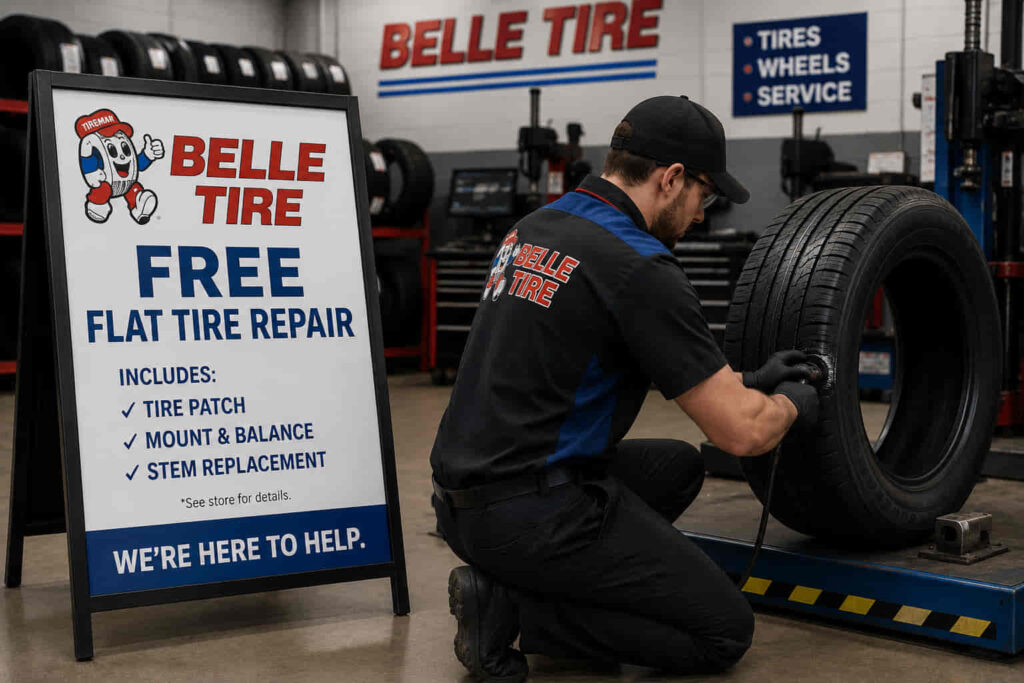
Belle Tire provides tire repair services, but whether a tire can be patched for free depends on the type of damage, tire condition, and applicable service policies. A punctured tire does not always require replacement because certain types of damage can be repaired when the tire structure remains safe and suitable for continued use.
Tire patching is a repair method designed to restore a tire’s ability to maintain air pressure after a puncture. However, the repair process begins with a complete inspection because not every hole, leak, or damaged area can be safely repaired. The location of the puncture, the size of the damage, tread condition, and previous repairs all affect the final decision.
A small puncture in the main tread area may be handled differently from damage on the sidewall or shoulder of the tire. While a proper repair can extend the usable life of a tire, attempting to repair a tire with structural damage can create safety risks during driving.
Understanding how Belle Tire handles tire repair helps drivers make better decisions when dealing with flat tires or slow leaks. This guide explains how Belle Tire tire repair service works, what damage may be repairable, when replacement is necessary, and how to maintain tires after a repair.
What Happens During a Belle Tire Free Tire Repair Inspection?
A Belle Tire tire repair inspection focuses on identifying the cause of air loss and determining whether the tire can be safely repaired. The purpose of the inspection is not only to seal the puncture but also to evaluate whether the tire can continue operating without creating additional safety risks.
The inspection process begins by locating the source of the problem, such as a nail puncture, screw damage, or another type of leak. The position of the damage is one of the most important factors because different areas of the tire have different structural characteristics. A puncture in the main tread area is evaluated differently from damage near the sidewall.
The overall condition of the tire is also considered during the evaluation. Factors such as tread depth, uneven wear, previous repairs, tire age, and signs of internal damage can affect whether a repair is appropriate. A tire with a small puncture but severe wear may not be a good candidate for repair because its remaining service life and safety margin are already reduced.
For example, a tire that loses air after running over a small nail may only require inspection and possible repair if the damage is limited to the tread area. However, a tire that has been driven for an extended distance while completely flat may have internal damage caused by heat and friction, making replacement a safer option.
The inspection process ensures that tire repair decisions are based on safety and long-term reliability rather than simply restoring air pressure. A repair is only valuable when the tire can continue performing under normal driving conditions.
What Types of Tire Damage Can Belle Tire Repair?
Belle Tire may be able to repair certain types of tire damage when the puncture is located in a repairable area and the tire structure remains intact. The most common repairable problems involve small punctures caused by objects such as nails or screws that enter the tread area.
The tread area is generally the most suitable location for repair because it contains the primary contact surface designed to handle road forces. When a puncture is small and does not damage the internal structure of the tire, a professional repair can restore the tire’s ability to maintain proper air pressure.
The size, location, and condition of the damage determine whether repair is possible. A clean puncture through the tread may be repairable, while a larger hole, irregular tear, or damage extending into weaker areas of the tire may require replacement.
For example, a screw embedded in the center portion of the tread on a tire with good tread depth may represent a repairable situation. In contrast, a puncture close to the shoulder area or sidewall may compromise the tire’s strength because those areas experience significant flexing during operation.
Proper tire repair is designed to restore safe function, not simply cover visible damage. A professional evaluation helps determine whether repairing the tire provides a reliable solution or whether replacing the tire is the safer long-term choice.
Read more: Does Discount Tire Price Match
What Tire Damage Cannot Be Repaired by Belle Tire?
Some tire damage cannot be repaired because the damage affects the structural integrity of the tire and cannot be safely restored through a patch or other repair method. Tire repair can address specific punctures and leaks, but it cannot rebuild damaged internal components or restore strength lost from severe damage.
Sidewall damage is one of the most important situations where repair is usually not recommended. The sidewall is designed to flex during driving while supporting the weight of the vehicle. A puncture, cut, or bulge in this area can indicate internal damage that may increase the risk of tire failure.
Large punctures and irregular damage can also make a tire unsuitable for repair. A large hole, torn rubber, or damage caused by a major impact may compromise the tire structure beyond what a repair can safely fix. The same applies to tires with severe tread wear or existing damage from previous repairs.
Driving on a flat tire can create additional problems even when the original puncture appears minor. When a tire operates without sufficient air pressure, excessive heat and friction can damage the internal layers. For example, a driver who continues driving after a tire loses all air pressure may damage the tire beyond repair.
A safe repair decision requires evaluating the entire tire, not just the visible puncture. Replacing a damaged tire may cost more initially, but it provides better protection when the tire can no longer maintain reliable structural performance.
What Is the Difference Between Tire Patch and Tire Plug?
A tire patch and a tire plug are different repair methods because they address punctures in different ways, but both require proper evaluation to determine whether they are suitable for a specific tire. The main difference is how each method seals the damaged area and restores the tire’s ability to hold air.
A tire plug is designed to fill a puncture channel from the outside, preventing air from escaping through the damaged area. It is commonly associated with quick repairs, but a plug alone may not provide the same level of internal sealing as a complete repair method.
A tire patch works by sealing the damaged area from inside the tire. The repair material covers the puncture area internally, helping prevent air leakage and creating a more complete repair when the tire is suitable for service. Professional tire repair often considers the location and severity of the puncture before selecting the appropriate approach.
For example, a small puncture in the center of the tread may be suitable for a professional repair process, while a puncture near the sidewall may not be safe regardless of whether a patch or plug is used.
The most important factor is not simply choosing between a patch and a plug, but determining whether the tire itself remains safe after repair. A proper inspection ensures that the repair method matches the condition of the tire and supports reliable performance.
How Long Does a Patched Tire Last After Repair?
A properly repaired tire can last for the remaining usable life of the tire when the damage is suitable for repair and the tire is maintained correctly. However, the lifespan of a patched tire depends on several factors, including the quality of the repair, the location of the puncture, the tire’s age, tread condition, and driving habits.
A tire repair does not create a new tire; it restores the tire’s ability to hold air after specific types of damage. The remaining lifespan is therefore influenced by the condition of the tire before the repair. A newer tire with good tread depth and a small tread puncture may continue providing reliable service, while an older tire with significant wear may need replacement sooner.
Maintenance after a repair also affects how long the tire continues to perform. Maintaining the correct air pressure helps reduce stress on the repaired area and prevents additional uneven wear. Regular inspections can identify slow leaks, tread problems, or other issues before they become safety concerns.
For example, a tire with a small nail puncture repaired professionally may continue operating normally for thousands of miles if the tire remains in good condition. However, a repaired tire that develops repeated pressure loss or shows signs of structural damage may require replacement.
A tire patch should be viewed as a way to extend the service life of a safe tire, not as a solution that removes all future maintenance needs. Proper inspection and care determine whether the repaired tire continues to provide reliable performance.
Should You Repair or Replace a Damaged Tire?
You should repair a damaged tire when the damage is limited, the tire structure remains safe, and the repair can restore reliable performance. You should replace the tire when damage affects safety, durability, or the ability of the tire to handle normal driving conditions.
The decision between repair and replacement depends on several factors, including puncture location, tire age, tread depth, and overall condition. A small puncture in the main tread area on a tire with sufficient remaining life may be a good candidate for repair. A tire with sidewall damage, severe wear, or internal damage generally requires replacement.
Cost is an important consideration, but safety should determine the final decision. Repairing a tire that is no longer structurally reliable may create additional risks because the damage can affect how the tire performs under heat, pressure, and road stress.
For example, replacing a tire with a damaged sidewall may seem more expensive than attempting a repair, but the replacement provides better protection against potential tire failure. On the other hand, repairing a minor tread puncture can help avoid unnecessary replacement costs when the tire remains safe.
The best choice comes from evaluating the complete condition of the tire rather than focusing only on the immediate repair expense. A professional inspection helps determine whether repair provides a safe extension of tire life or whether replacement is the better long-term solution.
What Should You Know About Belle Tire Free Tire Repair Service?
Belle Tire tire repair service can help drivers extend the life of suitable tires, but whether a tire can be repaired depends on safety factors rather than simply the presence of a puncture. A free or low-cost repair option is valuable when the tire remains structurally sound and the damage can be corrected without affecting long-term reliability.
The most important part of tire repair is the inspection process. A small tread puncture on a tire with good condition may be repairable, while sidewall damage, severe wear, or internal damage may require replacement. Choosing the correct solution helps prevent future problems and protects overall driving safety.
Understanding the difference between repairable and non-repairable damage allows drivers to make better decisions when dealing with flat tires or air leaks. A professional evaluation considers the location of damage, tire condition, remaining tread life, and the vehicle’s safety requirements before recommending repair or replacement.
After a successful repair, proper maintenance remains essential. Maintaining correct tire pressure, checking for leaks, rotating tires regularly, and monitoring tread condition help maximize the remaining service life of the tire.
Overall, Belle Tire free tire repair service can provide significant value when the damaged tire is still safe to use. The goal should not be only to reduce immediate costs but to choose a repair solution that maintains reliable performance and protects the vehicle over time.