Few dashboard warnings worry drivers more than the Chevy Traverse Service ESC message. It can appear without warning. In many cases, it shows up with reduced engine power, traction control alerts, or rough driving behavior. Drivers often ask one question first. Is this a small sensor issue or a serious safety problem?
The Electronic Stability Control system helps your Chevy Traverse keep traction and stability. It also improves steering control during sharp turns, wet roads, and emergency maneuvers. When the Service ESC warning appears, the system has detected a fault that needs attention.
Some causes are minor. A bad wheel speed sensor or faulty steering angle sensor may trigger the warning. Other problems can be more serious. ABS module failures, damaged wiring, or throttle issues can put the vehicle into reduced power mode. These faults can worsen if you ignore them.
Repair costs also concern many owners. Some fixes cost little more than routine maintenance. Others can become expensive when major components fail. Knowing the real cause early can save money and prevent unnecessary repairs.
This guide explains what the Chevy Traverse Service ESC warning means, what causes it, how to diagnose the problem, and what repairs may solve it before the issue gets worse.
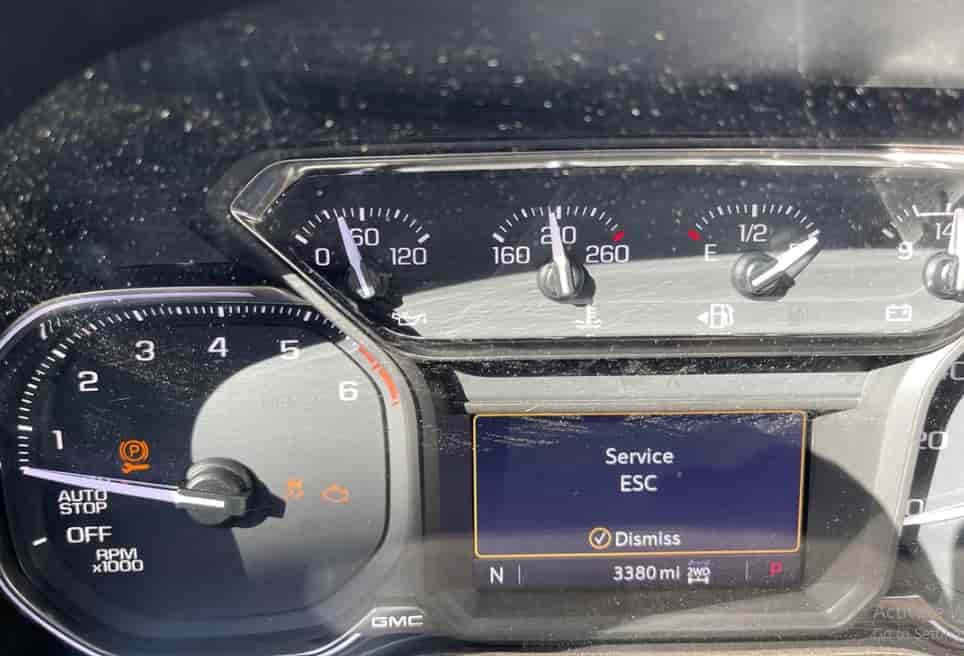
What Does the Chevy Traverse Service ESC Warning Mean?
The Chevy Traverse Service ESC warning means the Electronic Stability Control system has detected a problem that may affect traction, stability, or steering assistance. This system helps keep the vehicle under control during sudden turns, slippery road conditions, or emergency maneuvers. When a fault appears, the warning light alerts the driver that the system may not respond properly when extra stability support is needed.
The ESC system relies on several components working together. Wheel speed sensors monitor traction at each wheel, while the steering angle sensor tracks driver input. The ABS control module and traction control system process this data and react when the vehicle starts losing stability. In some situations, the system can apply braking to individual wheels or reduce engine power to help restore control. If one component sends faulty data, the system may trigger the Service ESC warning.
Many drivers also see confusion between Service ESC and Service Stabilitrak. In most Chevy models, Stabilitrak is the brand name for the broader stability system, while ESC refers to the electronic control function within that system. Both warnings often point to similar issues, including sensor failures, electrical faults, or ABS related problems.
Common triggers include bad wheel speed sensors, steering angle sensor failures, damaged wiring, weak battery voltage, or throttle related faults that may also cause reduced engine power warnings. Understanding what this warning means is important because it often signals more than a simple dashboard alert. It can be an early sign of a problem that affects both vehicle performance and driving safety.
Common Causes of Chevy Traverse Service ESC Warning
Several issues can trigger the Chevy Traverse Service ESC warning, but faulty wheel speed sensors remain one of the most common causes. These sensors monitor how fast each wheel rotates and send that data to the stability and ABS systems. If one sensor sends incorrect readings or fails completely, the ESC system may interpret it as a traction problem and trigger the warning light. In many Chevy Traverse cases, this is one of the first components technicians inspect.
Another frequent cause involves the steering angle sensor. This sensor tracks the direction of the steering wheel and helps the ESC system compare driver input with actual vehicle movement. When the sensor becomes misaligned or starts failing, the system may lose accurate steering data and disable stability control as a precaution. This often causes both Service ESC and traction control warnings to appear together.
ABS control module problems can also trigger the warning. Since the ESC system works closely with ABS functions, faults in the control module can interrupt communication between critical safety systems. In some cases, damaged wiring, corroded connectors, or weak battery voltage can create similar symptoms. Electrical problems are often overlooked, yet they can cause intermittent ESC warnings that are difficult to diagnose.
Engine related faults may also contribute to the problem. A failing throttle body, sensor communication errors, or reduced engine power conditions sometimes trigger the Chevy Traverse Service ESC warning as part of a broader system fault. Because several causes can produce similar symptoms, proper diagnosis matters before replacing parts. Identifying the root cause early can prevent unnecessary repairs and help restore vehicle safety faster.
Symptoms That Often Come With a Service ESC Warning
The Chevy Traverse Service ESC warning rarely appears alone. In many cases, other symptoms show up at the same time and help point toward the underlying problem. One of the most common signs is a reduced engine power warning. When this happens, the vehicle may respond slowly to acceleration, lose power during driving, or enter a protective limp mode designed to prevent further damage.
Another common symptom involves traction control or ABS warning lights appearing with the Service ESC message. Because these systems work together, a fault in one area can trigger multiple warnings on the dashboard. Some drivers also report rough shifting, hesitation during acceleration, or sudden changes in vehicle behavior, especially at lower speeds or when turning.
Handling issues can also appear when the ESC system is not working properly. The vehicle may feel unstable on wet roads, less responsive during cornering, or harder to control during emergency maneuvers. In some cases, drivers notice the warning comes and goes, which often points to intermittent electrical faults or failing sensors rather than a complete system failure.
Other symptoms may include engine misfires, unexpected braking behavior, or warning messages related to Stabilitrak and traction control. These signs often confuse owners because they may seem unrelated, yet they can all connect to the same root issue. Recognizing these symptoms early helps narrow down the cause faster and reduces the risk of ignoring a fault that could grow into a more expensive repair.
How to Diagnose the Problem
Diagnosing a Chevy Traverse Service ESC warning starts with reading trouble codes, since the warning itself does not reveal the exact fault. A professional scan tool can identify whether the issue involves a wheel speed sensor, steering angle sensor, ABS module, or another related component. Diagnostic trouble codes often provide the fastest path to finding the root cause instead of replacing parts through trial and error.
After scanning the system, technicians usually inspect the wheel speed sensors and their wiring. Damaged sensor connectors, dirt buildup, or broken wires can cause incorrect signals and trigger the warning. The steering angle sensor may also need calibration or testing, especially if the warning appeared after alignment work or steering repairs.
Electrical checks are another important part of diagnosis. Weak battery voltage, charging system issues, or corroded grounds can disrupt communication between control modules and cause intermittent ESC faults. These problems can mimic major component failures, which is why they should never be overlooked.
If the warning appears with reduced engine power or throttle related symptoms, engine diagnostics may also be necessary. A failing throttle body or sensor communication fault can sometimes trigger the ESC warning as part of a larger system issue. Proper diagnosis focuses on identifying the true source of the fault before repairs begin. This approach reduces unnecessary costs and improves the chance of fixing the problem correctly the first time.
How to Fix Chevy Traverse Service ESC Problems
Fixing a Chevy Traverse Service ESC warning depends on the root cause, but many repairs involve replacing failed sensors or correcting electrical faults. If a bad wheel speed sensor triggers the warning, replacing the sensor often restores normal system operation. Steering angle sensor issues may require recalibration or replacement, especially when the sensor sends inaccurate data to the stability control system.
Electrical repairs are also common. Damaged wiring, loose connectors, or corroded terminals can interrupt communication between modules and trigger ESC faults. In some cases, cleaning connections or repairing wiring solves the issue without replacing major components. If battery voltage or charging problems contribute to the warning, correcting those faults may also eliminate intermittent ESC messages.
More serious cases may involve ABS control module repairs or throttle body replacement, particularly when the warning appears with traction control failures or reduced engine power symptoms. These repairs often require professional diagnostics because multiple systems may be affected at the same time.
Some drivers attempt a simple reset by restarting the vehicle or clearing codes after minor faults, but a reset alone does not fix an underlying problem. If the warning returns, the fault still exists and needs proper diagnosis. The best repair strategy focuses on fixing the cause, not just removing the warning light. Addressing the issue early can restore safety systems, prevent larger failures, and often reduce total repair costs.
Chevy Traverse Service ESC Repair Costs
Repair costs for a Chevy Traverse Service ESC warning vary widely depending on the exact failure. Some fixes are relatively affordable, while others become expensive if major components are involved. The final cost depends on which part fails and whether additional systems are affected.
A wheel speed sensor replacement is usually one of the most common and affordable repairs. In most cases, the cost ranges from about 150 to 350 dollars, including parts and labor. Steering angle sensor issues typically cost more because calibration or replacement is required. This repair often falls between 250 and 600 dollars depending on the shop and model year.
If the ABS control module fails, the repair becomes significantly more expensive. ABS module repair or replacement can range from 500 to 1500 dollars. This is because the part itself is costly and may require programming after installation. Electrical diagnostics or wiring repairs are usually less expensive, but costs can increase if the issue is difficult to locate.
Throttle body related problems can also trigger the Service ESC warning, especially when reduced engine power appears. In these cases, replacement costs often range from 300 to 800 dollars. Labor charges may increase the total depending on complexity.
Overall, minor sensor issues are usually manageable in terms of cost, while module or engine related failures can become expensive. Early diagnosis helps reduce repair expenses and prevents small faults from turning into larger system problems.
Can You Drive With the Service ESC Light On?
Driving with the Chevy Traverse Service ESC light on is possible in some situations, but it depends on the severity of the fault. In many cases, the vehicle will still run normally, but the stability control system may be disabled. This means the car loses part of its ability to help you maintain traction during sharp turns, sudden braking, or slippery road conditions.
If the warning appears without other symptoms, you may be able to continue driving for a short time. However, you should still treat it as an early warning sign and plan for diagnosis as soon as possible. Even if the vehicle feels normal, the system may not protect you correctly in an emergency situation.
The risk becomes higher when the Service ESC warning appears together with reduced engine power, traction control warnings, or ABS failure indicators. In these cases, the vehicle may enter limp mode or show reduced acceleration. Driving in this condition can feel unsafe, especially in traffic or on highways.
If you notice unstable handling, loss of power, or braking changes, it is better to stop driving and inspect the vehicle. Continuing to drive with multiple system warnings can increase the risk of further damage and higher repair costs. The ESC system is designed to support safety, so when it fails, your vehicle loses an important layer of protection.
In short, you can sometimes drive short distances with the warning on, but you should never ignore it for long. Early inspection always reduces risk and repair cost.
Chevy Traverse Model Years Known for ESC Problems
Some Chevy Traverse model years report more frequent Service ESC warnings than others. These issues often come from sensor reliability, ABS system design, or electrical stability problems that vary by production year. While not every vehicle is affected, owner complaints and repair records show clear patterns in certain generations.
Older Traverse models, especially early first generation vehicles, tend to show more stability control and traction system faults over time. As mileage increases, wheel speed sensors and wiring harnesses become more prone to wear. This leads to intermittent ESC warnings that may appear and disappear during driving.
Certain mid generation models also report recurring ABS module issues. When the ABS control unit begins to fail, it can trigger both Service ESC and Stabilitrak warnings. In these cases, drivers often notice multiple dashboard alerts at the same time, especially during wet or uneven road conditions.
In newer models, ESC related problems are less frequent but still possible. Most issues come from sensor failures, battery voltage instability, or software related communication errors between control modules. These problems are often easier to diagnose compared to older systems, but they still require proper scanning tools to confirm the cause.
Understanding which model years show higher ESC related complaints helps owners anticipate potential issues early. It also helps when buying a used Chevy Traverse, since stability system repairs can become expensive if multiple components are affected. Preventive maintenance and early diagnostics remain the best way to avoid recurring Service ESC warnings regardless of model year.
How to Prevent Future ESC Problems
Preventing Chevy Traverse Service ESC warnings starts with maintaining the key systems that support stability control. Regular maintenance helps reduce sensor failures, electrical issues, and communication errors between modules. Most ESC problems develop gradually, so early care can make a significant difference in long term reliability.
One of the most important steps is keeping wheel speed sensors clean and protected. Dirt, rust, or road debris can interfere with sensor signals and trigger false warnings. During routine service, inspections should include checking sensor wiring for damage or wear. This simple step helps avoid many common ESC related issues.
Battery health also plays a major role in system stability. A weak or unstable battery can cause voltage drops that affect ABS and ESC modules. Replacing an aging battery before it fails completely helps prevent unexpected warning lights and system errors. The charging system should also be tested regularly to ensure consistent performance.
Proper wheel alignment and steering system maintenance are also important. If the steering angle sensor becomes misaligned, the ESC system may interpret vehicle movement incorrectly. Keeping suspension and steering components in good condition helps the system function accurately.
Finally, addressing small warning signs early is key. Intermittent traction control lights, minor sensor faults, or unusual driving behavior should never be ignored. Fixing small issues early prevents them from developing into larger and more expensive ESC system failures. Consistent maintenance is the most effective way to keep the stability system working properly and avoid future warning messages.
Conclusion
The Chevy Traverse Service ESC warning is an important signal that the stability control system has detected a fault. It does not always mean a serious failure, but it does mean the vehicle may not fully support traction and stability when you need it most. This is why understanding the warning early can help prevent both safety risks and unnecessary repair costs.
Most ESC issues come from common sources such as wheel speed sensors, steering angle sensors, ABS module faults, or electrical connection problems. In some cases, engine related issues like reduced power or throttle problems can also trigger the warning. Because multiple systems work together, the symptoms often overlap and can confuse drivers.
Repair costs vary depending on the cause. Simple sensor replacements are usually affordable, while ABS module repairs or complex electrical faults can become more expensive. This makes early diagnosis very important, since fixing small issues early often prevents larger system failures later.
If the Service ESC light appears on your Chevy Traverse, it is best not to ignore it. Even if the vehicle still drives normally, the stability system may be partially disabled. This can affect safety in sudden or difficult driving conditions. A proper diagnostic check helps identify the exact cause and ensures the correct repair is done the first time.
In the end, the key takeaway is simple. The ESC system is designed to protect you. When it stops working correctly, your vehicle loses an important safety layer. Addressing the issue early keeps your Chevy Traverse safer, more reliable, and more cost effective to maintain over time.