When the check engine light suddenly appears on your Chevy Colorado, it can trigger immediate concern. For many drivers, that small warning light raises a big question: is it a minor issue or the beginning of an expensive repair? The answer often lies in understanding Chevy Colorado check engine light codes and what they are trying to tell you.
Modern Chevy Colorado trucks rely on an onboard diagnostics system to monitor engine performance, emissions components, ignition timing, fuel delivery, and dozens of other operating functions. When something falls outside normal parameters, the system stores a fault code and may trigger the check engine light. Some codes point to simple issues like a loose gas cap, while others may signal serious problems involving the catalytic converter, timing components, or engine misfires.
This is where many owners run into frustration. A code scanner may display a number like P0171 or P0420, but the code itself does not always reveal the full problem. In many cases, the trouble code is only the symptom, while the root cause may involve multiple components. Misreading that warning can lead to wasted money, unnecessary parts replacement, or worse, costly engine damage.
This guide explains the most common Chevy Colorado check engine light codes, what causes them, the symptoms they produce, and the repairs often needed to fix them. You will also learn which trouble codes can usually wait and which ones should never be ignored. If you have ever wondered whether your warning light means a quick fix or a major repair bill, this article will help you diagnose the situation with confidence.
What Does the Check Engine Light Mean on a Chevy Colorado?
A check engine light on a Chevy Colorado is a warning from the onboard diagnostics system. It means the vehicle has detected an issue in the engine, emissions system, or related sensors. The system stores a diagnostic trouble code to help identify the problem, but the light itself does not explain the exact cause.
There are two main types of check engine light behavior. A steady light usually indicates a non urgent issue that still needs attention. Common causes include a loose gas cap, oxygen sensor problems, fuel system imbalance, or emissions related faults. These issues may not affect immediate drivability, but they can reduce fuel efficiency or increase emissions over time.
A flashing check engine light is more serious. It often signals an active engine misfire. This condition can damage the catalytic converter if the vehicle continues to run under load. If the light is flashing and the engine feels rough or loses power, it is safer to stop driving and diagnose the issue as soon as possible.
One important point is that the check engine light does not point to a specific failed part. It only indicates that the engine control module has detected abnormal performance. The actual cause may require deeper inspection.
For example, a P0420 code may suggest low catalytic efficiency. However, the real cause could be an oxygen sensor fault or an exhaust leak. A P0171 code may indicate a lean fuel condition. This can result from vacuum leaks or fuel delivery issues. One code can have several possible causes.
Understanding Chevy Colorado check engine light codes helps avoid unnecessary repairs. It also helps you identify problems early before they become expensive.
In the next section, we will explain how OBD2 trouble codes work and how to read them correctly.
How Chevy Colorado OBD2 Trouble Codes Work
Chevy Colorado vehicles use an onboard diagnostics system known as OBD2 to monitor engine performance and emissions systems. This system continuously checks signals from sensors throughout the vehicle. When something goes outside the expected range, it generates a diagnostic trouble code, often called a DTC.
Each code follows a standardized format that starts with a letter and is followed by numbers. For example, codes beginning with P refer to powertrain issues. These include the engine, transmission, and emissions system. Other letters like B, C, or U relate to body, chassis, or communication network issues.
The engine control module stores these codes when it detects abnormal behavior. However, the code itself does not explain the full problem. It only points to the system where the issue is occurring. This is why the same code can have multiple possible causes.
For example, a P0171 code indicates that the engine is running too lean. This means there is too much air or not enough fuel in the mixture. The cause could be a vacuum leak, dirty mass airflow sensor, or low fuel pressure. A scanner will show the code, but it will not tell you which part is faulty.
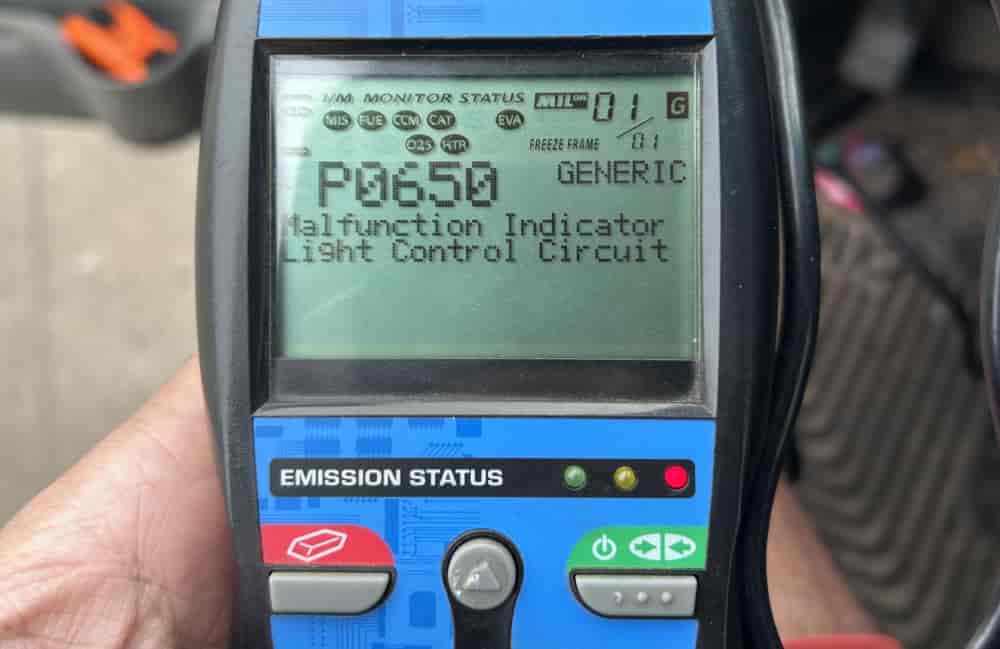
To read these codes, most owners use an OBD2 scanner. This device connects to the diagnostic port under the dashboard. Once connected, it can retrieve stored codes and sometimes show live engine data. More advanced scanners can also display freeze frame data, which shows engine conditions at the moment the fault occurred.
Understanding how these codes work is important. It helps you avoid guessing and unnecessary part replacement. Instead of replacing components blindly, you can narrow down the real issue using structured diagnosis.
Next, we will look at the most common Chevy Colorado check engine light codes and what they actually mean in real driving conditions.
Common Chevy Colorado Check Engine Light Codes Explained
Several Chevy Colorado check engine light codes appear more often than others. These codes usually relate to engine performance, emissions control, and fuel delivery systems. Understanding them helps you identify problems faster and avoid unnecessary repairs.
P0171 System Too Lean
This code means the engine is getting too much air or not enough fuel. Common causes include vacuum leaks, dirty mass airflow sensors, or weak fuel pumps. Drivers may notice rough idle, hesitation, or reduced fuel efficiency.
P0420 Catalyst Efficiency Below Threshold
This code points to a problem with the catalytic converter system. In some cases, the oxygen sensors may be sending incorrect data. In more serious cases, the catalytic converter itself may be failing. Symptoms often include reduced power and higher emissions.
P0300 Random Misfire Detected
This code indicates that the engine is misfiring in multiple cylinders. Causes can include worn spark plugs, faulty ignition coils, or fuel injector issues. Drivers may feel shaking, poor acceleration, or uneven engine performance.
P0017 Crankshaft and Camshaft Correlation Error
This code suggests timing issues between the crankshaft and camshaft. It may be caused by a stretched timing chain or sensor malfunction. Symptoms can include hard starting, poor performance, or engine noise.
P0442 EVAP System Small Leak Detected
This code is often less serious and may be triggered by a loose or faulty gas cap. It can also indicate small leaks in the EVAP system. Usually, there are no major drivability issues, but the check engine light remains on.
Each of these Chevy Colorado check engine light codes represents a different system. However, they all require proper diagnosis because the root cause may vary. Replacing parts without confirming the issue can lead to wasted money and recurring problems.
Next, we will explore the most common causes behind these codes and how they develop over time.
Most Common Causes Behind Chevy Colorado Check Engine Codes
Most Chevy Colorado check engine light codes come from a few repeating problem areas. These issues often develop over time due to wear, heat, and normal engine operation. Understanding the root causes helps you avoid guessing and reduces unnecessary repairs.
One of the most common causes is vacuum leaks. Small cracks in hoses or intake components allow extra air into the engine. This often leads to lean condition codes like P0171. Even a small leak can affect fuel balance and trigger the check engine light.
Another frequent issue involves sensors. Oxygen sensors and mass airflow sensors play a key role in measuring air and fuel ratios. When they become dirty or fail, they send incorrect signals to the engine control module. This can cause poor fuel economy, hesitation, or unstable idle.
Ignition system problems are also common. Worn spark plugs or failing ignition coils can lead to misfires. This often results in codes like P0300. Drivers may notice engine shaking, loss of power, or difficulty accelerating.
Fuel delivery issues can also trigger warning codes. A weak fuel pump or clogged injectors can reduce fuel pressure. When the engine does not receive enough fuel, performance drops and diagnostic codes appear.
Emissions system faults are another major category. The EVAP system and catalytic converter are both monitored closely. A loose gas cap can trigger small leak codes, while a failing catalytic converter may lead to P0420.
In many cases, these problems do not appear suddenly. They build gradually, which is why early diagnosis is important. A small issue ignored for too long can lead to more serious engine damage and higher repair costs.
Next, we will look at the symptoms that often appear when these trouble codes are active.
Symptoms That Often Appear With Trouble Codes
When Chevy Colorado check engine light codes appear, the vehicle usually shows warning signs before or at the same time. These symptoms help you understand how serious the issue might be and whether immediate action is needed.
One of the most common symptoms is rough engine idle. The engine may feel unstable when the vehicle is stopped. You might notice small vibrations or uneven RPM levels. This often points to fuel mixture problems, vacuum leaks, or ignition issues.
Another frequent symptom is reduced fuel efficiency. When sensors fail or the air fuel ratio is incorrect, the engine burns more fuel than necessary. Drivers may notice they are filling up more often without changing driving habits.
Loss of power during acceleration is also a key warning sign. The vehicle may feel slow or unresponsive when pressing the gas pedal. This can be caused by misfires, fuel delivery issues, or clogged air intake components.
Hard starting is another symptom linked to trouble codes. The engine may take longer to start or require multiple attempts. This is often related to weak ignition components or fuel system pressure problems.
In more severe cases, the check engine light may flash instead of staying solid. This usually indicates a serious misfire condition. The vehicle may shake heavily and lose performance quickly. Driving in this condition can cause additional engine damage.
Some Chevy Colorado drivers may also notice unusual exhaust smells or increased emissions. This often happens when the catalytic converter or oxygen sensors are not functioning properly.
These symptoms are important because they provide real world confirmation of what the trouble codes are indicating. When combined with OBD2 scan results, they help create a clearer diagnosis instead of relying on the code alone.
Next, we will explain how to diagnose Chevy Colorado check engine light codes using an OBD2 scanner step by step.
How to Diagnose Chevy Colorado Codes With an OBD2 Scanner
Diagnosing Chevy Colorado check engine light codes starts with a proper OBD2 scan. This step is essential because the code alone does not provide a full diagnosis. It only points to the system where the issue is detected.
The first step is to locate the OBD2 port. On most Chevy Colorado models, it is found under the dashboard near the steering column. Once located, plug in the OBD2 scanner and turn the ignition to the ON position without starting the engine.
After the scanner powers up, select the option to read diagnostic trouble codes. The device will communicate with the engine control module and display any stored codes. These may include current faults or previously stored historical codes.
Once the codes appear, it is important to write them down. Some scanners also provide brief definitions, but these should only be used as a guide. The same code can have multiple causes, so interpretation matters.
Advanced scanners can provide freeze frame data. This shows engine conditions at the exact moment the fault occurred. Information such as engine load, temperature, and fuel trim can help narrow down the root cause.
Live data monitoring is another useful feature. It allows you to observe sensor behavior in real time. For example, you can check oxygen sensor readings or airflow values while the engine is running. Abnormal readings often help confirm which component is failing.
After gathering data, the next step is to compare symptoms with the code information. This combination is more reliable than relying on the code alone. It reduces the risk of replacing parts that are still functioning correctly.
Proper diagnosis saves both time and money. It also prevents repeat check engine light issues caused by incomplete repairs.
Next, we will look at how to fix Chevy Colorado check engine light problems based on these diagnostic results.
How to Fix Chevy Colorado Check Engine Light Problems
Fixing Chevy Colorado check engine light codes depends on accurate diagnosis. Each code points to a system, but the real solution depends on confirming the root cause through inspection and testing.
For simple issues like EVAP leaks or loose gas caps, the fix is often quick. Tightening or replacing the gas cap can immediately resolve codes like P0442. After the repair, the code may clear itself after a few driving cycles or require a scanner reset.
For sensor related codes, cleaning or replacing components is often required. A dirty mass airflow sensor can sometimes be cleaned with a dedicated cleaner. Oxygen sensors, however, usually need replacement when they fail, since they degrade over time and cannot be restored reliably.
Ignition related problems such as P0300 misfires typically require spark plug or ignition coil replacement. Worn spark plugs can cause weak combustion, while failing coils can lead to inconsistent firing. Replacing these components often restores smooth engine performance.
Fuel system issues may require more in depth repairs. Low fuel pressure can be caused by a weak fuel pump or clogged fuel filter. In these cases, testing fuel pressure is necessary before replacing parts. Injectors may also need cleaning or replacement if they are restricted.
More complex codes like P0017 may involve timing chain wear or sensor calibration problems. These repairs are more advanced and often require professional tools and expertise. Ignoring timing related issues can lead to severe engine damage over time.
After repairs are completed, clearing the code with an OBD2 scanner is the final step. However, clearing the code without fixing the root cause will only make the problem return.
Proper repair is always more effective than quick resets. It ensures the check engine light does not reappear and prevents hidden engine damage from developing further.
Next, we will explain which Chevy Colorado trouble codes can lead to expensive repairs and should be treated with priority.
Chevy Colorado Trouble Codes That Can Lead to Expensive Repairs
Not all Chevy Colorado check engine light codes are equal. Some point to minor issues, while others can lead to costly repairs if ignored. Understanding which codes carry higher risk helps you prioritize repairs and avoid long term engine damage.
One of the most expensive categories involves timing related codes such as P0017. This code can indicate problems with the crankshaft and camshaft synchronization. In some cases, the issue comes from a worn timing chain or faulty timing components. If left unresolved, it can affect engine performance severely and may lead to internal engine damage.
Catalytic converter related codes like P0420 can also become expensive. While oxygen sensors may sometimes trigger this code, a failing catalytic converter is a more serious and costly repair. Replacement parts can be expensive, especially if the underlying issue has caused long term damage to the exhaust system.
Misfire codes such as P0300 can also escalate in cost if ignored. A random misfire may start with simple spark plug or ignition coil issues. However, if the engine continues to misfire, it can damage the catalytic converter over time. This turns a relatively cheap repair into a much more expensive one.
Fuel system issues can also become costly in advanced stages. A failing fuel pump or clogged injectors can reduce engine performance and increase wear on other components. If fuel delivery problems are ignored, they may lead to broader engine inefficiency and additional repair needs.
Even though some codes seem minor at first, their long term impact depends on how quickly they are addressed. Early diagnosis is always cheaper than delayed repair.
Next, we will discuss whether it is safe to drive your Chevy Colorado when these check engine light codes appear and how to make the right decision.
Can You Drive With a Chevy Colorado Check Engine Light On?
Whether you can drive with a Chevy Colorado check engine light on depends on the type of warning and how the vehicle behaves. Not every code requires you to stop driving immediately, but some situations do carry real risk.
If the check engine light is steady and the vehicle feels normal, it is usually safe to continue driving for a short period. In many cases, this indicates non urgent issues such as small EVAP leaks, sensor inefficiencies, or minor fuel trim problems. However, the issue should still be diagnosed soon to avoid long term damage or reduced fuel economy.
If the check engine light is flashing, the situation is more serious. A flashing light often means the engine is misfiring. This condition can quickly damage the catalytic converter and increase repair costs. If this happens, especially with rough running, loss of power, or strong vibrations, it is safer to stop driving and inspect the vehicle immediately.
Driving habits also matter. Even with a steady light, heavy acceleration or towing can worsen underlying issues. For example, a small misfire or fuel imbalance may become more severe under load. This is why early diagnosis is always recommended, even if the vehicle still feels drivable.
Another factor is symptom severity. If you notice overheating, strong fuel smell, or sudden power loss, you should not continue driving. These signs suggest a deeper mechanical issue that may be developing quickly.
In general, a steady check engine light gives you time to plan a repair, but a flashing light demands immediate attention. Treating the warning correctly helps prevent expensive damage and keeps the engine running safely.
Next, we will look at how to prevent future check engine light problems on your Chevy Colorado through proper maintenance and driving habits.
Preventing Future Check Engine Light Problems
Preventing Chevy Colorado check engine light codes is mostly about consistent maintenance and early attention to small issues. Most engine warning problems do not appear suddenly. They usually develop slowly over time due to wear, contamination, or neglected service intervals.
One of the most effective prevention steps is regular maintenance of the ignition system. Spark plugs and ignition coils should be inspected and replaced according to the manufacturer schedule. Worn spark plugs can lead to misfires, rough idle, and eventually trigger codes like P0300.
Air and fuel system cleanliness also plays a major role. A dirty mass airflow sensor can send incorrect readings to the engine control module. This affects fuel mixture and can trigger lean condition codes such as P0171. Keeping the air intake system clean helps maintain stable engine performance.
Fuel quality is another important factor. Low quality fuel or contaminated gasoline can affect combustion efficiency. Over time, this may cause deposits in injectors or affect sensor readings. Using reliable fuel sources reduces the risk of long term engine issues.
Routine inspection of vacuum hoses and intake components is also helpful. Small cracks or loose connections can create vacuum leaks that are difficult to notice at first. These leaks often lead to unstable idle and check engine light warnings if left untreated.
The EVAP system should not be ignored either. Even a loose gas cap can trigger a warning code. Making sure the gas cap is properly sealed after refueling is a simple but effective habit.
Finally, using an OBD2 scanner periodically can help detect early issues before the check engine light appears. Early detection allows small problems to be fixed before they turn into expensive repairs.
Preventive maintenance not only reduces warning codes but also improves fuel efficiency and extends engine life. A well maintained Chevy Colorado is far less likely to experience repeated check engine light issues.
Conclusion
Chevy Colorado check engine light codes are not random warnings. They are structured signals from the vehicle’s diagnostic system designed to identify problems early. Understanding these codes helps you avoid guessing and reduces the risk of unnecessary repairs.
Most codes relate to a few key systems, including fuel delivery, ignition, emissions control, and engine timing. While some issues are minor, others can lead to expensive damage if ignored. The key difference is not just the code itself, but the symptoms and how quickly the problem is addressed.
A steady check engine light usually allows time for diagnosis, but a flashing light should always be treated as urgent. Combining OBD2 scan results with real driving symptoms gives the most accurate picture of what is happening inside the engine.
By following proper maintenance habits and responding early to warning signs, you can significantly reduce the chance of recurring check engine light issues. This approach helps keep your Chevy Colorado running smoothly, improves reliability, and protects you from unexpected repair costs.