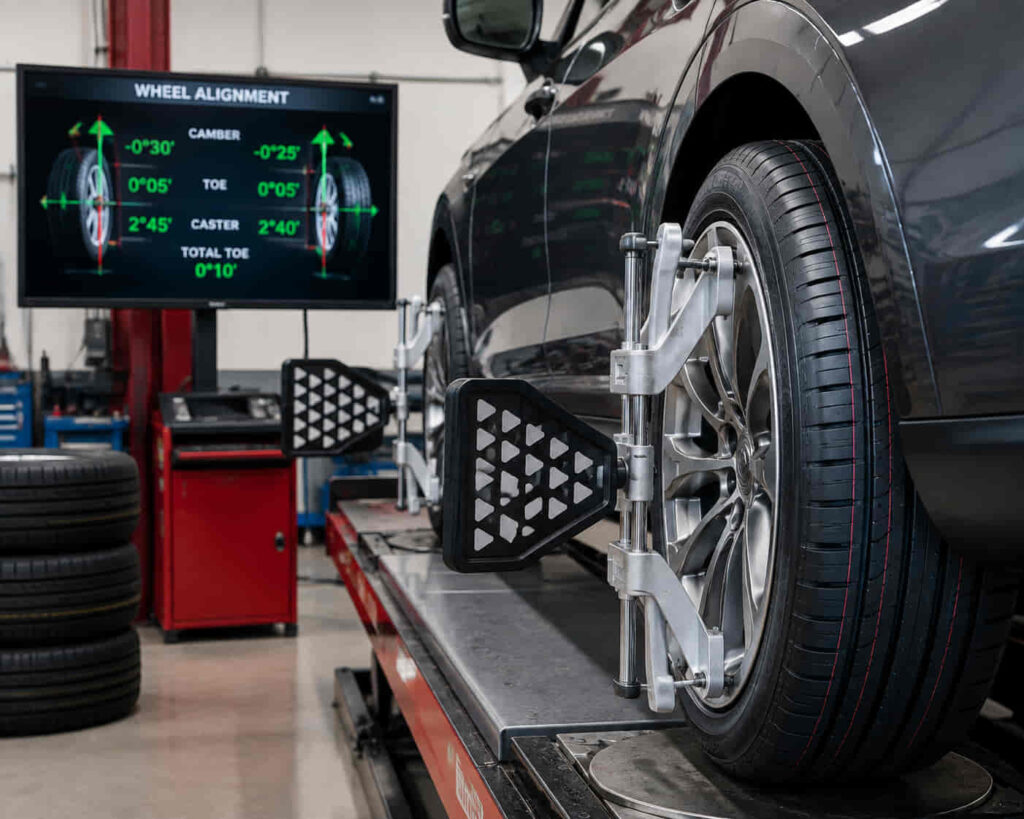
You do not always need a wheel alignment when installing new tires, but checking the alignment is highly recommended because incorrect wheel angles can reduce tire lifespan, create uneven wear, and affect vehicle handling. New tires are designed to provide maximum traction and stability, but they can only perform properly when they maintain the correct contact position with the road.
Many drivers assume that installing new tires automatically requires an alignment service. However, tire replacement and wheel alignment solve different problems. New tires restore the condition of the tire surface, while alignment corrects the position and angle of the wheels relative to the vehicle suspension system.
A vehicle with incorrect alignment may damage a new set of tires faster because certain areas of the tread experience excessive pressure. This can lead to uneven wear patterns, steering problems, and reduced driving comfort even when the tires themselves are high quality.
A wheel alignment check is especially important when old tires show uneven wear, the vehicle pulls to one side, steering feels unstable, or suspension components have recently been repaired. In these situations, installing new tires without correcting alignment issues can reduce the value of the tire investment.
This guide explains how wheel alignment works, why it matters after installing new tires, when it is necessary, and how it helps improve tire performance, safety, and long-term durability.
What Does Wheel Alignment Do?
Wheel alignment adjusts the angles of a vehicle’s wheels so they maintain the correct position relative to the suspension system and the road surface. The purpose of alignment is to ensure that the tires make proper contact with the road, allowing the vehicle to handle correctly while reducing unnecessary tire wear.
A vehicle’s wheel alignment is mainly determined by three important angles: camber, caster, and toe. Camber controls whether the top of the tire leans inward or outward when viewed from the front of the vehicle. Caster affects steering stability and how the vehicle returns to a straight position after turning. Toe alignment controls whether the front edges of the tires point inward or outward compared with each other.
When these angles are within the manufacturer’s recommended specifications, the tires can distribute driving forces more evenly across the tread surface. This improves steering response, maintains vehicle stability, and allows the tire tread to wear at a more consistent rate.
Misalignment can occur because of impacts from potholes, damaged suspension components, worn steering parts, or normal vehicle use over time. Even a small change in wheel angles can affect how the tires interact with the road.
For example, a vehicle with excessive toe misalignment may cause the tires to scrub against the road surface instead of rolling smoothly. This creates additional friction, increases tread wear, and can reduce the expected lifespan of a new tire set.
Why Is Wheel Alignment Important After Installing New Tires?
Wheel alignment is important after installing new tires because it helps protect the tire investment and allows the new tires to deliver their intended performance. A new tire provides fresh tread depth and improved traction, but incorrect wheel angles can prevent the tire from wearing evenly from the beginning.
When a vehicle has alignment problems, the new tires may develop uneven wear patterns much earlier than expected. One side of the tread may wear faster than another, reducing usable tread depth and creating the need for premature replacement.
Proper alignment also improves driving stability. Correct wheel angles help the vehicle track straight, reduce steering corrections, and maintain predictable handling during acceleration, braking, and cornering. This is especially important because tires are the only part of the vehicle directly connected to the road.
Another benefit is improved efficiency. When wheels are misaligned, tires experience additional rolling resistance because they are not moving in the optimal direction. This creates extra friction that can affect fuel efficiency and increase tire stress.
However, alignment is not automatically required every time new tires are installed. If the vehicle already has correct alignment settings, even tire wear, and no steering issues, a technician may only need to inspect the alignment rather than perform a full adjustment.
For example, a driver replacing worn tires after years of normal use should consider an alignment check, especially if the old tires showed uneven wear. This simple inspection can help ensure the new tires achieve their expected lifespan and performance.
Read more: Are Douglas Tires Good
What Happens If You Skip Wheel Alignment with New Tires?
Skipping wheel alignment after installing new tires can lead to uneven tire wear, reduced handling performance, and a shorter tire lifespan because the tires may not maintain proper contact with the road. New tires require correct wheel positioning to distribute driving forces evenly across the tread surface.
When alignment angles are incorrect, certain areas of the tire experience more pressure than others. This creates uneven wear patterns where one edge of the tread may become worn faster than the rest of the tire. Over time, this reduces usable tread depth and prevents the tire from delivering consistent traction.
Poor alignment can also affect vehicle control. A vehicle with misaligned wheels may pull to one side, require frequent steering corrections, or feel unstable during normal driving. These issues become more noticeable at higher speeds because even small alignment problems can influence how the vehicle tracks on the road.
Another consequence is reduced tire value. A new set of tires represents a significant investment, and incorrect alignment can waste that investment by causing premature wear. A tire designed to last tens of thousands of miles may need replacement sooner if alignment problems are not corrected.
Misalignment can also place additional stress on suspension and steering components. When the wheels are not positioned correctly, the vehicle’s mechanical systems must work harder to maintain stability.
For example, if a new tire develops excessive wear on the inner edge within a short period after installation, the cause may not be the tire itself but an underlying toe or camber alignment problem.
What Are the Signs You Need Wheel Alignment?
The most common signs that a vehicle needs wheel alignment include uneven tire wear, steering problems, and changes in how the vehicle tracks on the road. Recognizing these symptoms early can prevent additional tire damage and maintain driving safety.
One common sign is the vehicle pulling to the left or right while driving on a straight road. A properly aligned vehicle should maintain its direction with minimal steering input. If the driver constantly needs to correct the steering position, the wheel angles may no longer match the manufacturer’s specifications.
Another indicator is an off-center steering wheel. When the vehicle is traveling straight but the steering wheel remains tilted, it may suggest that the wheels are not aligned correctly. This issue often appears after impacts, suspension repairs, or long-term driving on rough roads.
Uneven tire wear is another important warning sign. Tires should wear relatively evenly across the tread surface. Excessive wear on the inside edge, outside edge, or a pattern that appears uneven between tires can indicate alignment problems.
Drivers may also notice changes in handling, including increased steering effort, reduced stability, or unusual tire noise. These symptoms indicate that the tires are not interacting with the road as efficiently as they should.
For example, a vehicle that receives new tires but continues pulling to one side after installation should have its alignment inspected. Correcting the alignment issue early can help protect the new tires and restore normal driving behavior.
What Is the Difference Between Wheel Alignment and Tire Balancing?
Wheel alignment and tire balancing are two different tire services that solve separate problems, although both affect driving comfort, tire wear, and vehicle performance. Wheel alignment focuses on correcting the angles of the wheels, while tire balancing focuses on distributing the weight of the tire and wheel assembly evenly.
Wheel alignment changes the relationship between the wheels and the vehicle suspension system. The goal is to ensure that all tires point in the correct direction and maintain proper contact with the road. Alignment problems usually cause symptoms such as uneven tread wear, vehicle pulling, or an off-center steering wheel.
Tire balancing addresses weight differences around the tire and wheel. Even small variations in weight distribution can create vibrations, especially at higher speeds. A technician uses balancing equipment to identify uneven weight distribution and adds small weights to correct the imbalance.
These services are often performed during tire installation because both contribute to a smoother and safer driving experience. However, they should not be confused because they solve different mechanical issues.
A vehicle can have properly balanced tires but still have alignment problems. Similarly, a vehicle can have correct alignment but experience vibration caused by an unbalanced tire. Understanding the difference helps drivers choose the correct service instead of replacing tires to solve a problem caused by another issue.
For example, if a driver feels vibration through the steering wheel at highway speeds, tire balancing may be the solution. If the vehicle pulls to one side and the tires wear unevenly, wheel alignment is more likely the required service.
How Much Does Wheel Alignment Cost After New Tires?
The cost of wheel alignment after installing new tires depends on the vehicle type, alignment method, service location, and whether the vehicle requires front-wheel or four-wheel alignment. While alignment adds an additional maintenance expense, it can help protect the larger investment made in new tires.
A basic alignment service typically costs less than replacing a damaged or prematurely worn tire set. The exact price varies because different vehicles have different suspension designs and adjustment requirements. Some vehicles require more complex alignment procedures because of advanced suspension systems or specialized components.
Front-end alignment is generally used for vehicles where only the front wheels require adjustment, while four-wheel alignment is performed on vehicles where all four wheels need to be checked and adjusted. Many modern vehicles, especially those with independent suspension systems or all-wheel drive, require more comprehensive alignment checks.
The cost of alignment should also be considered as part of overall tire ownership. New tires are designed to provide thousands of miles of service, but incorrect alignment can reduce that lifespan by causing uneven wear. Spending money on alignment can therefore prevent higher replacement costs later.
For example, a driver installing a new set of premium tires may benefit from an alignment inspection because protecting tire longevity becomes more important when the tire investment is higher.
The most practical approach is not to assume that every new tire installation requires a full alignment adjustment, but to have the vehicle inspected when there are signs of alignment issues or when tire wear patterns suggest a problem.
Should You Get Wheel Alignment When Buying New Tires?
You should consider getting a wheel alignment check when installing new tires because proper alignment helps protect the tires, improve vehicle handling, and maximize the lifespan of your investment. However, a full alignment adjustment is not required in every situation if the vehicle already maintains correct wheel angles and shows no signs of alignment problems.
The purpose of wheel alignment is not to improve the condition of the tires themselves but to ensure that the tires operate correctly after installation. New tires provide fresh tread and improved traction, but incorrect wheel angles can prevent them from wearing evenly and performing as expected.
Drivers should pay particular attention to alignment when old tires show uneven wear, the vehicle pulls to one side, the steering wheel is not centered, or suspension components have recently been repaired. In these situations, installing new tires without correcting alignment issues can reduce tire life and create unnecessary costs.
For vehicles with even tire wear, stable steering, and no handling problems, an alignment inspection may be enough to confirm that the current settings are within specifications. This approach avoids unnecessary service while still protecting the new tires.
Overall, wheel alignment is an important part of maintaining new tires, but it should be viewed as a preventive inspection rather than an automatic requirement. Checking alignment at the right time helps drivers achieve better safety, smoother handling, and longer tire performance.