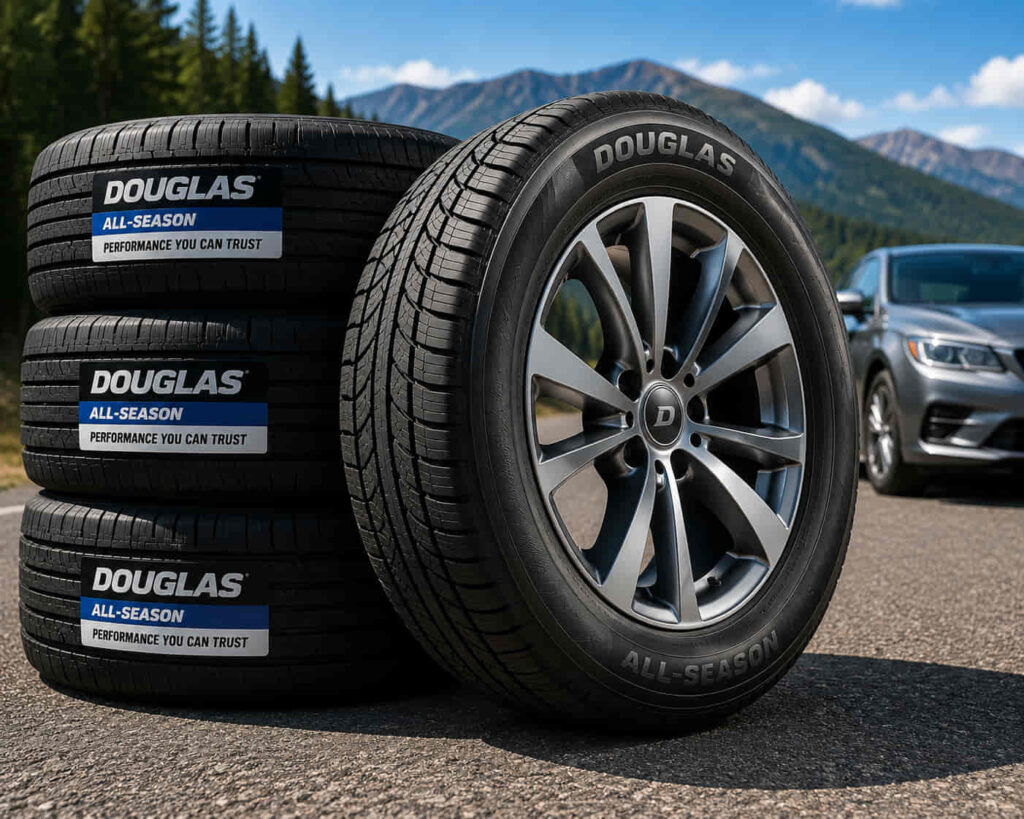
Douglas tires are designed as affordable replacement tires that provide practical everyday performance for drivers who need reliable transportation without a high purchase cost. The brand focuses on delivering basic safety, acceptable durability, and predictable handling rather than competing directly with premium tire manufacturers in advanced performance or specialized applications.
Douglas Tires are commonly considered a value-oriented option for drivers who prioritize affordability and convenience. The brand is known among consumers looking for replacement tires for daily commuting, older vehicles, and normal driving conditions where extreme performance capabilities are not the primary requirement.
However, evaluating Douglas Tires requires understanding their intended market position. A budget tire is not designed to provide the same level of technology, refinement, or specialized performance as premium brands such as Michelin, Continental, or Bridgestone. Instead, the goal is to provide a practical balance between cost and essential driving needs.
The quality of a Douglas tire depends on factors such as the specific model, vehicle type, maintenance habits, and driving environment. For drivers who mainly use their vehicles for commuting, errands, and regular highway driving, Douglas Tires may provide sufficient performance at a lower cost.
This review explains Douglas Tire quality, manufacturer background, real-world performance, durability, advantages, limitations, and whether Douglas Tires are a good choice for different types of drivers.
Who Makes Douglas Tires?
Douglas Tires are a private-label tire brand primarily associated with Walmart, with manufacturing connected to established tire producers rather than operating as an independent tire manufacturer. Understanding who makes Douglas Tires helps explain why the brand is positioned differently from major tire companies such as Michelin, Goodyear, or Continental.
Douglas operates mainly as a value-focused tire brand designed to provide affordable replacement options for everyday drivers. Instead of competing through premium technology or specialized performance, the brand focuses on offering practical tires for common driving situations such as commuting, local transportation, and regular highway use.
The connection between Douglas Tires and larger tire manufacturers has influenced the way consumers view the brand. While Douglas does not have the same level of brand recognition as premium tire companies, its association with established manufacturing standards provides additional confidence for buyers seeking budget-friendly options.
The most important factor when evaluating Douglas Tires is understanding their intended purpose. These tires are not designed for performance driving, extreme weather conditions, or demanding off-road applications. Their target audience is drivers who need a replacement tire that meets basic safety and reliability expectations at a lower cost.
For example, a driver replacing tires on an older sedan used mainly for commuting may find Douglas a practical solution. However, someone driving a high-performance vehicle or frequently facing severe winter conditions may require a more specialized tire designed for those environments.
How Good Are Douglas Tires Compared With Other Brands?
Douglas Tires provide acceptable everyday performance, but they are positioned below premium and many mid-range tire brands in areas such as advanced technology, handling refinement, and specialized capability. Their main advantage is affordability rather than maximum performance.
Compared with premium brands, Douglas tires generally offer fewer advanced features related to noise reduction, fuel efficiency, high-speed handling, and extreme weather performance. Premium manufacturers invest heavily in research and development to optimize multiple performance characteristics, while value brands focus on meeting essential requirements at a lower price.
However, a lower price does not automatically mean poor quality. For drivers with basic transportation needs, a Douglas tire can provide adequate traction, reasonable tread life, and dependable performance when properly maintained. The tire’s suitability depends more on matching expectations with the product’s purpose.
Douglas Tires are most competitive when compared with other budget replacement options. Drivers who need affordable tires for daily use may find the cost savings more important than the additional features offered by expensive alternatives.
For example, a vehicle used for short daily trips, grocery runs, and occasional highway driving may not require premium tires with advanced performance capabilities. In this situation, Douglas can provide a practical balance between cost and basic functionality.
Read more: Are Hankook Tires Good
How Do Douglas Tires Perform in Real-World Driving?
Douglas Tires provide suitable performance for normal daily driving conditions, including commuting, local transportation, and regular highway use. Their performance is focused on reliability and affordability rather than delivering advanced handling characteristics or specialized capability for demanding environments.
On dry roads, Douglas Tires generally provide predictable handling and acceptable traction for everyday drivers. The tread design is developed to maintain regular road contact and support normal steering control during routine driving situations. For vehicles used mainly for commuting, these characteristics are usually sufficient.
On wet roads, Douglas Tires are designed to provide basic water evacuation and traction support through their tread patterns. However, drivers should understand that budget tires may not provide the same level of wet braking performance or advanced grip technology found in higher-priced tire categories.
Highway driving performance is also dependent on factors such as tire condition, vehicle type, and driving speed. Douglas Tires can support normal highway travel when properly maintained, but they are not specifically engineered for high-performance driving, aggressive cornering, or extreme handling demands.
Winter performance is one area where expectations should be carefully managed. While some Douglas all-season tires may handle light seasonal conditions, they are not a replacement for dedicated winter tires in areas with heavy snow, ice, or prolonged freezing temperatures.
For example, a driver using a Douglas tire on a commuter vehicle in a region with moderate weather may experience reliable everyday performance. However, a driver frequently traveling through mountain roads, severe storms, or icy conditions would likely benefit from tires designed specifically for those environments.
How Long Do Douglas Tires Last?
Douglas Tires can provide reasonable tread life for budget tires, but their lifespan depends heavily on driving habits, maintenance, road conditions, and the specific tire model. Like any tire, proper care plays a major role in determining how long the product remains safe and effective.
Tire durability is influenced by several factors, including correct inflation pressure, wheel alignment, rotation schedule, vehicle weight, and driving behavior. A properly maintained Douglas tire will typically perform better and wear more evenly than a neglected tire.
Because Douglas Tires are positioned in the value segment, their expected lifespan may not always match premium tires that use more advanced compounds and engineering methods. Premium brands often invest more heavily in maximizing tread life while maintaining performance characteristics throughout the tire’s usable period.
However, durability should be evaluated based on the intended use. A driver who needs affordable tires for a vehicle used mainly for short trips may receive good value from Douglas. The lower purchase cost can make sense when the vehicle does not require advanced performance features.
For example, an older sedan used for commuting a few miles each day may not justify the expense of premium tires with extended performance technology. In this situation, Douglas Tires can provide a practical replacement option when combined with proper maintenance and responsible driving habits.
What Are the Advantages of Douglas Tires?
The main advantages of Douglas Tires are affordable pricing, accessibility, and practical performance for drivers who need dependable replacement tires without a high upfront cost. The brand’s value comes from meeting basic transportation needs rather than offering advanced features found in premium tire categories.
One of the biggest strengths of Douglas Tires is affordability. Tire replacement can be a significant expense, especially for drivers who need a full set of tires. Douglas provides an option for customers who want to maintain vehicle safety and reliability while keeping replacement costs lower.
Another advantage is availability. Because Douglas Tires are widely associated with Walmart, they are accessible to many consumers who prefer convenient purchasing and replacement options. This makes the brand attractive to drivers who want a straightforward solution without spending extensive time comparing premium tire models.
Douglas Tires are also suitable for simple daily driving applications. Vehicles used for commuting, local transportation, and normal road conditions usually do not require specialized tire technology. In these situations, a properly selected Douglas tire can provide adequate traction, comfort, and reliability.
The brand can be especially practical for older vehicles where owners may not want to invest heavily in premium replacements. For example, a driver maintaining an older sedan used mainly for work transportation may prioritize keeping operating costs low while maintaining acceptable safety standards.
The value of Douglas Tires comes from matching the product with the right use case. They provide a cost-effective solution for drivers who need functional transportation rather than maximum performance.
What Are the Limitations of Douglas Tires?
The main limitations of Douglas Tires are reduced performance capability, fewer advanced features, and limited suitability for demanding driving conditions. These limitations are expected because the brand is positioned as an affordable replacement option rather than a premium tire manufacturer.
One major limitation is technology. Premium tire brands invest heavily in advanced rubber compounds, noise reduction systems, performance testing, and specialized designs. Douglas Tires generally focus on providing essential performance, which means they may not offer the same level of refinement, efficiency, or handling precision.
Another limitation is performance in extreme conditions. Drivers who frequently encounter heavy snow, ice, high-speed driving, or challenging road surfaces may need tires specifically engineered for those situations. Douglas Tires are better suited for moderate climates and normal driving environments.
Ride comfort and noise control may also differ compared with more expensive tires. Premium tires often use advanced construction methods to reduce road noise and improve driving smoothness, while budget tires typically prioritize affordability over maximum comfort.
The limited product range is another consideration. Drivers looking for specialized options such as high-performance tires, dedicated winter tires, or advanced all-terrain products may find more choices from larger tire manufacturers.
For example, a commuter who mainly drives through city streets may find Douglas provides sufficient value. However, a driver who owns a performance vehicle or regularly travels through harsh weather conditions may benefit from investing in a tire designed specifically for those requirements.
Are Douglas Tires Worth Buying?
Douglas Tires are worth considering for drivers who need affordable replacement tires for everyday driving and prioritize cost savings over premium performance features. The brand provides a practical solution for vehicles used mainly for commuting, local transportation, and normal road conditions where extreme traction or advanced handling capability is not required.
The biggest strength of Douglas Tires is their value. They allow drivers to replace worn tires while maintaining basic safety and reliability without making a large financial investment. For many vehicle owners, especially those using older cars or vehicles with limited annual mileage, this balance between price and functionality can be a reasonable choice.
However, Douglas Tires are not designed to compete with premium brands in areas such as advanced technology, maximum tread life, high-performance handling, or severe weather capability. Drivers who frequently face heavy snow, icy roads, aggressive driving conditions, or long-distance performance demands may benefit from choosing a more specialized tire.
The right decision depends on matching the tire with the vehicle’s purpose and driving environment. A budget tire can provide strong value when its capabilities match the driver’s needs, but it may become a poor choice when used outside its intended conditions.
Overall, Douglas Tires represent a practical budget option for everyday drivers who need reliable transportation at an affordable price. They are most suitable for consumers looking for basic performance, convenient availability, and lower replacement costs rather than premium driving refinement.