Your car suddenly loses power while you are driving. The engine stops responding the way it should. You press the accelerator, but the speed barely increases. This situation is known as limp mode, and it often catches drivers off guard.
Limp mode acts as a built in safety system. The engine control unit limits performance to prevent serious damage. While this protects your car, it also creates stress and confusion, especially if you do not know the cause.
Many drivers assume the worst when limp mode appears. In reality, faulty sensors often trigger it. These sensors constantly send data about air intake, fuel mixture, engine timing, and transmission behavior. When one sensor sends incorrect or missing data, the system reacts immediately.
The engine control unit does not take risks. It reduces power to protect critical components. This is why your car feels slow, restricted, and sometimes stuck in one gear.
In this guide, you will learn what sensors can cause limp mode, how to spot early warning signs, and how to fix the problem quickly. This knowledge helps you avoid costly repairs and regain control of your vehicle with confidence.
What Is Limp Mode and Why Sensors Trigger It
Modern vehicles rely on a complex control system to keep the engine and transmission running smoothly. At the center of this system sits the engine control unit, often called the ECU. It acts like the brain of the car and makes real time decisions based on data from multiple sensors.
Limp mode is a protective function built into this system. When the ECU detects abnormal data, it limits engine performance to prevent further damage. Instead of shutting the engine off completely, it allows the car to operate at reduced power so you can still reach a safe location.
Sensors play a critical role in this process. Each sensor monitors a specific condition such as air intake, fuel mixture, engine timing, or transmission speed. The ECU depends on this data to calculate how the engine should perform. When a sensor sends incorrect values or stops sending data, the system cannot trust the information anymore.
The ECU reacts quickly to avoid risk. It reduces throttle response, limits RPM, and may lock the transmission into a single gear. This response prevents issues like overheating, misfiring, or internal damage.
Several types of sensor failures can trigger limp mode. Some send signals that fall outside the normal range. Others provide inconsistent readings that confuse the system. In some cases, the ECU receives no signal at all, which it treats as a serious fault.
Understanding this relationship between sensors and limp mode helps you diagnose problems faster. Instead of guessing, you can focus on the components most likely to fail and take action before the issue becomes more expensive.
Full List of Sensors That Can Cause Limp Mode
Modern vehicles rely on multiple sensors to control engine and transmission performance. When one of these sensors fails, the engine control unit quickly reacts. As a result, limp mode activates to protect critical components.
Air intake sensors play a key role in fuel calculation. For example, the Mass Air Flow sensor measures incoming air, while the MAP sensor tracks pressure inside the intake system. If either sensor sends incorrect data, the engine may lose power and trigger limp mode. In addition, the Intake Air Temperature sensor can worsen the issue when combined with other faults.
Exhaust and emission sensors also contribute to this problem. The Oxygen sensor helps maintain the correct air fuel ratio. When it fails, combustion becomes inefficient. Similarly, the Exhaust Gas Temperature sensor protects the engine from overheating. Therefore, abnormal readings can immediately activate limp mode.
Engine critical sensors have an even stronger impact. The Throttle Position sensor controls acceleration input, while the Crankshaft and Camshaft sensors manage timing. If these sensors fail, the engine may misfire or run unpredictably. Consequently, the system limits performance.
Transmission and turbo sensors also play a role. Faulty speed sensors can lock the car in one gear, while boost sensors may reduce power to prevent overpressure.
Overall, even a single faulty sensor can trigger limp mode. Therefore, accurate diagnosis is essential before making repairs.
Symptoms Before and During Limp Mode
Limp mode rarely appears without warning. In most cases, your car shows early signs before performance drops completely. Therefore, recognizing these symptoms early can help you avoid costly repairs.
At first, you may notice reduced engine power. The car feels slower than usual, especially during acceleration. In addition, the engine may hesitate or respond unevenly when you press the pedal. These signs often point to sensor data becoming unstable.
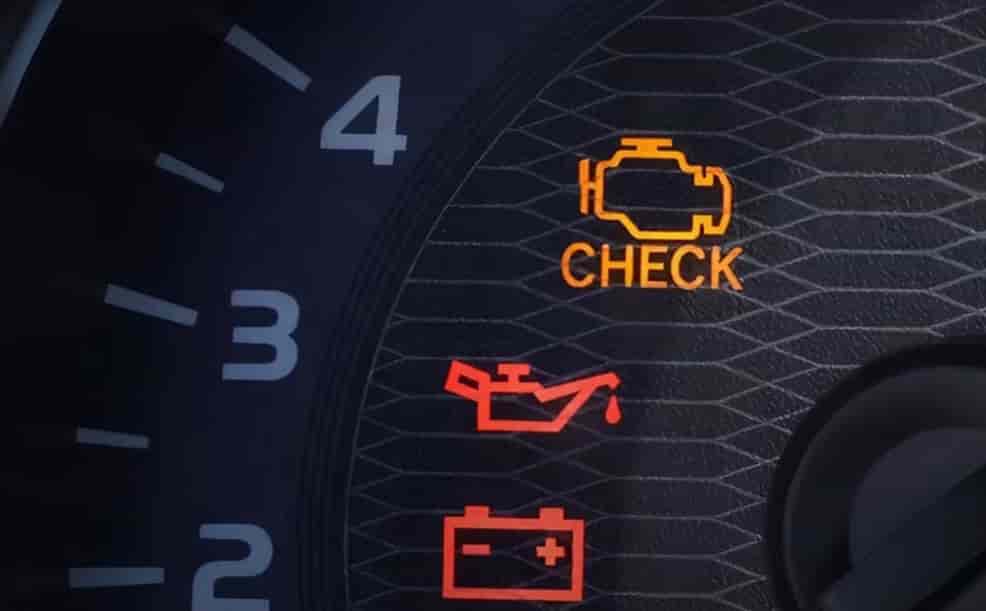
As the problem worsens, the check engine light usually turns on. This warning indicates that the engine control unit has detected abnormal readings. For example, faulty air or fuel sensors often trigger this alert before limp mode activates.
Once limp mode starts, the symptoms become more obvious. The vehicle may refuse to exceed a certain speed, often around 30 to 50 mph. At the same time, the transmission can get stuck in one gear. As a result, driving feels restricted and uncomfortable.
In some cases, fuel consumption increases while performance drops. This creates a frustrating situation where you pay more for less power. More importantly, driving in this condition can become unsafe, especially on highways or during overtaking.
Because of these risks, you should never ignore early warning signs. Instead, diagnosing the issue quickly helps prevent further damage and reduces repair costs.
How to Diagnose Which Sensor Caused Limp Mode
When limp mode activates, guessing the cause can waste time and money. Therefore, you should follow a clear diagnostic process to identify the faulty sensor quickly and accurately.
First, use an OBD2 scanner to read error codes from the engine control unit. These codes provide direct clues about which sensor or system is failing. For example, codes related to airflow, oxygen, or throttle position often point to specific components.
Next, analyze the error codes instead of replacing parts immediately. In many cases, one faulty sensor can trigger multiple codes. Therefore, you need to identify the root cause rather than treating symptoms.
After that, inspect the sensor and its wiring. Loose connections, damaged wires, or corrosion can interrupt signals. As a result, the ECU may receive incorrect or missing data, which triggers limp mode.
Then, test the sensor using a multimeter or diagnostic tool. Compare the readings with manufacturer specifications. If the values fall outside the normal range, the sensor likely needs cleaning or replacement.
In some situations, cleaning the sensor solves the problem. For instance, a dirty MAF sensor often causes incorrect airflow readings. However, if the sensor is damaged, replacement becomes necessary.
Finally, clear the error codes and test drive the vehicle. If limp mode does not return, you have likely fixed the issue. Otherwise, you should continue checking related sensors or systems.
By following this process, you reduce guesswork and avoid unnecessary repairs. More importantly, you can fix limp mode faster and with greater confidence.
Fixes and Repair Costs
Fixing limp mode does not always require expensive repairs. In many cases, a simple sensor cleaning or minor fix can restore normal performance. Therefore, understanding the cost and solution helps you make better decisions.
First, consider cleaning before replacing. For example, a dirty Mass Air Flow sensor often causes incorrect readings. In this case, using a proper cleaning solution can fix the issue at a very low cost. As a result, you may avoid unnecessary part replacement.
However, if the sensor is damaged, replacement becomes necessary. The cost varies depending on the type of sensor and vehicle model. For instance, a MAF sensor typically costs between $50 and $300. An Oxygen sensor may range from $100 to $250. Meanwhile, more complex sensors, such as transmission or turbo related components, can cost significantly more.
In addition, labor costs can increase the total expense. A simple sensor replacement may cost $50 to $150 in labor. On the other hand, hard to access components may require more time and higher fees.
Because of this, many car owners choose the DIY approach. If you have basic tools and knowledge, replacing or cleaning sensors can save money. However, incorrect installation may create new issues. Therefore, you should only attempt DIY repairs when you feel confident.
Overall, early diagnosis remains the most effective way to reduce costs. Fixing a small sensor issue early prevents more serious damage later.
Conclusion
Limp mode can feel alarming, especially when your car suddenly loses power without warning. However, in many cases, the issue comes from faulty sensors rather than major mechanical damage. Understanding what sensors can cause limp mode gives you a clear advantage when diagnosing the problem.
Throughout this guide, you have seen how different sensors affect engine performance. Air intake, exhaust, engine timing, transmission, and turbo systems all rely on accurate data. When one sensor fails, the engine control unit reacts immediately to protect the vehicle. As a result, performance becomes limited and driving conditions worsen.
The key to avoiding expensive repairs lies in early detection. Small signs such as reduced power, poor acceleration, or a check engine light often appear before limp mode activates. Therefore, taking action early can save both time and money.
In addition, using the right diagnostic process helps you identify the exact cause instead of guessing. This approach reduces unnecessary part replacements and ensures a faster fix.
If your car enters limp mode, do not ignore it. Instead, scan the system, inspect the sensors, and address the issue as soon as possible.
Have you ever experienced limp mode before? What sensor caused the issue in your case? Share your experience and help others avoid the same problem.