Have you ever inflated your Toyota’s tires to the recommended pressure, only to see the tire pressure warning light remain illuminated on the dashboard? This is a common issue that frustrates many Toyota owners. The warning light can appear after a tire rotation, seasonal temperature changes, tire replacement, or even after properly inflating underinflated tires.
Toyota vehicles are equipped with a Tire Pressure Monitoring System (TPMS), a safety feature designed to alert drivers when one or more tires fall below the recommended pressure level. While this system helps improve safety, fuel efficiency, and tire lifespan, it can occasionally require recalibration to function correctly. When that happens, performing a Toyota tire pressure sensor reset is often the quickest solution.
The good news is that resetting the TPMS on most Toyota models is a simple process that can be completed in just a few minutes without visiting a dealership or purchasing expensive diagnostic equipment. Whether you drive a Toyota Corolla, Camry, RAV4, Highlander, Tacoma, or another model, understanding the proper reset procedure can save both time and money.
In this step-by-step guide, you will learn how the Toyota TPMS system works, when a reset is necessary, how to perform the reset correctly, and what to do if the tire pressure warning light stays on after the procedure.
Understanding the Toyota Tire Pressure Monitoring System (TPMS)
Before performing a Toyota tire pressure sensor reset, it is important to understand how the Tire Pressure Monitoring System works and why it plays a critical role in vehicle safety.
The Tire Pressure Monitoring System, commonly known as TPMS, is an electronic safety feature designed to monitor the air pressure inside your tires. When one or more tires fall below the manufacturer’s recommended pressure level, the system triggers a warning light on the dashboard. This alert helps drivers address potential tire issues before they lead to reduced fuel efficiency, uneven tire wear, poor handling, or even tire failure.
Most Toyota vehicles use direct TPMS technology. Each wheel contains a pressure sensor mounted inside the tire. These sensors continuously transmit tire pressure data to the vehicle’s electronic control unit. If the system detects abnormal pressure levels, it immediately activates the TPMS warning light to notify the driver.
There are several situations where a Toyota TPMS reset may be required. For example, you may need to reset the system after inflating underinflated tires, rotating tires, replacing a tire pressure sensor, installing new tires, or experiencing significant temperature changes that affect tire pressure readings. Understanding these scenarios can help you determine whether a reset is necessary or if a more serious tire-related issue needs attention.
By learning how TPMS functions, you can better diagnose warning light issues and ensure your Toyota remains safe and efficient on the road.
Before Resetting Your Toyota Tire Pressure Sensor
Many drivers attempt a Toyota tire pressure sensor reset immediately after seeing the warning light. However, skipping basic inspections can cause the reset procedure to fail. Taking a few minutes to perform the following checks can significantly increase the chances of a successful reset.
Start by locating the recommended tire pressure specification for your vehicle. This information is typically found on a sticker inside the driver’s side door jamb. Do not rely solely on the maximum pressure printed on the tire sidewall, as that number does not represent the manufacturer-recommended operating pressure.
Next, use a reliable tire pressure gauge to check all four tires. Inflate or deflate each tire until it matches Toyota’s recommended PSI level. If your vehicle is equipped with a spare tire that is monitored by the TPMS system, make sure to inspect and adjust its pressure as well. Many drivers overlook the spare tire, which can cause the warning light to remain on even after resetting the system.
Carefully inspect each tire for visible signs of damage. Look for nails, screws, punctures, sidewall cracks, or slow leaks that may cause pressure loss. Even a small leak can trigger the TPMS warning light repeatedly.
Finally, ensure your vehicle battery is functioning properly. Weak battery voltage can occasionally interfere with electronic system calibration. Once all tires are properly inflated and inspected, you are ready to begin the Toyota tire pressure sensor reset process.
How to Reset Toyota Tire Pressure Sensor Step by Step
Resetting the TPMS system on most Toyota models is a straightforward process that can be completed in a few minutes. While the exact procedure may vary slightly depending on the model year, the following steps work for many Toyota vehicles equipped with a TPMS reset button.
Begin by parking the vehicle on a level surface and ensuring all tires are inflated to the correct pressure. Insert the key into the ignition and turn it to the ON position without starting the engine. For push-button start models, press the Start button twice without pressing the brake pedal.
Locate the TPMS reset button. In many Toyota models, it can be found beneath the steering wheel, under the dashboard, or near the driver’s knee panel. Consult your owner’s manual if you have difficulty finding the button.
Press and hold the TPMS reset button until the tire pressure warning light blinks three times. This blinking light indicates that the system has entered calibration mode. Release the button and wait a few moments while the system begins processing the new tire pressure information.
Start the engine and allow the vehicle to idle briefly. Then drive the vehicle at normal road speeds for approximately 10 to 30 minutes. During this period, the TPMS sensors communicate updated pressure readings to the vehicle’s computer, allowing the system to complete the reset process.
If the procedure is successful, the warning light should turn off automatically. If the light remains illuminated or begins flashing, additional troubleshooting may be required. This may indicate a faulty sensor, communication issue, low tire pressure, or another TPMS-related problem that requires further inspection.
Toyota Tire Pressure Sensor Reset Without a Reset Button
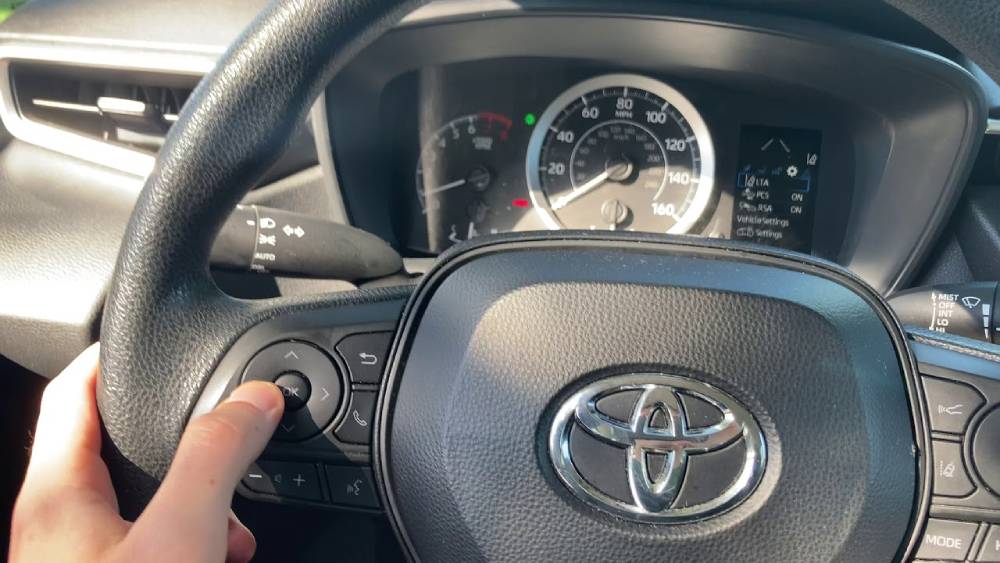
Many newer Toyota vehicles no longer use a dedicated TPMS reset button. Instead, the reset process is performed through the vehicle’s information display or infotainment system. If you cannot locate a reset button beneath the dashboard or near the steering column, your Toyota may use this newer method.
Begin by ensuring all tires are inflated to the correct pressure according to the manufacturer’s specifications. Turn on the ignition or start the vehicle and access the settings menu through the instrument cluster display or touchscreen interface.
Navigate to the vehicle settings section and look for options related to TPMS, Tire Pressure Monitoring System, or Tire Pressure Settings. Depending on the model, you may see options such as “Set Pressure,” “Initialize,” or “Store Current Pressure.” Select the appropriate option and confirm your choice when prompted.
Once the system begins initialization, the vehicle will record the current tire pressures as the new baseline values. In most cases, you will need to drive the vehicle for several minutes to allow the sensors and control module to complete the calibration process.
This method is commonly found on newer Toyota Corolla, Camry, RAV4, Highlander, Tacoma, Tundra, and Prius models. While the menu layout may vary slightly from one model year to another, the general process remains similar. Consulting the owner’s manual can help you locate the exact menu options for your vehicle.
Understanding how to reset TPMS without a physical reset button is increasingly important because Toyota continues to transition toward digital vehicle settings and advanced driver information systems.
Toyota TPMS Reset Procedures by Popular Models
Although the overall TPMS reset process is similar across Toyota vehicles, certain models have unique procedures or menu configurations. Knowing the model-specific method can save time and reduce frustration.
Toyota Corolla TPMS Reset
For many Toyota Corolla models manufactured before the introduction of digital TPMS controls, the reset button is located beneath the steering wheel. After adjusting tire pressure, turn the ignition to the ON position and hold the TPMS reset button until the warning light flashes three times. Start the vehicle and drive for approximately 10 to 20 minutes to complete calibration.
Newer Corolla models may require navigation through the vehicle settings menu. Select the TPMS initialization option and follow the on-screen instructions.
Toyota Camry TPMS Reset
The Toyota Camry typically uses a reset button located below the dashboard on older model years. Once all tires are inflated correctly, hold the button until the indicator light blinks. For newer Camry vehicles equipped with advanced displays, access the TPMS settings through the instrument cluster and initiate the reset electronically.
Toyota RAV4 TPMS Reset
Older RAV4 models generally follow the traditional reset button procedure. Newer versions often use a menu-driven initialization process accessible through the vehicle settings display. After selecting the reset option, drive the vehicle normally to allow recalibration.
Toyota Highlander TPMS Reset
Many recent Highlander models use dashboard controls rather than a physical button. Navigate through the vehicle settings menu, locate the tire pressure monitoring system section, and select the calibration or initialization option. The system will automatically learn the current tire pressures during normal driving.
Regardless of the model, always verify tire pressure before beginning the reset process. Incorrect pressure readings remain one of the most common reasons for unsuccessful TPMS resets.
Why the Toyota Tire Pressure Light Stays On After Reset
One of the most common questions Toyota owners ask is why the tire pressure warning light remains illuminated even after completing the reset procedure. While this can be frustrating, the issue is usually caused by one of several identifiable factors.
Incorrect tire pressure is the leading cause of persistent TPMS warnings. Even if one tire is only slightly below the recommended pressure, the system may continue displaying the warning light. Temperature fluctuations can also affect tire pressure and trigger alerts, particularly during seasonal changes.
A faulty TPMS sensor is another frequent culprit. Each sensor contains an internal battery that typically lasts between five and ten years. Once the battery fails, the sensor can no longer transmit accurate pressure information to the vehicle’s computer, resulting in a persistent warning light.
Slow air leaks can also cause recurring TPMS warnings. Small punctures, damaged valve stems, or deteriorating tire seals may allow air to escape gradually. In these situations, resetting the system only provides temporary relief because the underlying issue remains unresolved.
Some Toyota vehicles monitor the spare tire as part of the TPMS system. If the spare tire is underinflated, the warning light may remain active even when all four road tires have proper pressure.
Electronic communication problems can occasionally occur between the TPMS sensors and the vehicle’s control module. Sensor damage, signal interference, or programming issues may prevent the system from receiving accurate tire pressure data.
If the warning light continues to stay on after multiple reset attempts, a professional diagnostic inspection may be necessary to identify defective sensors or system faults. Addressing the root cause rather than repeatedly performing resets will provide a long-term solution and help maintain the safety benefits of the TPMS system.
Troubleshooting Failed Toyota TPMS Resets
If your Toyota tire pressure sensor reset does not work as expected, do not assume the system is defective. In many cases, the problem can be traced to a simple oversight or a component that requires additional attention.
One common issue occurs when the TPMS warning light flashes for approximately one minute before remaining illuminated. This behavior often indicates a sensor malfunction rather than a tire pressure problem. Since TPMS sensors rely on internal batteries, aging sensors can eventually stop transmitting accurate data to the vehicle’s computer.
Another frequent problem is a warning light that never turns off after the reset process. In this situation, it is important to verify that all tires were adjusted to the correct pressure before initiating the reset. Even a small difference from the recommended PSI can prevent successful calibration.
Drivers sometimes experience a warning light that disappears temporarily but returns several days later. This typically points to a slow air leak rather than a system error. Inspect the tires carefully for nails, punctures, damaged valve stems, or wheel rim leaks. A professional tire inspection may be necessary if the leak is difficult to detect.
In some cases, recently replaced TPMS sensors may require programming before they can communicate with the vehicle. Installing a new sensor without proper registration can cause the warning light to remain active despite multiple reset attempts.
Extreme weather conditions can also influence tire pressure readings. A significant drop in temperature may lower tire pressure enough to trigger the warning system even when the tires were recently inflated. Checking tire pressure regularly during seasonal changes can help prevent unnecessary TPMS alerts.
When troubleshooting TPMS issues, always address the underlying cause rather than repeatedly performing resets. A properly functioning Tire Pressure Monitoring System provides valuable safety information and should never be ignored.
When to Replace a Toyota TPMS Sensor
Although TPMS sensors are designed to last for many years, they are not permanent components. Understanding when replacement is necessary can help you avoid ongoing warning light issues and maintain accurate tire pressure monitoring.
Most Toyota TPMS sensors have an average lifespan of five to ten years. The exact lifespan depends on driving conditions, climate, mileage, and sensor quality. Because each sensor contains a sealed battery, battery failure is one of the most common reasons for replacement.
A persistent TPMS warning light that remains active despite proper tire inflation and successful reset attempts may indicate a failed sensor. Drivers may also notice intermittent warnings that appear and disappear without any obvious tire pressure changes. These inconsistent alerts often signal a sensor that is nearing the end of its service life.
Physical damage can also lead to sensor failure. Sensors may be damaged during tire replacement, wheel repairs, curb impacts, or road hazards. Corrosion around the valve stem can further affect sensor performance, especially in regions with harsh weather conditions.
The cost of replacing a Toyota TPMS sensor varies depending on the vehicle model, sensor type, and labor rates. In addition to the sensor itself, programming or relearning procedures may be required to ensure proper communication with the vehicle’s TPMS control module.
Replacing a faulty sensor promptly helps restore the accuracy of the Tire Pressure Monitoring System and ensures you receive reliable warnings whenever tire pressure falls below safe operating levels.
Frequently Asked Questions
Can I Drive With the TPMS Light On?
Yes, you can usually continue driving if the TPMS light is illuminated, but you should check your tire pressure as soon as possible. Driving with underinflated tires can reduce fuel efficiency, accelerate tire wear, and increase the risk of tire failure. If the warning light appears unexpectedly, inspect all tires before continuing long-distance travel.
How Long Does a Toyota Tire Pressure Sensor Reset Take?
The actual reset procedure typically takes only a few minutes. However, the system may require an additional 10 to 30 minutes of driving time before the recalibration process is fully completed. The exact duration depends on the vehicle model and driving conditions.
Does Disconnecting the Battery Reset the TPMS?
Disconnecting the battery may temporarily clear some vehicle settings, but it is generally not a reliable method for resetting the Tire Pressure Monitoring System. The proper reset procedure should always be performed using the TPMS reset button or the vehicle’s settings menu.
Do All Toyota Vehicles Have a TPMS Reset Button?
No. Many older Toyota models include a dedicated TPMS reset button, while newer vehicles often perform the reset through the instrument cluster or infotainment system. The location and method vary depending on the model and production year.
Why Is My TPMS Light Flashing Instead of Staying Solid?
A flashing TPMS light usually indicates a system fault rather than low tire pressure. Common causes include a failed sensor battery, damaged sensor, communication problem, or sensor programming issue. Diagnostic testing may be required to identify the exact cause.
How Often Should I Check My Tire Pressure?
Toyota owners should check tire pressure at least once per month and before long trips. Regular inspections help maintain optimal handling, fuel economy, tire lifespan, and overall vehicle safety.
Can Temperature Changes Trigger the TPMS Warning Light?
Yes. Tire pressure naturally decreases as temperatures drop and increases when temperatures rise. Sudden weather changes can trigger the TPMS warning light even if there are no leaks or sensor problems. Checking and adjusting tire pressure seasonally can help prevent unnecessary warnings.
Is a TPMS Sensor Replacement Expensive?
The total replacement cost depends on the vehicle model and service provider. Costs typically include the sensor, installation, and programming. Replacing sensors during tire replacement can often reduce labor expenses.
Conclusion
Knowing how to perform a Toyota tire pressure sensor reset is a valuable skill that can save time, money, and unnecessary trips to the dealership. In many cases, a persistent TPMS warning light is simply the result of tire pressure adjustments, tire rotations, seasonal temperature changes, or routine maintenance that requires the system to be recalibrated.
By following the correct reset procedure, verifying that all tires are inflated to the manufacturer’s recommended pressure, and understanding the differences between older and newer Toyota TPMS systems, most drivers can successfully resolve warning light issues on their own. Whether your vehicle uses a dedicated TPMS reset button or a digital initialization menu, the process is typically quick and straightforward.
It is also important to remember that a reset is not always the solution. If the warning light remains illuminated after multiple attempts, the problem may involve a faulty TPMS sensor, a slow air leak, damaged tire components, or communication issues within the monitoring system. Identifying and addressing the root cause will ensure that your Tire Pressure Monitoring System continues to provide accurate safety alerts.
Regular tire pressure checks, routine maintenance, and prompt attention to TPMS warnings can improve fuel efficiency, extend tire life, and enhance overall driving safety. With the information provided in this guide, you can confidently perform a Toyota Tire Pressure Sensor Reset and keep your Toyota operating at its best for years to come.