The Toyota Tacoma has built a reputation as one of the most dependable midsize pickup trucks ever produced. Known for its durability, strong resale value, and ability to handle everything from daily commuting to off-road adventures, the Tacoma is often considered a long-term investment by truck owners. However, even the most reliable vehicle requires proper maintenance to perform at its best.
Many Tacoma owners assume that reliability alone will protect them from costly repairs. Unfortunately, neglecting routine maintenance can lead to premature wear, reduced fuel efficiency, and expensive mechanical failures that could have been avoided. Simple services such as oil changes, tire rotations, and fluid inspections play a crucial role in keeping your truck running smoothly for hundreds of thousands of miles.
Following the recommended Toyota Tacoma service schedule helps ensure that critical components receive attention before problems develop. Regular maintenance not only improves vehicle performance and safety but also helps preserve resale value and extend the lifespan of major systems such as the engine, transmission, and drivetrain.
In this complete guide, you will learn the recommended Toyota Tacoma maintenance intervals, what services are required at each milestone, common maintenance mistakes to avoid, and practical tips that can help your Tacoma remain reliable well beyond 200,000 miles.
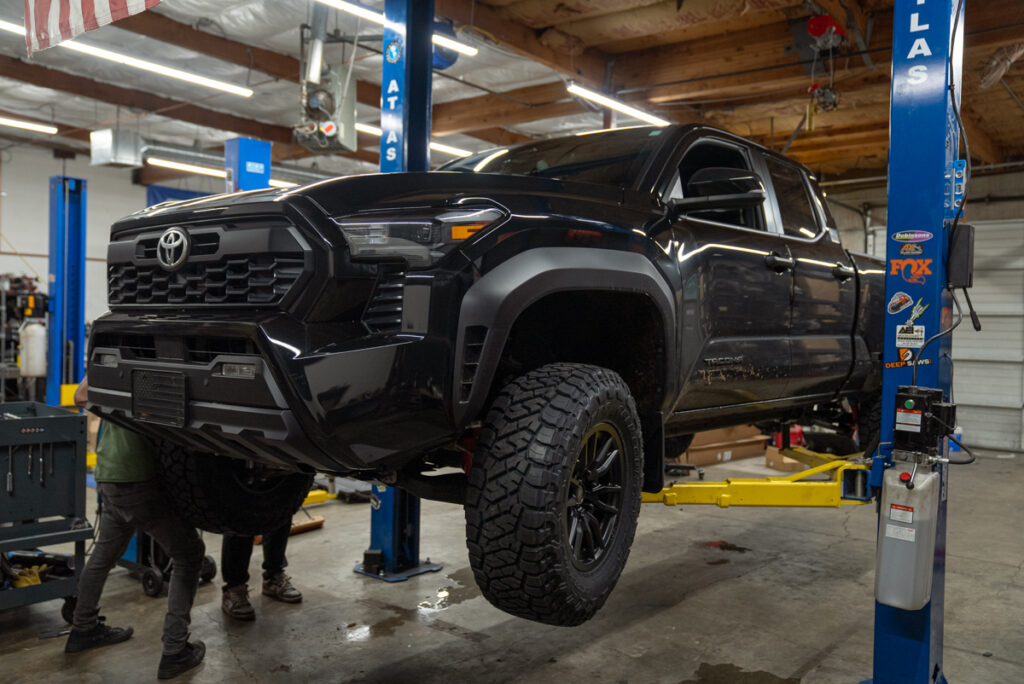
Why Following the Toyota Tacoma Service Schedule Matters
Many vehicle owners focus on fixing problems only after they occur. While this approach may seem cost effective in the short term, it often leads to significantly higher repair expenses over time. Following the Toyota Tacoma service schedule is one of the most effective ways to protect your investment and ensure your truck remains dependable for years to come.
Routine maintenance allows technicians to identify potential issues before they develop into serious mechanical failures. Components such as brakes, tires, belts, hoses, and fluid systems naturally wear over time. Regular inspections help detect abnormal wear patterns and address them before they compromise vehicle performance or safety.
Another important benefit of scheduled maintenance is improved fuel efficiency. Clean engine oil, properly inflated tires, and a well maintained air intake system help the engine operate more efficiently, reducing fuel consumption and improving overall driving performance.
Owners who regularly follow Toyota’s maintenance recommendations also tend to experience fewer unexpected breakdowns. This is particularly important for drivers who frequently tow trailers, travel long distances, or use their Tacoma in demanding off road environments.
Perhaps most importantly, proper maintenance can dramatically extend the lifespan of major vehicle systems. A well maintained Tacoma can often exceed 200,000 miles with relatively few major repairs, making routine service one of the smartest investments a truck owner can make.
Toyota Tacoma Maintenance Schedule by Mileage
Understanding what services are required at different mileage intervals helps owners stay organized and avoid missing important maintenance milestones. While exact recommendations may vary slightly depending on model year and driving conditions, the following schedule provides a general overview of Toyota Tacoma maintenance requirements.
Every 5,000 Miles
This is the most frequent maintenance interval and serves as the foundation of long term vehicle reliability.
Recommended services include changing the engine oil when required, rotating tires, inspecting brake components, checking fluid levels, inspecting windshield wipers, and verifying that all exterior lights are functioning correctly.
Regular tire rotations promote even tread wear and help maximize tire lifespan. Brake inspections allow technicians to identify worn pads or damaged components before they affect stopping performance. Fluid checks help ensure that critical systems continue operating properly.
Skipping these basic services may seem harmless initially, but over time it can accelerate wear on essential vehicle components and increase repair costs.
Every 15,000 Miles
At this interval, maintenance becomes more comprehensive. In addition to routine oil changes and tire rotations, technicians should inspect the steering system, suspension components, cooling system, and exhaust system.
Drivers who regularly travel on rough roads or tow heavy loads place additional stress on these components. Early detection of worn suspension parts can improve ride quality, vehicle handling, and overall safety.
Routine inspections at this stage often reveal small issues that can be corrected quickly and affordably before they develop into larger problems.
Every 30,000 Miles Service Checklist
The 30,000 mile service interval represents one of the first major maintenance milestones for Toyota Tacoma owners. By this point, several components have accumulated enough wear to require closer attention or replacement.
One of the most common services performed at this interval is replacing the engine air filter. A clogged air filter restricts airflow to the engine, reducing performance and fuel economy. Replacing the cabin air filter is also recommended to maintain proper airflow inside the vehicle and improve passenger comfort.
Technicians should inspect the brake system thoroughly, including brake pads, rotors, calipers, and brake lines. Any signs of excessive wear should be addressed promptly to maintain optimal braking performance.
The fuel system, transmission components, and drivetrain should also be inspected for leaks, wear, or damage. For owners who frequently drive off road or tow heavy loads, differential fluid condition should receive special attention.
Completing all recommended maintenance at 30,000 miles helps ensure that critical systems continue operating efficiently while reducing the likelihood of expensive repairs later in the vehicle’s life. Many reliability issues that appear at higher mileage can often be traced back to neglected maintenance during these earlier service intervals.
Dưới đây là Task 5–7 với 3 phần tiếp theo của bài viết.
Every 60,000 Miles Service Checklist
The 60,000 mile service interval is often considered one of the most important milestones in the Toyota Tacoma maintenance schedule. At this point, many of the fluids and components that have protected the vehicle since new may begin to lose effectiveness. Ignoring maintenance at this stage can significantly increase the risk of costly repairs in the future.
One of the primary services commonly performed around 60,000 miles is transmission fluid inspection and replacement when applicable. Transmission fluid plays a critical role in lubrication, cooling, and smooth gear operation. Over time, heat and contamination can reduce its effectiveness, leading to increased wear inside the transmission.
Differential fluid and transfer case fluid should also be inspected and replaced according to manufacturer recommendations, especially for four wheel drive models. These components experience considerable stress during towing, hauling, and off road driving.
Depending on the engine configuration and model year, spark plug replacement may also be recommended. Worn spark plugs can contribute to poor fuel economy, rough engine performance, and increased emissions.
A comprehensive brake inspection should be completed during this service interval. Brake pads, rotors, brake fluid, and related hardware should all be evaluated to ensure safe operation.
Owners who stay current with maintenance at 60,000 miles often avoid some of the most expensive drivetrain and transmission related repairs that occur later in the vehicle’s lifespan.
Every 100,000 Miles Service Checklist
Reaching 100,000 miles is a significant achievement for any vehicle. For the Toyota Tacoma, this milestone marks the transition from routine ownership into long term durability management. Proper maintenance at this stage can have a major impact on whether the truck reaches 200,000 miles and beyond.
The cooling system should receive particular attention. Coolant naturally degrades over time and loses its ability to regulate engine temperatures effectively. Replacing coolant according to Toyota recommendations helps prevent overheating and protects critical engine components from corrosion.
Technicians should carefully inspect belts, hoses, seals, and gaskets for signs of aging or deterioration. Rubber components become more vulnerable to cracking and leaks as mileage accumulates.
The water pump should also be inspected for signs of wear, coolant leakage, or unusual noise. While not every Tacoma will require water pump replacement at 100,000 miles, identifying problems early can prevent unexpected breakdowns.
Suspension components deserve a thorough evaluation as well. Shock absorbers, bushings, ball joints, and steering components may exhibit wear that affects ride comfort and handling.
A complete vehicle inspection at this milestone provides an opportunity to identify aging components before they fail, helping owners maintain reliability and avoid unexpected repair expenses.
Common Toyota Tacoma Maintenance Mistakes to Avoid
Even owners who intend to care for their vehicles properly sometimes make maintenance mistakes that can shorten the lifespan of their Tacoma. Understanding these common errors can help drivers protect their investment and avoid unnecessary expenses.
One of the most frequent mistakes is postponing oil changes. Modern engines rely on clean oil to reduce friction, control temperature, and protect internal components. Extending oil change intervals beyond recommended limits can accelerate engine wear and increase the likelihood of costly repairs.
Another common mistake is neglecting tire rotations. Uneven tire wear not only shortens tire lifespan but can also affect vehicle handling, braking performance, and fuel efficiency. Regular rotations help maximize tire value and improve driving safety.
Many owners also overlook differential, transfer case, and transmission fluid maintenance. These fluids often receive less attention than engine oil, yet they are equally important for protecting expensive drivetrain components.
Using incorrect oil viscosity or low quality replacement parts can also create long term reliability concerns. While cheaper alternatives may appear attractive initially, they can result in reduced performance and higher maintenance costs over time.
Finally, some drivers wait until warning lights appear before scheduling service. By the time a warning indicator activates, a minor issue may have already progressed into a more significant problem. Preventive maintenance remains far less expensive than major repairs and should always be prioritized whenever possible.
Estimated Toyota Tacoma Maintenance Costs
One of the reasons the Toyota Tacoma remains so popular among truck owners is its reputation for relatively affordable long term ownership. While maintenance expenses are unavoidable for any vehicle, the Tacoma generally costs less to maintain than many competing trucks when serviced properly and on schedule.
Routine maintenance services are typically inexpensive compared to major repairs. An oil change may cost between $60 and $120 depending on the type of oil used and labor rates in your area. Tire rotations generally range from $20 to $60, while engine and cabin air filter replacements often cost between $30 and $100.
More comprehensive services become necessary as mileage increases. Transmission fluid replacement may cost between $150 and $400, while differential and transfer case services can range from $100 to $300 each. A major maintenance visit at 60,000 miles may cost anywhere from $500 to $1,200 depending on the services performed and the condition of the vehicle.
Although these costs may seem significant, they are small when compared to major component failures. A transmission replacement can exceed several thousand dollars, while engine repairs or rebuilds can quickly become one of the largest ownership expenses a driver may face.
Preventive maintenance remains one of the most cost effective strategies for reducing total ownership costs. Spending a few hundred dollars on routine service today can save thousands of dollars in future repair bills.
Frequently Asked Questions About the Toyota Tacoma Service Schedule
How often should I service my Toyota Tacoma?
Most Toyota Tacoma models require basic maintenance every 5,000 miles or six months, whichever comes first. However, specific recommendations may vary based on model year, engine type, and driving conditions. Always consult your owner’s manual for the most accurate maintenance schedule.
Can I perform Tacoma maintenance myself?
Many routine maintenance tasks can be completed by experienced vehicle owners. Oil changes, air filter replacements, battery inspections, and tire pressure checks are among the most common do it yourself services. More advanced procedures involving the transmission, drivetrain, or electronic systems may require professional expertise.
Is dealership service required to maintain my warranty?
No. Vehicle owners are generally free to choose where maintenance is performed as long as the required services are completed according to manufacturer recommendations and proper records are maintained.
What happens if I miss a scheduled maintenance interval?
Missing a service interval does not automatically cause vehicle damage, but repeated neglect can accelerate wear and increase the risk of component failure. If maintenance has been delayed, it is best to schedule service as soon as possible and resume the recommended schedule.
How long can a Toyota Tacoma last with proper maintenance?
The Toyota Tacoma is widely recognized for exceptional durability. Many owners report exceeding 200,000 miles with minimal major repairs, while some well maintained trucks continue operating reliably beyond 300,000 miles.
Conclusion
Following the Toyota Tacoma service schedule is one of the most important responsibilities of vehicle ownership. While the Tacoma has earned a reputation for outstanding reliability, even the most durable truck depends on consistent maintenance to perform at its highest level.
Routine services such as oil changes, tire rotations, brake inspections, and fluid replacements may seem minor, but together they create the foundation for long term vehicle health. Staying proactive with maintenance allows owners to identify potential issues early, improve fuel efficiency, enhance safety, and reduce the likelihood of expensive repairs.
As mileage accumulates, major service intervals at 30,000, 60,000, and 100,000 miles become increasingly important. Addressing maintenance needs at these milestones helps protect critical systems including the engine, transmission, cooling system, and drivetrain.
For drivers who rely on their Tacoma for commuting, towing, work duties, or off road adventures, a well planned maintenance strategy can make the difference between a truck that lasts a decade and one that remains dependable for several decades.
Ultimately, the cost of preventive maintenance is far lower than the cost of major repairs. By following Toyota’s recommended maintenance schedule and addressing small issues before they become serious problems, owners can maximize performance, preserve resale value, and enjoy the full potential of their Toyota Tacoma for many years to come.
How many miles are currently on your Toyota Tacoma, and which maintenance milestone are you approaching next? Keeping track of your service schedule today can help ensure a more reliable driving experience tomorrow.