The Tesla Model Y Tow Package has become one of the most discussed features among electric SUV owners who want more than just daily commuting. Many drivers who own the Tesla Model Y are surprised to discover that this electric vehicle is not only designed for efficiency and performance but also has the capability to handle towing tasks when properly equipped. However, there is still a lot of confusion about what the Tesla Model Y Tow Package actually includes and how it performs in real-world conditions.
The growing interest in electric vehicles has changed the expectations of drivers, especially those who previously relied on gasoline SUVs for towing trailers, small campers, or cargo. With the introduction of towing capability in the Tesla Model Y, users now question whether an electric SUV can truly replace traditional towing vehicles without sacrificing performance, safety, or convenience.
Understanding the Tesla Model Y Tow Package is important because it is not just a simple hardware upgrade. It involves a combination of mechanical components, software integration, and vehicle dynamics that all work together to enable safe towing. At the same time, real-world usage shows that towing with an electric vehicle introduces new factors such as battery consumption, range reduction, and charging planning.
In this complete guide, we will explore everything about the Tesla Model Y Tow Package including towing capacity, installation process, and real-world towing performance. The goal is to give a clear and practical understanding so you can decide whether this towing solution fits your driving needs and lifestyle.
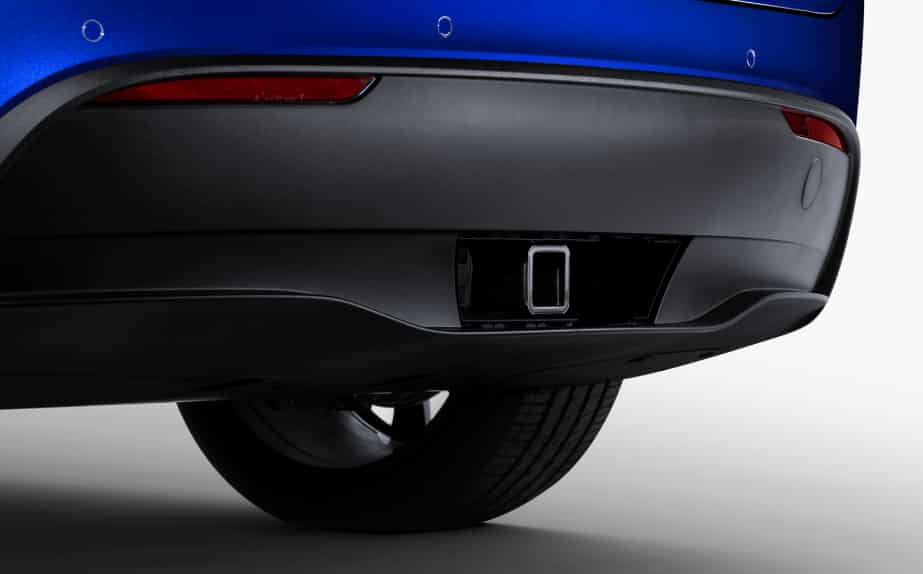
Overview of Tesla Model Y Tow Package
The Tesla Model Y Tow Package is an optional system that enables towing for the Tesla Model Y. It combines hardware, electrical components, and software features to support safe trailer towing. This system does not work as a simple accessory. It works as an integrated towing solution built for the vehicle.
The package usually includes a tow hitch receiver and a wiring harness for trailer lights. It also includes software activation inside the vehicle system. Once installed, the vehicle adjusts key settings to support towing. These settings help manage stability, braking, and traction control during driving with a load.
Tesla designs the Tow Package specifically for the Tesla Model Y platform. This design improves compatibility with the electric drivetrain and battery system. It also reduces risks that often come from aftermarket towing solutions. The system works directly with vehicle sensors and control units to maintain balance while towing.
After activation, the vehicle shows towing information on the main display. The driver can see trailer connection status and system alerts. The system also adjusts the estimated driving range based on towing conditions. This helps the driver plan trips with more accuracy and control energy use.
The Tesla Model Y Tow Package may not come standard in every market. Some vehicles require installation at a Tesla service center. Other configurations may include it depending on region and trim level. Drivers should check availability before purchase or installation.
Overall, the Tow Package expands the function of the Tesla Model Y. It allows the vehicle to handle light to moderate towing tasks. It also keeps the focus on efficiency, safety, and smooth driving experience.
Tesla Model Y Towing Capacity Explained
The towing capacity of the Tesla Model Y depends on configuration, market, and installed equipment. Tesla engineers design the vehicle to handle light to moderate towing tasks while maintaining stability and efficiency. The system focuses on balancing power, safety, and battery management during towing.
In most configurations, the Tesla Model Y supports towing a small trailer, a bike carrier, or a lightweight camper. The vehicle uses its electric drivetrain to deliver instant torque, which helps with smooth acceleration under load. This makes towing feel stable at lower and medium speeds compared to many traditional SUVs.
However, towing affects driving range significantly. The vehicle consumes more energy when it pulls additional weight. Air resistance and trailer weight both increase battery usage. Drivers often notice a reduction in range depending on trailer size, terrain, and driving speed. Highway towing usually reduces efficiency more than city driving due to constant speed and wind resistance.
Stability also plays a key role in towing performance. The Tesla Model Y uses traction control and stability systems to maintain balance. These systems adjust power delivery to each wheel in real time. This helps reduce sway and improves control when the vehicle carries a trailer.
Braking distance also increases when towing. The vehicle manages this by using regenerative braking combined with traditional braking systems. The driver must still maintain a safe following distance because heavier loads require more stopping power.
Tesla also integrates software logic that adjusts range estimation when towing mode is active. This helps the driver understand real energy consumption instead of relying on standard driving estimates. It improves planning for charging stops during long trips.
Overall, the Tesla Model Y offers practical towing capability for everyday use. It performs well for light trailers and recreational towing. However, it requires careful planning when drivers use it for long distance or heavy load towing scenarios.
Installation Process of Tesla Model Y Tow Package
The installation process of the Tesla Model Y Tow Package is designed as a factory controlled upgrade that combines hardware mounting and software activation. Tesla does not treat this as a simple accessory installation. Instead, the process follows strict engineering standards to ensure safety, electrical compatibility, and towing stability for the Tesla Model Y.
The process usually begins at a Tesla service center. A technician first checks vehicle compatibility and inspects the rear structure to confirm it can support towing hardware. After that, the rear bumper assembly is removed to expose the factory reinforced mounting points. These points are already built into the vehicle frame to handle towing stress.
Once the structure is exposed, the tow hitch receiver is installed directly into the chassis mounting points. This step is important because it ensures the load is distributed correctly across the vehicle frame. After securing the hitch, the technician installs the wiring harness. This harness connects the vehicle electrical system to trailer lights such as brake lights, indicators, and tail lights.
After hardware installation, the system moves to software activation. Tesla enables towing mode inside the vehicle software. This mode adjusts traction control, braking response, and stability systems to support towing conditions. The technician then runs diagnostic checks to confirm that all electrical and control systems function correctly together.
Tesla service centers complete the process with calibration and testing. This ensures that sensors respond accurately when a trailer is attached. After final checks, the vehicle is returned to the owner with towing mode fully activated and ready for use.
Overall, the installation process ensures that the Tesla Model Y Tow Package works as a fully integrated system rather than an external modification. This approach reduces risks and maintains the original driving performance of the vehicle while adding towing capability.
Real World Towing Performance
Real world towing performance of the Tesla Model Y Tow Package depends on load weight, terrain, speed, and driving behavior. In practical use, the Tesla Model Y performs well with light to moderate trailers. It delivers stable acceleration thanks to instant torque from its electric drivetrain. This helps the vehicle move smoothly even when it carries additional weight.
However, real world driving shows a clear impact on driving range. When towing, the Tesla Model Y consumes significantly more energy compared to normal driving. Heavy trailers and high speeds increase aerodynamic drag, which leads to faster battery depletion. Drivers often experience noticeable range reduction on highways, especially during long distance trips with constant speed.
City towing usually performs better in terms of energy efficiency. Lower speeds and frequent stops reduce aerodynamic resistance. Still, frequent acceleration from a full stop increases energy usage. This creates a balance where driving style directly affects efficiency when towing.
Stability remains one of the strongest aspects of the Tesla Model Y Tow Package. The vehicle uses advanced traction control and stability systems to manage weight distribution in real time. These systems help reduce trailer sway and maintain control during lane changes or crosswind conditions. The low center of gravity from the battery pack also improves towing stability compared to many traditional SUVs.
Braking performance changes under load as well. The vehicle relies on both regenerative braking and mechanical brakes to manage stopping distance. While regenerative braking helps recover energy, the driver still needs to maintain a longer following distance. Heavier trailers naturally require more time and space to stop safely.
In real world scenarios such as camping or small trailer transport, the Tesla Model Y handles towing tasks reliably. It works well for short trips and regional travel. However, long distance towing requires careful planning for charging stops and route selection. Drivers must account for reduced range and charging availability along the journey.
Overall, the Tesla Model Y Tow Package delivers practical real world performance for light towing needs. It balances efficiency, control, and comfort, but it is not designed for heavy duty towing applications.
Limitations and Hidden Drawbacks
The Tesla Model Y Tow Package provides useful towing capability, but it also comes with clear limitations that drivers need to understand before using it in real situations. These limitations are not only related to hardware capacity but also connected to how electric vehicles manage energy, heat, and driving range under load.
One of the main drawbacks is the significant reduction in driving range when towing. The Tesla Model Y consumes more energy as soon as it pulls a trailer. Weight and aerodynamic drag both increase battery usage. At higher speeds, the impact becomes even more noticeable. This creates a practical challenge for long distance travel because drivers must plan frequent charging stops.
Another limitation is charging convenience during towing trips. Charging with a trailer attached can be difficult because many charging stations are not designed for vehicles with trailers. Drivers often need to detach the trailer before charging. This adds time and reduces convenience during long journeys.
Thermal management also becomes more important during towing. When the vehicle carries a load, the battery and drivetrain work harder. This increases heat generation. Although Tesla designs the cooling system to handle demanding conditions, sustained towing on steep roads or hot weather can still reduce efficiency and performance stability.
The Tesla Model Y Tow Package also has limitations in towing weight. It is designed for light to moderate towing only. It does not compete with traditional heavy duty SUVs or trucks. Attempting to exceed recommended limits can affect braking performance, stability, and long term vehicle durability.
Another hidden drawback involves driver expectations. Many users assume that electric torque automatically means unlimited towing power. In reality, towing requires energy management, planning, and awareness of reduced range. Without proper understanding, drivers may face unexpected battery depletion during trips.
Finally, software limitations also play a role. The vehicle adjusts performance when towing mode is active, but it still prioritizes efficiency and safety over maximum towing strength. This means acceleration and range estimation change significantly under load, which can affect trip planning accuracy.
Overall, the Tesla Model Y Tow Package is effective for everyday light towing, but it requires careful use. Understanding these limitations helps drivers avoid unrealistic expectations and improves overall towing experience.
Is Tesla Model Y Tow Package Worth It
The value of the Tesla Model Y Tow Package depends heavily on how a driver plans to use the vehicle. It is not a universal upgrade for every owner. Instead, it fits specific driving needs where light towing is part of a lifestyle rather than a daily requirement.
For drivers who occasionally tow small trailers, bikes, or lightweight camping equipment, the Tesla Model Y Tow Package offers strong value. It integrates directly with the vehicle system and provides stable control during towing. The software support also helps drivers monitor range and adjust trip planning more accurately. In this case, the package adds real practical flexibility to the Tesla Model Y.
For users who focus on city driving and daily commuting, the value becomes less clear. Most of the towing features may remain unused for long periods. In this situation, the cost of installation may not feel justified unless the driver expects future towing needs. The decision becomes more about potential use rather than immediate necessity.
When compared to traditional gasoline SUVs, the Tesla Model Y Tow Package offers a different kind of towing experience. It provides smooth torque delivery and advanced stability systems, but it cannot match heavy towing capacity. Drivers who expect truck level performance may find it limited. However, those who value efficiency, technology integration, and low operating cost may see it as a modern alternative for light towing tasks.
Another important factor is long term ownership planning. If a driver enjoys outdoor travel, camping, or occasional road trips with trailers, the Tow Package can significantly expand the usability of the Tesla Model Y. It turns the vehicle into a more versatile SUV without changing its core electric efficiency.
Cost also plays a key role in the decision. Since the Tow Package requires installation and service center activation, buyers need to evaluate whether the added capability justifies the total expense. For many users, the answer depends on how often they realistically plan to tow.
Overall, the Tesla Model Y Tow Package is worth it for drivers who actively need light towing capability and want full integration with the Tesla system. It is less valuable for users who do not plan to tow regularly and prefer a purely urban driving experience.
Conclusion
The Tesla Model Y Tow Package extends the functionality of the Tesla Model Y and transforms it from a purely urban electric SUV into a more versatile vehicle for light towing needs. It combines hardware integration, software control, and stability systems to support safe trailer use while maintaining the core efficiency of the vehicle.
Throughout this guide, we explored how the towing capacity of the Tesla Model Y works in real conditions, how the installation process is handled at service centers, and how real world performance changes under load. We also examined the limitations that come with electric vehicle towing, especially in terms of range reduction, charging convenience, and load restrictions.
In practical use, the Tow Package performs best for drivers who need occasional towing for small trailers, camping equipment, or recreational use. It delivers smooth handling and strong stability thanks to Tesla’s integrated control systems. At the same time, it requires careful planning for long distance travel because energy consumption increases significantly when towing.
For buyers considering this upgrade, the key question is not only about capability but also about lifestyle fit. If towing is part of your regular driving needs, the Tesla Model Y Tow Package can add real value and flexibility. If towing is rare or unnecessary, the upgrade may not provide enough practical benefit to justify the cost.
Overall, the Tesla Model Y Tow Package represents a balanced solution for light towing in the electric vehicle segment. It reflects how modern EV technology can support utility use without compromising efficiency or driving comfort. As electric vehicles continue to evolve, towing capability will likely become even more advanced and efficient in future models.