A tire pressure warning light can appear without warning and leave many Kia owners wondering what to do next. Some drivers think they need a special reset button or an expensive repair. In reality, most Kia vehicles reset the Tire Pressure Monitoring System automatically after the tires reach the correct pressure and the vehicle is driven for a short distance.
Learning how to reset a Kia tire pressure sensor helps you keep your vehicle safe and running efficiently. Proper tire pressure improves handling, supports better fuel economy, and extends tire life. It also reduces the risk of uneven tire wear and unexpected tire damage. Knowing how the TPMS works makes it easier to solve warning light issues before they become bigger problems.
This guide explains the complete TPMS reset process for Kia vehicles. You will learn why the tire pressure warning light turns on, how the system monitors tire pressure, and the correct steps to reset the sensor. The guide also covers common reasons the TPMS light stays on after inflation and offers practical solutions for different Kia models, including the Sportage, Sorento, Forte, Soul, Telluride, Seltos, K5, Niro, and Carnival. By the end, you will understand how to reset the system correctly and when professional inspection may be necessary.
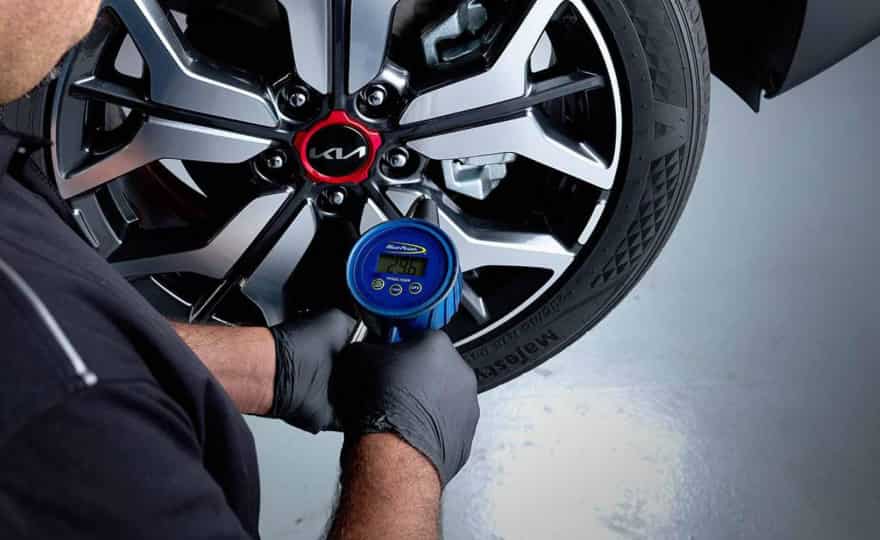
What Is the Kia Tire Pressure Monitoring System (TPMS)?
The Kia Tire Pressure Monitoring System, or TPMS, is a safety feature that monitors the air pressure inside each tire while you drive. The system helps you maintain the correct tire pressure. It also alerts you when one or more tires fall below the recommended level. Most modern Kia models include this technology because proper tire pressure improves safety, fuel efficiency, and overall tire performance.
Each wheel contains a TPMS sensor that measures tire pressure in real time. The sensor sends this data to the vehicle’s control module through a wireless signal. When the pressure drops below the recommended range, the system activates the TPMS warning light on the dashboard. The warning gives you enough time to inspect the tires before low pressure affects your driving.
Most Kia vehicles use a direct TPMS. This system measures the actual pressure inside each tire instead of estimating it through wheel speed. As a result, it delivers accurate readings and faster warnings. Many newer Kia models also display the pressure for each tire on the instrument cluster. This feature makes it easy to identify the tire that needs attention.
The TPMS does more than detect low tire pressure. It also helps protect your tires from premature wear. Underinflated tires create more rolling resistance. This forces the engine to work harder and increases fuel consumption. Low tire pressure also creates extra heat inside the tire. Over time, the heat can damage the tire structure and shorten its lifespan.
Weather can also affect tire pressure. Cold temperatures reduce the air pressure inside each tire. Even a small temperature change can trigger the TPMS warning light. In many cases, adding air restores the correct pressure. The system then resets automatically after a short drive.
Many drivers believe they must reset the TPMS manually every time the warning light appears. That is not true for most Kia vehicles. The system recognizes the updated tire pressure after all tires reach the recommended PSI. It then turns off the warning light after you drive for several minutes at a steady speed.
Understanding how the Kia Tire Pressure Monitoring System works helps you diagnose TPMS problems with confidence. It also helps you tell the difference between low tire pressure and a faulty sensor. This knowledge saves time, avoids unnecessary repairs, and keeps your Kia safe on the road.
Why Is the Kia Tire Pressure Sensor Light On?
The Kia tire pressure sensor light turns on when the Tire Pressure Monitoring System detects low tire pressure or identifies a problem with the monitoring system. In most situations, the warning does not mean the sensor has failed. It simply alerts you that one or more tires require attention. Finding the exact cause is the first step toward restoring normal TPMS operation and preventing unnecessary repairs.
Low tire pressure remains the most common reason for the warning light. Tires naturally lose air over time, and cold weather can reduce air pressure even faster. A small drop in temperature is often enough to trigger the TPMS light. Driving with underinflated tires can reduce fuel efficiency, increase tire wear, and affect vehicle handling. Checking all four tires with an accurate pressure gauge and inflating them to the recommended PSI usually solves the problem.
The warning light may also appear because of a faulty TPMS sensor. Each sensor contains a built in battery that gradually loses power after several years of use. Road impacts, damaged valve stems, or improper tire service can also affect sensor performance. If the sensor cannot transmit accurate pressure data, the system will continue to display the warning until the problem is repaired.
Recent tire rotation, tire replacement, or wheel installation can also trigger the TPMS light. Most Kia vehicles automatically recognize the sensors after a short drive, while some models require a relearn procedure. If the warning light flashes before remaining on, the system may have a communication fault or a failed sensor. In this situation, a TPMS diagnostic scan is the fastest way to identify the exact cause and restore proper system operation.
How to Reset Kia Tire Pressure Sensor
Resetting a Kia tire pressure sensor is usually simple because most modern Kia vehicles do not require a manual reset button. Instead, the Tire Pressure Monitoring System automatically updates after the tires reach the correct pressure and the vehicle is driven under normal conditions. Following the proper steps helps the system recognize the new tire pressure and turn off the warning light.
Begin by checking the recommended tire pressure listed on the driver’s door jamb sticker. Do not use the maximum PSI printed on the tire because that number represents the tire’s limit rather than the correct operating pressure. Use a reliable digital tire pressure gauge to measure each tire, then add or release air until every tire matches the recommended specification. If your Kia includes a spare tire with a TPMS sensor, check its pressure as well because a low spare tire can also trigger the warning light.
After adjusting the tire pressure, start the engine and drive the vehicle at a steady speed above 25 mph or 40 km per hour. Continue driving for at least 10 to 20 minutes whenever traffic conditions allow. During this time, the TPMS receives updated pressure readings from each sensor and compares them with the recommended values. Once every sensor reports normal pressure, the system automatically clears the warning light without any additional action.
If the TPMS light remains on after driving, stop the vehicle and check the tire pressure again. A slow air leak, an incorrect PSI reading, or a damaged tire may prevent the system from completing the reset. If the warning light flashes before staying on, the problem is more likely related to a faulty TPMS sensor or a communication issue within the monitoring system. In this case, a TPMS diagnostic scan can identify the faulty component and confirm whether the sensor requires replacement or reprogramming.
Do Kia Vehicles Have a TPMS Reset Button?
Many Kia owners search for a TPMS reset button after the tire pressure warning light appears. In most cases, they do not find one because the majority of modern Kia vehicles do not include a dedicated reset button. Instead, the Tire Pressure Monitoring System automatically detects the correct tire pressure after the tires are properly inflated and the vehicle is driven for a short distance.
This automatic relearn process reduces the need for manual intervention and makes the system easier to use. After you inflate all tires to the recommended PSI, the TPMS sensors send updated pressure data to the control module. The system verifies the new readings and turns off the warning light once every tire reaches the correct pressure. Most drivers only need to drive for 10 to 20 minutes at a steady speed before the warning disappears.
Some newer Kia models provide TPMS information through the instrument cluster or the infotainment display. These menus allow you to view the current tire pressure for each wheel, but they usually do not include a manual reset function. If the warning light remains on after correct tire inflation and normal driving, the system may have detected a faulty sensor, a communication problem, or another TPMS fault. A diagnostic scan can quickly identify the cause and determine whether the sensor needs replacement or programming.
Understanding that most Kia vehicles reset the TPMS automatically can save both time and money. Instead of searching for a reset button that does not exist, focus on maintaining the correct tire pressure and inspecting the system whenever the warning light fails to turn off after completing the recommended driving procedure.
How Long Does It Take for the Kia TPMS to Reset?
The time required to reset a Kia Tire Pressure Monitoring System depends on the vehicle model and driving conditions. In most cases, the TPMS resets automatically within 10 to 20 minutes after all tires reach the recommended pressure. During this period, the sensors send updated pressure readings to the control module. Once the system confirms that every tire is within the correct range, the warning light turns off without any manual action.
Driving at a steady speed helps the relearn process finish more quickly. Most Kia vehicles require speeds above 25 mph or 40 km per hour before the TPMS begins updating sensor information. Frequent stops, heavy traffic, or short trips may delay the reset because the system needs enough time to receive stable data from every wheel.
If the warning light remains on after 20 minutes of driving, check the tire pressure again with an accurate gauge. A tire may still be below the recommended PSI, or it may have a slow air leak that prevents the pressure from remaining stable. You should also inspect the spare tire if it is equipped with a TPMS sensor because low pressure in the spare can trigger the warning on some Kia models.
A flashing TPMS light usually indicates a different problem. This warning often points to a failed sensor, a weak sensor battery, or a communication fault within the monitoring system. When this happens, driving longer will not reset the warning. A TPMS diagnostic tool can identify the faulty sensor and confirm whether it needs to be replaced or reprogrammed. Regular tire pressure checks and routine maintenance help prevent repeated TPMS warnings and keep the system working as intended.
What to Do If the TPMS Light Stays On
A TPMS warning light that stays on after resetting the system usually indicates that another issue needs attention. In many cases, the problem is not the reset procedure itself. Instead, the system continues to detect low tire pressure or receives incorrect data from one of the sensors. Checking the vehicle carefully can help you find the cause before replacing any parts.
Start by measuring the pressure in all four tires with a reliable digital gauge. Inflate or deflate each tire until it matches the recommended PSI shown on the driver’s door jamb sticker. If your Kia has a spare tire with a TPMS sensor, check its pressure as well. A low spare tire can keep the warning light on even when the other tires are properly inflated.
Next, inspect each tire for visible damage. Look for nails, screws, cuts, or other objects that may cause a slow air leak. Even a small puncture can reduce tire pressure over time and prevent the TPMS from completing the reset process. You should also examine each valve stem because a damaged valve can allow air to escape.
If the tire pressure is correct and no leaks are present, the TPMS sensor may not be working properly. Sensor batteries wear out after years of use, and physical damage can also affect performance. A flashing warning light often indicates a communication problem rather than low tire pressure. In this situation, a TPMS diagnostic scan can identify the faulty sensor and verify whether it requires replacement or reprogramming.
Regular tire inspections and routine pressure checks help prevent repeated TPMS warnings. Keeping the tires at the correct pressure also improves vehicle stability, extends tire life, and supports better fuel efficiency throughout the year.
Common TPMS Problems on Kia Vehicles
Kia owners may experience different TPMS issues even after maintaining the correct tire pressure. Some problems result from normal wear, while others appear after tire service or seasonal weather changes. Understanding these common situations makes it easier to identify the cause and choose the right solution before the problem becomes more serious.
A flashing TPMS warning light is one of the most common issues. The light usually flashes for about one minute before remaining on. This pattern often indicates a communication problem instead of low tire pressure. A weak sensor battery, a damaged TPMS sensor, or a fault in the control module can prevent the system from receiving accurate pressure data. A diagnostic scan is the quickest way to identify the affected component.
Some drivers notice that the TPMS light returns a few days after resetting the system. This issue often points to a slow air leak or incorrect tire pressure rather than a failed sensor. Small punctures, leaking valve stems, or changes in outside temperature can gradually reduce tire pressure and activate the warning light again. Checking the tire pressure regularly helps prevent repeated alerts.
Incorrect pressure readings are another common concern. One tire may display a pressure value that does not match the reading from a digital tire pressure gauge. Dirt, corrosion, or internal sensor damage can affect measurement accuracy. In some cases, replacing the sensor is the only reliable solution.
TPMS sensors also have a limited lifespan because each unit contains a sealed battery. After several years of use, the battery may no longer provide enough power for normal operation. When this happens, replacing the complete sensor restores accurate pressure monitoring and ensures the TPMS continues to protect your vehicle during everyday driving.
Tips to Prevent TPMS Warning Lights
Preventing TPMS warning lights is much easier than dealing with unexpected alerts while driving. A few simple maintenance habits can keep the Tire Pressure Monitoring System working properly and reduce the risk of sensor related problems. Regular inspections also improve vehicle safety, support better fuel economy, and extend tire life.
Check the tire pressure at least once a month and before every long trip. Always measure the pressure when the tires are cold because heat from driving can affect the reading. Use the recommended PSI listed on the driver’s door jamb sticker instead of the maximum pressure printed on the tire. Keeping every tire at the correct pressure allows the TPMS to provide accurate information and reduces uneven tire wear.
Inspect the tires and valve stems whenever you wash the vehicle or perform routine maintenance. Look for nails, cuts, cracks, or signs of air leakage. Repairing small problems early helps prevent sudden pressure loss and keeps the TPMS warning light from appearing unexpectedly. If your Kia has a spare tire with a TPMS sensor, remember to check its pressure during every inspection.
Replace worn TPMS sensors when they reach the end of their service life. Most sensor batteries last several years, but they eventually lose the ability to transmit accurate data. If you replace a sensor, make sure it is programmed correctly for your vehicle. You should also drive carefully over potholes and rough roads because strong impacts can damage both the tire and the sensor.
Simple maintenance and regular tire pressure checks can prevent most TPMS warnings. These habits improve driving confidence, increase tire durability, and help your Kia deliver safe and reliable performance throughout the year.
Conclusion
Knowing how to reset a Kia tire pressure sensor can save time and help you avoid unnecessary repairs. In most Kia vehicles, the Tire Pressure Monitoring System resets automatically after you inflate all tires to the recommended pressure and drive for several minutes. Understanding how the system works also makes it easier to identify the difference between low tire pressure and a genuine TPMS fault.
Regular tire maintenance is the best way to keep the TPMS operating correctly. Check the tire pressure every month, inspect the tires for damage, and follow the recommended PSI listed by Kia. These simple habits improve vehicle safety, support better fuel efficiency, and extend the life of your tires. They also reduce the chance of seeing unexpected warning lights while driving.
If the TPMS light remains on after following the correct reset procedure, inspect the tires for leaks and confirm the pressure with a reliable gauge. A flashing warning light usually indicates a sensor or communication problem that requires professional diagnosis. Addressing the issue early helps prevent larger repair costs and ensures the monitoring system continues to provide accurate tire pressure information.
By following the steps in this guide, you can confidently reset the TPMS on most Kia models and maintain safe driving conditions throughout the year. Whether you drive a Sportage, Sorento, Forte, Soul, Telluride, Seltos, K5, Niro, or Carnival, proper tire pressure maintenance will help your vehicle perform at its best while protecting you and your passengers on every journey.