Few things are more frustrating than cleaning or replacing your GM vehicle’s throttle body only to discover that the engine now idles roughly, stalls unexpectedly, or displays a Reduced Engine Power warning. After carefully following a throttle body relearn procedure, you expect the engine to return to normal operation. Instead, the relearn fails, the idle remains unstable, and the Check Engine Light may even appear. If you’re dealing with a GM throttle body relearn not working issue, you’re certainly not alone.
Modern Chevrolet, GMC, Buick, and Cadillac vehicles rely on an Electronic Throttle Control (ETC) system rather than a traditional mechanical throttle cable. The Engine Control Module (ECM) continuously learns and stores the throttle body’s fully closed and partially open positions to ensure precise airflow, smooth idling, and responsive acceleration. Whenever the throttle body is cleaned, replaced, or disconnected from power, the ECM may need to relearn these values. However, if an underlying mechanical, electrical, or software issue exists, the relearn process can fail regardless of how many times you repeat it.
This comprehensive troubleshooting guide explains why a GM throttle body relearn not working problem occurs, the warning signs to watch for, and the most common causes behind a failed relearn. You’ll also learn how to diagnose the issue step by step, perform the correct relearn procedure, understand when a professional scan tool is necessary, and determine whether replacing components is the only solution. By the end of this guide, you’ll have a clear roadmap for restoring proper throttle operation and avoiding unnecessary parts replacement.
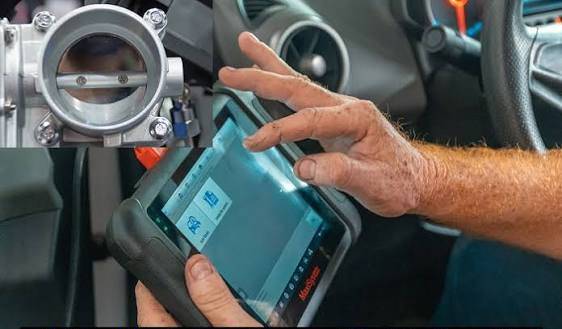
What Is a GM Throttle Body Relearn?
A GM throttle body relearn is a calibration process that allows the Engine Control Module (ECM) to recognize the exact position of the electronic throttle plate after maintenance or repairs. Unlike older vehicles that use a mechanical throttle cable, most modern Chevrolet, GMC, Buick, and Cadillac models rely on an Electronic Throttle Control (ETC) system. Instead of a direct cable connection, the accelerator pedal sends electrical signals to the ECM, which then commands an electric motor inside the throttle body to open or close the throttle plate.
Because the throttle plate controls the amount of air entering the engine, even a slight difference in its learned position can affect idle quality, throttle response, fuel economy, and engine performance. The ECM continuously stores adaptive values that represent the fully closed position, idle position, and partially open positions of the throttle body. These values help the engine maintain a stable idle under different operating conditions, including cold starts, air conditioning load, and changing engine temperatures.
A throttle body relearn becomes necessary whenever these learned values are erased or become inaccurate. Common situations include cleaning carbon deposits from the throttle body, replacing the throttle body assembly, disconnecting or replacing the battery, installing a new ECM, or repairing components related to the electronic throttle control system. Without recalibration, the ECM may continue using outdated values that no longer match the actual throttle position.
It is also important to understand that a throttle body relearn is not always the same as an idle relearn. A throttle body relearn focuses on calibrating the electronic throttle plate and its position sensors, while an idle relearn allows the ECM to fine tune idle speed based on real operating conditions. Some GM vehicles perform both procedures automatically during normal driving, while others require a specific ignition sequence or a professional scan tool to complete the calibration successfully.
Although the exact procedure varies by model year, engine type, and vehicle platform, the overall purpose remains the same. The ECM must accurately identify the throttle body’s operating range before it can control airflow with precision. If this learning process is interrupted or blocked by another fault, the throttle body relearn may fail, resulting in drivability problems and diagnostic trouble codes.
This procedure is commonly required on many GM vehicles, including popular Chevrolet Silverado, Tahoe, Suburban, Equinox, Malibu, Colorado, GMC Sierra, Yukon, Acadia, Terrain, Buick Enclave, Encore, LaCrosse, and Cadillac Escalade, CTS, XT5, and several other models equipped with electronic throttle control.
Symptoms That Indicate the Relearn Is Not Working
When a GM throttle body relearn fails, the ECM cannot accurately determine the throttle plate’s position. As a result, the engine may struggle to regulate airflow, causing a wide range of drivability issues. Some symptoms appear immediately after cleaning or replacing the throttle body, while others gradually worsen as the ECM attempts to compensate using incorrect adaptive values.
The most common symptom is a rough or unstable idle. Engine speed may fluctuate continuously, idle higher than normal, or occasionally drop so low that the engine stalls. Drivers often notice the vehicle shaking at stoplights or vibrating more than usual while idling in Park or Neutral.
Another common warning sign is poor throttle response. Pressing the accelerator may produce delayed acceleration, hesitation, or inconsistent engine power. In severe cases, the vehicle may enter Reduced Engine Power mode, limiting throttle opening to protect the engine and electronic throttle control system.
Many vehicles will also illuminate the Check Engine Light after the relearn fails. The ECM may detect inconsistencies between the commanded throttle position and the actual position reported by the throttle position sensors. This often results in one or more diagnostic trouble codes that prevent the relearn procedure from completing successfully.
Drivers may also experience hard starting, unexpected stalling, surging while cruising, increased fuel consumption, or inconsistent transmission shifting. Since modern automatic transmissions rely heavily on throttle input, inaccurate throttle position data can negatively affect shift timing and overall drivability.
The table below summarizes the most common symptoms and their likely causes.
| Symptom | Possible Cause |
|---|---|
| Rough or unstable idle | Failed throttle calibration |
| High idle speed | Vacuum leak or incorrect learned values |
| Low idle or stalling | Dirty throttle body or unsuccessful relearn |
| Check Engine Light | Stored diagnostic trouble code |
| Reduced Engine Power message | Electronic throttle control fault |
| Delayed throttle response | Throttle position sensor mismatch |
| Engine surging | Vacuum leak or throttle plate sticking |
| Hard starting | ECM adaptation failure |
| Poor fuel economy | Incorrect throttle position calculation |
| Hesitation during acceleration | Electronic throttle body malfunction |
Although these symptoms strongly suggest a relearn problem, they do not always indicate that the relearn procedure itself is at fault. In many cases, another mechanical or electrical issue prevents the ECM from accepting new calibration values. Proper diagnosis is therefore essential before repeating the relearn procedure or replacing expensive components.
Why Is the GM Throttle Body Relearn Not Working?
A failed throttle body relearn is usually a symptom of another underlying problem rather than the root cause itself. The ECM will only complete the learning process when every component in the electronic throttle control system operates within its expected range. If even one sensor provides inaccurate data or the throttle body cannot move freely, the relearn may fail regardless of how carefully the procedure is performed.
Dirty Throttle Body
Carbon buildup is one of the most common causes of relearn failure. Over time, oil vapor from the crankcase ventilation system combines with airborne contaminants, creating deposits around the throttle plate. These deposits restrict movement and prevent the plate from reaching its true closed position.
Typical symptoms include rough idle, hesitation, high idle speed, and intermittent stalling. Even after cleaning, excessive residue left around the throttle bore may continue interfering with calibration if the cleaning process is incomplete.
Always inspect both sides of the throttle plate and use a throttle body cleaner specifically designed for electronic throttle bodies. Avoid forcing the throttle plate open by hand unless the manufacturer explicitly permits it, as doing so can damage the internal gear mechanism.
Incorrect Relearn Procedure
Many failed relearn attempts occur because the incorrect procedure is used. GM vehicles do not all follow the same calibration sequence. Some models complete the relearn automatically after several drive cycles, while others require specific ignition ON and OFF intervals, idle periods, or bidirectional commands from a professional scan tool.
Skipping a step, turning the ignition off too early, starting the engine before the ECM finishes initialization, or performing the procedure on a cold engine may all prevent successful calibration.
Always verify the recommended relearn procedure for your exact model year, engine, and transmission combination before beginning.
Low Battery Voltage
Electronic throttle systems are highly sensitive to voltage fluctuations. A weak battery or unstable charging system can interrupt communication between the ECM and throttle actuator motor during calibration.
If battery voltage drops below the required operating range, the ECM may cancel the relearn process and store diagnostic trouble codes. Before troubleshooting more complex issues, confirm that the battery is fully charged and that the alternator is maintaining proper system voltage under load.
Faulty Throttle Body, TPS, and APP Sensor Issues
Even if the throttle body appears clean, internal component failure can prevent a successful relearn. Modern GM electronic throttle bodies contain an electric actuator motor and one or more throttle position sensors that constantly communicate with the Engine Control Module. If any of these components operate outside their expected range, the ECM will reject the calibration process and store a fault code.
A worn throttle body may develop excessive shaft play or a sticking throttle plate that prevents smooth movement. In other cases, the internal actuator motor becomes weak and cannot accurately position the throttle plate during calibration. These problems are common on high-mileage vehicles where the throttle body has been exposed to years of heat, vibration, and carbon contamination.
The throttle position sensor (TPS) is another critical component. It continuously reports the throttle plate angle to the ECM. If the sensor provides inconsistent or implausible readings, the ECM cannot determine the actual throttle position and will terminate the relearn procedure. Common symptoms include delayed acceleration, unstable idle, reduced engine power, and intermittent Check Engine Light warnings. Diagnostic trouble codes such as P0121, P0220, P2135, or P2176 often point toward throttle position sensor or correlation problems.
The Accelerator Pedal Position (APP) sensor should also be inspected. Since electronic throttle systems rely entirely on pedal input, inaccurate APP sensor readings may confuse the ECM during calibration. A faulty pedal sensor can cause hesitation, poor acceleration, limp mode activation, or unexpected throttle response. Live data from a scan tool is often the fastest way to compare APP sensor values with throttle position sensor readings and identify abnormal behavior.
Before replacing expensive components, inspect all electrical connectors for corrosion, bent terminals, moisture intrusion, or loose locking tabs. A poor electrical connection can produce the same symptoms as a defective sensor and may intermittently interrupt communication between the throttle body and the ECM.
Vacuum Leaks, Wiring Problems, and ECM Software Issues
Not every failed throttle body relearn is caused by the throttle body itself. External engine problems can significantly affect airflow calculations and prevent the ECM from completing the calibration process.
Vacuum leaks are among the most overlooked causes. When unmetered air enters the intake system after the mass airflow sensor, the ECM receives inaccurate airflow information. As a result, it struggles to establish a stable idle speed, making it impossible to complete the relearn successfully. Common leak locations include cracked vacuum hoses, damaged intake manifold gaskets, leaking brake booster hoses, worn PCV hoses, and loose intake duct clamps. A smoke test is often the most effective method for locating small leaks that cannot be detected during a visual inspection.
Electrical wiring should also receive careful attention. The throttle body harness operates in a high-temperature environment where insulation can become brittle over time. Damaged wiring, partially broken conductors, poor grounds, or corroded connectors may create intermittent voltage drops that disrupt communication with the electronic throttle control system. Gently flexing the harness while monitoring live scan tool data can sometimes reveal wiring faults that remain hidden during static testing.
Another possibility is outdated ECM software. General Motors periodically releases updated calibration files to correct drivability issues, improve throttle response, and resolve known software bugs affecting specific vehicle models. If the ECM software is outdated or corrupted, the relearn process may repeatedly fail despite all mechanical components functioning correctly. A dealership or qualified repair facility can verify whether a newer calibration is available and reprogram the ECM using factory-approved equipment.
Stored diagnostic trouble codes can also block the relearn procedure. The ECM is designed to prevent calibration when active faults are detected within the electronic throttle control system. Some of the most common codes associated with relearn failure include:
| DTC | Description | Typical Cause |
|---|---|---|
| P0121 | Throttle Position Sensor Range/Performance | Faulty TPS or wiring |
| P1516 | Throttle Actuator Control Performance | Throttle body or TAC circuit issue |
| P2101 | Throttle Actuator Position Performance | Internal throttle body failure |
| P2135 | TPS Correlation Error | Sensor mismatch or wiring fault |
| P2176 | Minimum Throttle Position Not Learned | Failed relearn or sticking throttle plate |
Always diagnose and repair active trouble codes before attempting another throttle body relearn. Simply clearing the codes without correcting the underlying fault rarely produces a lasting solution.
How to Fix a GM Throttle Body Relearn That Is Not Working
Successfully fixing a failed throttle body relearn requires a systematic diagnostic approach. Repeating the relearn procedure multiple times without identifying the root cause usually wastes time and may even create additional problems. The following steps provide an organized method for restoring proper throttle operation.
Begin by scanning the vehicle for diagnostic trouble codes using a professional OBD-II scan tool. Record every stored, pending, and history code before clearing anything. Freeze-frame data can provide valuable information about engine operating conditions when the fault first occurred.
Next, perform a thorough visual inspection of the throttle body. Look for heavy carbon buildup, oil contamination, signs of physical damage, or evidence that the throttle plate sticks while moving through its full range. If cleaning is required, use a cleaner specifically designed for electronic throttle bodies and avoid spraying excessive solvent directly into sensitive electronic components.
After cleaning, verify battery condition. A fully charged battery and stable charging system are essential during the relearn process. Low voltage can interrupt communication between the ECM and throttle actuator, causing calibration to fail before completion.
Continue by inspecting all related wiring, connectors, and grounds. Repair damaged insulation, clean corroded terminals, and ensure every connector locks securely into place. If available, use a multimeter to verify reference voltage, ground integrity, and circuit continuity according to the factory service manual.
Using a scan tool with live data capability, compare accelerator pedal position readings with throttle position sensor values. Both sensors should respond smoothly without sudden jumps or signal dropouts. Any irregular readings should be diagnosed before proceeding further.
Once all mechanical and electrical issues have been addressed, perform the correct throttle body relearn procedure for your specific GM model. Some vehicles require only an ignition cycle followed by an idle period, while others require a dedicated scan tool to initiate throttle calibration. Always follow the manufacturer-recommended procedure rather than relying on a universal method found online.
After completing the relearn, start the engine and allow it to reach normal operating temperature. Observe idle stability, throttle response, and fuel trim values during a road test. If no new diagnostic trouble codes appear and engine performance returns to normal, the relearn has likely completed successfully. However, if the same symptoms immediately return, further diagnosis of the throttle body assembly, ECM, or related control circuits may be necessary before replacing any components.
Manual Relearn Procedure for Most GM Vehicles
The exact throttle body relearn procedure varies depending on the vehicle’s model year, engine, and Engine Control Module (ECM) software. While many newer GM vehicles automatically adapt over several drive cycles, others require a manual relearn sequence or a scan tool with bidirectional controls. Always consult the factory service information for your specific vehicle before beginning the procedure.
If your vehicle supports a manual relearn, ensure the battery is fully charged and all electrical accessories such as the air conditioning, headlights, and radio are switched off. The engine should be at normal operating temperature unless the service manual specifies otherwise.
Follow these general steps for a manual throttle body relearn:
- Turn the ignition key to the ON position without starting the engine.
- Leave the ignition on for approximately 30 seconds to allow the ECM to initialize the electronic throttle body.
- Turn the ignition completely off and wait another 30 to 60 seconds.
- Start the engine without pressing the accelerator pedal.
- Allow the engine to idle undisturbed for at least five minutes. During this period, the idle speed may fluctuate slightly as the ECM begins learning the new throttle position.
- If the idle stabilizes, take the vehicle on a short road test that includes city driving, steady cruising, and several gentle acceleration and deceleration cycles.
- Recheck for diagnostic trouble codes after the drive cycle.
Some GM vehicles require several ignition cycles or multiple drive cycles before idle quality fully returns to normal. During this learning period, minor idle fluctuations may be considered normal as long as no diagnostic trouble codes return.
If the engine immediately enters Reduced Engine Power mode, stalls repeatedly, or continues displaying the same fault codes after multiple relearn attempts, stop repeating the procedure. An unresolved mechanical or electrical fault is likely preventing the ECM from completing calibration.
When Is a Professional Scan Tool Required?
Many owners assume that every GM throttle body can be relearned manually, but this is not always the case. Certain vehicles require a professional diagnostic scan tool capable of initiating the relearn process through the ECM. Attempting a manual procedure on these models will often result in repeated failures because the calibration command is never sent to the throttle control module.
A scan tool is commonly required after installing a brand-new throttle body, replacing the Engine Control Module, repairing the throttle actuator control system, or updating ECM software. Some late-model GM vehicles also require electronic calibration whenever adaptive memory is erased.
Professional scan tools communicate directly with the ECM and guide the technician through the relearn procedure while monitoring throttle angle, accelerator pedal position, battery voltage, and other critical parameters in real time. This greatly reduces the chance of repeating unnecessary repairs because abnormal sensor readings can be identified immediately.
Factory-level diagnostic equipment such as the GM GDS2 platform offers the highest level of compatibility, but many advanced aftermarket scan tools from reputable manufacturers also support throttle body relearn functions on a wide range of Chevrolet, GMC, Buick, and Cadillac vehicles.
If repeated manual relearn attempts fail despite a clean throttle body, good battery voltage, and no obvious wiring damage, investing in a professional diagnostic session is often less expensive than replacing parts based on guesswork.
Common Diagnostic Trouble Codes Associated with Relearn Failure
Diagnostic Trouble Codes (DTCs) provide valuable clues about why a GM throttle body relearn is not working. Reading these codes before replacing components can save both time and money. While a single code rarely confirms the exact failure, it significantly narrows the list of possible causes.
| DTC | Description | Possible Cause | Recommended Action |
|---|---|---|---|
| P0121 | Throttle Position Sensor Range/Performance | Faulty TPS, wiring damage, sticking throttle plate | Inspect TPS signals, clean throttle body, test wiring |
| P0220 | Throttle Position Sensor Circuit Malfunction | Sensor failure or open circuit | Check connector integrity and sensor voltage |
| P1516 | Throttle Actuator Control Performance | Faulty throttle actuator, damaged wiring, ECM issue | Inspect actuator motor, harness, and grounds |
| P2101 | Throttle Actuator Position Performance | Internal throttle body failure | Test throttle body operation and replace if necessary |
| P2119 | Throttle Closed Position Performance | Throttle plate binding or carbon buildup | Clean throttle body and verify free movement |
| P2135 | Throttle Position Sensor Correlation | TPS signal mismatch | Compare sensor data using live scan tool readings |
| P2176 | Minimum Throttle Position Not Learned | Failed relearn procedure or sticking throttle plate | Repair underlying fault and repeat relearn |
| P1518 | TAC Module Communication Issue | Wiring fault or control module problem | Diagnose communication circuits and ECM |
Do not clear these codes immediately after they appear. Instead, record the freeze-frame data and identify whether the fault occurred during idle, acceleration, or the relearn procedure itself. This information can significantly reduce diagnostic time and prevent unnecessary component replacement.
It is also important to remember that multiple codes may appear simultaneously. For example, a damaged wiring harness can trigger both throttle position sensor and throttle actuator codes, making it seem as though several components have failed. In reality, repairing a single broken wire may resolve every stored fault and allow the throttle body relearn to complete successfully.
Can You Drive If the Throttle Body Relearn Doesn’t Work?
Whether you can continue driving after a failed throttle body relearn depends on the severity of the problem. In some cases, the vehicle may remain drivable with only minor symptoms such as a slightly rough idle or reduced throttle response. However, these symptoms should not be ignored because they often indicate that the Engine Control Module is unable to accurately control the electronic throttle body.
If the vehicle enters Reduced Engine Power mode, driving should be limited to reaching a safe location or a repair facility. In this mode, the ECM intentionally limits throttle opening to protect the engine and prevent unintended acceleration. Acceleration becomes sluggish, highway merging can be difficult, and climbing steep grades may be unsafe.
A failed relearn can also lead to unstable idle speed, frequent stalling, hesitation during acceleration, or poor fuel economy. These issues not only affect drivability but can also increase wear on engine components if left unresolved. Repeated stalling at intersections or while making turns creates an additional safety hazard, particularly in heavy traffic.
If the Check Engine Light is flashing rather than remaining steadily illuminated, stop driving immediately. A flashing warning light usually indicates a severe engine condition that requires prompt diagnosis. Continuing to drive under these circumstances may result in expensive engine or catalytic converter damage.
In many situations, the relearn itself is not the real problem. Instead, an underlying fault such as a defective throttle body, damaged wiring, vacuum leak, or faulty sensor prevents the ECM from completing calibration. Identifying and repairing the root cause should always take priority over repeatedly attempting the relearn procedure.
As a general rule, if your GM vehicle drives normally without warning messages and no new diagnostic trouble codes return after the relearn, it is usually safe to continue driving while the ECM completes its adaptive learning. However, if drivability continues to deteriorate, professional diagnosis should not be delayed.
How to Prevent Future GM Throttle Body Relearn Problems
Many throttle body relearn failures can be avoided through routine maintenance and proper repair practices. Preventive maintenance not only improves engine performance but also extends the lifespan of the electronic throttle control system.
Clean the throttle body at regular service intervals, especially on high-mileage vehicles. Carbon deposits accumulate gradually and restrict throttle plate movement long before noticeable symptoms appear. Cleaning the throttle body before heavy contamination develops reduces the likelihood of calibration problems after maintenance.
Use high-quality replacement parts whenever the throttle body or related sensors require replacement. Original Equipment Manufacturer (OEM) components or premium aftermarket brands are generally more reliable than inexpensive alternatives, which may have inaccurate sensor calibration or lower manufacturing quality.
Maintain a healthy electrical system by regularly testing battery condition and charging voltage. Modern electronic throttle systems depend on stable voltage during startup and relearn procedures. A weak battery can cause intermittent calibration failures even when no other faults are present.
Inspect electrical connectors whenever servicing the intake system. Look for corrosion, bent terminals, damaged wire insulation, or moisture contamination. Applying dielectric grease to clean connector terminals may help protect against future corrosion in harsh environments.
Repair vacuum leaks as soon as they are discovered. Small leaks often develop gradually and may initially produce only minor idle fluctuations. Left unattended, they can interfere with throttle body calibration and fuel trim calculations.
Avoid forcing the throttle plate open by hand unless specifically instructed by the manufacturer. Many electronic throttle bodies use delicate gear mechanisms that can be damaged by excessive force.
Finally, never ignore the Check Engine Light. Addressing diagnostic trouble codes early often prevents more serious drivability issues and increases the likelihood of a successful throttle body relearn after future repairs.
Frequently Asked Questions
How long does a GM throttle body relearn take?
Most manual relearn procedures take between five and fifteen minutes. However, some GM vehicles continue refining idle and throttle calibration over several drive cycles before reaching optimal performance.
Does disconnecting the battery reset the throttle body?
Disconnecting the battery may erase adaptive memory on certain GM models, but it does not physically reset the throttle body. In many cases, the ECM will still require a throttle body relearn after battery power is restored.
Can I perform a throttle body relearn without a scan tool?
Yes, many older GM vehicles support a manual relearn procedure. However, numerous late-model vehicles require a professional scan tool capable of initiating electronic throttle calibration through the ECM.
Why is my engine still idling rough after completing the relearn?
Persistent rough idle usually indicates another problem beyond the relearn procedure itself. Common causes include vacuum leaks, carbon buildup, faulty throttle position sensors, damaged wiring, low battery voltage, or an internal throttle body failure.
Does every GM vehicle require a throttle body relearn?
No. Some GM vehicles automatically learn new throttle values during normal driving, while others require a manual procedure or scan tool calibration after throttle body service. The exact requirement depends on the vehicle’s model year, engine, and ECM software.
Can a weak battery cause a throttle body relearn to fail?
Yes. Electronic throttle control systems require stable system voltage. A weak battery or charging system can interrupt communication between the ECM and throttle actuator during calibration, causing the relearn process to fail.
Can a vacuum leak prevent throttle body relearning?
Absolutely. Unmetered air entering the intake system changes the amount of airflow reaching the engine, making it difficult for the ECM to establish the correct idle position. Repairing the vacuum leak is essential before attempting another relearn.
Should I replace the throttle body if the relearn keeps failing?
Not necessarily. A failed relearn does not automatically mean the throttle body is defective. Always diagnose diagnostic trouble codes, inspect wiring, verify battery voltage, check for vacuum leaks, and test throttle position sensor data before replacing expensive components.
Conclusion
A GM throttle body relearn not working problem can be frustrating, but the relearn procedure itself is rarely the true cause. In most cases, the Engine Control Module is preventing calibration because it has detected an underlying mechanical, electrical, or software issue that must be corrected first.
Successful diagnosis begins with scanning for diagnostic trouble codes, inspecting the throttle body for carbon buildup or mechanical damage, verifying battery voltage, checking wiring integrity, and confirming that throttle position and accelerator pedal sensors are operating correctly. Addressing these issues before repeating the relearn procedure significantly improves the chances of restoring normal engine performance.
It is equally important to follow the correct relearn procedure for your specific GM vehicle. While some Chevrolet, GMC, Buick, and Cadillac models complete the process automatically, others require a precise ignition sequence or a professional scan tool with bidirectional controls. Repeating an incorrect procedure without diagnosing the root cause often leads to unnecessary parts replacement and additional repair costs.
If your vehicle continues displaying Reduced Engine Power, rough idle, or recurring throttle-related diagnostic trouble codes after multiple relearn attempts, professional diagnostic equipment may be necessary to identify the exact fault. A systematic approach not only saves time and money but also ensures the electronic throttle control system operates safely and reliably for years to come.
If you’re still experiencing a GM throttle body relearn not working issue, leave a comment with your vehicle’s year, make, model, engine size, mileage, and any stored OBD-II trouble codes. The more information you provide, the easier it will be to narrow down the cause and recommend the most effective repair.