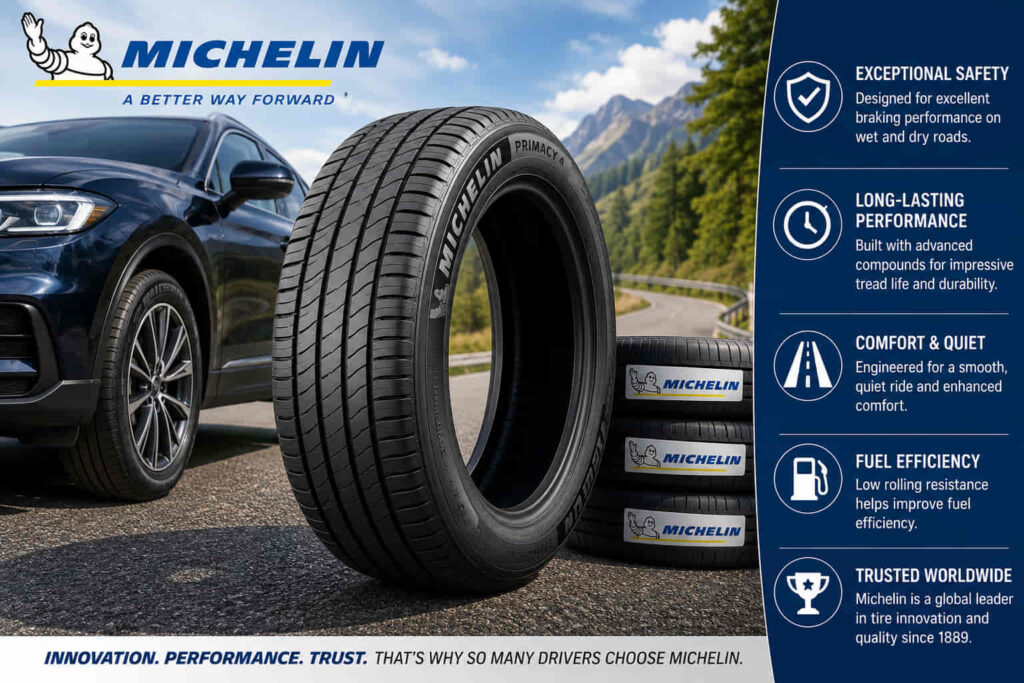
Michelin tires are considered one of the leading premium tire options because they combine advanced engineering, strong durability, safety-focused designs, and consistent performance across different driving conditions. However, whether Michelin tires are good depends on the vehicle type, driving habits, budget, and the performance characteristics a driver values most.
Michelin has built a strong reputation in the tire industry through decades of research, innovation, and product development. The brand is known for creating tires that focus on long tread life, reliable traction, comfortable driving experiences, and advanced technologies designed to improve safety and efficiency.
The higher price of Michelin tires often leads buyers to question whether the additional investment provides real value. A premium tire does not automatically make sense for every driver because the benefits depend on how the vehicle is used. A daily commuter, a luxury vehicle owner, and an electric vehicle driver may have different priorities when choosing tires.
Michelin produces a wide range of tire categories, including passenger tires, SUV tires, performance tires, and winter tires. Each product line is designed for specific driving needs, meaning the best Michelin tire depends on matching the tire characteristics with the vehicle and environment.
This guide explains Michelin tire quality, manufacturing background, durability, performance, advantages, limitations, and whether Michelin tires are worth buying for different types of drivers.
Who Makes Michelin Tires?
Michelin Tires are manufactured by Michelin Group, a global tire company known for developing its own tire technologies, research processes, and product engineering systems. Understanding who makes Michelin tires helps explain why the brand has maintained a premium position in the global tire market for decades.
Michelin was founded in France and has grown into one of the largest tire manufacturers worldwide. Unlike brands that mainly focus on specific market segments, Michelin develops tires for a wide range of applications, including passenger vehicles, SUVs, trucks, electric vehicles, performance cars, and commercial transportation.
The company’s reputation is built around research and development rather than only brand recognition. Michelin invests heavily in tire compounds, tread design, safety testing, and efficiency improvements to create products that perform consistently across different conditions.
Michelin also owns other tire brands, including BFGoodrich and Uniroyal, but each brand maintains its own product positioning. Michelin generally represents the premium segment, focusing on advanced technology, comfort, longevity, and overall driving refinement.
The manufacturing process behind Michelin tires involves strict quality standards, engineering analysis, and performance testing. However, the country where a specific Michelin tire is produced does not determine its quality by itself. The design, materials, testing standards, and intended application have a greater impact on real-world performance.
For example, a Michelin tire designed for a luxury sedan focuses on quiet operation and comfort, while a Michelin performance tire for a sports vehicle prioritizes handling and grip.
Why Are Michelin Tires More Expensive?
Michelin tires are more expensive because the brand invests heavily in research, advanced materials, engineering development, and technologies designed to improve safety, durability, and driving performance. The higher price reflects the cost of developing and producing premium tires rather than simply paying for the brand name.
One major factor behind Michelin’s pricing is tire technology. Modern tire development requires extensive testing of rubber compounds, tread patterns, structural designs, and performance characteristics. Michelin engineers work to balance multiple factors, including traction, rolling resistance, tread life, and ride comfort.
Another reason is durability. Many Michelin tires are designed with long-term ownership in mind, meaning the initial purchase price may be offset by a longer service life compared with lower-priced alternatives. A tire that maintains performance over more miles can provide better overall value despite a higher upfront cost.
Michelin also focuses strongly on safety performance. Features such as improved wet braking, stable handling, and optimized tread designs are developed through extensive testing. These characteristics are especially important because tires are the only part of a vehicle that directly connects with the road surface.
For example, a driver who keeps a vehicle for several years and drives long distances may benefit more from Michelin’s durability and performance advantages than someone who only needs the lowest-cost replacement tire.
The value of Michelin tires depends on whether the driver uses the features they are paying for. Premium technology provides the most benefit when comfort, safety, longevity, and consistent performance are important priorities.
How Long Do Michelin Tires Usually Last?
Michelin tires are widely recognized for their long tread life, with many models designed to provide extended mileage when properly maintained. The actual lifespan of Michelin tires depends on factors such as tire model, driving habits, road conditions, vehicle alignment, and maintenance practices.
One reason Michelin tires often achieve strong durability is the company’s focus on balancing tread wear with overall performance. A tire that lasts longer must maintain its grip, structural integrity, and handling characteristics throughout its usable life. Michelin develops different rubber compounds and tread designs to help achieve consistent performance as the tire wears.
Maintenance has a major impact on how long Michelin tires last. Correct tire pressure, regular rotation, proper wheel alignment, and routine inspections help prevent uneven wear and allow the tire to perform closer to its intended lifespan. Even a premium tire can wear prematurely if it is underinflated, overloaded, or used on a vehicle with alignment problems.
Michelin offers different durability levels depending on the product category. Touring tires designed for daily commuting often prioritize long tread life and comfort, while performance tires may prioritize handling and grip over maximum mileage.
For example, a driver using Michelin tires on a highway commuter vehicle with proper maintenance may experience many years of reliable service. However, an aggressive driver using high-performance tires may replace them sooner because increased grip and handling demands can accelerate wear.
The value of Michelin durability comes from consistent performance over time rather than simply achieving the highest mileage number.
How Do Michelin Tires Perform on Different Road Conditions?
Michelin tires generally perform well across a wide range of road conditions because the brand develops different tire categories for specific driving environments and performance requirements. The actual performance depends on choosing the correct Michelin tire model for the vehicle and conditions.
On dry pavement, Michelin tires are known for stable handling, predictable steering response, and strong road contact. Performance-focused models are engineered to provide precise control, while touring models prioritize smooth driving and comfort for everyday use.
On wet roads, Michelin places significant emphasis on braking performance and water evacuation. Tire tread patterns are designed to help move water away from the contact area, reducing the risk of losing traction during heavy rain. This is especially important because wet-road grip directly affects stopping distance and vehicle control.
Michelin also produces tires designed for cold-weather conditions. Winter-focused models use specialized rubber compounds that remain flexible at low temperatures, helping maintain traction on snow and icy surfaces. All-season models provide broader usability for drivers who experience moderate seasonal changes.
For electric vehicles and hybrid vehicles, Michelin has developed tires that address specific challenges such as increased vehicle weight, instant torque delivery, and efficiency demands. These tires focus on reducing rolling resistance while maintaining durability and safety.
However, no single Michelin tire is designed to be perfect for every condition. A performance tire may not provide the same winter capability as a dedicated winter tire, and a comfort-focused tire may not deliver the same handling response as a sports-oriented model.
For example, a luxury sedan owner may prioritize a quiet and comfortable Michelin touring tire, while a sports car driver may choose a Michelin performance tire for improved cornering and responsiveness.
Read more: Are BF Goodrich Tires Good
What Are the Advantages of Michelin Tires?
The main advantages of Michelin tires are long-term durability, strong safety performance, advanced engineering, and consistent driving comfort across different vehicle categories. These characteristics have helped Michelin maintain its position as one of the most recognized premium tire brands in the automotive industry.
One of Michelin’s biggest strengths is its focus on overall balance. Instead of optimizing only one performance factor, Michelin develops tires that combine multiple characteristics such as traction, braking ability, comfort, tread life, and efficiency. This approach allows Michelin tires to perform well in everyday driving situations while also meeting the demands of specialized vehicles.
Another important advantage is product variety. Michelin offers tires for different purposes, including daily commuting, luxury vehicles, sports cars, SUVs, electric vehicles, and winter driving. This wide range allows drivers to select a tire designed specifically for their vehicle and driving environment rather than using a general-purpose solution.
Michelin tires are also known for refined driving characteristics. Many models emphasize reduced road noise, smoother ride quality, and stable handling, which makes them popular among drivers who value comfort and long-distance driving performance.
The brand’s reputation for safety is another major factor. Michelin invests in tire testing and development to improve areas such as wet braking, road grip, and vehicle control. These advantages are particularly valuable because tire performance directly affects how safely a vehicle responds during emergency situations.
For example, a driver who frequently travels long highway distances may benefit from Michelin’s combination of comfort, durability, and stability compared with a lower-cost tire designed mainly around initial purchase price.
What Are the Limitations of Michelin Tires?
The main limitation of Michelin tires is their higher purchase price, which may not provide the same level of value for drivers who only need basic transportation performance. While Michelin offers advanced technology and strong durability, not every driver requires premium tire characteristics.
The initial cost is the most noticeable difference between Michelin and many budget or mid-range tire brands. A set of Michelin tires can require a larger upfront investment, which may be difficult for drivers who prioritize the lowest replacement cost.
Another limitation is that Michelin’s advantages depend on selecting the correct tire model. A premium tire designed for a specific purpose may not perform better if it does not match the vehicle or driving environment. For example, a high-performance Michelin tire may provide excellent handling but may not be the best choice for a driver who mainly needs long-lasting commuter tires.
Michelin tires also face strong competition from other premium manufacturers. Brands such as Continental, Bridgestone, and Goodyear offer high-quality alternatives, meaning buyers should compare factors such as warranty, performance requirements, and driving conditions rather than choosing based only on reputation.
For drivers who rarely use their vehicle, drive short distances, or mainly need affordable replacements, the additional cost of Michelin may not create enough practical benefit. In these situations, a less expensive tire that meets safety requirements may provide better financial value.
For example, a daily commuter who drives thousands of miles each year may appreciate Michelin’s durability and comfort, while a vehicle used occasionally for short local trips may not fully benefit from premium tire technology.
Are Michelin Tires Worth Buying?
Michelin tires are worth buying for drivers who prioritize long-term value, safety, comfort, and consistent performance over the lowest upfront cost. The brand’s premium pricing reflects investments in tire technology, engineering development, durability, and performance characteristics designed to provide reliable results throughout the tire’s usable life.
Michelin is not automatically the best choice for every driver because tire value depends on how the vehicle is used. Drivers who spend significant time on highways, own premium vehicles, drive electric vehicles, or want a quieter and more refined experience are more likely to benefit from Michelin’s strengths.
The brand’s advantages are most noticeable in areas such as tread life, wet-weather performance, ride comfort, and overall reliability. However, drivers who only need basic replacement tires for short-distance commuting may find that less expensive alternatives provide enough performance for their needs.
Choosing Michelin tires should be based on the relationship between vehicle requirements, driving conditions, and ownership expectations. A premium tire provides the most value when the driver uses the features they are paying for, including improved comfort, safety, and long-term durability.
Michelin remains one of the strongest choices in the tire market because it combines advanced engineering with consistent real-world performance. For drivers seeking a balance of quality, longevity, and confidence behind the wheel, Michelin tires can represent a worthwhile investment.